Introduction
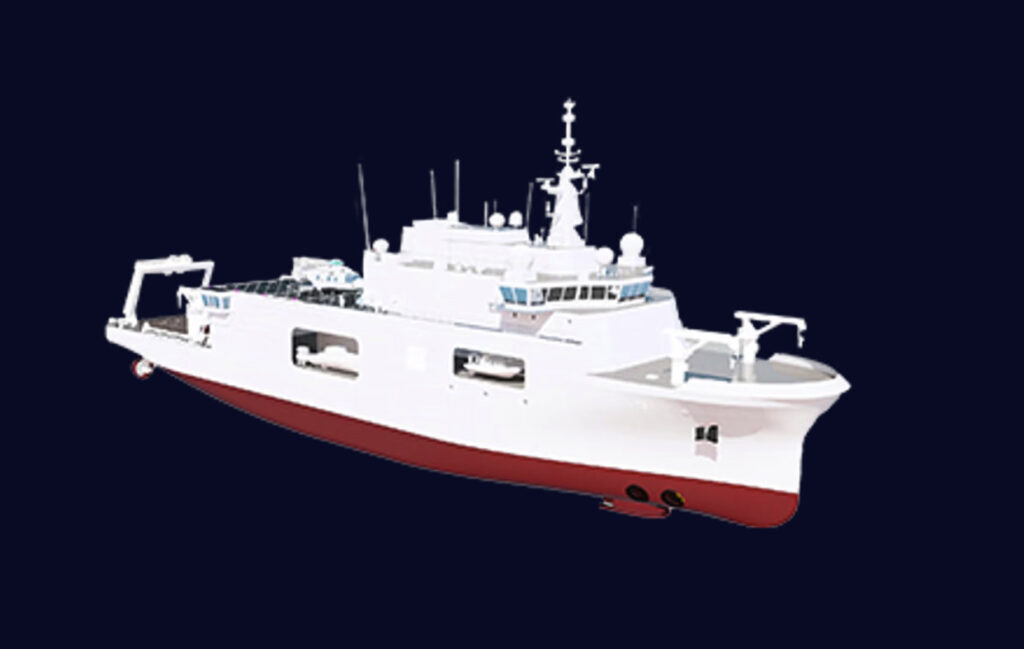
NIOM, short for Nave Idro-Oceanografica Maggiore, is the Italian Navy’s new major hydro-oceanographic ship built by Fincantieri and named Quirinale. The vessel is a specialized naval auxiliary rather than a surface combatant, optimized for scientific mapping, hydrography, oceanography, geophysics and environmental monitoring. It will serve the Italian Navy Hydrographic Institute, the national authority responsible for producing and updating Italy’s official nautical documentation.
The ship is intended to renew Italy’s ocean-going hydrographic capability and replace Nave Ammiraglio Magnaghi, which entered service in 1975. NIOM is designed to support national maritime-security requirements, safe navigation, environmental protection and scientific cooperation, including operations with research bodies, universities and international hydrographic organizations.
Program and Construction
Fincantieri received the contract for NIOM from Italy’s naval armaments directorate within the Ministry of Defence framework. The program includes the construction of the ship as well as integrated logistics support and temporary support services. First steel was cut at Fincantieri’s Riva Trigoso yard on 19 December 2023, and the vessel was launched there on 26 January 2026.
Following launch, Quirinale was scheduled to continue fitting-out and crew-preparation activities at the integrated Muggiano and Riva Trigoso shipyard complex, with delivery to the Italian Navy planned for the second half of 2027. The program is the lead element in the renewal of the Italian Navy’s hydrographic service, to be followed by smaller coastal hydro-oceanographic ships.
Design and Operating Environment
NIOM has an overall length of 110 m, a beam of 20 m and a full-load displacement of about 6,100 t. The ship’s design emphasizes endurance, precise station keeping, mission flexibility and operations in demanding marine environments. Its hull form has been optimized to reduce hydrodynamic resistance, while onboard systems include roll-reduction equipment and a DP2 dynamic-positioning system for stable operations during survey and scientific work.
The vessel is designed for oceanic and polar missions, including work near the ice edge. Italian Navy information describes the ship with ICE-CLASS 1C capability, enabling operation in fragmented ice of about 40 cm, and equipment suitable for polar climates with average temperatures down to about -16°C. This gives Quirinale a broader operating envelope than a conventional regional hydrographic vessel.
Propulsion and Mobility
NIOM uses an integrated electric propulsion arrangement. Fincantieri’s published configuration includes two 3 MW electric propulsion motors, four 2.45 MWe diesel generator sets, two mechanical azimuth thrusters aft and two 0.9 MW electrically driven bow thrusters. The azimuthing propulsion and bow-thruster arrangement are central to the vessel’s low-speed maneuverability and survey-station performance.
The ship has a maximum speed of 15 kn, a range of 7,000 nmi at 12 kn and a logistical endurance of 45 days. These figures align the vessel with long-duration hydrographic and oceanographic campaigns rather than high-speed naval tasking.
Hydrographic and Scientific Mission Systems
Quirinale carries a broad hydrographic and oceanographic sensor suite. Published Fincantieri equipment includes multibeam echosounders, a sub-bottom profiler, towed side-scan sonar, bathythermograph, Doppler acoustic profiler, wave-measurement equipment, towed seismic equipment, current-meter chains, marine gravimetric and magnetometric instruments, and a CTD system for conductivity, temperature and depth measurements.
The vessel is intended to perform bathymetric, topographic and geodetic surveys; collect hydro-oceanographic, geophysical and meteorological data; detect magnetic and gravimetric anomalies; and support Rapid Environmental Assessment operations. Italian Navy information indicates that the ship can measure water parameters and sample seabed conditions to 5,000 m, while its acoustic sensors can support survey activity down to 10,000 m.
Unmanned Systems, Boats and Aviation
NIOM is equipped to operate unmanned systems as part of its survey architecture. Fincantieri lists an autonomous underwater vehicle, an unmanned surface vehicle and a remotely operated vehicle as part of the ship’s unmanned-system fit. The AUV capability extends the ship’s ability to map and investigate areas that cannot be efficiently covered by the hull-mounted sensors alone, including under ice or in deep-water survey areas.
The ship also carries two hydrographic boats, each about 10 m long, for shore and port survey work. A flight deck sized for NH90 helicopter operations gives the vessel additional flexibility for personnel transfer, logistics, surveillance support and operations in remote maritime areas. Public specifications emphasize the ship’s research equipment, boats and unmanned systems rather than a permanent combat-system or gun fit.
Operational Role and Significance
NIOM Quirinale will act as the Italian Navy’s principal ocean-going hydrographic and scientific platform. Its combination of endurance, polar access, DP2 positioning, specialized laboratories, acoustic sensors and unmanned vehicles makes it a strategic national asset for seabed knowledge, navigation safety and environmental awareness. The ship also reflects a wider trend in naval auxiliaries: specialized platforms are increasingly expected to support scientific, security, climate, subsea and sovereign-data missions from a single adaptable hull.