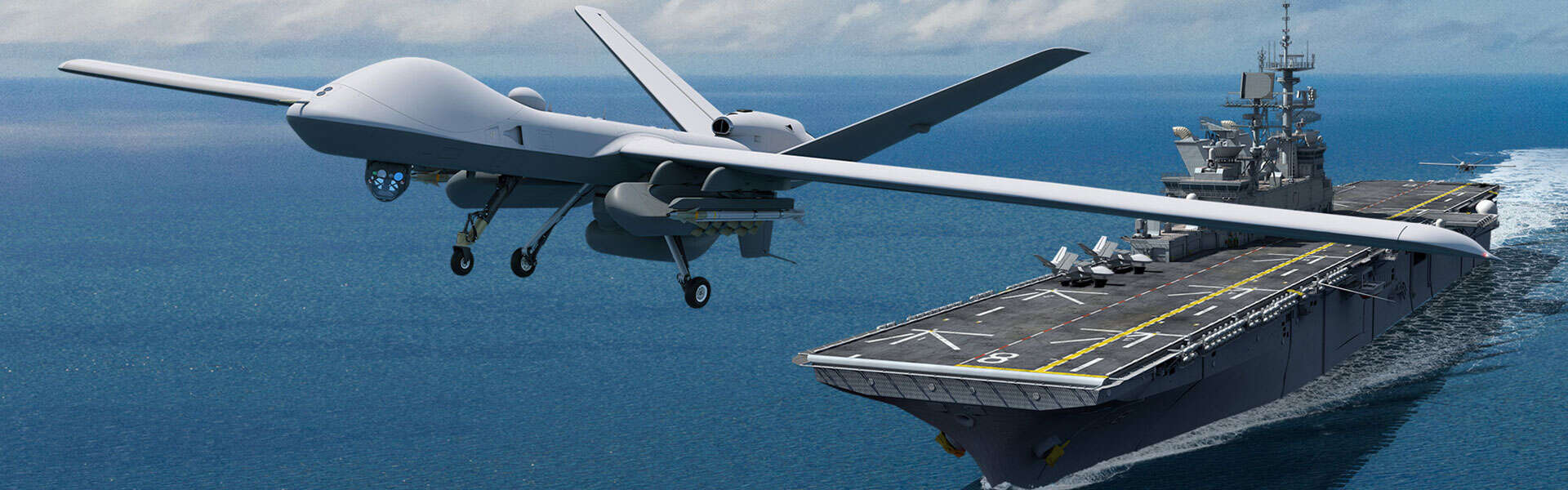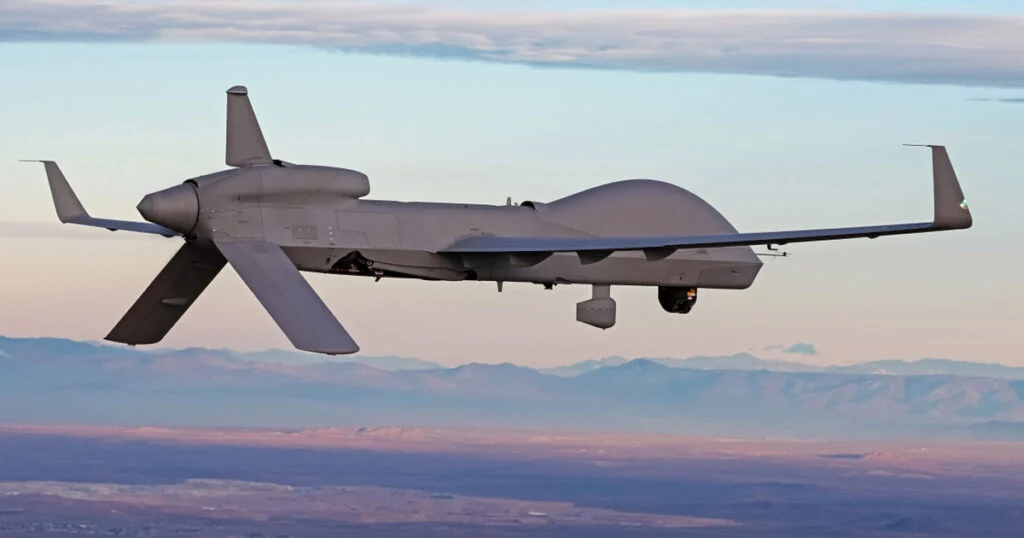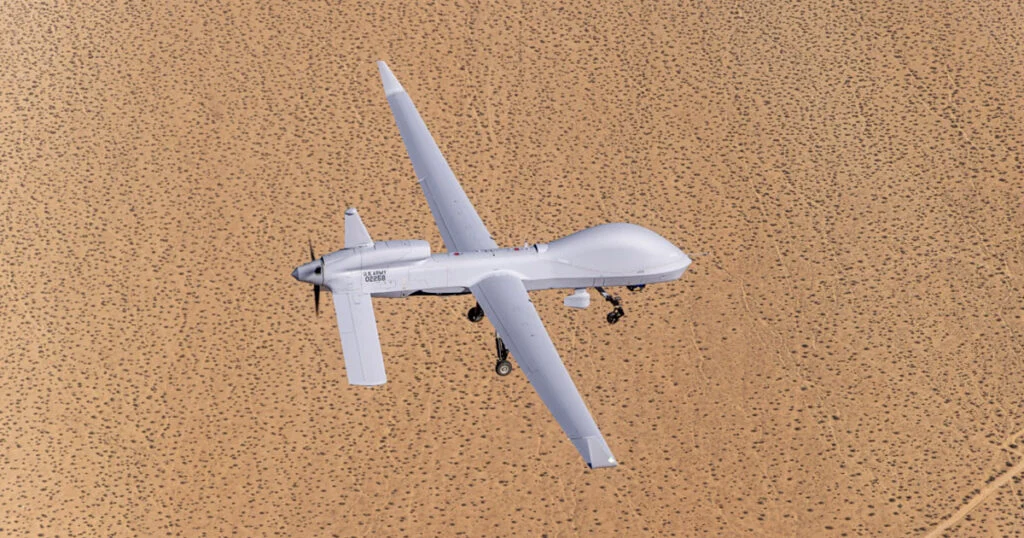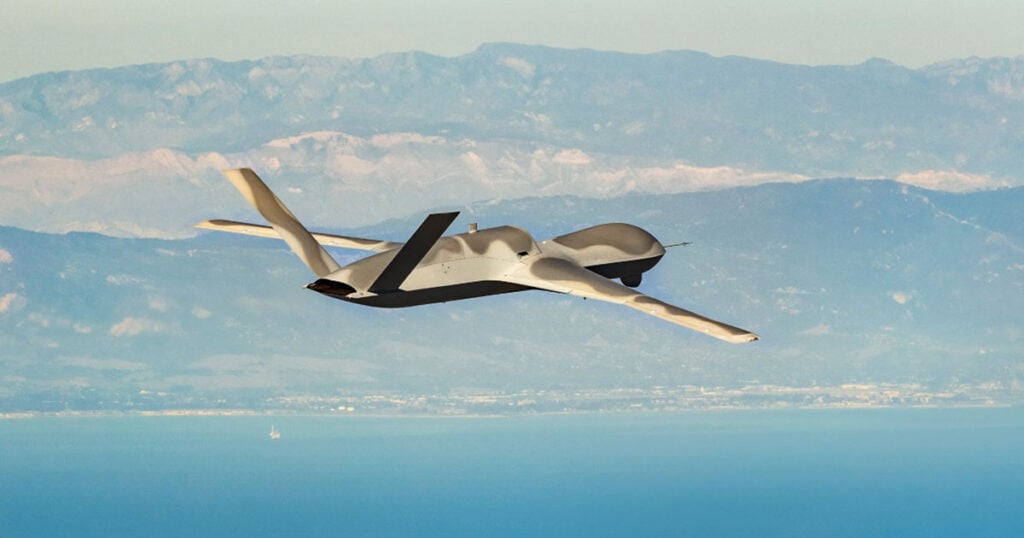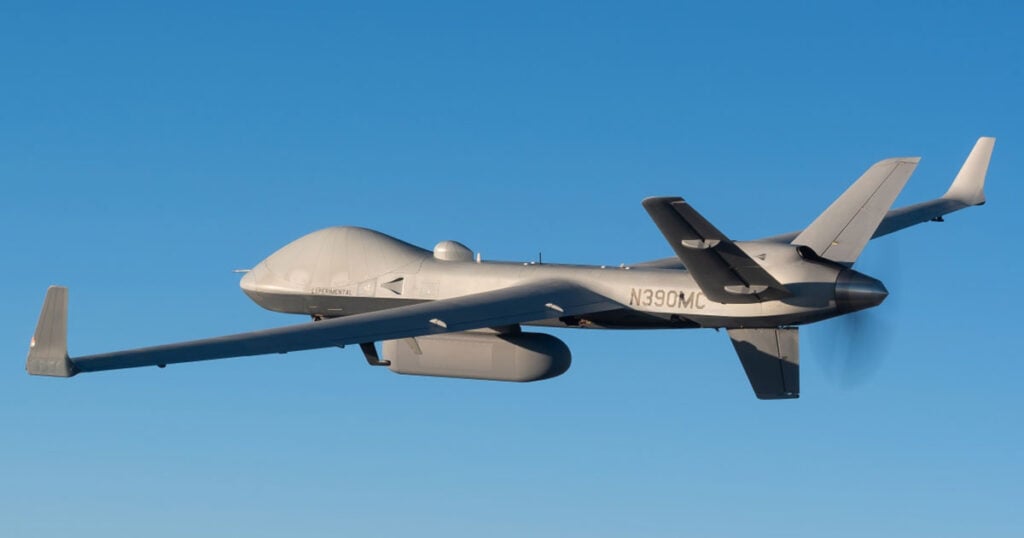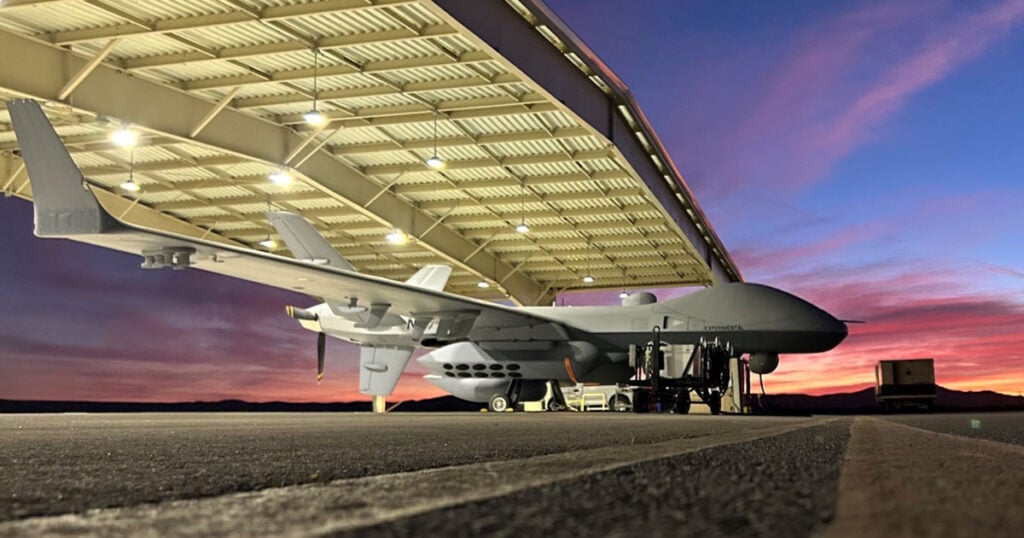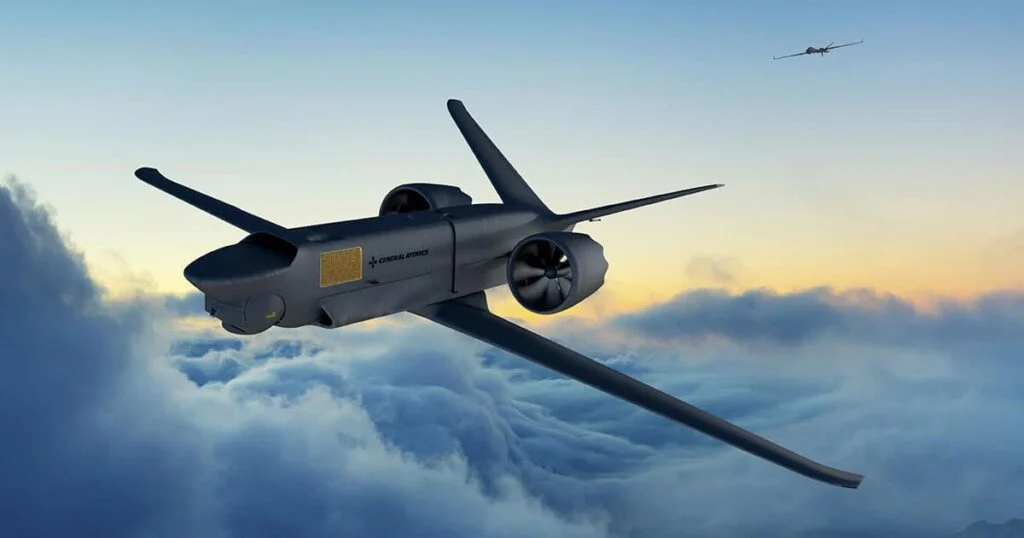
The Sparrowhawk is an advanced multi-mission, recoverable small UAS designed to be deployed from and retrieved by larger unmanned aircraft such as the MQ-9. Developed by GA-ASI, the Sparrowhawk extends the operational reach of remotely piloted aircraft by enabling expanded mission capabilities, collaborative autonomy, and distributed sensor networks across contested environments.
Unlike conventional sensor payloads, Sparrowhawk operates as an independent platform, executing surveillance, signals intelligence (SIGINT/ELINT), and electronic warfare missions before being retrieved in-flight by its host aircraft. This allows it to deliver actionable intelligence and operate as a force multiplier while maintaining low observability and survivability in highly contested areas.
Design and Deployment
Sparrowhawk is a compact and nimble SUAS, designed to be carried under the wing of a larger unmanned aircraft like the MQ-9, much like a sensor pod or external fuel tank. Once the host aircraft reaches an area of interest, Sparrowhawk is launched and begins independent operations, staying connected through secure communication links to provide real-time intelligence and electronic warfare support.
Its stealthy and low-altitude flight profile makes it difficult to detect, making it an ideal tool for penetrating adversary airspace while remaining attritable—designed for high-risk environments where recovery might not always be possible. However, when conditions permit, Sparrowhawk can rendezvous with its host aircraft, allowing it to be safely retrieved mid-air for redeployment or return to base.
Mission Capabilities
Sparrowhawk is engineered to provide multiple operational benefits, including:
- Expanded Mission Capability – Conducting ISR, SIGINT/ELINT, and jamming missions to support larger UAS platforms.
- Collaborative Autonomy – Operating as part of a distributed and networked UAV force.
- Disaggregated Sensors – Deploying multiple assets for wider situational awareness across the battlespace.
- Below-the-Weather Sensor Coverage – Flying beneath cloud cover for improved reconnaissance.
- Attritable Sensor Deployment – Providing cost-effective intelligence in contested airspace.
This force-multiplying approach enhances both offensive and defensive air operations by increasing survivability, reducing risk to human-operated assets, and providing persistent battlefield coverage.
Operational Concept
- Deployment – Sparrowhawk is mounted on the MQ-9’s wing station like a payload.
- Launch – The MQ-9 reaches the area of interest and releases Sparrowhawk mid-flight.
- Independent Operations – Sparrowhawk performs ISR, SIGINT, ELINT, or electronic warfare missions.
- Rendezvous & Recovery – If required, Sparrowhawk returns to the MQ-9, which retrieves it mid-air.
- Continued Mission – The MQ-9 can return to base or launch another Sparrowhawk from its second wing station.
By integrating launch-and-recovery capability, Sparrowhawk offers an innovative way to extend unmanned mission effectiveness without the need for additional ground infrastructure.