


Accelerate Defense Modernization through Strategic Sourcing
Discover cutting-edge solutions from leading global suppliers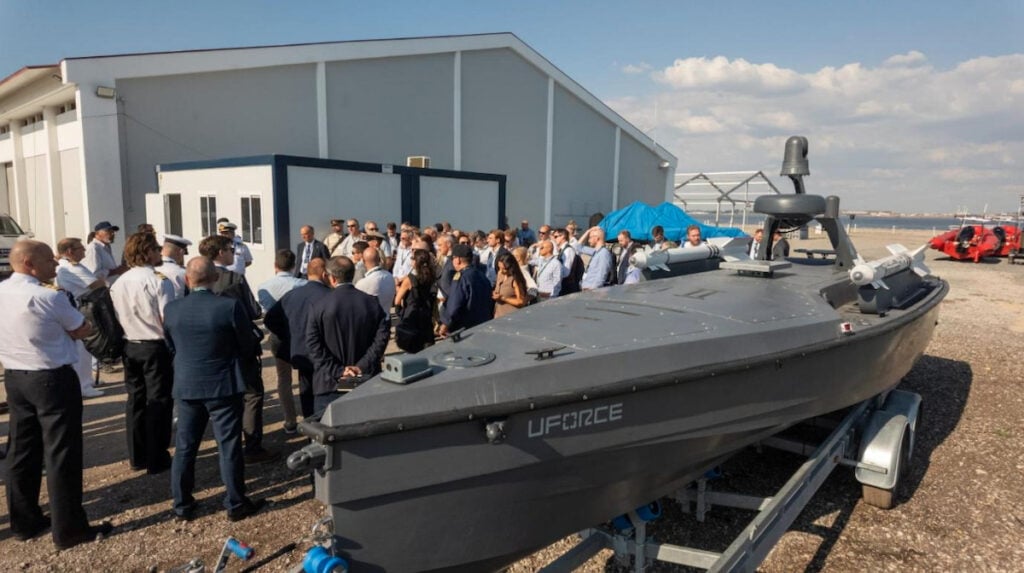
Maritime ISR 2026 will bring together naval, government, and industry stakeholders to examine how emerging technologies and operational approaches are shaping maritime awareness and surveillance.
The maritime operating environment is becoming increasingly complex. As grey zone activity intensifies, autonomous vessels become more capable, and the challenge of tracking non-cooperative or “dark” vessels grows, naval forces are looking beyond traditional surveillance methods to deliver persistent Intelligence, Surveillance, and Reconnaissance (ISR) across increasingly contested waters.
From protecting critical undersea infrastructure and monitoring strategic waterways to detecting anomalous vessel behavior and supporting maritime border security, the demand for persistent maritime awareness has never been greater. At the same time, the rapid growth of autonomous systems, AI-enabled analytics, and multi-domain sensor networks is fundamentally changing how maritime information is collected, fused, and exploited.
Shipborne UAVs are extending surveillance beyond the horizon. Uncrewed Surface Vessels (USVs) are increasing persistence across vast maritime areas. Autonomous underwater vehicles are enabling intelligence gathering and seabed monitoring in environments that are difficult, dangerous, or impossible for crewed platforms to access. Combined with advances in AI, data fusion, and interoperable command networks, these technologies are helping naval commanders build a faster, more complete operational picture while reducing the burden on limited resources.
As these capabilities mature, the challenge is no longer simply acquiring new technology. The priority is understanding how autonomous platforms, sensors, and emerging ISR capabilities can be integrated into operational fleets, multinational task groups, and future naval doctrine.
These challenges will form the foundation of discussions at Maritime ISR 2026, taking place on 13–14 October in Tróia, Portugal.
Bringing together senior naval commanders, coast guard organizations, government agencies, program managers, and technology innovators, the conference has been designed to examine how allied nations are strengthening maritime ISR to outpace evolving threats.
Delegates will gain exclusive program updates from senior naval leaders responsible for some of the world’s most important maritime ISR initiatives, including perspectives from the Royal Navy, United States Navy, and, for the first time, dedicated operational insight from Baltic and Northern European navies, including the Polish Navy, German Navy, and Norwegian Navy. These organizations are operating on one of NATO’s most strategically important maritime frontlines, offering first-hand perspectives on capability gaps, operational lessons, and future ISR requirements.
The programme will also explore how allied forces are operationalizing autonomous maritime ISR, integrating scalable uncrewed systems into naval operations, accelerating AI-enabled intelligence fusion, expanding space-based maritime surveillance, and strengthening the ability to detect and monitor grey zone activity across increasingly contested maritime environments.
Beyond the conference sessions, Maritime ISR 2026 introduces several important developments for 2026.
The conference will be held in association with REPMUS26, ensuring discussions are directly informed by NATO’s largest operational experimentation exercise for autonomous maritime systems. This unique connection provides delegates with insight into technologies, concepts, and operational lessons emerging from real experimentation rather than theoretical discussion alone.
Maritime ISR 2026 is also being co-located with Surface Warships, Seabed Security, and Uncrewed Naval Systems, creating a broader maritime capability forum where delegates can engage with stakeholders working across the surface, subsea, autonomous, and ISR communities under a single registration. This expanded format provides significantly greater opportunities for cross-domain collaboration, networking, and knowledge exchange than ever before.
One of the defining features of the event is the exclusive pre-conference visit to the Portuguese Navy Operational Experimentation Centre (CEOM).
Taking place immediately following REPMUS26, the visit gives attendees rare access to one of Europe’s leading facilities for maritime operational experimentation. Rather than viewing static displays or exhibition stands, delegates will experience live operational demonstrations of Uncrewed Underwater Vehicles (UUVs), USVs, and Uncrewed Aerial Systems (UAS) as they are employed within realistic maritime scenarios.
Attendees will also hear directly from the Portuguese Navy on key lessons emerging from REPMUS26, including the operational integration of autonomous systems, ISR technologies, AI-enabled capabilities, and multi-domain experimentation. For organizations developing uncrewed platforms, sensors, payloads, communications technologies, and maritime ISR solutions, the CEOM visit provides an exceptional opportunity to observe emerging capabilities in action while engaging directly with the operational community evaluating and employing them.
As maritime threats continue to evolve, closer collaboration between navies, coast guards, government organizations, and industry will be essential to maintaining maritime awareness and operational advantage. Maritime ISR 2026 has been designed to facilitate those conversations, connecting the organizations responsible for developing the next generation of maritime ISR capability with the technology providers helping to deliver it.
To learn more about Maritime ISR 2026, download the agenda or contact the Defence iQ team at [email protected] to discuss attending, speaking, exhibiting, or partnership opportunities.
Maritime ISR 2026 is part of Defence iQ’s four co-located maritime conferences, delivered in association with REPMUS26, providing access to Maritime ISR, Surface Warships, Seabed Security, and Uncrewed Naval Systems through a single delegate pass.