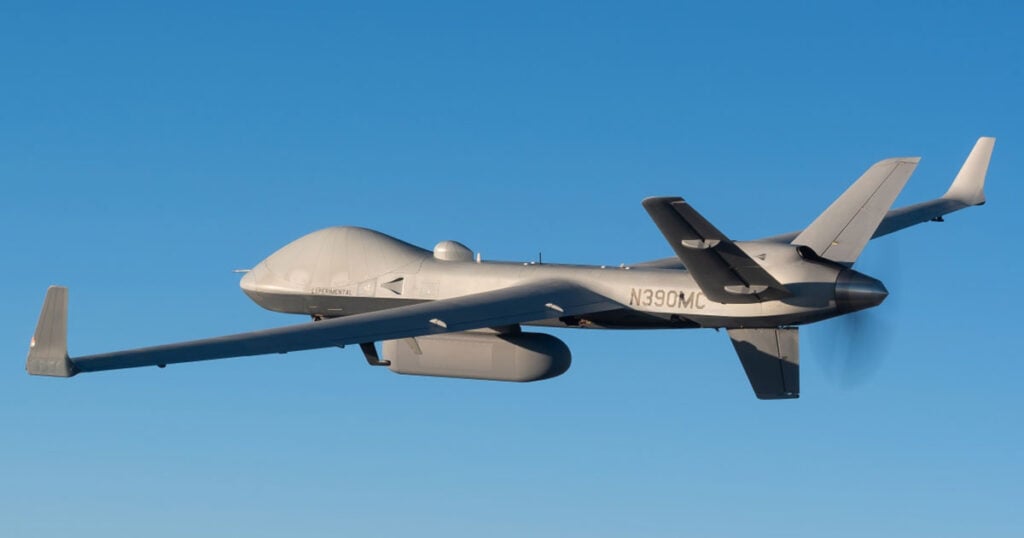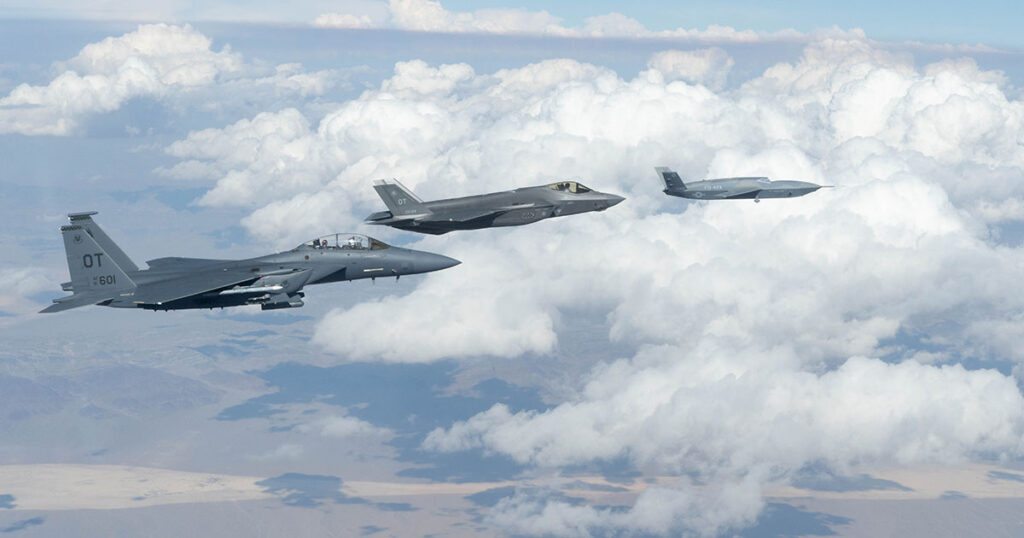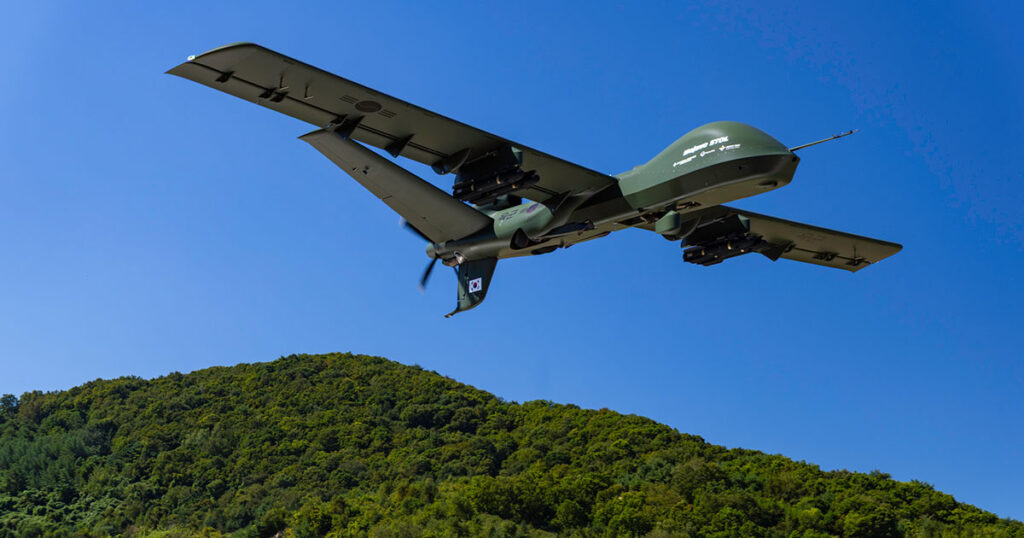



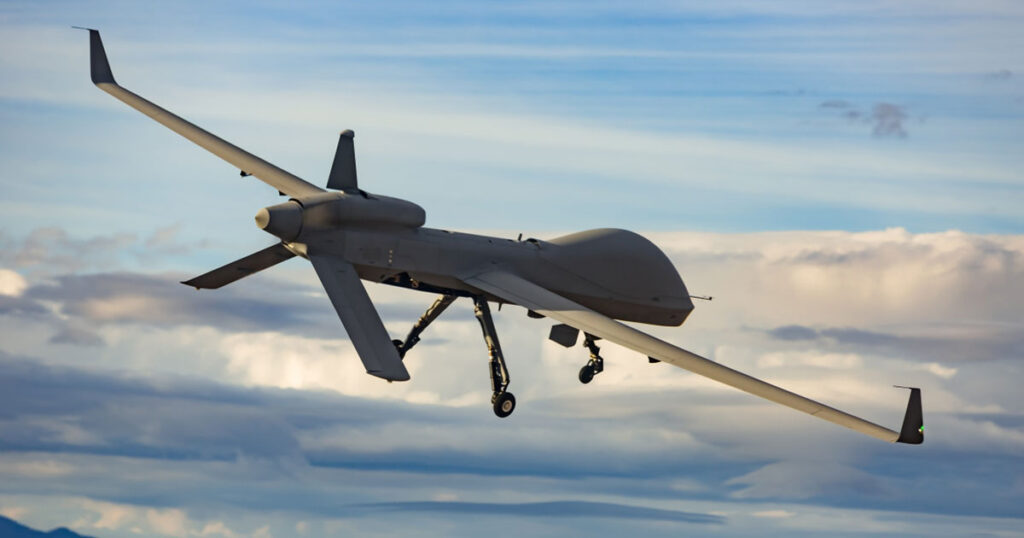
General Atomics Aeronautical Systems, Inc. (GA-ASI) has conducted its first flight test series of the Gray Eagle Extended Range (GE-ER) Unmanned Aircraft System (UAS) using a Proliferated Low Earth Orbit (PLEO) satellite constellation for aircraft communications.
Contracted by the U.S. Army, the flight tests began in January 2025 and mark a significant milestone, making GE-ER the first U.S. Army aircraft to be controlled over the new satellite service. Gray Eagle is also the only U.S. Army UAS capable of leveraging Geostationary Earth Orbit (GEO), Low Earth Orbit (LEO) and PLEO constellations for secure, inflight adaptable and resilient communication, navigation and data management.
The initial testing focused on flight-critical operations, including core aircraft control functions as well as sensor and communications systems. To date, GA-ASI has conducted two GE-ER flights and a series of ground test events using PLEO. Future flight testing is in the planning stages and includes operations across the full flight regime.
Modular Open Systems Approach (MOSA)
The Gray Eagle family of UAS is built on a Modular Open Systems Approach (MOSA) design that includes standardized interfaces and protocols. This approach has enabled rapid integration of the PLEO constellation and other significant capabilities without major technical efforts or extended timelines for integration and testing so new capabilities can be fielded faster.
“The PLEO integration and flight testing continue to show that the current GE-ER open architecture is real. We are practicing rapid integration now which will prove critical to the platform’s survivability and mission success in Multi-Domain Operations,” said GA-ASI Vice President of Army Programs Don Cattell.
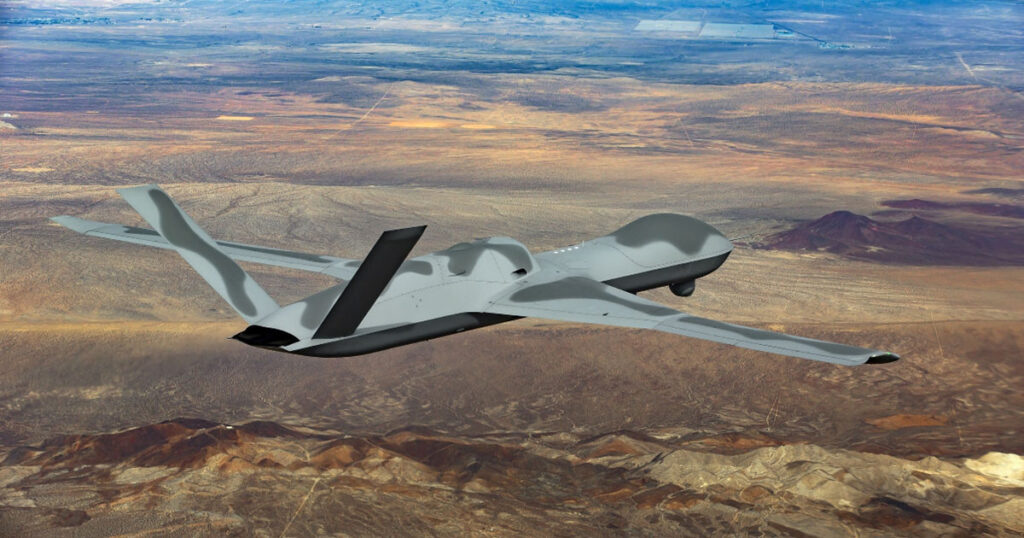
Building on the GE-ER, the Gray Eagle 25M (GE 25M), takes MOSA to the next level with a government-owned, government-controlled open architecture that enables plug-and-play capabilities to ensure the platform’s rapid, low-cost adaptability to changing threats. GE 25M incorporates open architecture with ground systems, advanced and modular datalinks, and an upgraded propulsion system. These powerful additions significantly enhance the platform’s ability to rapidly add new capabilities, provide resilience to electronic threats, and deliver expeditionary employment to austere locations. PLEO will be a baseline capability for the 25M system.
The PLEO capability for the GE 25M is just one of several features of the system that maximizes the survivability of the platform. It also provides a low-cost opportunity to drastically increase the operational flexibility of both the Gray Eagle ER and Gray Eagle 25M.
The 25M’s MOSA architecture enables use of the higher data rates available on the PLEO system and supports flight operations across the globe from pole to pole. These capabilities, combined with longer-range sensors, anti-jam navigation, and expeditionary ground control systems allow the Gray Eagles to operate outside the threat weapons envelope, but deliver effects hundreds of kilometers beyond the Forward Line of Own Troops, making GE 25M one of the most survivable aircraft in the Army inventory