


Accelerate Defense Modernization through Strategic Sourcing
Discover cutting-edge solutions from leading global suppliers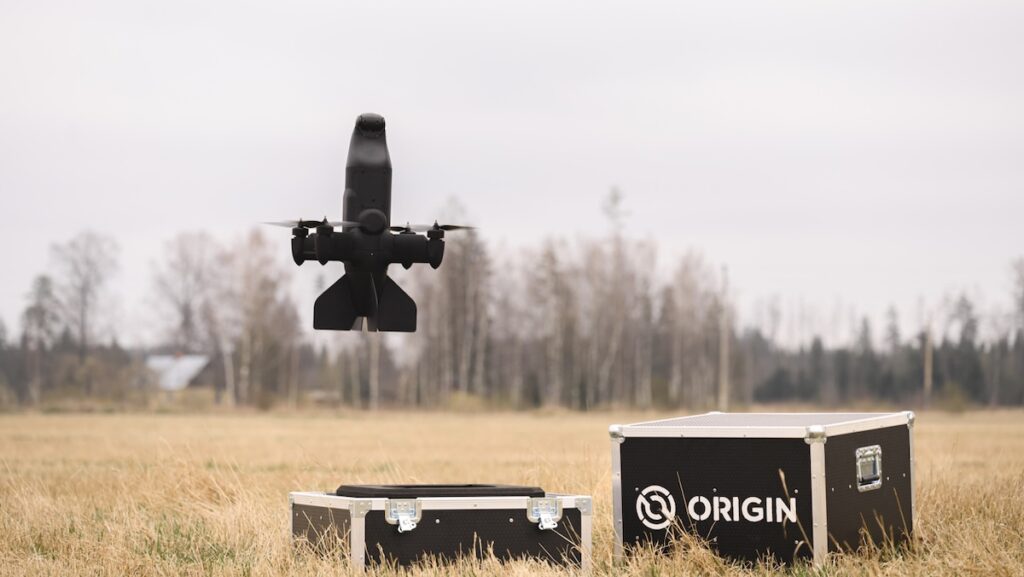
ORIGIN and the Military Institute of Armament Technology (WITU) are introducing the BLAZE autonomous counter-drone interceptor at MSPO 2026 with the latest version of a directional fragmentation warhead developed specifically for the platform.
Engineered by WITU specifically for BLAZE and the demands of modern counter-drone operations, the module combines a focused effect against aerial targets with multiple layers of mechanical, electronic and software-controlled safety. The warhead carries a NATO stock number, making BLAZE the first NATO-codified interceptor drone available with a STANAG-compliant warhead module.
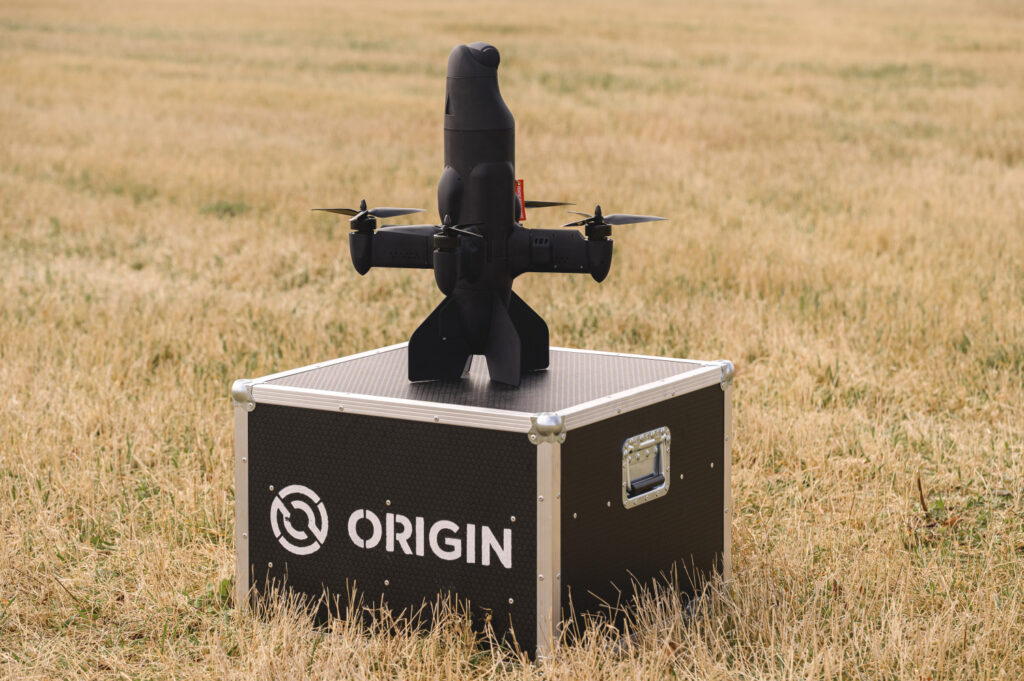
The BLAZE warhead is a compact directional high-explosive fragmentation module built specifically for intercepting unmanned aerial threats. Weighing 700 grams, it directs a concentrated pattern of high-velocity steel fragments towards the target while keeping the interceptor light and agile. Rather than adapting an existing munition, WITU engineered the warhead from the outset as an integral part of BLAZE.
WITU also designed and built the Electronic Safe and Arm Device (ESAD), which governs how and when the warhead activates. The explosive charge, directional fragmentation package, electronically controlled fuze and mechanical safety mechanisms are combined within a single precision-engineered module.
The warhead remains safely disarmed until defined flight conditions are met, can be armed and disarmed repeatedly in flight, and automatically returns to a safe state if an engagement is cancelled, allowing BLAZE to return and land. It initiates at a precisely controlled moment during the terminal intercept.
Col. Piotr Rulińki, Head of the Center for Ballistics and Unmanned Systems at the Military Institute of Armament Technology (WITU), said, “The ESAD we built for ORIGIN’s BLAZE meets the same safety and standardisation requirements we apply across our work for the Polish armed forces. We designed it from the ground up for counter-drone engagements, with the safety and control features that mission demands. Partnering with ORIGIN lets our expertise support allied NATO forces, which is a good example of how Polish and Baltic industry can build on each other’s strengths.”
Beyond the WITU partnership, ORIGIN has partnered with several electronics manufacturers with operations across Europe to scale up production of BLAZE interceptors to meet growing demand from NATO countries. In line with the interceptor’s modular design, this allows end users to take on a larger share of their own supply chain where that suits their procurement needs.
The BLAZE interceptor is being showcased at WITU’s stand, booth 2-E08, at MSPO in Kielce, Poland, from 8 to 11 September 2026.