Accelerate Defense Modernization through Strategic Sourcing
Discover cutting-edge solutions from leading global suppliers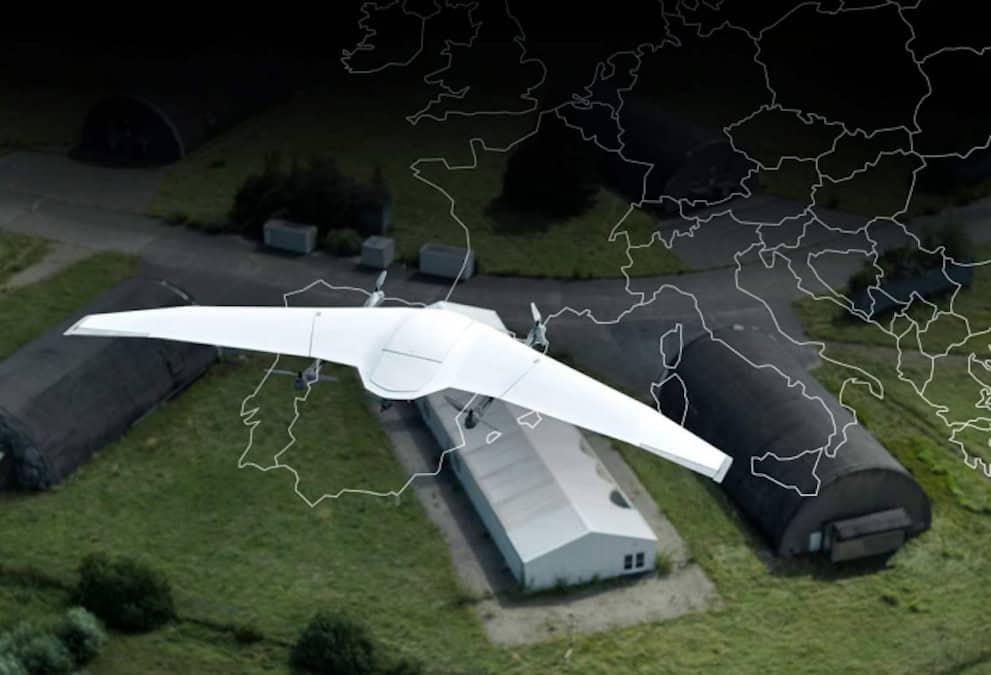
Alpine Eagle outlines the need to incorporate an airborne Counter-Unmanned Aerial System (C-UAS) capability into NATO’s Eastern Shield, a multi-layer defensive architecture extending from the High North to the Black Sea. Read more >>
While the Shield’s fixed radar network forms a strong drone detection backbone, it remains vulnerable to low-altitude, low-cost, and high-volume drone and loitering munitions that exploit terrain and sensor gaps.
Alpine Eagle highlights that reliance on expensive interceptors, missiles, and fixed radars in C-UAS operations creates cost imbalances and operational blind spots across forests, littoral zones, and mountainous areas.
The paper emphasizes that these vulnerabilities enable adversaries to employ drones, such as small rotary-wing UAVs, fixed-wing ISR drones, and Shahed-class strike drones, for reconnaissance, suppression, precision attacks, and logistic interdiction across the phases of peacetime, crisis, and, conflict, including grey-zone operations.
Existing ground-based radar systems detect small radar cross-section targets only at short ranges, providing limited warning time for interception. This restricted coverage and lack of scalability have made legacy systems inadequate against swarming and high-tempo drone incursions.
To address these limitations, Alpine Eagle proposes a layered C-UAS approach that combines fixed and airborne radar, automated triage through NATO-integrated C2 systems, and a scalable interception framework incorporating electronic warfare, jamming, spoofing, directed-energy disruption, interceptor UAVs, surface-to-air missiles (SAMs), and close-in weapon systems (CIWS).
Integrating airborne radar and interceptor platforms with NATO’s fixed radar network could create a coherent, layered ‘detect-decide-defeat’ framework. Ground-based sensors would form the surveillance backbone, whilst airborne assets extend coverage and engage threats that breach the first line. Shared C2 systems enable rapid validation, cross-border coordination, and automated triage, deploying the lowest-cost effective response.
This could establish a mobile, persistent, and affordable layer, closing detection and defeating gaps, integrating across borders, and scaling to meet diverse threats. Airborne radar is positioned as a complement, not a competitor, to ground-based radar systems.
The article concludes that together these elements could form a scalable, adaptive shield along NATO’s entire eastern frontier, ensuring that no single layer bears the full burden of countering the evolving drone threat.
To find out more information, read ‘Building Counter-UAS into NATO’s Eastern Shield’ here >>