Showcase your capabilities
If you design, build or supply Border Security USVs, create a profile to showcase your capabilities and connect with visitors who have an active requirement for your solutions.




Locate manufacturers and suppliers of border security USVs delivering systems for persistent maritime surveillance, ISR operations, and border patrol deployment. Platforms are engineered for contested environments and meet mission requirements across coastal, littoral, and offshore operational environments. Integrated sensors, navigation systems, and secure communication architectures enable reliable deployment and ISR performance.
Read the Technology Overview
Crewed & Uncrewed Vessels for Naval Defense, Coast Guard & Humanitarian Missions

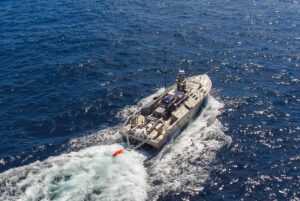
Cutting-Edge Defense Technologies Empowering The Warfighter On The Modern Battlefield

If you design, build or supply Border Security USVs, create a profile to showcase your capabilities and connect with visitors who have an active requirement for your solutions.

Border security USV systems are unmanned surface vehicles designed to support ISR operations, maritime domain awareness, and persistent border surveillance across complex operational environments. These platforms integrate sensor payloads, navigation systems, and command-and-control systems to deliver continuous monitoring capabilities while reducing personnel exposure in contested environments.
A border security USV combines autonomous control, propulsion, and multi-domain communication systems to execute patrol, detection, and interdiction support missions. Platforms are optimized for deployment scenarios ranging from harbor protection and port security to extended maritime border patrol operations within exclusive economic zones.
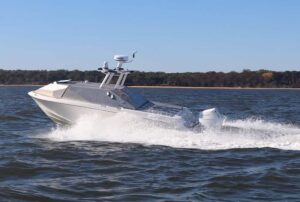
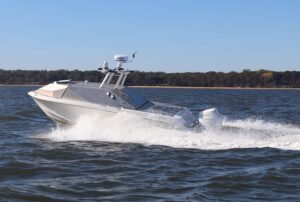
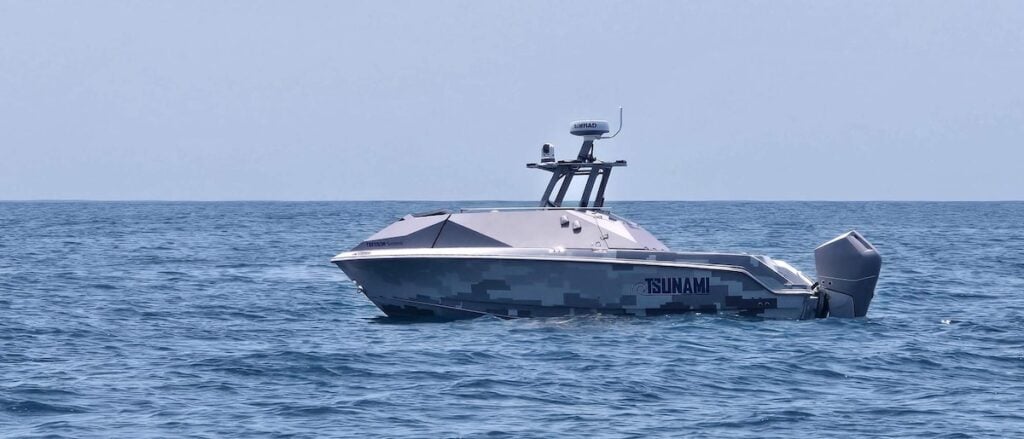
TSUNAMI™, fully autonomous attritable USVs for naval operations, from Textron Systems
Border security USVs support persistent ISR operations across maritime borders, enabling continuous monitoring of illegal crossings, smuggling routes, and unauthorized vessel activity. Platforms operate autonomously or as part of coordinated ISR systems to enhance maritime domain awareness.
USVs are deployed for port security and harbor protection, providing stand-off surveillance and infrastructure security coverage. Integration with radar and camera systems enables intrusion detection and supports force protection for high-value maritime assets.
Border security unmanned surface vehicles provide real-time tracking and cueing for maritime interdiction operations. Data link systems and command-and-control systems enable coordinated response between manned and unmanned assets.
USVs support infrastructure protection for offshore platforms, coastal installations, and energy assets. Persistent surveillance and sensor fusion enable early threat detection and response in contested environments.
Platforms contribute to maritime domain awareness by integrating AIS, radar, and sensor suites to deliver a comprehensive operational picture. This supports decision-making across ISR missions and border patrol operations.
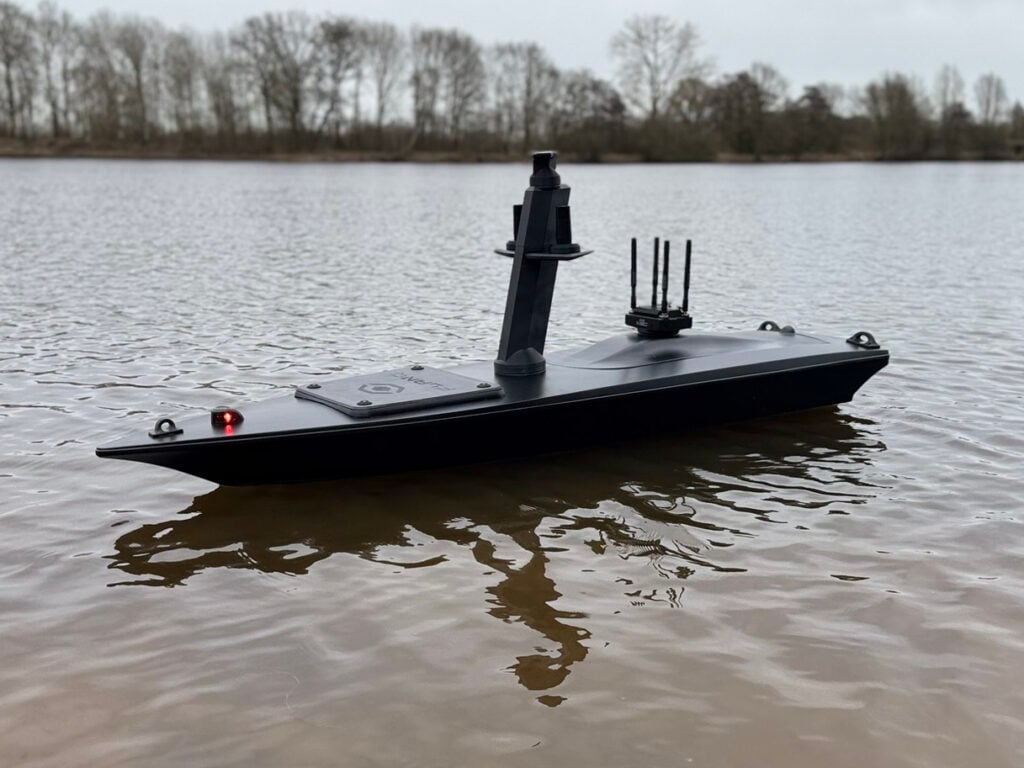
Small USVs are optimized for short-range border surveillance and harbor protection missions. These platforms prioritize low SWaP profiles, rapid deployment, and high maneuverability in constrained operational environments.
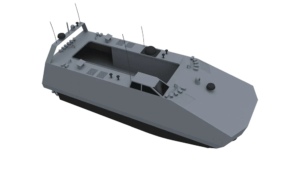
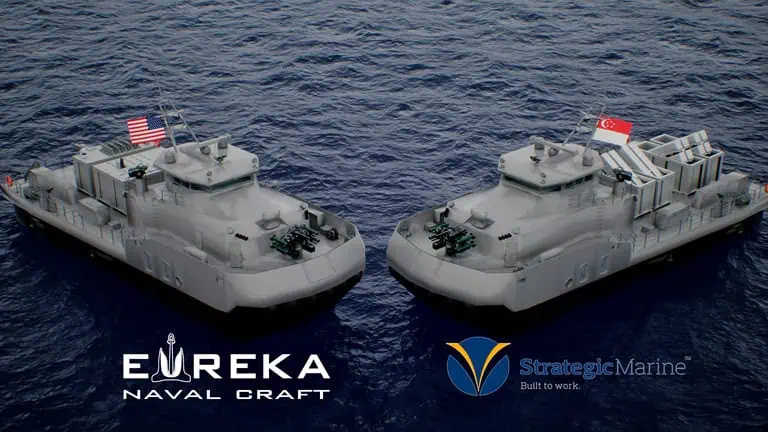
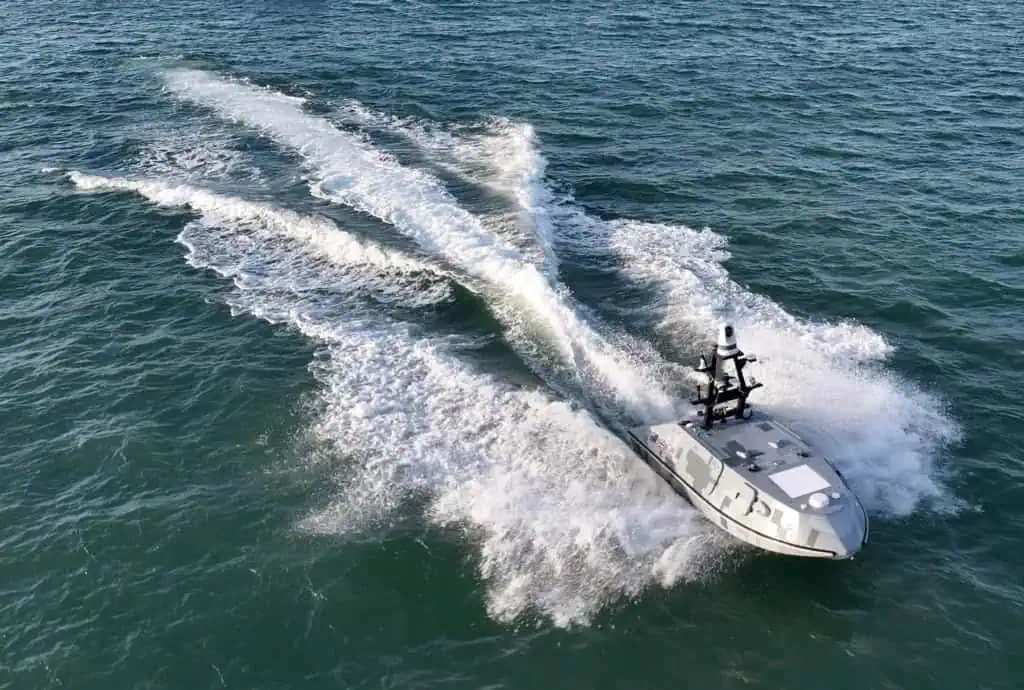
AIRCAT Panther, an autonomous surface vessel for defense operations, by Eureka Naval Craft
Medium USVs provide extended endurance and increased payload capacity for ISR missions and maritime surveillance. They support the integration of multiple sensor systems and communication systems for multi-mission deployment scenarios.
Large USVs are designed for long-endurance maritime border-security operations in offshore environments. These platforms support complex mission systems, advanced propulsion systems, and extended-range satellite communication.
Border security unmanned surface vehicles are built around modular mission systems that enable rapid adaptation to evolving mission requirements. Core subsystems include ISR payloads, navigation and positioning technologies, communication links, and onboard processing units.
Sensor suites typically integrate radar, lidar, sonar, and electro-optical systems to provide layered detection capabilities. Camera systems and infrared sensor technologies support identification and tracking in low-visibility conditions, enabling effective border surveillance and maritime reconnaissance.
Navigation system performance is driven by GNSS, inertial navigation systems, and autopilot systems, ensuring precise route execution and station keeping. These systems enable reliable operation in denied or degraded environments where GNSS disruption may occur.
Communication system architecture includes satellite communication, radio communication systems, and secure data link systems to maintain connectivity with command-and-control systems. This ensures real-time ISR data transfer and coordinated response during ISR missions and maritime interdiction operations.
Propulsion systems range from diesel to electric and hybrid systems, balancing endurance, acoustic signature, and fuel efficiency. Energy storage systems and battery systems support extended mission duration and low-observable operation profiles.
Border security USVs complement manned patrol vessels by extending ISR coverage without increasing crew risk in contested environments. Compared to aerial ISR platforms, USVs provide persistent surface-level monitoring with lower operational cost and extended dwell time.
Compared with fixed coastal surveillance systems, unmanned surface vehicles offer greater mobility and adaptability for deployment in dynamic operational environments. This enables coverage of gaps in coastal monitoring infrastructure and supports responsive mission execution.
Border security USV systems are developed in alignment with defense and maritime standards to ensure interoperability and mission readiness. Relevant frameworks include MIL-STD requirements for environmental durability, STANAG protocols for communication and interoperability, and ISO standards for maritime safety and system reliability.
Compliance with command-and-control systems integration standards ensures seamless operation within broader C4ISR architectures. This enables coordinated ISR operations, secure data exchange, and effective deployment across joint and coalition forces.
System integration is critical to achieving mission effectiveness in USV deployments for border security. Platforms must align with existing ISR, command-and-control, and communication system architectures to ensure operational continuity.
Key considerations include sensor compatibility, data link interoperability, navigation system resilience, and propulsion system performance under varying environmental conditions. Deployment scenarios must account for contested environments, including electronic warfare threats and GNSS denial.
Border security USVs are increasingly deployed as part of multi-layered defense strategies, integrating with aerial ISR platforms, coastal surveillance systems, and manned assets to deliver comprehensive maritime security coverage.


 Searching Companies & Products