Unmanned Surface Vehicles
Discover cutting-edge solutions from leading global suppliers
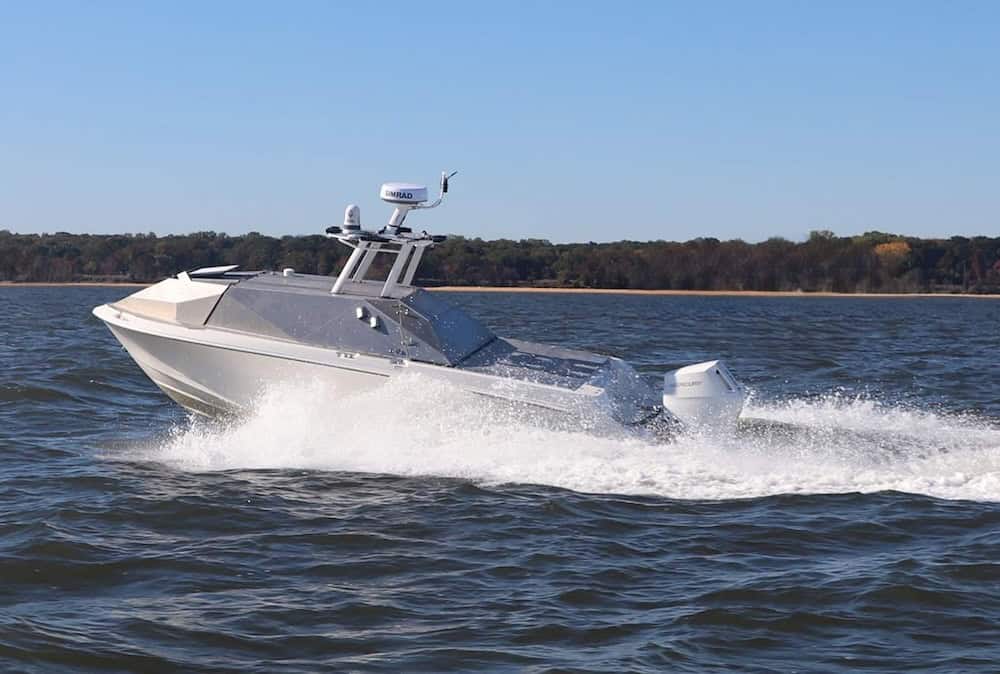
HII has reached the 30% construction milestone on its ROMULUS Unmanned Surface Vessel (USV) prototype, which remains on schedule for sea trials in the fourth quarter of 2026.
To mark the milestone, HII executives recently visited the Breaux Brothers Enterprises shipyard in Loreauville, Louisiana, alongside partners from Incat Crowther to review progress on hull construction and the integration of HII’s Odyssey Autonomous Control System (ACS).
The ROMULUS platform is designed as a modular, AI-enabled family of vessels intended to meet the requirements of the U.S. Navy, Marine Corps, and joint forces. These vessels prioritize high endurance, open-ocean autonomy, and scalability to support distributed maritime operations.
Andy Green, President of HII’s Mission Technologies division, commented, “ROMULUS is progressing at a pace that reflects the urgency of the mission and the strength of our partnerships.Breaux Brothers and our industry team are delivering a platform that brings scale, autonomy and real operational advantage to the fleet. At 30% complete, the ROMULUS prototype is well on its way to becoming the benchmark for unmanned surface capability.”
The vessel is engineered for a range of 2,500 nautical miles and speeds exceeding 25 knots. Its mission profile is diverse, covering intelligence, surveillance and reconnaissance, mine countermeasures, strike operations, and the launch and recovery of both underwater and aerial unmanned vehicles. By pairing the USV with HII’s REMUS Unmanned Underwater Vehicles (UUVs), the system creates a dual-domain force package that extends undersea reach.
At the core of the platform is the Odyssey ACS, an autonomy suite already utilized across 35 USV platforms and 750 UUVs globally. This system enables multi-agent swarming and manned-unmanned teaming. To enhance performance and lifecycle sustainment, the ROMULUS platforms also incorporate integrated capabilities from Shield AI, Applied Intuition, and C3 AI.
The software architecture of the Odyssey suite is government-aligned and open-access, allowing for the rapid integration of third-party technologies and sensors. This design ensures the platform can evolve alongside emerging naval concepts. In a recent development in November, HII and Shield AI successfully completed the first major test of their integrated autonomy solution on a ROMULUS 20 vessel, representing a significant step toward the operational deployment of the AI-enabled fleet.
Development of the ROMULUS line is supported by HII’s Dark Sea Labs Advanced Technology Group, focusing on a design that allows for rapid and repeatable production to meet global theater demands.