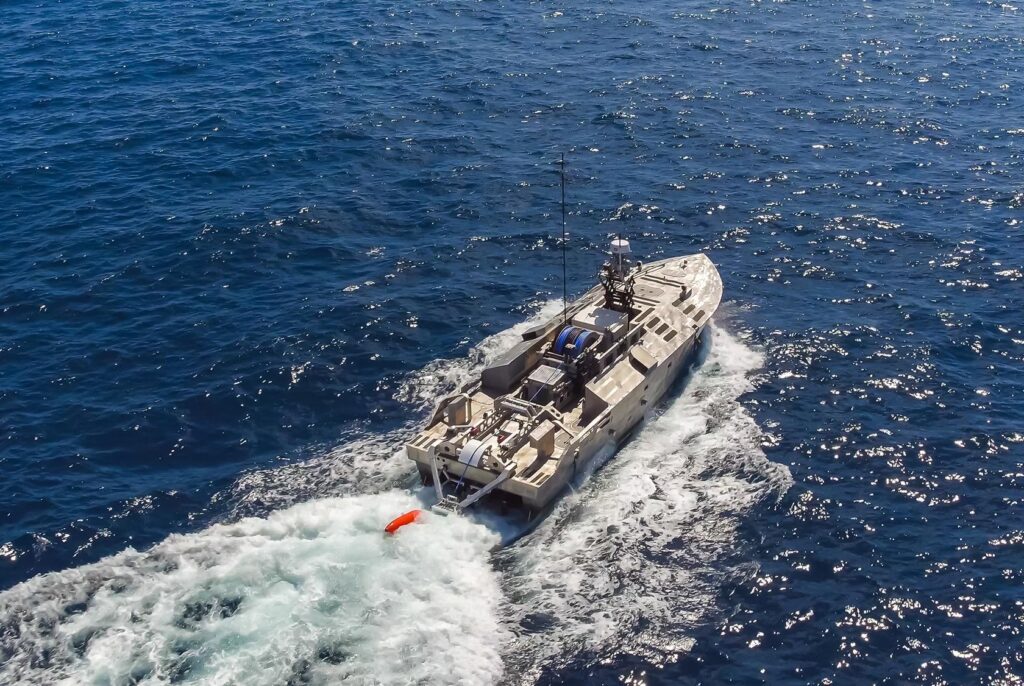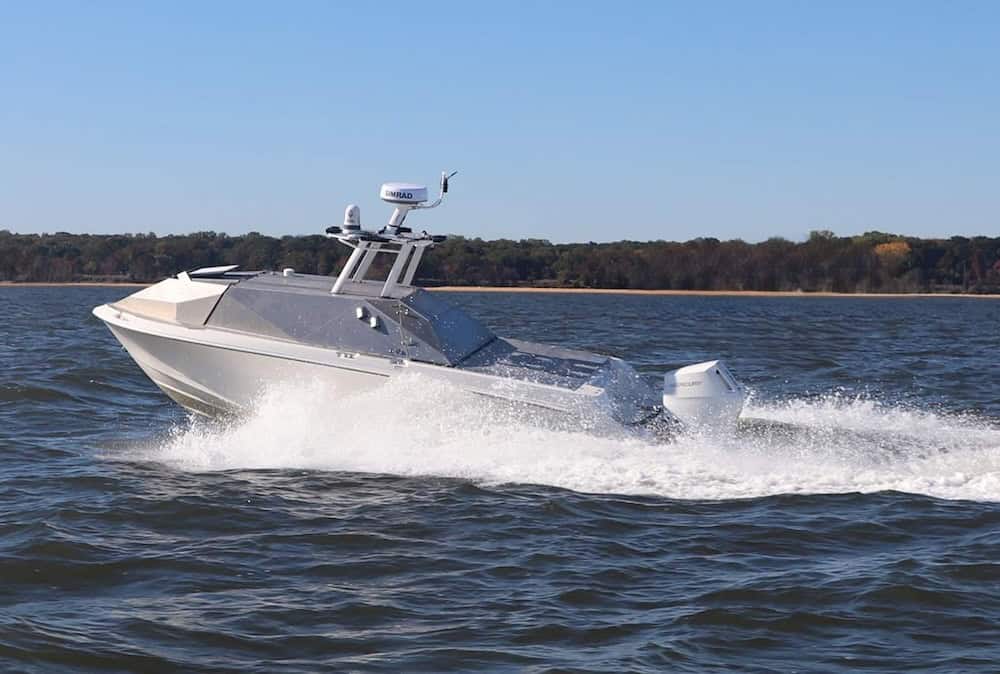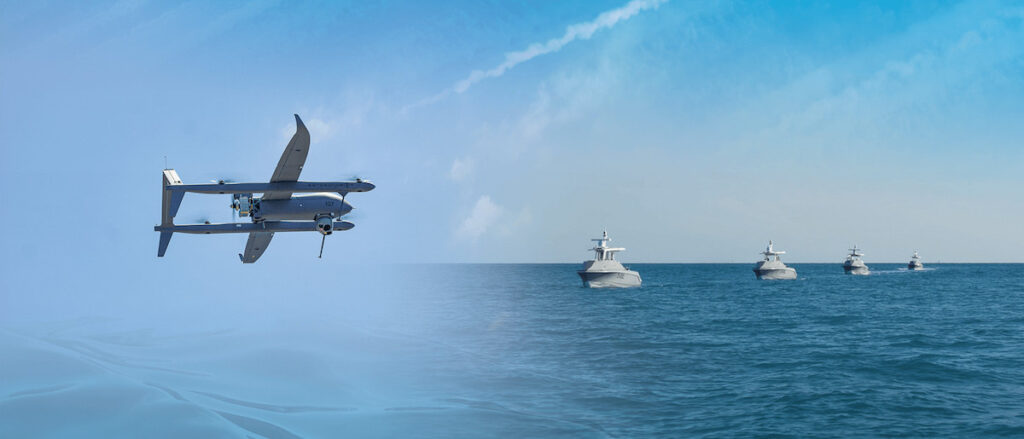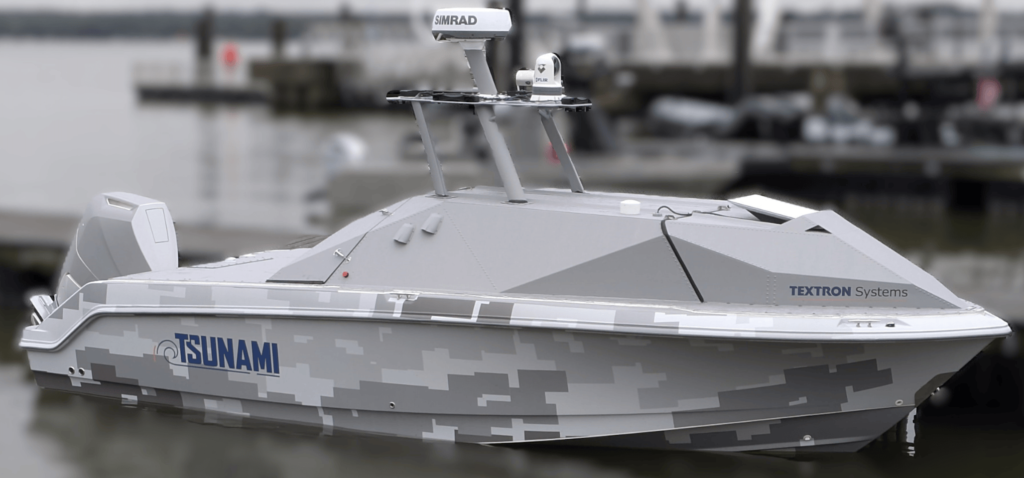
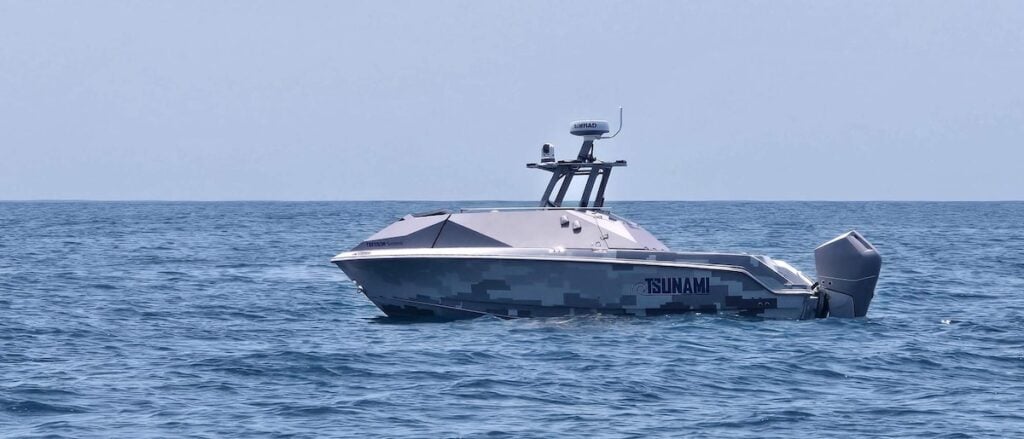
Textron Systems showcased the advanced manned-unmanned teaming capabilities of its autonomous TSUNAMI™ vehicle during the FLEX25 Hybrid Fleet Campaign Event in El Salvador.
During FLEX25, the company supported the U.S. Southern Command (SOCOM) and operated with regional partners, such as the El Salvadorian Navy, to display the operational readiness of innovative unmanned platforms in real-world maritime scenarios.
TSUNAMI is an unmanned surface vehicle (USV) designed to be scalable and affordable, supporting diverse mission profiles such as maritime interdiction, intelligence gathering, and ongoing surveillance. The FLEX25 demonstration specifically highlighted efforts to counter persistent drug trafficking challenges, an area where TSUNAMI plays a critical role.
TSUNAMI was tasked with intercepting a high-speed narcotics boat, guided by leveraging intelligence relayed from an airborne Textron Aviation Beechcraft King Air aircraft equipped with advanced radar systems.
TSUNAMI Capabilities and Successes Demonstrated in Scenario
The USV’s real time capabilities were showcased, such as the vessel’s proficiency in receiving, processing, and acting upon remote data cues, to swiftly and autonomously engage the target vessel.
The smooth data transfer and coordinated engagement reinforced the potential of manned-unmanned teaming, with the King Air’s crew directing high-level surveillance as TSUNAMI and El Salvadorian Navy executed a joint MUM-T intercept on the water.
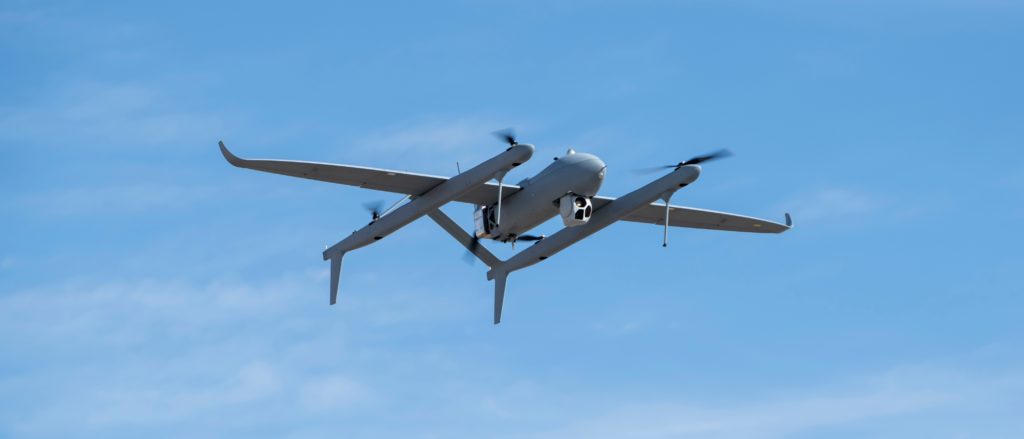
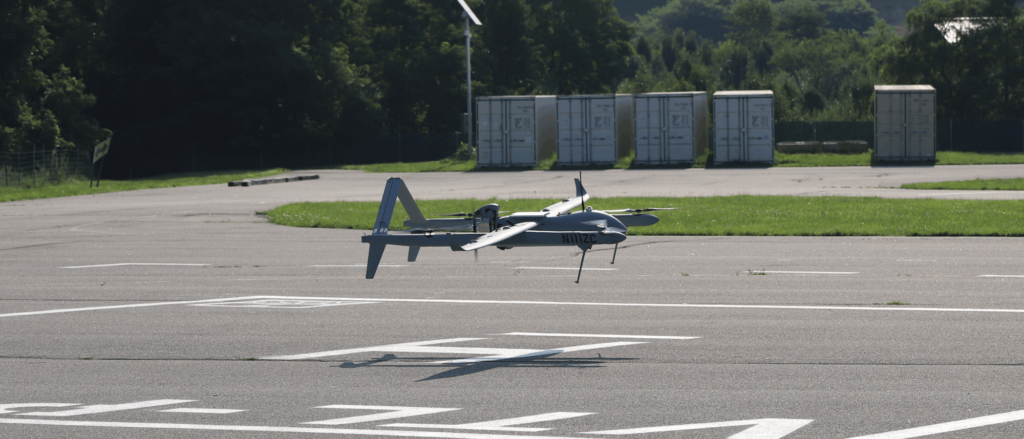
TSUNAMI also operated alongside other unmanned platforms to share surveillance and autonomously target information. This highlights the force-multiplier effect by integrating advanced autonomous systems which allows for greater coverage and improved response times in complex environments.
The vessel exhibited effective interoperability across air and maritime domains and with Textron’s use of high-fidelity radar data, secure communication links, and sophisticated mission autonomy, its solution brings greater intelligence, speed, and accuracy to counter-narcotics missions.
This exhibition reiterated capabilities unmanned systems supply across mission sets, such as extended surveillance ranges, reduced operational risk to personnel, and increased interception rates against agile adversaries.
With the maritime operational landscape evolving and an increasing complexity of security challenges, Textron’s capabilities intend to provide decisive advantages in maritime environments.