Unmanned Surface Vehicles (USV) for Defense, Security, and Emergency Services Operators
Category Presented by
Source unmanned surface vehicles from leading manufacturers and suppliers supporting defense, security, emergency services, and broader government maritime operations. USVs provide scalable maritime capability for ISR, force protection, mine countermeasures, and maritime domain awareness. Designed for integration with naval and government command-and-control systems, USVs deliver persistent surveillance, reduced operational risk, and lower lifecycle costs across contested and complex maritime environments.
If you design, build or supply Unmanned Surface Vehicles, create a profile to showcase your capabilities and connect with visitors who have an active requirement for your solutions.
Unmanned Surface Vehicles (USV) for Defense, Security, and Emergency Services Operators
Overview by
Sarah Simpson
Updated:
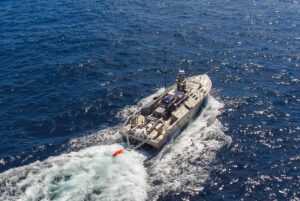
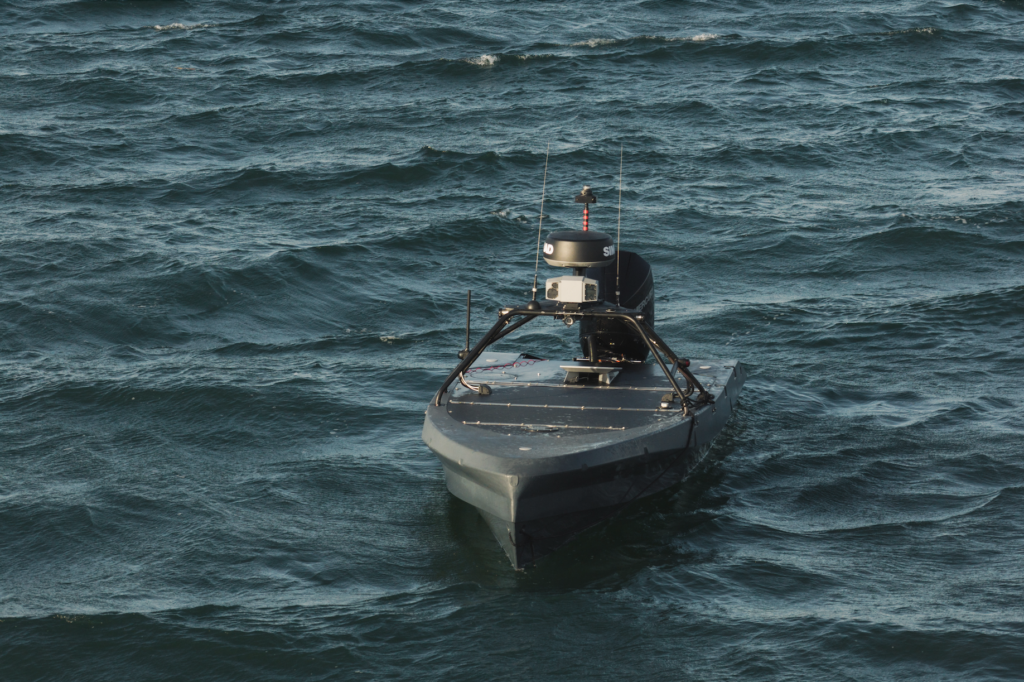
Unmanned surface vehicles operate without onboard crew using remote, supervised autonomous, or fully autonomous navigation systems. Platforms integrate diesel, electric, or hybrid propulsion with GNSS/GPS and inertial navigation systems, supported by radar, sonar, electro-optical, infrared, lidar, and signals intelligence payloads.
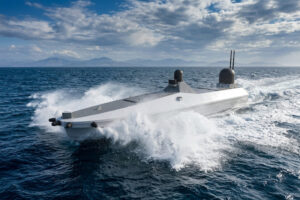
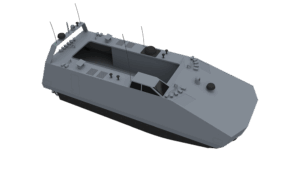
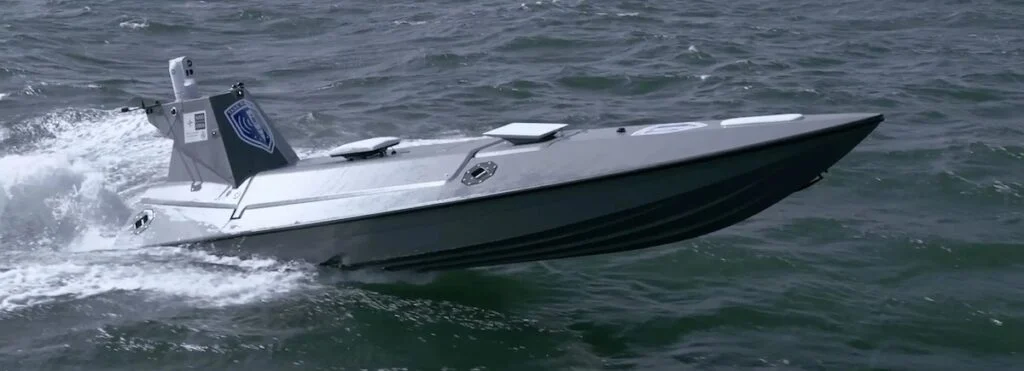
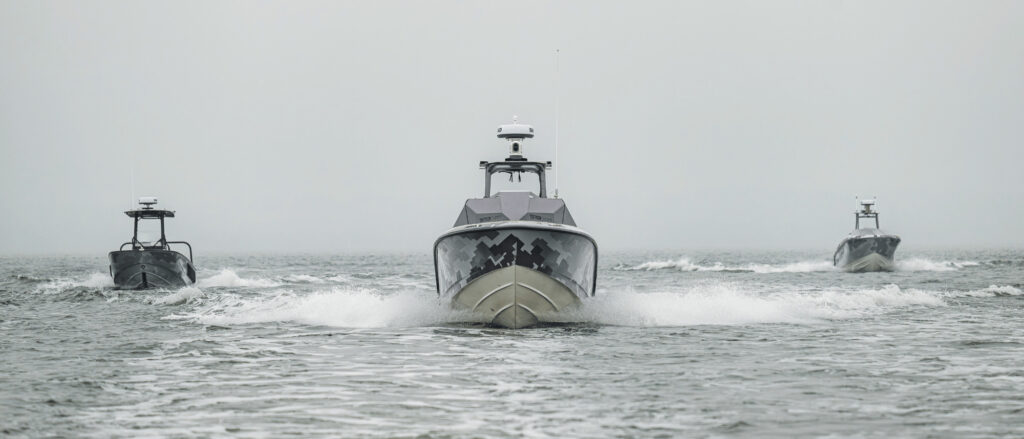
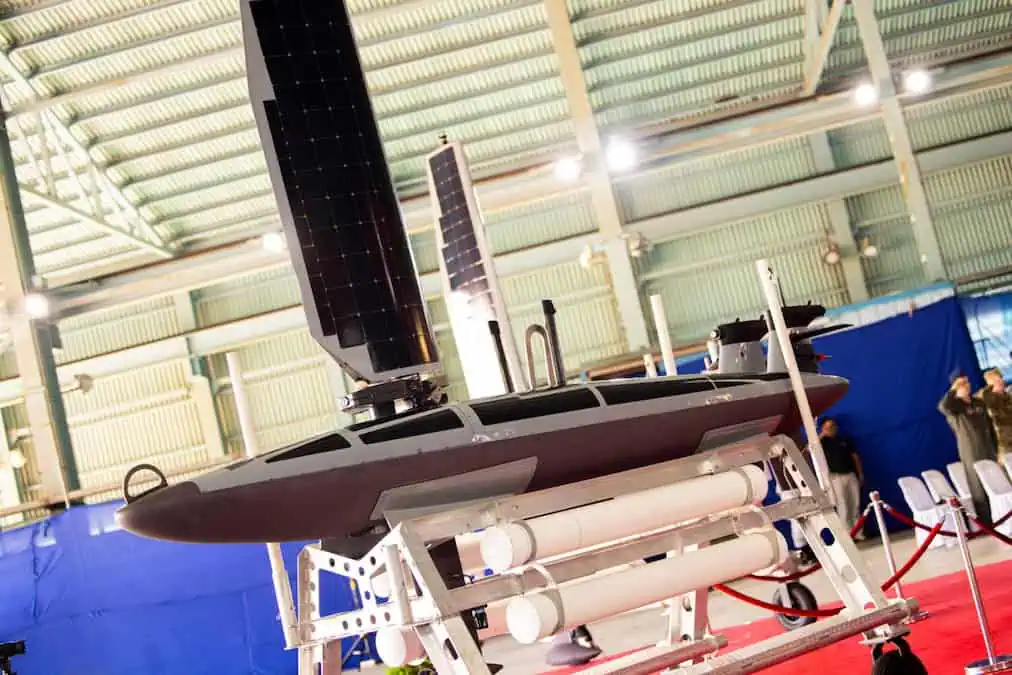
AIRCAT Panther USV from Eureka Naval Craft
Defense and government users deploy USVs for naval warfare, border security, law enforcement, disaster response, humanitarian assistance, and critical infrastructure protection. Modular hulls in aluminum or composite materials support configurable payload bays, secure command-and-control links, satellite communications, collision-avoidance systems, and mission-management architectures for ISR, electronic warfare, mine countermeasures, and search-and-rescue missions.
Unmanned Surface Vehicle Types and Applications
Military USVs
Military USVs are engineered for naval warfare and expeditionary missions that require hardened systems, secure communications, and interoperability with fleet command-and-control systems. Typical roles include intelligence, surveillance, and reconnaissance (ISR), force protection, mine countermeasures, and autonomous patrol in blue water and littoral zones.
Autonomous Surface Vehicles ASV
Autonomous surface vehicles rely on onboard mission management systems and autonomous control systems for independent navigation and task execution. They are used across defense, security, environmental monitoring, and research operations.
Small USVs
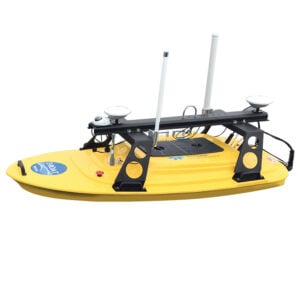
Small USVs are compact platforms suited to reconnaissance missions, port security operations, inspection, and short-range surveillance in confined waters. Their size enables launch and recovery from larger vessels or rapid shore deployment.
Medium USVs
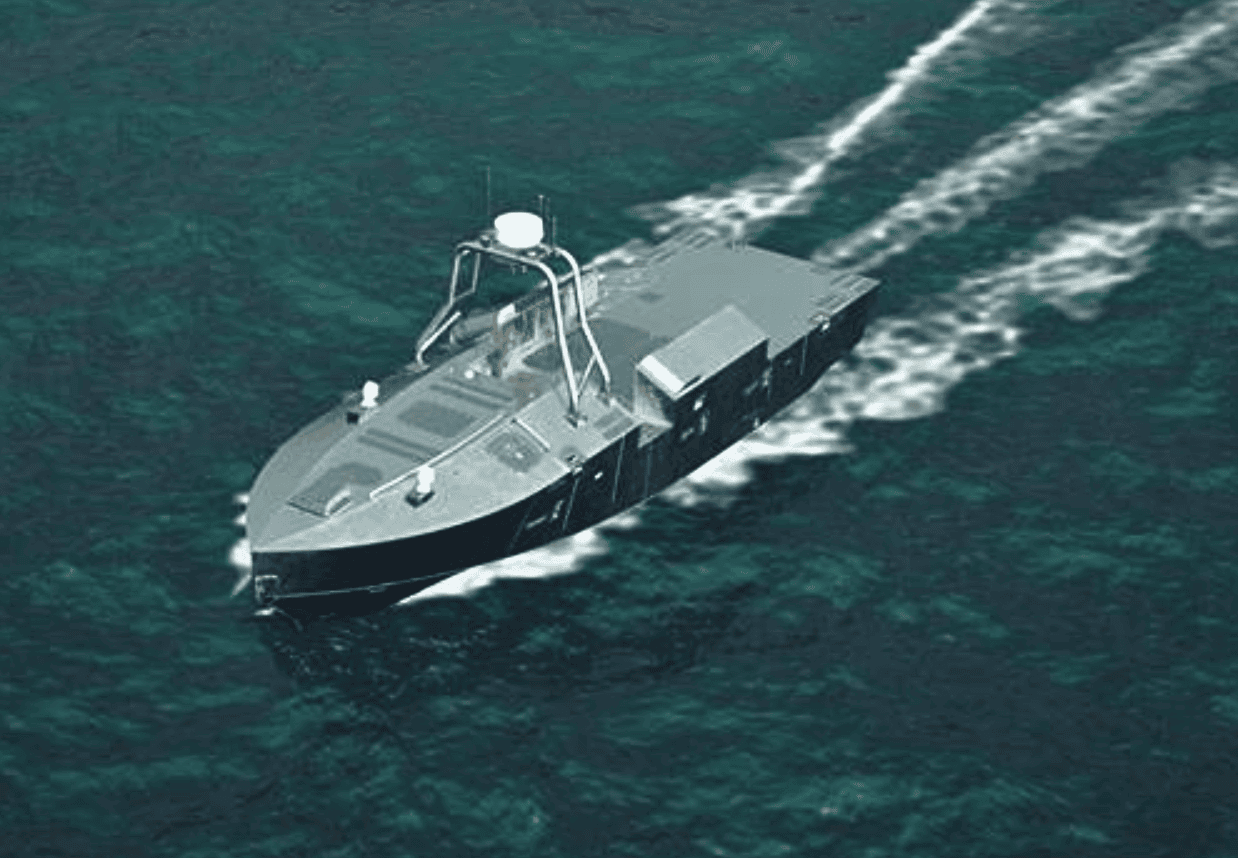
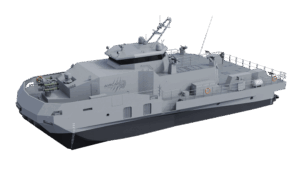
CUSV, a rapidly-reconfigurable USV, from Textron Systems
Medium USVs provide increased endurance and payload capacity for maritime patrol, sensor deployment, and intelligence, surveillance, and reconnaissance tasks. They are often selected for extended coastal surveillance and offshore asset protection.
Large USVs
Large USVs are long-endurance unmanned surface vessels engineered for extended blue-water operations and integration with naval command-and-control architectures. They offer greater displacement, payload capacity, fuel storage, and power generation than small and medium USVs. Typical roles include persistent ISR, maritime domain awareness, anti-submarine warfare sensing, logistics support, and configurable mission payload deployment, depending on system design and national doctrine.
Fleet-Class USV (CUSV)
Fleet-class USVs, including common unmanned surface vehicle (CUSV) configurations, are modular systems capable of rapid re-role between mine warfare, ISR, and force protection. Configurable payload bays and standardized interfaces support deployment from crewed naval platforms.
Remotely Operated USVs
Remotely operated USVs are controlled directly by operators from shore-based or shipboard control stations using secure line-of-sight or satellite communication systems. These platforms rely on continuous human input for navigation and task execution, making them well-suited for inspection, hazardous-response, and explosive-ordnance tasks, as well as precision maneuvering in complex or confined environments.
Supervised Autonomous USVs
Supervised autonomous USVs perform missions independently while remaining under human oversight. This approach combines operational efficiency with real-time intervention capability.
Combat USVs
Combat USVs support armed patrol, targeting support, and surface warfare missions. Some configurations integrate remote weapon systems or weapons mount options while operating as part of networked maritime forces.
Survey USVs
Survey USVs are equipped with hydrographic and bathymetric mapping sensors, such as multibeam and side-scan sonars. Government and naval organizations use these platforms for seabed characterization, navigation safety, and mission planning.
Mine Countermeasures USVs
Mine countermeasures USVs deploy sonar and unmanned influence-sweep systems to detect, classify, and neutralize mines. These systems reduce risk to crewed vessels operating in mined waterways.
Anti-Submarine Warfare USVs
Anti-submarine warfare USVs use acoustic sensors and advanced autonomy to detect and track submarines over extended periods. Long-endurance concepts similar to ACTUV enable persistent ASW coverage at reduced operating costs.
Maritime Domain Awareness USVs
Maritime domain awareness USVs provide continuous sensing and real-time data relay across shipping lanes, coastal zones, and strategic maritime approaches. They support intelligence and force protection objectives.
ISR USVs
ISR USVs integrate radar, EO sensors, IR cameras, and SIGINT payloads to conduct long-duration surveillance and reconnaissance. These systems are deployed for target tracking, signals intelligence collection, and maritime patrol.
Maritime Security USVs
Maritime security USVs enhance harbor monitoring, perimeter patrol, and critical infrastructure protection. They are widely used by defense organizations, coast guards, and other government agencies.
Border security USVs and law enforcement USVs conduct coastal surveillance, border patrol operations, and maritime policing. Integrated radar systems and electro-optical sensors support detection, monitoring, and interdiction.
High Speed Interception USVs
High-speed interception USVs use powerful propulsion systems and optimized hull designs for rapid response missions. They are deployed for security enforcement and convoy escort tasks.
Support and Logistics USVs
Support and logistics USVs transport cargo and equipment between ships and shore in contested or remote areas. Autonomous resupply reduces operational exposure during naval combat missions.
Target Towing USVs
Target towing USVs tow aerial or surface targets during live fire training. They provide realistic moving targets while minimizing personnel risk.
Decoys and Attritable USVs
Decoys and attritable USVs are lower-cost platforms designed to distract or saturate adversary sensors and weapons. They support distributed maritime operations and fleet survivability.
Counter-UAS USVs
Counter-UAS USVs integrate detection sensors and counter-drone systems to identify and defeat unmanned aerial threats near ships or protected infrastructure. These systems enhance layered defense in maritime environments.
Environmental and CBRN Monitoring USVs
Environmental and CBRN monitoring USVs carry sensors for chemical, biological, radiological, and nuclear detection. They support hazard assessment, maritime safety, and disaster response planning.
Search and Rescue USVs
Search-and-rescue USVs execute autonomous search patterns and assist individuals in distress by relaying communications or delivering flotation devices. They are deployed in maritime search and rescue operations and humanitarian assistance missions.
Cybersecurity, encrypted satellite communications systems, and secure command-and-control architectures are essential for deployment in contested environments. Compliance with maritime safety regulations and integration with existing fleet systems are critical considerations for procurement decision makers.
Unmanned surface vehicles continue to evolve as core assets for naval warfare, security enforcement, and government maritime operations. Their modularity, autonomy, and mission adaptability position them as central components of modern maritime strategy.
A recent joint U.K. demonstration has proven that Shield AI's Hivemind AI software enables multiple uncrewed surface vessels to operate dynamically as a coordinated, autonomous team during complex maritime surveillance missions
SEA.AI demonstrates a shared passive perception layer across diverse crewed and uncrewed vessels to eliminate critical navigational blind spots during NATO's premier maritime exercise, REPMUS, in Portugal
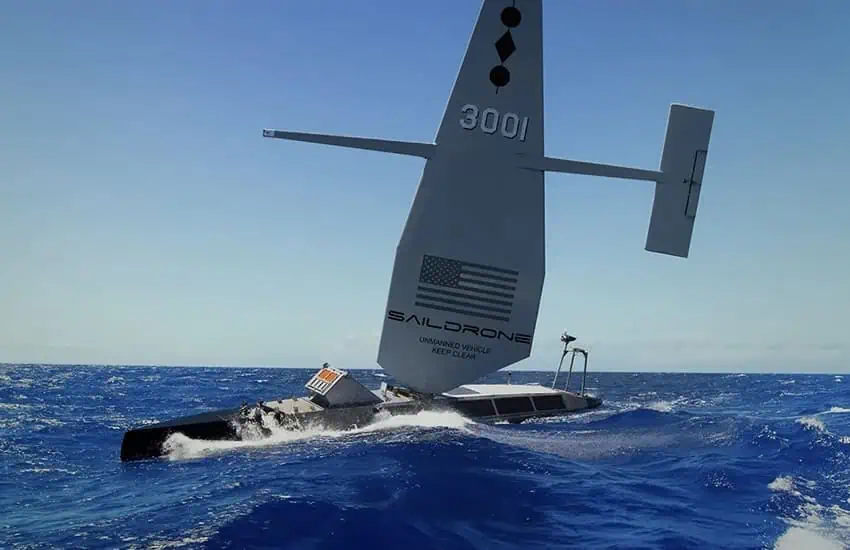
A recent naval exercise demonstrated live-fire missile capabilities from a Saildrone autonomous surface vessel, proving that uncrewed ocean platforms can seamlessly integrate combat-ready strike systems into carrier strike group operations
Read how Textron Systems is combining autonomous technology and commercial boat building expertise to develop the TSUNAMI® USV, a scalable platform for a range of maritime missions
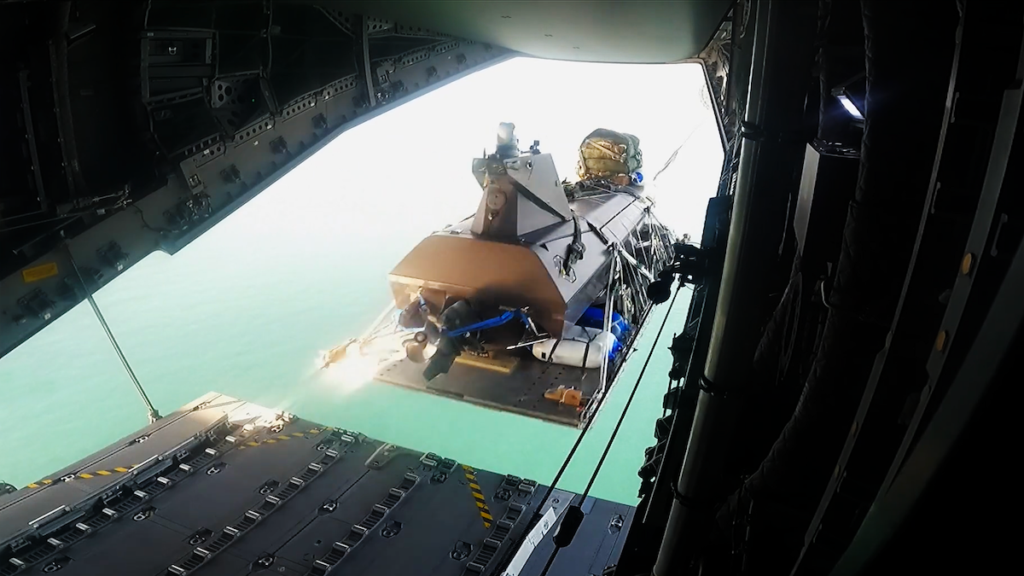
Kraken Technology Group and Capewell deployed the K3 SCOUT from an A400M, demonstrating a new rapid-insertion capability for uncrewed maritime operations
U.S. Embassy Philippines has confirmed the transfer of four long-endurance platforms to expand the Philippine Navy’s capability to monitor critical waterways above and below the surface
Royal Navy divers have completed rapid training on a portable submersible mine disposal system from Video Ray ahead of an upcoming multinational mission to the Strait of Hormuz aboard the RFA Lyme Bay
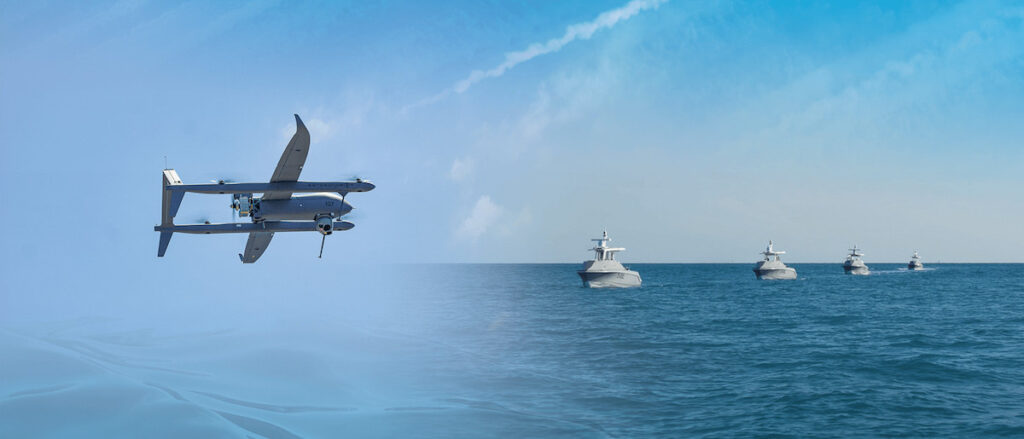
Coordinated uncrewed aircraft and surface vessels from Textron Systems and partners recently demonstrated an integrated, low-cost sensor-to-shooter workflow during a U.S. Navy fleet exercise, successfully validating cross-domain autonomous interoperability
An agreement signed between Milanion and a subsidiary of Republikorpat expands the conversion of Indonesian-built fast-attack craft into autonomous vessels, scaling up the nation's sovereign unmanned maritime capabilities
The latest defense technology news, straight to your inbox.
Get our weekly roundup of technology developments, new products and industry news.
THANK YOU FOR SIGNING UP
Thanks for joining us. Check your inbox.
We've sent you an email. Click the confirmation link to complete your subscription to the weekly eBrief. In the meantime, explore the latest news, suppliers and technologies on DA.
Advancing Defense Capability Through Strategic Collaboration
Defense Advancement works with major OEMs to foster collaboration and increase engagement with SMEs, to accelerate innovation and drive defense capabilities forward.