Accelerate Defense Modernization through Strategic Sourcing
Discover cutting-edge solutions from leading global suppliers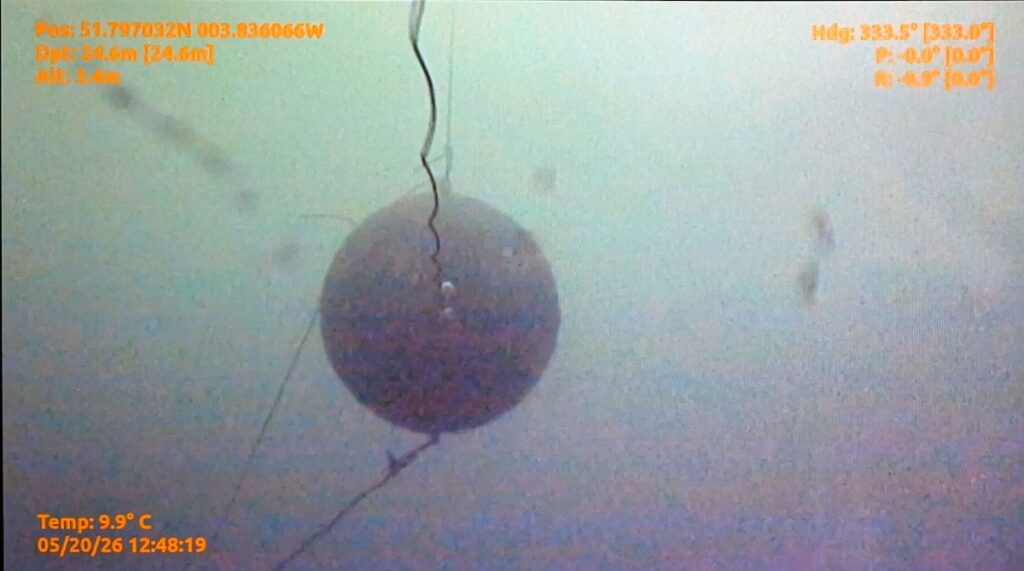
Specialists from the Royal Navy’s Diving Threat and Exploitation Group have deployed with a new submersible remote-controlled vehicle from Video Ray, supporting upcoming mine warfare operations in the Strait of Hormuz.
The portable Video Ray Defender-Viper system, which is already battle-proven in Ukraine, is designed to locate, identify, and safely neutralize underwater explosive devices. The technology is particularly effective against buoyant mines that sit just below the ocean surface and detonate when struck by passing vessels. The equipment has been loaded aboard the RFA Lyme Bay in Gibraltar, enabling the vessel to serve as a mine warfare mothership for an upcoming multinational mission.
“A fundamental principle of Explosive Ordnance Disposal is to use remote means whenever possible, so if we have this tech, we need to use it,” explained Lieutenant Commander James Carpenter, Commanding Officer, Delta Squadron.
During front-line operations, the divers will work in tandem with the Royal Navy’s Mine Threat Exploitation Group. The team will utilize advanced sonar systems to pinpoint the location of suspected devices, allowing the divers to focus on neutralization.
The deployment package aboard the RFA Lyme Bay features two complete configurations consisting of three primary components: the distinctive yellow and black Defender remotely operated vehicle, the Viper attachment mechanism, and the Tornado firing system. The Defender system can be steered manually via a heavy-duty laptop from a small boat or a shipboard command compartment, or it can navigate autonomously using pre-set coordinates.
While maintaining its position through specialized onboard software, the vehicle provides a continuous video and sonar feed to the operator. Once in position, the Viper component is fired into the mine to attach a demolition charge. The Defender then retreats while unravelling a firing cable, allowing the operator to safely detonate the weapon from a distance. The system delivers a shaped charge capable of directing energy through steel more than one metre thick to detonate the high explosive core of the mine.
Able Seaman (Diver) Charlie Rich, an experienced clearance diver who has previously served in the Gulf, noted the system’s operational advantages in low-visibility environments.
“There are occasions when it is so dark, visibility is so bad that you’re literally hoping to bump into something. With this, the sonar is fantastic, so we can ‘see’ through the darkness and murkiness,” he said. “The system has the potential to be phenomenal – and we still possess our fundamental skills to fall back upon if it doesn’t work for some reason and get in the water.”
The dozen-strong mission team will undergo further training with the Defender-Viper system before commencing operations aboard the RFA Lyme Bay.