

Showcase your capabilities
If you design, build or supply Power Supplies, create a profile to showcase your capabilities and connect with visitors who have an active requirement for your solutions.




Military power supplies convert, regulate, and distribute electrical power to defense platforms and subsystems. They incorporate components such as converters, transformers, and filters to ensure performance under military environmental and electrical standards. Military power supply manufacturers develop these units for integration into ground vehicles, aircraft, naval systems, and other mission-critical applications.
Read the Technology Overview
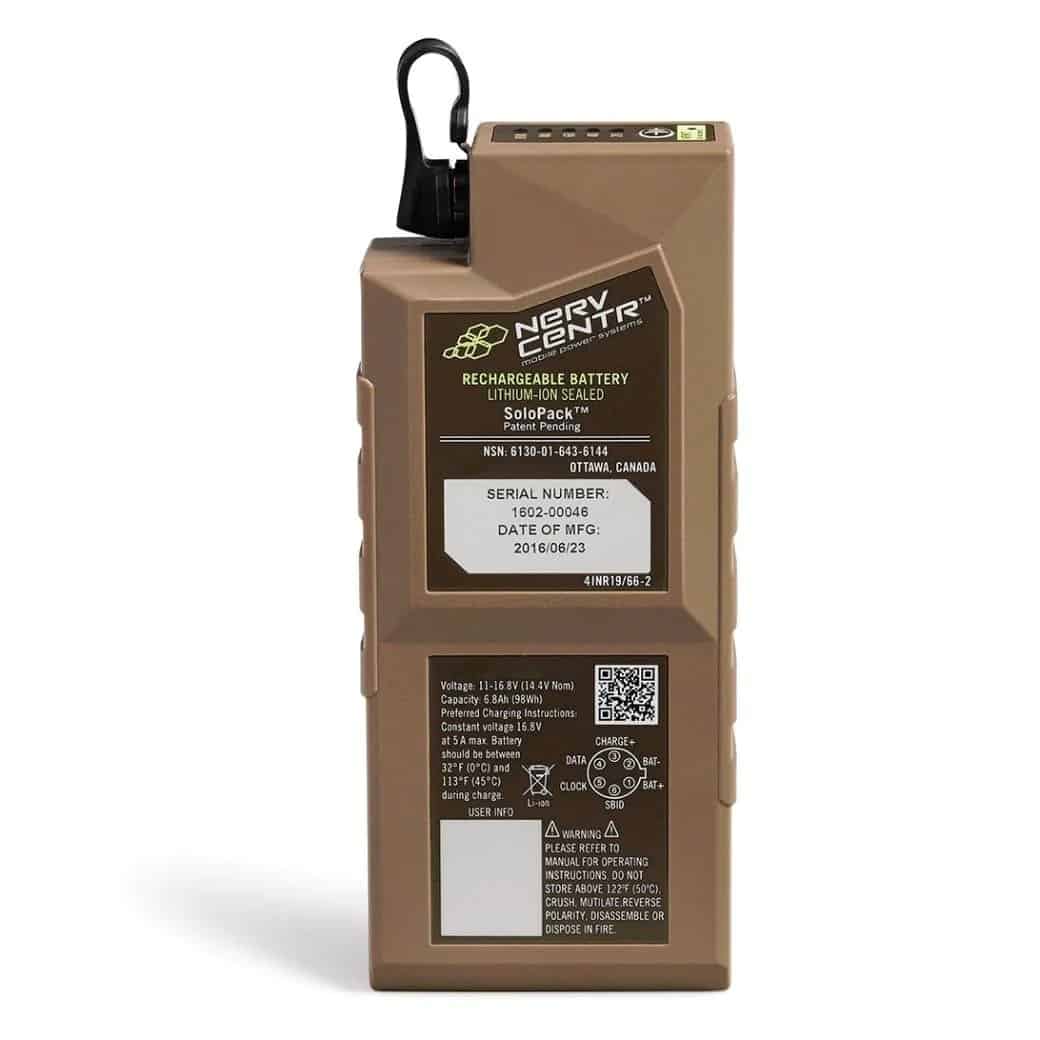
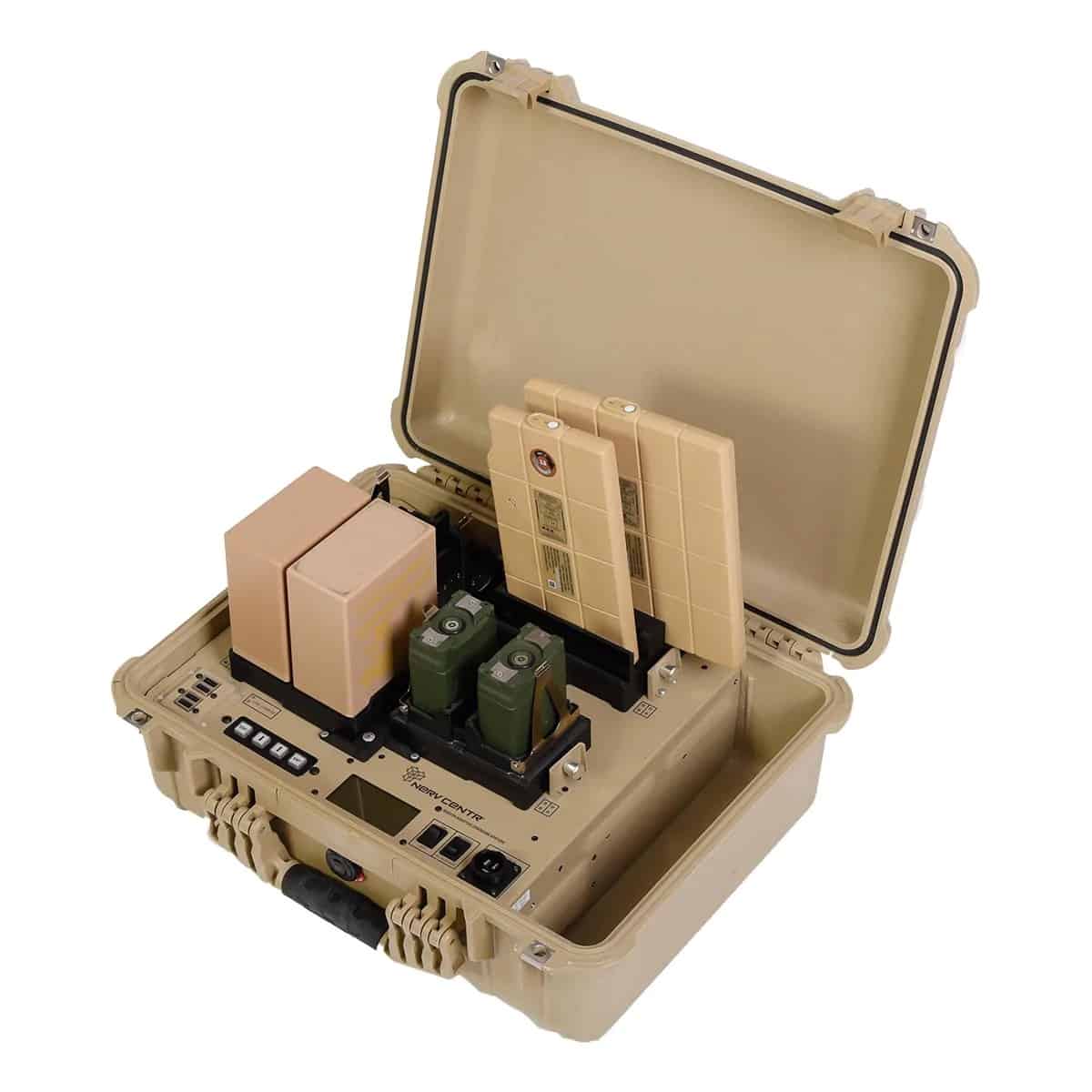
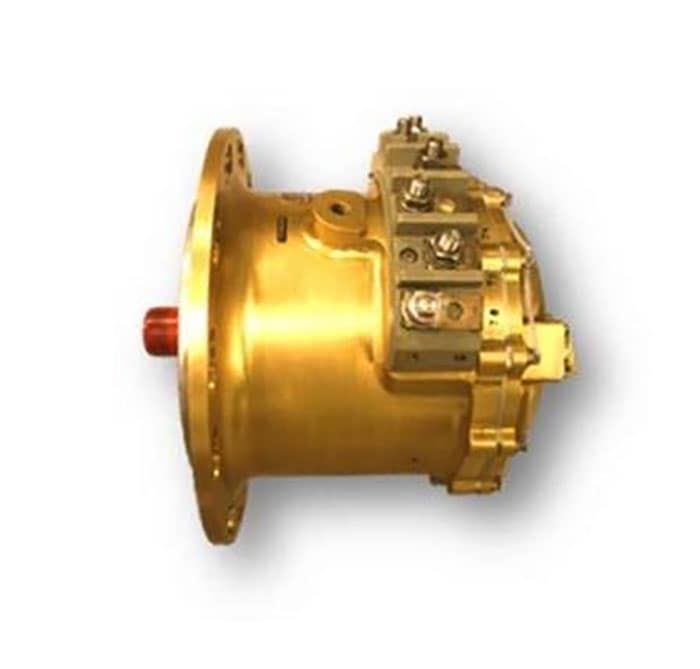
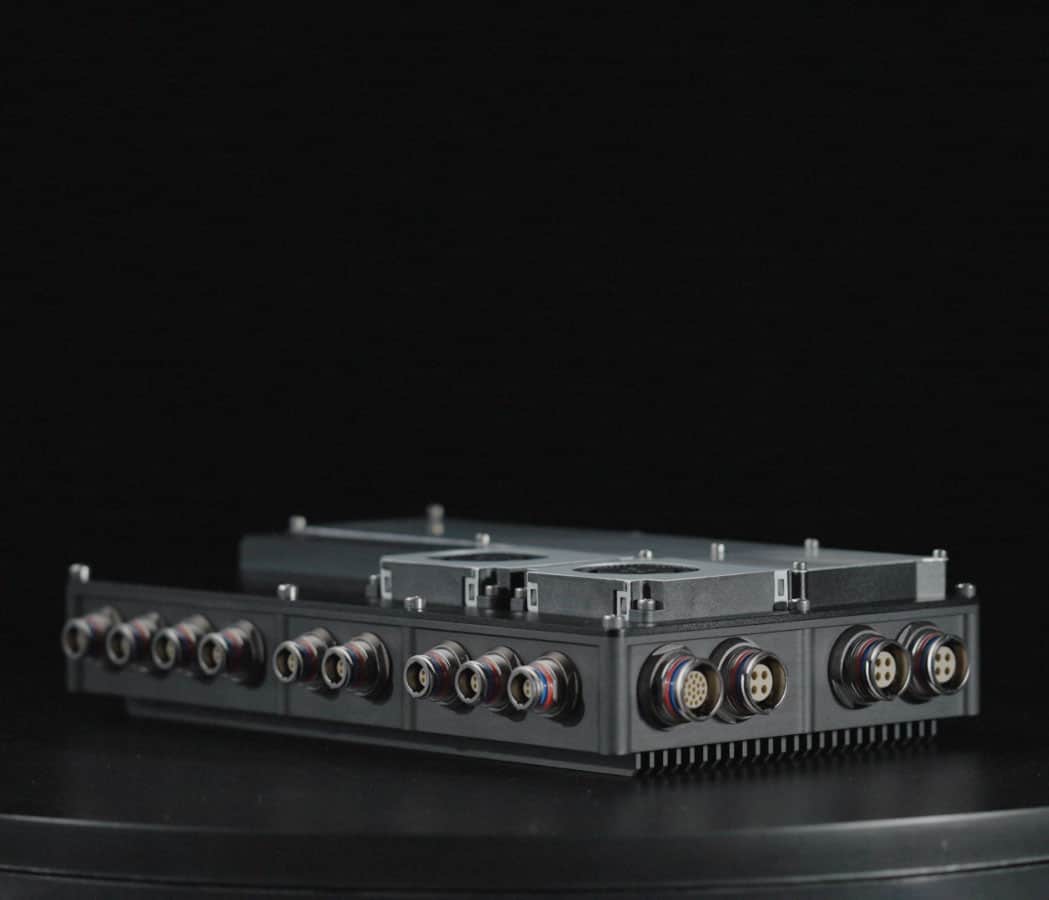

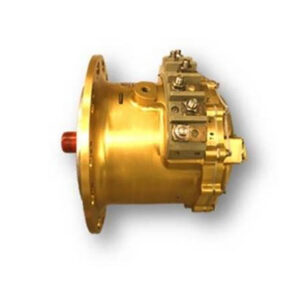
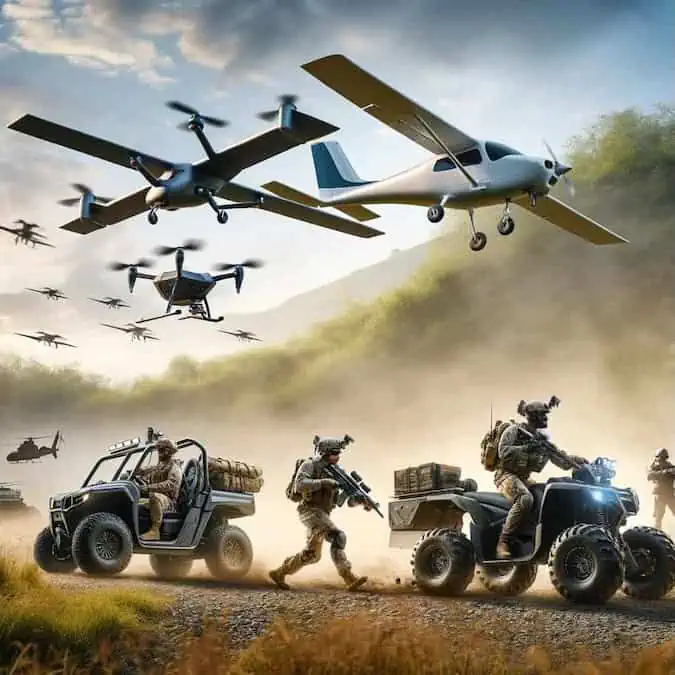
Advanced Solutions for Defense Modernization: Propulsion, Sensors, Communication & Augmented Reality Systems

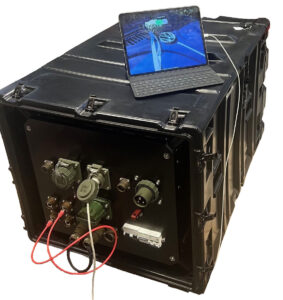
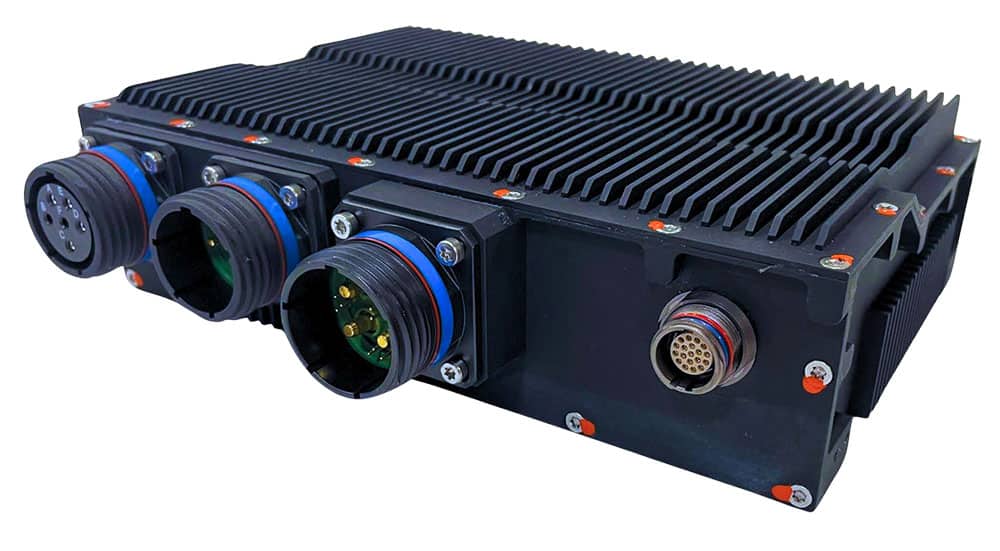
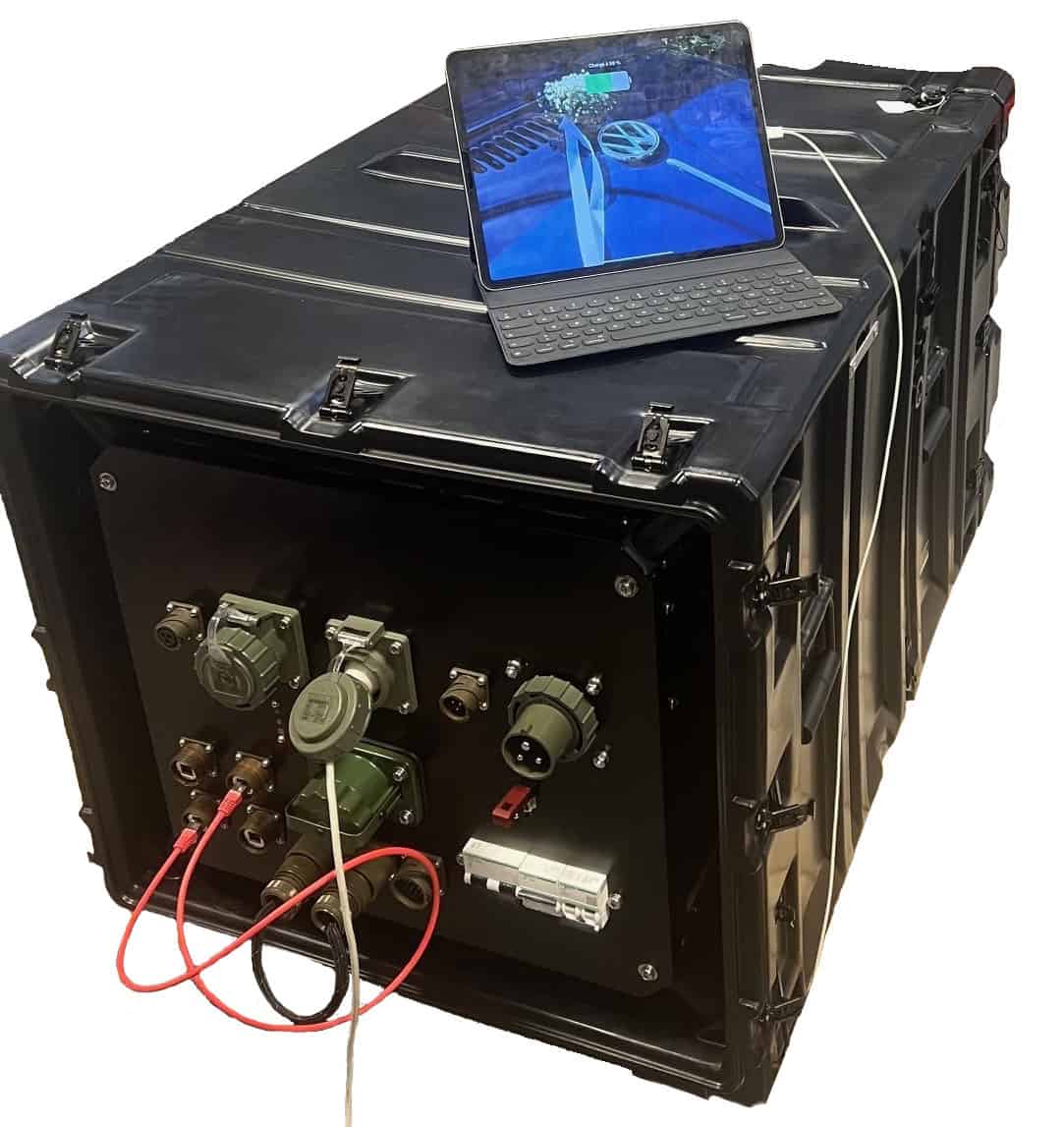
Field-Proven Rugged Power Conversion Products for Military & Defense Applications


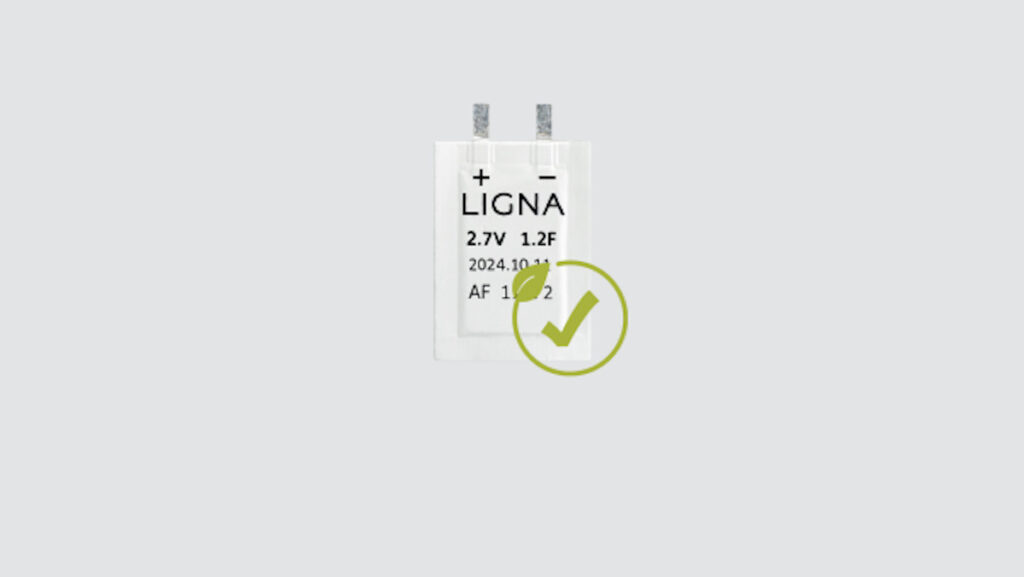
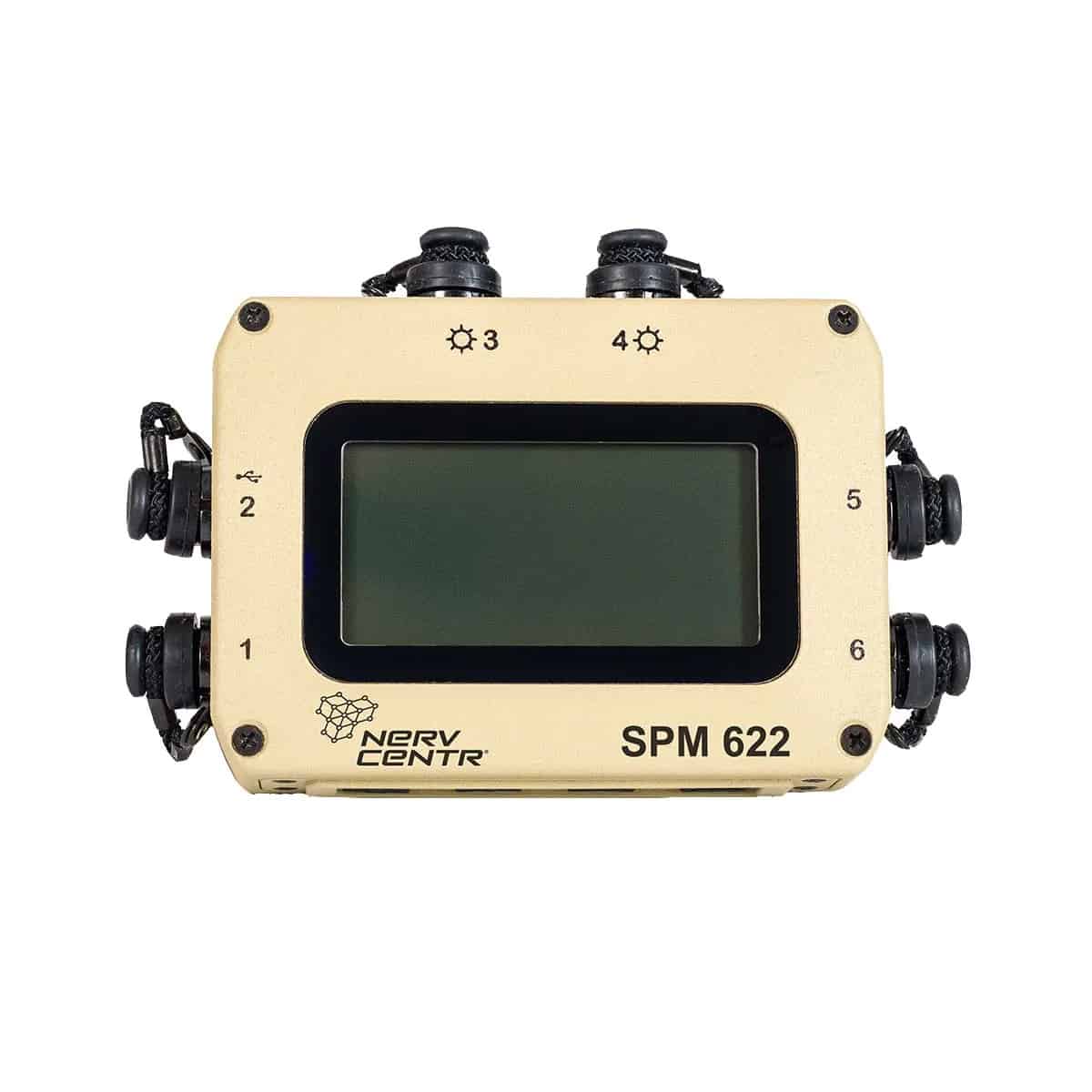
Mission-Critical Power & Lighting Solutions for Sustainable Military Operations

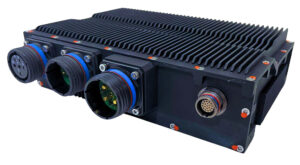
Power Distribution, Power Generation, Battery Management & Engine Starters for Tactical Unmanned Aircraft

If you design, build or supply Power Supplies, create a profile to showcase your capabilities and connect with visitors who have an active requirement for your solutions.

Military power supplies form the backbone of electrical energy delivery in defense systems. These units are built to accommodate wide input voltage ranges, provide stable output, and withstand the physical and electromagnetic challenges common in combat environments. They support primary and auxiliary systems across land, air, sea, and space domains, enabling sustained operation in remote, mobile, and combat scenarios.
Converters, transformers, and regulation components serve as supporting technologies that adapt electrical energy to match subsystem needs. Together, these systems maintain power quality, ensure safety, and provide fault tolerance in complex military architectures.
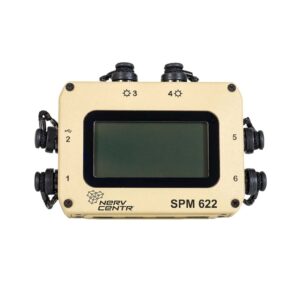
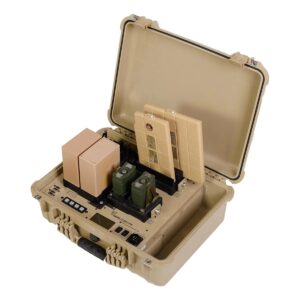
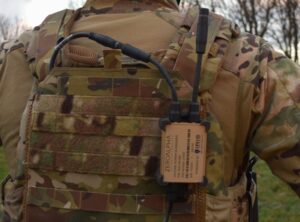
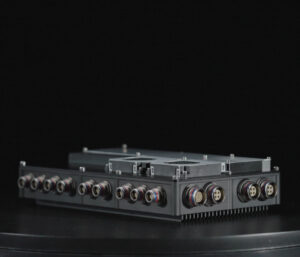
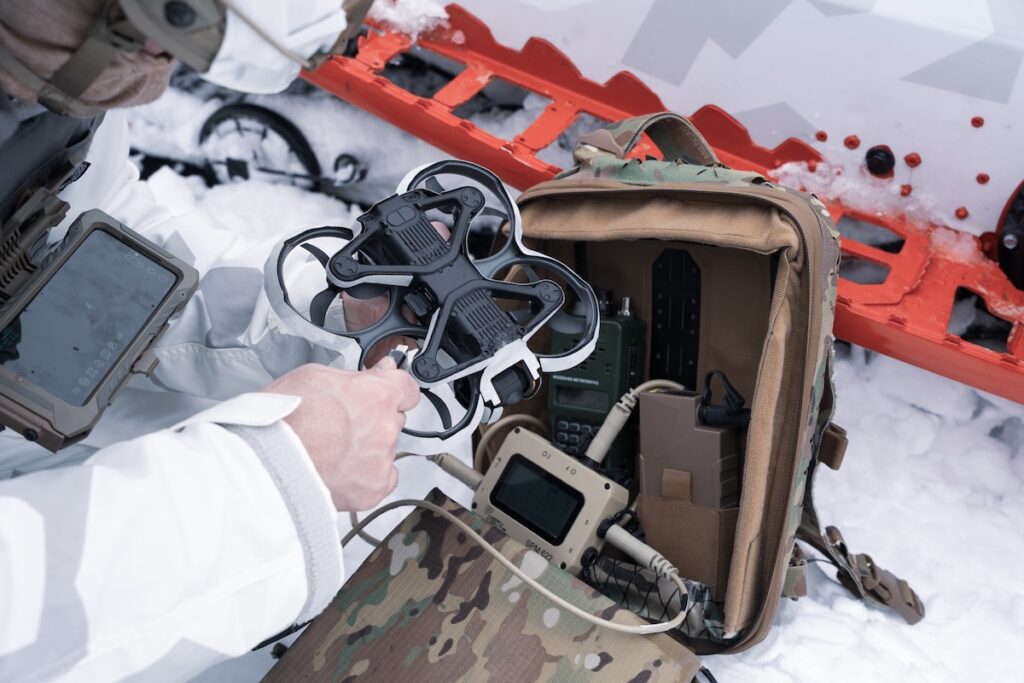
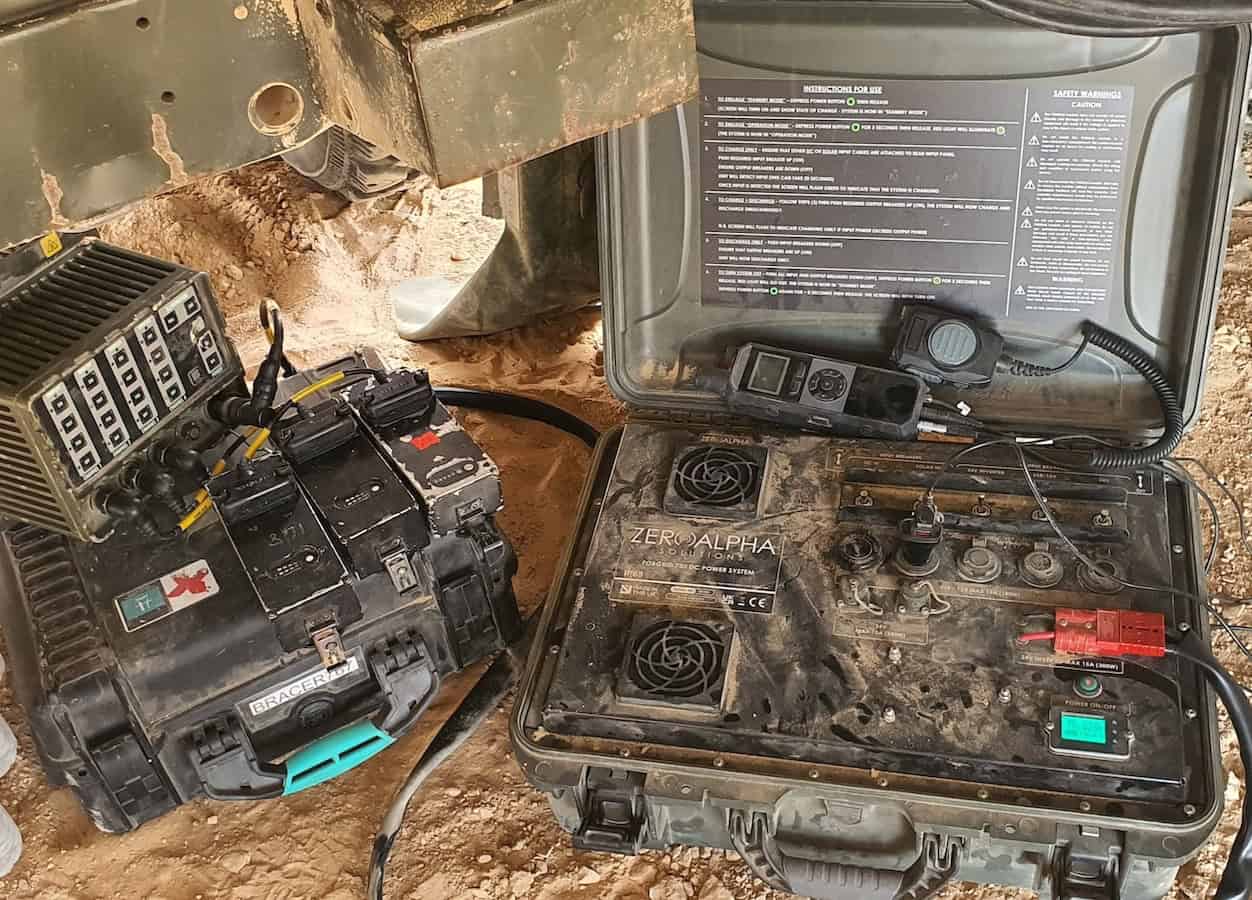
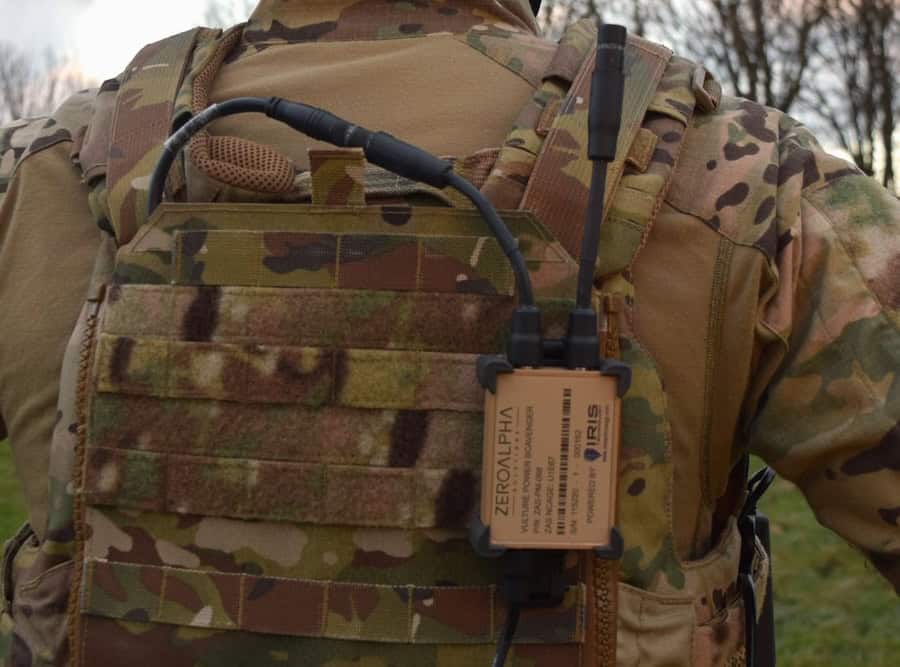
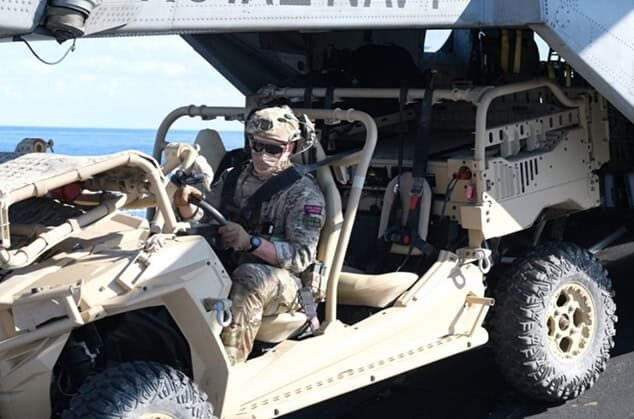
Military Power Supply, Squad Power Management, by Galvion
Military power supplies and power systems are used across various platforms and environments, often customized to match platform-specific electrical architectures. Notable use cases include:
Military power supplies are used to operate targeting systems, military radios and communications, electronic warfare modules, and onboard computing in armored vehicles and tactical trucks. They are built to withstand vibration, temperature fluctuations, and power transients common in mobile operations.
Fixed-wing and rotary aircraft rely on power supplies for avionics, radar, communication, navigation, and environmental control systems. These supplies must conform to airborne power standards such as MIL-STD-704 and deliver low-noise output compatible with sensitive equipment.
Naval platforms use rugged power supplies to support propulsion control, sonar, weapons systems, and onboard IT infrastructure. These supplies operate in high-humidity, salt-laden environments and are often integrated into shipboard power distribution networks.
Unmanned systems require lightweight, compact power supplies for payload control, navigation and positioning, telemetry, and propulsion support. DC-DC converters and battery management systems are commonly used in these space-constrained platforms.
Power systems provide backup and surge protection for data servers, communication nodes, and C2C (command and control) consoles in fixed and mobile command posts. Uninterruptible power supplies (UPS) are essential to prevent data loss and maintain connectivity during power disruptions.
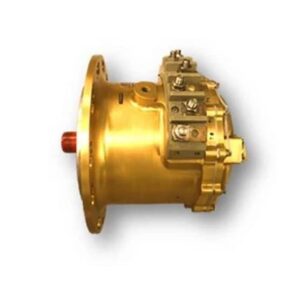
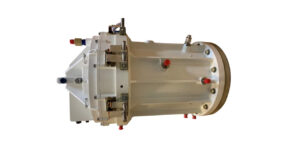
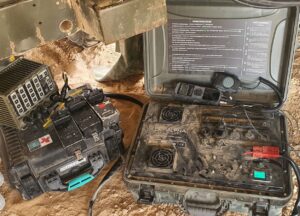
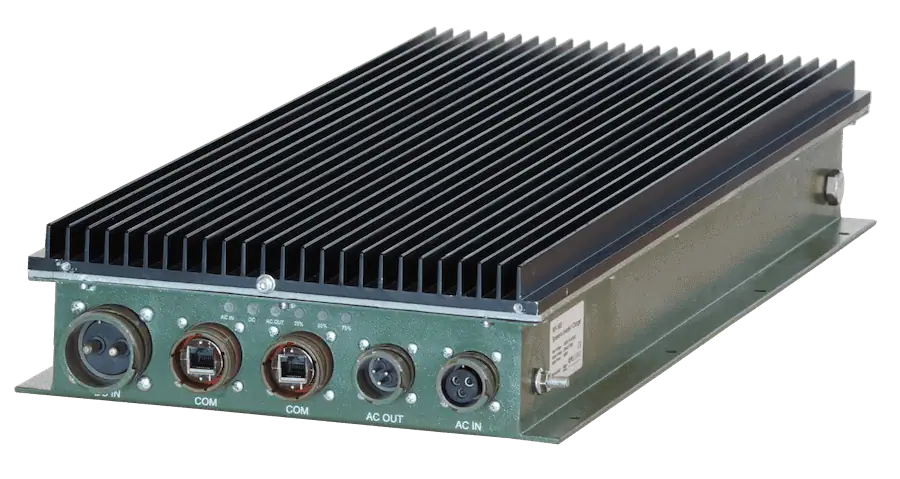
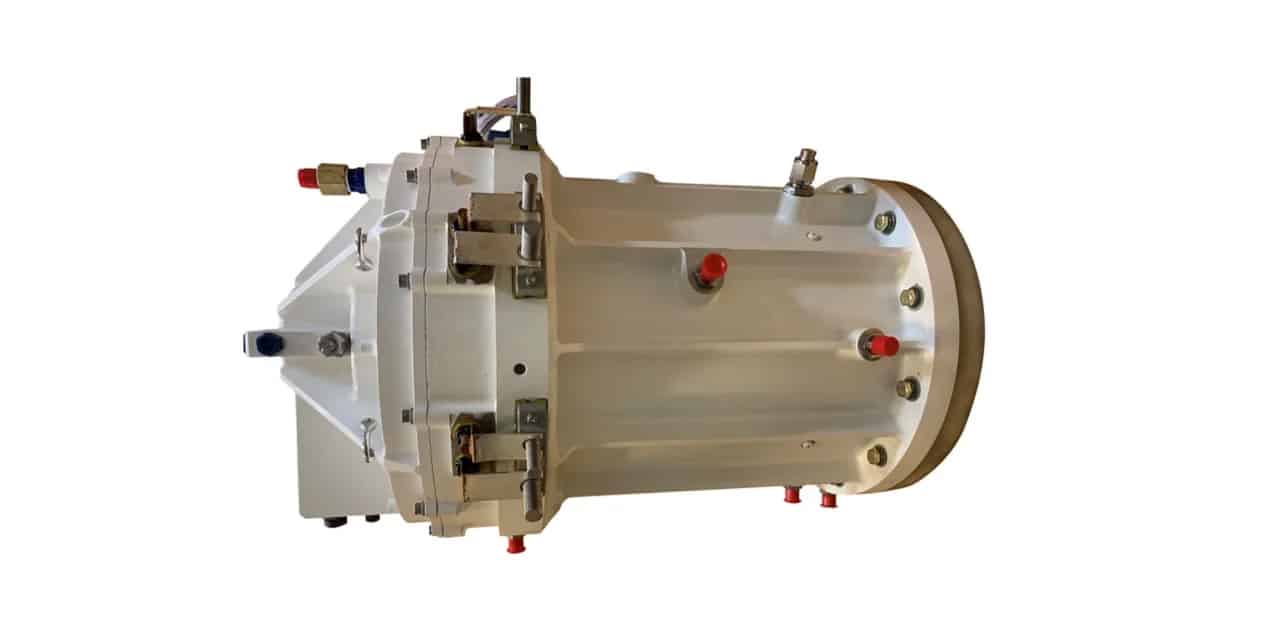
Military Grade Power Supply, 250kW Generator, by Honeywell
Ruggedized portable power units support field radios, medical systems, laptops, and surveillance gear. These systems often include built-in battery packs, voltage regulation, and environmental sealing.
High-performance power supplies with precise regulation and minimal electrical noise are used in EW and SIGINT platforms. They support fast-switching circuits, phased-array antennas, and digital signal processing units.
Ground-based and airborne radar systems require stable, high-voltage power to support beamforming, signal processing, and rotation motors. These systems demand high reliability and thermal control in both fixed and mobile configurations.
High voltage and pulsed power supplies drive lasers, high-power microwaves, and particle beams in experimental and operational directed energy systems. These applications require custom electrical architectures and fast energy discharge capabilities.
Miniaturized power supplies embedded in missiles and guided munitions provide short-duration energy to fuzing, guidance, and telemetry subsystems. These supplies must survive extreme acceleration, vibration, and temperature changes.
Power systems in satellite payloads, high-altitude platforms, and space vehicles are engineered for vacuum, radiation, and thermal cycling. Redundant architectures and fault tolerance are critical in these non-serviceable environments.
Remote power units enable unattended ground sensors and perimeter surveillance equipment in austere environments. These systems often use solar charging, energy harvesting, or low-draw electronics to maximize longevity.
System resilience in these applications often depends on redundancy, fault isolation, and filtering to prevent cross-system interference or unplanned shutdowns.
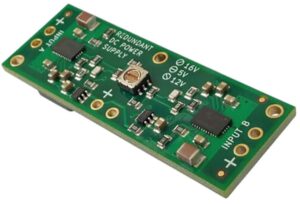
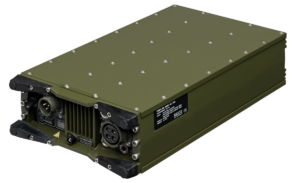
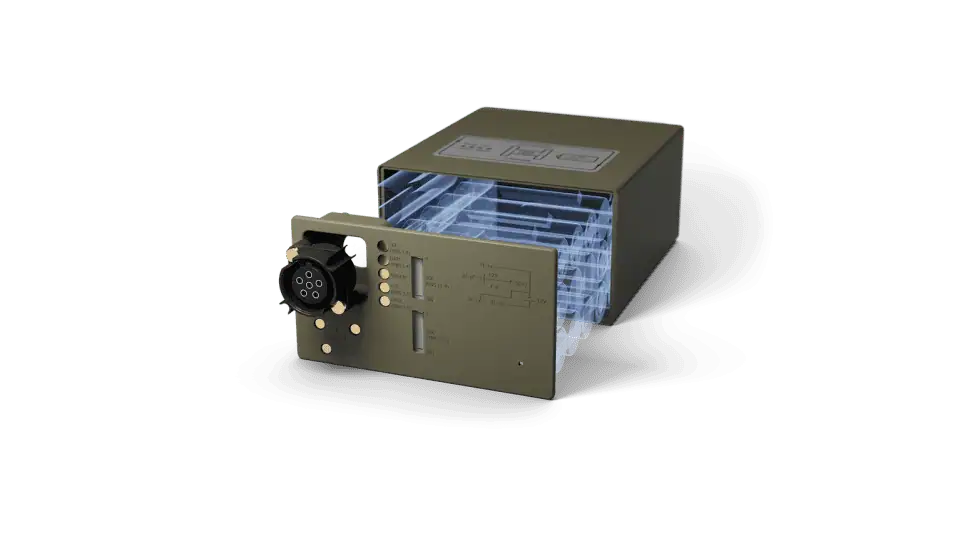
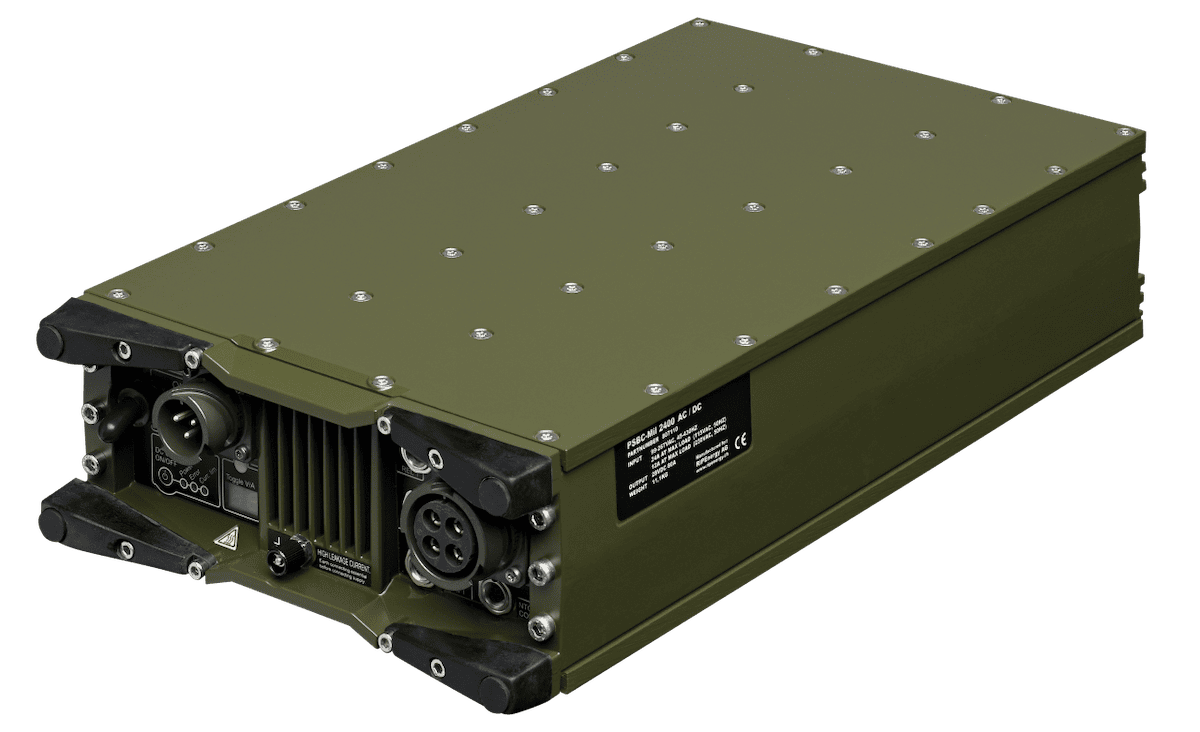
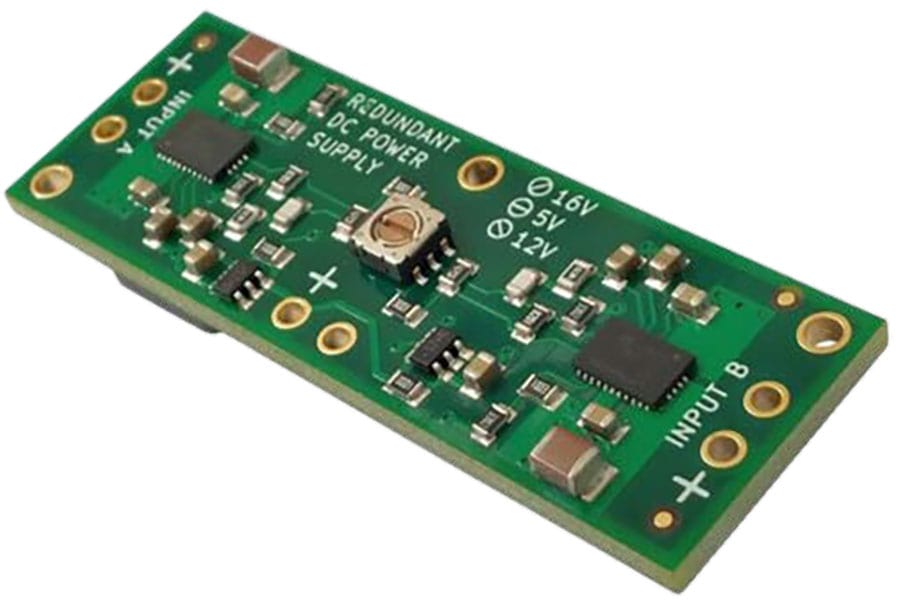
Military Spec Power Supply by visionair
Military power supplies are configured to meet diverse operational requirements. Common types include:
Each type is selected based on specific constraints, including power level, weight, thermal dissipation, and electrical interface.
Converters and transformers are integral to military power systems for adapting electrical characteristics and maintaining safety:
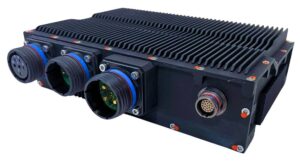 Military power supplies are constructed to function reliably under extreme mechanical, thermal, and electromagnetic conditions. Key design features include:
Material selection, PCB layout, and enclosure design are optimized for long lifecycle, field serviceability, and resistance to corrosion and fatigue.
Effective deployment of military power systems requires careful consideration of electrical and mechanical interface constraints:
Military designers also address startup behavior, transient response, ripple suppression, and harmonics, particularly in high-density electronic warfare and radar environments.
Adherence to established defense and aerospace standards ensures compatibility and reliability. Relevant specifications include:
Meeting these standards is essential for power supply manufacturers seeking to deliver deployable and certifiable defense hardware.
As defense systems evolve to support more electronics, higher bandwidth communications, and energy-intensive payloads, power supply technology is advancing accordingly:
These advancements help defense programs meet size, weight, power, and cost (SWaP-C) targets while enhancing mission reliability and longevity.
Military power supply manufacturers support both standard and custom designs based on program-specific requirements. Selection criteria typically include:
Suppliers may offer solutions tailored to ground vehicles, aircraft, naval platforms, UAVs, or portable systems. In many cases, collaboration during early-stage system design ensures proper alignment with platform requirements and speeds certification processes.


 Searching Companies & Products