Sonar: Technologies, Components, & Military Applications
Sonar, or Sound Navigation and Ranging, operates by transmitting sound waves through water and interpreting the returning echoes. This process allows for the identification, tracking, and classification of submerged objects and environments. In defense operations, sonar is used across various platforms to support navigation, surveillance, threat detection, and mission planning in underwater domains where visibility and electromagnetic sensing are limited.
If you design, build or supply Acoustic & Sonar Sensors, create a profile to showcase your capabilities and connect with visitors who have an active requirement for your solutions.
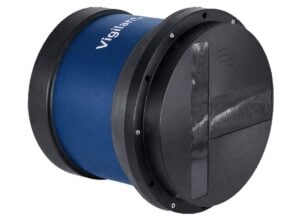
...orward Looking Sonar (FLS) system developed for crewed and uncrewed surface and subsurface platforms... ...tching between sonar and 2D/3D depth mapping modes. Designed for integration with modern autonomous...
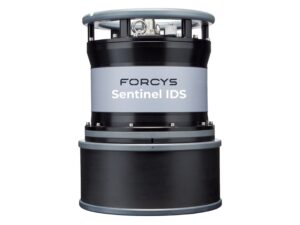
...uder Detection Sonar (IDS) system developed to protect ports, naval facilities, vessels, and... .... Suitable for military bases, ports, harbours, commercial vessels, private yachts, and critical...
Sonar: Technologies, Components, & Military Applications
Overview by
Sarah Simpson
Updated:
Modern military sonar systems are adapted for specific operational needs, ranging from wide-area reconnaissance to close-range target classification. Systems may be deployed on submarines, surface vessels, aircraft, unmanned platforms, or stationary installations.
The configuration and performance of a sonar system depend on its intended function, the acoustic environment, and the level of detail required. Understanding the underlying components and variations helps evaluate system suitability for mission profiles.
How Sonar Works
Sonar systems transmit sound pulses into the water using a transducer, which converts electrical signals into mechanical vibrations. These vibrations generate acoustic waves that travel outward until they encounter an object or boundary, at which point some energy is reflected. The receiving transducer, or array, then converts the returning sound into an electrical signal for processing.
By analyzing the time delay, amplitude, frequency shift, and phase of the echo, sonar systems determine parameters such as distance, size, speed, direction, and material characteristics. In multibeam and synthetic aperture systems, multiple receivers or successive pings build detailed three-dimensional profiles of the underwater environment.
Frequency selection plays a key role in system design. Low-frequency sonar can detect targets at longer ranges but provides lower resolution, while high-frequency systems offer finer detail over shorter distances. Broadband and narrowband configurations are used depending on the signal complexity and interference environment.
Types of Sonar Systems
Military sonar systems fall broadly into two categories: active and passive. These define the system’s operating mode, whether it emits sound energy or only listens for it. Within each category are specialized types designed for specific tactical and operational roles.
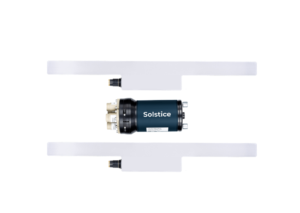
Side scan sonar, Solstice, from Forcys.
Active Sonar Systems
Active sonar works by transmitting sound pulses into the water and analyzing the echoes that return from objects or surfaces. This method provides precise location, range, and structure information, making it suitable for detection, classification, and navigation tasks.
Hull-Mounted Sonar
Installed directly onto the hull of a submarine or surface vessel, hull-mounted active sonar provides forward or downward coverage. These systems are used for threat detection, mine avoidance, and seabed mapping in real-time.
Towed Array Sonar (Active Mode)
When operated actively, towed arrays offer broad area coverage with greater signal isolation from platform noise. This setup is often used for long-range detection and threat engagement.
Dipping Sonar
Typically deployed from helicopters, dipping sonar systems are lowered into the water to perform localized active searches. They are ideal for rapid anti-submarine operations in littoral zones.
Forward-Looking Sonar
This type provides real-time imagery of the area ahead of a vessel or UUV. It supports navigation and obstacle avoidance, particularly in cluttered or unknown environments.
Multibeam Sonar
Used primarily for bathymetric surveying and terrain mapping, multibeam sonar emits multiple beams to cover a wide swath of the seabed. Military applications include safe navigation, mine detection, and landing site evaluation.
Side Scan Sonar
Side scan sonar produces high-resolution seafloor imagery by transmitting acoustic waves sideways from a towed or hull-mounted platform. It is frequently used for mine countermeasures, underwater search operations, and structural assessments.
Synthetic Aperture Sonar (SAS)
By combining data from successive pings along a linear path, SAS creates high-resolution acoustic imagery. It is employed for detailed object classification, mine detection, and infrastructure inspection, where precision is critical.
Intrusion Detection Sonar (IDS)
Intrusion Detection Sonar (IDS) systems are used to monitor restricted underwater areas and detect unauthorized divers, swimmer delivery vehicles, or small UUVs. These systems are optimized for short-range, high-resolution detection and are commonly deployed for harbor defense, port security, and protection of critical maritime infrastructure.
Passive Sonar Systems
Passive sonar systems do not emit sound but instead detect and analyze acoustic energy produced by external sources such as vessels, marine life, or underwater equipment. These systems are crucial for stealth operations, long-duration monitoring, and acoustic intelligence gathering.
Towed Array Sonar (passive mode)
Long passive arrays towed behind submarines or ships provide wide-area acoustic surveillance. These are essential in detecting quiet submarines and tracking vessel movements across open waters.
Hull-Mounted Passive Sonar
Submarine and ship hulls may be fitted with passive acoustic arrays to monitor surrounding noise. Though less sensitive than towed configurations, hull-mounted systems are always available and provide immediate data.
Flank Arrays
Mounted along the sides of a submarine, flank arrays increase directional sensitivity and complement bow-mounted systems. These are often used in conjunction with towed arrays for triangulated target tracking.
Sonar Buoys (Sonobuoys)
Air-dropped sonobuoys may operate passively, detecting underwater targets over a wide area and transmitting data to aircraft or surface platforms. These are frequently used in coordinated anti-submarine warfare missions.
Seabed-Mounted Passive Arrays
Deployed in strategic maritime chokepoints or near sensitive installations, seabed arrays can passively monitor acoustic activity over long periods. These systems are integral to acoustic surveillance networks and early warning systems.
Key Components in Sonar Systems
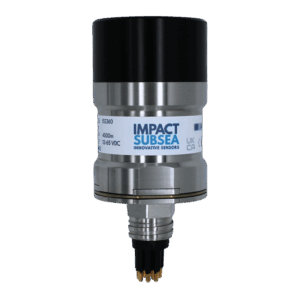
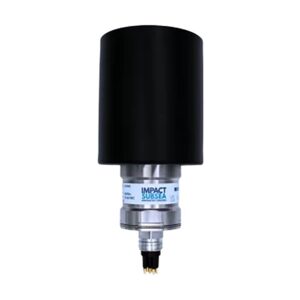
Sonar system from Impact Subsea, the ISP360 Profiling Sonar.
Transducers
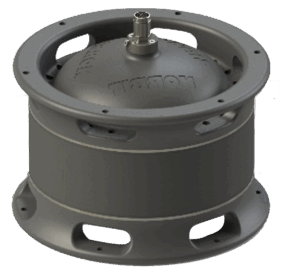
The transducer is the core element that converts electrical signals into sound and vice versa. It may comprise piezoelectric ceramics, capacitive micromachined ultrasonic transducers (CMUTs), or other advanced materials such as PMUTs and magnetostrictive elements. Tonpilz transducers, known for their high power output, are used in deep-sea and tactical applications.
Arrays
Array configurations vary based on platform and use case. Cylindrical, spherical, conical, and planar arrays enable directional sensing and beam steering. Phased arrays use electronic timing to direct acoustic beams without mechanical movement, improving responsiveness and accuracy.
Mounting configurations
Sonar components may be hull-mounted, towed, deployed via dipping mechanisms, or mounted on unmanned vehicles. Flank arrays extend along the side of a vessel, while long baseline and ultra-short baseline (USBL) systems provide precise underwater positioning and navigation.
Applications of Sonar in Defense
Anti-submarine warfare (ASW)
Sonar is integral to ASW operations, providing the primary means for detecting and tracking submarines. Either active or passive systems can be used to locate targets, estimate range and bearing, and support weapons targeting, with these systems deployed across crewed platforms and ASW USVs.
Mine Detection & Clearance
High-resolution imaging sonar, such as side scan or SAS, is used to detect and classify underwater mines. Systems may be mounted on unmanned underwater vehicles (UUVs) to conduct safe, autonomous reconnaissance.
Search & Rescue
Sonar aids in locating submerged vehicles, aircraft debris, or individuals. Forward-looking sonar and imaging sonar can guide divers or remotely operated vehicles (ROVs) in low-visibility environments.
Seabed & Infrastructure Monitoring
Military sonar systems also support non-combat roles, including environmental monitoring, pipeline inspection, and underwater construction. Sonar is used to assess seabed conditions, identify anomalies, and monitor critical assets.
Navigation & Obstacle Avoidance
Sonar enables submerged platforms to navigate safely, especially in contested or cluttered environments. Systems provide real-time depth data, detect obstacles, and support route planning. Obstacle detection sonar is particularly important for autonomous underwater vehicles (AUVs) operating without human supervision.
Acoustic Surveillance
Fixed sonar networks and mobile systems are used for long-range monitoring of maritime regions. These include port security applications, underwater communication systems, and acoustic surveillance of critical zones.
Military Standards & Environmental Considerations
Military sonar systems must comply with specific standards for reliability, interoperability, and performance. These may include MIL-STD-810 for environmental testing, MIL-STD-461 for electromagnetic compatibility, and NATO STANAGs for acoustic signature management. In addition, sonar deployment is increasingly subject to environmental regulation due to concerns about marine life impacts, especially from high-intensity active systems.
Sonar Systems & Technology in Defense Environments
The diversity of sonar systems used in defense reflects a broad range of operational requirements, from tactical engagements and submarine detection to navigation and underwater construction. Choosing the correct configuration, active or passive, hull-mounted or towed, narrowband or broadband, depends on platform capabilities, mission scope, and environmental conditions. As threats evolve and underwater domains grow more complex, sonar remains a core sensing modality for maritime defense operations.
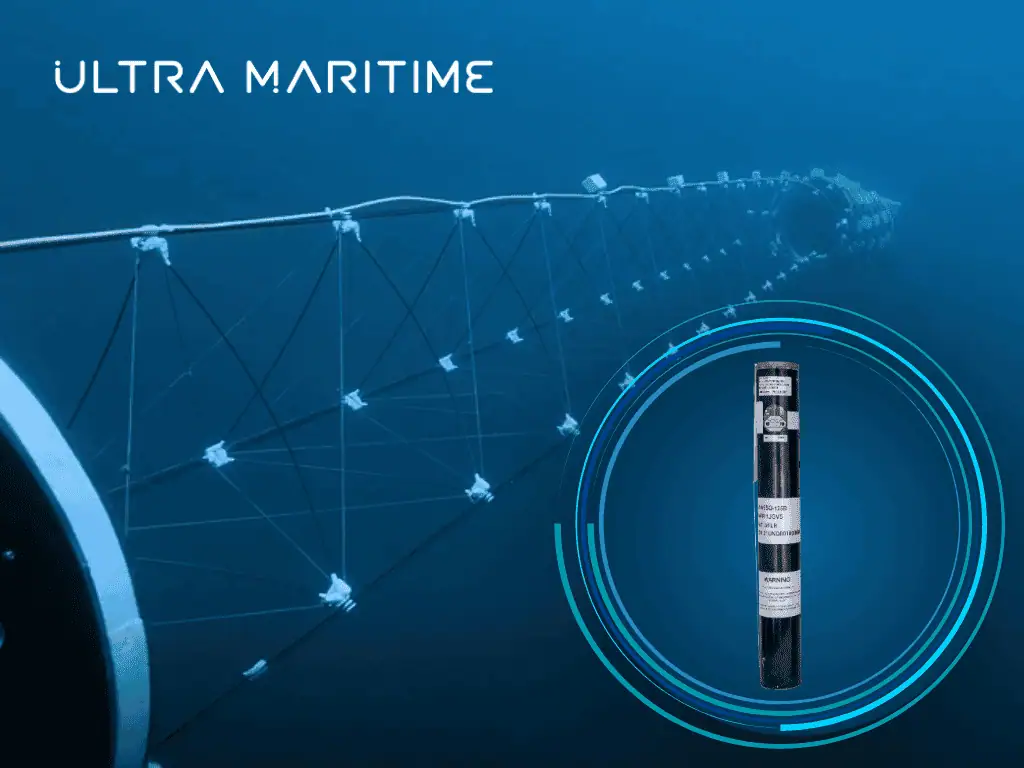
During the U.S. Navy's 2026 Lanternfish exercise, Ultra Maritime demonstrated a novel integrated active-passive sonar solution designed to advance persistent detection and localization capabilities for autonomous undersea warfare
NORBIT Security sonars will be integrated by Falcon Eye Technology to protect an Abu Dhabi cultural venue across ultra-shallow and deeper waterfront environments against underwater threats
Forcys explains how autonomous and unmanned underwater vehicles are changing maritime security requirements, highlighting detection challenges and the need for dedicated acoustic surveillance systems
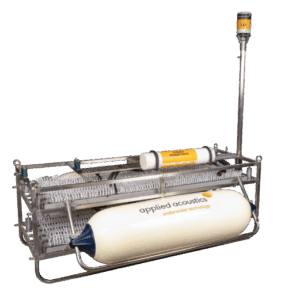
In this Q&A, applied acoustics highlights its subsea tracking technologies, their role in MCM and underwater infrastructure monitoring, and the challenges of achieving reliable acoustic positioning and communication in variable underwater conditions
Explore how applied acoustics provides rugged, high-precision underwater acoustic tracking systems that support naval divers, autonomous vehicles, and mine countermeasure operations in demanding defense environments
This case study highlights how Forcys supported integration of 4K imaging and 3D laser systems into compact AUVs, enhancing detection, reacquisition, and mission performance
Saildrone has integrated Innomar’s sub-bottom profiling technology into its Voyager USV, enabling long-endurance monitoring of undersea infrastructure in the Baltic Sea and detection of sub-seafloor changes
Global maritime defence firm deploys Forcys Sentinel Intruder Detection Systems to counter rising underwater threats against vital allied assets
Feb 19, 2026
Advancing Defense Capability Through Strategic Collaboration
Defense Advancement works with major OEMs to foster collaboration and increase engagement with SMEs, to accelerate innovation and drive defense capabilities forward.