Showcase your capabilities
If you design, build or supply Sub-Bottom Profilers, create a profile to showcase your capabilities and connect with visitors who have an active requirement for your solutions.




Sub-bottom profilers are critical tools for defense operations requiring precise detection of buried threats such as sea mines and unexploded ordnance (UXO). These systems enable high-resolution subsurface mapping to support safe, covert, and data-driven tactical decisions.
Read the Technology Overview
Marine & Subsea Navigation, Positioning & Survey Technologies for Naval & Defense Applications

If you design, build or supply Sub-Bottom Profilers, create a profile to showcase your capabilities and connect with visitors who have an active requirement for your solutions.

Sub-bottom profilers enable the detection of hazardous buried objects and the detailed mapping of seabed conditions. These solutions use low-frequency acoustic energy to penetrate the seabed and return reflections from subsurface layers, offering a 2D geological profile crucial for mission planning and threat mitigation.
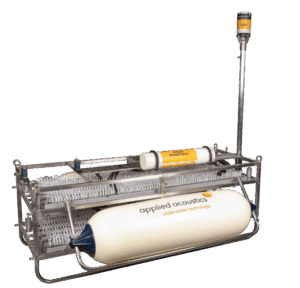
Sub Bottom Profiling Solutions by Applied Acoustics.
Sub-bottom profiling systems typically comprise modular hardware components, including seismic sources such as boomers and sparkers, hydrophones or hydrophone arrays, tow cables, winch systems, power supply units, and data acquisition modules. Together, these elements collect and process seismic data to reveal sediment layers, hard surfaces, and potential man-made threats undetectable by traditional sonar systems.
Sub-bottom profilers support a broad spectrum of military and defense activities by enabling accurate subsurface detection and geophysical mapping in littoral and deepwater environments. These capabilities are essential for missions where situational awareness of the underwater environment is critical to safety, stealth, and operational success.
One of the primary defense applications of sub-bottom profilers is the detection of unexploded ordnance. UXO includes sea mines, depth charges, and other buried explosive devices that pose significant threats to naval operations, underwater infrastructure, and personnel. These devices can remain active for decades and are often buried under layers of sediment, making them invisible to conventional sonar.
By generating high-resolution acoustic profiles of the sub-seabed, sub-bottom profilers help operators identify anomalies indicative of UXO. Sophisticated processing software can further assist in classifying these objects by analyzing their shape, size, and acoustic signature. Integration with hydrophone arrays and advanced signal processors enhances detection accuracy, minimizing false positives and improving clearance efficiency.
Sub-bottom profiling is essential for tactical seabed mapping, which supports mission planning for amphibious assaults, special operations, and undersea infrastructure deployment. Profilers deliver detailed cross-sections of the seafloor, enabling military planners to evaluate terrain features such as sediment type, bedrock depth, and subsurface irregularities.
This information aids in selecting safe landing zones for diver teams, staging areas for unmanned systems, and routes for undersea cables or pipelines. For covert operations, understanding sediment composition is critical to avoiding disturbances that could betray a unit’s presence. Profilers also help confirm the absence of man-made obstacles or natural hazards hindering vehicle mobility or anchor deployment.
Sub-bottom profilers complement mine countermeasure (MCM) strategies by detecting mines that have been deliberately buried to avoid detection. These operations typically involve a combination of sensors, including side-scan sonar and magnetic detectors; however, sub-bottom profiling provides the unique ability to see beneath the sediment surface.
Profilers help discriminate between benign geological features and potential mines by offering acoustic data from beneath the seafloor. When used with automated classification algorithms and multi-sensor fusion platforms, they can significantly reduce the time and risk involved in mine clearance.
Subsea installations such as communication cables, power lines, and pipelines are vital to national security and economic stability. Sub-bottom profilers are used in route clearance operations to verify that the path is free of buried ordnance or hazardous geology before construction begins. They also assist in post-installation inspections to monitor for sediment shifts or encroachments by foreign objects.
Military operations often require secure undersea infrastructure for data transmission or surveillance systems. Sub-bottom profilers support these initiatives by mapping the terrain and identifying optimal, threat-free installation corridors.
Many naval missions depend on rapidly deploying modular or temporary underwater systems, such as sonar arrays, sensor nodes, or surveillance modules. These systems must be placed in geophysically stable and acoustically favorable environments. Sub-bottom profiling allows operators to assess sediment strength, slope stability, and acoustic reflectivity, ensuring effective deployment and sustained asset performance.
In littoral zones where soft sediment layers are common, profilers can determine whether the seabed can support heavy or anchored equipment, or if additional anchoring or ballast measures are needed.
Military operations in maritime zones must also account for environmental impact and legal compliance. Sub-bottom profilers contribute to environmental baseline studies by identifying sensitive habitats or geological features that must be avoided. In areas governed by international law or joint NATO agreements, profiling data ensures that operations do not disrupt ecologically protected zones or interfere with existing undersea cables and pipelines.
Sub-bottom profiling systems are also employed during training exercises, particularly for mine warfare, UXO disposal, seabed reconnaissance, and intruder detection operations. By simulating real-world scenarios in controlled environments, these systems help naval personnel develop critical skills in interpreting subsurface data and making tactical decisions based on geophysical conditions.
These systems support coastal and deep-sea operations, with configurations adaptable to specific mission profiles, seabed conditions, and acoustic propagation environments.
Defense applications employ two primary types of sub-bottom profilers based on seismic energy source:
Each system includes a combination of hydrophones or hydrophone arrays, tow cables, control interfaces, and dedicated data acquisition systems. Configurations can be customized using modular housings to accommodate environmental conditions and mobility requirements.
Typical sub-bottom profiling solutions include:
| Feature | Boomer Systems | Sparker Systems |
| Penetration Depth | Medium | High |
| Resolution | High | Medium |
| Best Suited Sediment | Soft to Moderate | Moderate to Hard |
| Deployment Flexibility | High | Moderate |
| Power Requirements | Moderate | High |
Boomers are often chosen for shallow water and high-resolution work, while sparkers are preferred for deeper surveys and harder sediment profiles. Selection depends on the specific operational environment and mission requirements.
Sub-bottom profiler systems used in defense applications must align with strict operational and interoperability standards, including:
These standards ensure reliable performance, data integrity, and system safety across all deployment scenarios.
Sub-bottom profilers can be integrated with other tactical technologies, such as:
Combined systems increase operational efficiency and provide a more comprehensive understanding of subsea conditions critical to mission success.


 Searching Companies & Products