Sub-Bottom Profilers
Discover cutting-edge solutions from leading global suppliers
Saildrone has successfully integrated and operated a Sub-Bottom Profiler (SBP) on its Voyager Unmanned Surface Vehicle (USV) to provide persistent monitoring of critical undersea infrastructure.
Following a series of attacks by unidentified actors, leaders in the Baltic states have committed to expanding surveillance across a maritime region covering 110,000 square nautical miles. This area contains a dense network of energy pipelines, communication cables, and wind pylons that require continuous oversight to prevent disruption. Traditional manned platforms often struggle to provide the round-the-clock coverage necessary to eliminate predictable gaps that adversaries might exploit in contested waters.
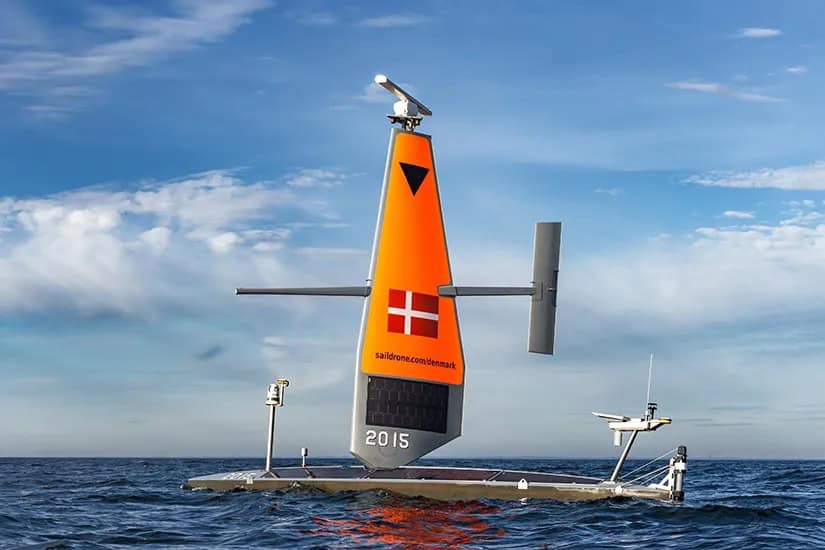
The integration of the Innomar Medium-USV SBP allows the Saildrone Voyager USV to acquire high-resolution, full-waveform acoustic data. This system reveals the layering and composition of the seafloor and sub-seafloor, enabling the detection of changes that may indicate tampering with submerged utilities. It also supports sub-seafloor mapping, including sediment analysis and the identification of buried features.
The SBP can operate at depths of up to 250 meters and penetrate the seafloor by as much as 70 meters, depending on sediment type. This capability was recently deployed in the Baltic Sea in support of the Danish Ministry of Defence Acquisition and Logistics Organisation (DALO).
Brian Connon, vice president of ocean mapping at Saildrone, commented, “The combination of the Innomar SBP and the Saildrone Voyager presents a wide range of opportunities for our customers to detect and track critical changes in seafloor geology, whether for the protection of subsea cables or building pylons for wind turbines. Saildrone is proud to add the Innomar SBP to the Voyager’s array of capabilities and to support the Danish government in enhancing its maritime awareness.”
The 10-meter Voyager is part of a three-class fleet of autonomous platforms designed for varying mission scales. While the 7-meter Explorer focuses on environmental observations and the 20-meter Surveyor handles deep-ocean mapping and defense missions, the Voyager is designed for long-endurance deployments with advanced sensor payloads. Saildrone has maintained four Voyager vessels in the Baltic Sea for six consecutive months, achieving a 92% uptime rate despite harsh weather conditions.
These autonomous operations are supported by a European subsidiary based in Copenhagen. By utilizing a specialized wing design that harvests energy to supplement the platform’s engine, these vehicles can sustain surface and subsurface surveillance for months at a time. This approach allows capital assets and crews to focus on high-level missions while autonomous systems deliver scalable, persistent maritime domain awareness.