
Showcase your capabilities
If you design, build or supply Military Engines, create a profile to showcase your capabilities and connect with visitors who have an active requirement for your solutions.




Military engines provide propulsion and electrical power for defense platforms operating across air, land, and sea domains. Designed for reliability and endurance, these military-grade engines are engineered to meet demanding environmental and operational standards while supporting various mission requirements.
Read the Technology Overview


Advanced Solutions for Defense Modernization: Propulsion, Sensors, Communication & Augmented Reality Systems

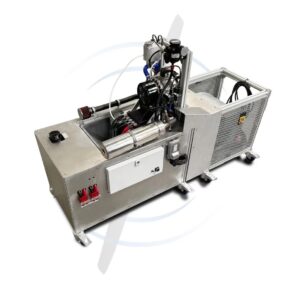
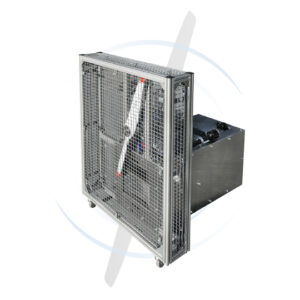
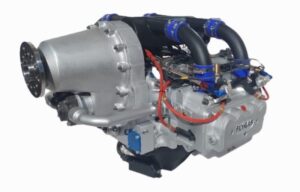
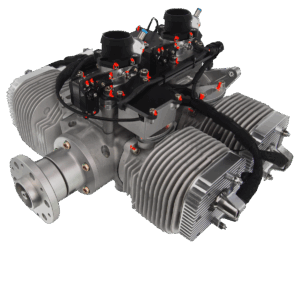
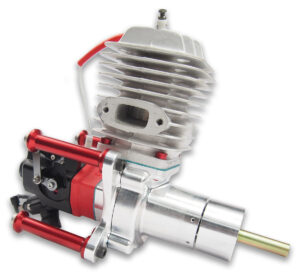
Heavy Fuel and Gasoline Engines for Unmanned Aerial Systems

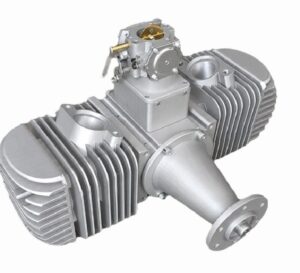
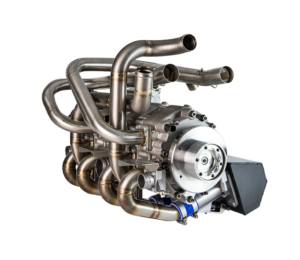
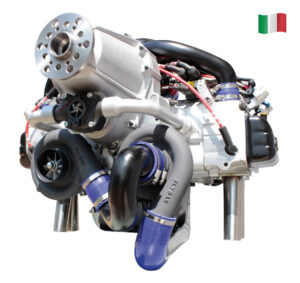
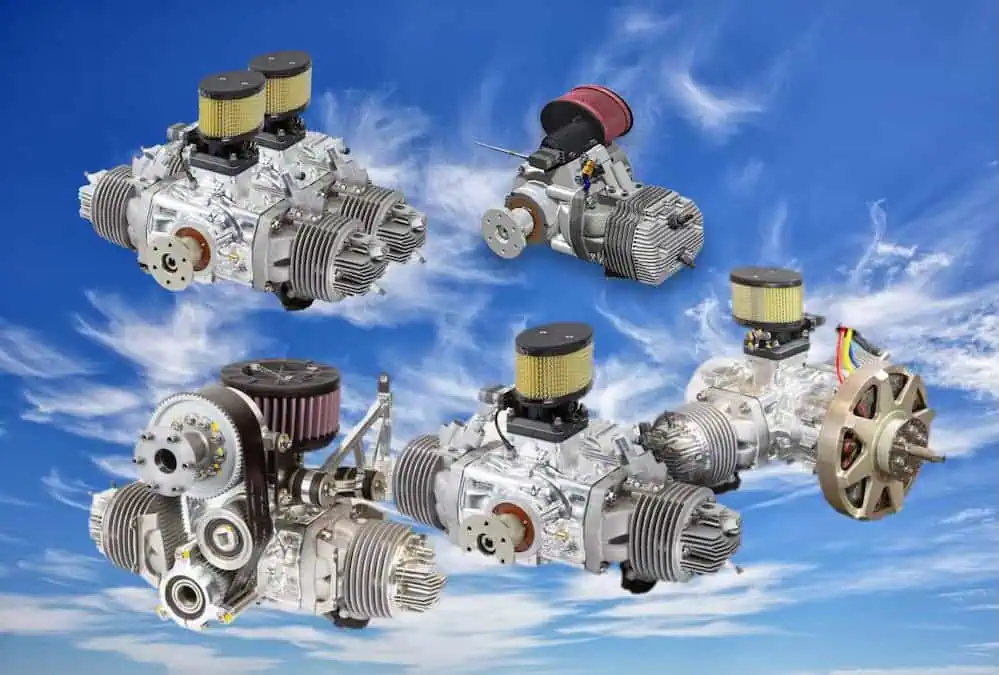
High-Powered UAV Engines & Propulsion Solutions for Military & Defense Applications

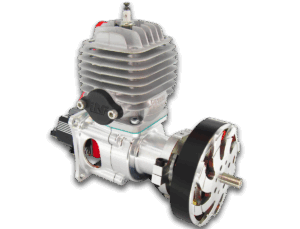
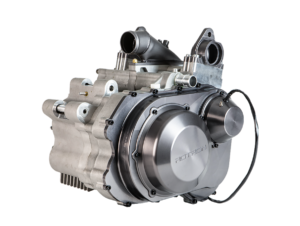
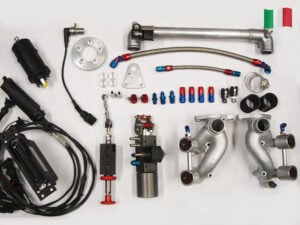
Advanced EFI Drone Propulsion Solutions for Military & Defense Applications

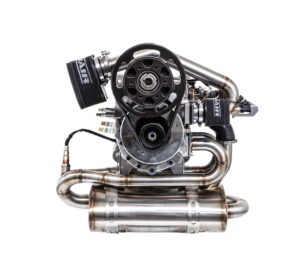
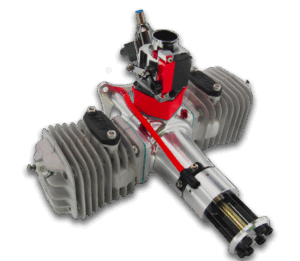
Lightweight Tactical UAV Engines for Gasoline & Heavy Fuel Applications

If you design, build or supply Military Engines, create a profile to showcase your capabilities and connect with visitors who have an active requirement for your solutions.

Modern defense engines include diesel, turbine, turbofan, and hybrid-electric designs. Each is optimized for a specific use case, whether powering armored vehicles, UAVs, or warships. Manufacturers and integrators continue to refine military standard engines to achieve higher fuel efficiency, lower signatures, and improved maintainability, ensuring long service life and interoperability across fleets.

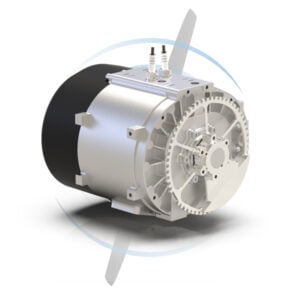
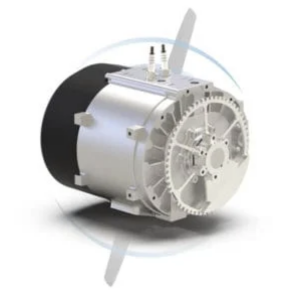
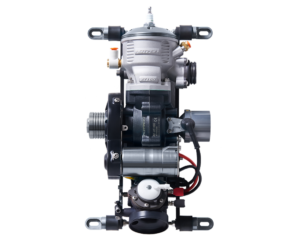
SP-180 HF SRE Heavy Fuel Rotary Engine by Sky Power International
A military diesel engine is widely used in land vehicles and auxiliary power units. Diesel and multi-fuel military engines provide the high torque and durability required for main battle tanks (MBTs), infantry fighting vehicles (IFVs), and logistics trucks. These mil spec motors can often operate on diesel, jet fuel, or kerosene, supporting defense single-fuel policies and simplifying logistics.
On naval platforms, diesel engines and marine propulsion engines power patrol vessels, landing craft, and hovercrafts, enabling long-duration missions with minimal maintenance. Diesel technology remains favored for its dependability, ease of field servicing, and resistance to ignition under fire.
Military gas turbine engines offer high power density and compact design for both aircraft and naval vessels. Gas turbines drive surface combatants such as destroyers and frigates, providing rapid acceleration and sustained cruising capability.
In aviation, turbine cores form the basis of turbojet, turbofan, and turboprop engines. Integrated compressors, combustors, and nozzles ensure efficient thrust generation, while afterburners provide additional acceleration during takeoff or combat operations. Turbine technology remains central to fighter jet engines and transport aircraft alike.
Turbojet engines generate thrust by compressing incoming air, mixing it with fuel, and igniting it to produce high-velocity exhaust. They are used in supersonic aircraft, missiles, and reconnaissance UAVs requiring high-altitude performance. Though largely replaced by turbofans for efficiency, turbojets remain integral to missile propulsion and expendable systems.
A turboprop engine combines a turbine with a propeller, providing efficient propulsion at subsonic speeds. It is commonly used in military transport aircraft, maritime patrol planes, and training platforms. Turboprop systems offer short-takeoff and landing (STOL) capability, making them valuable for operations from unprepared airstrips and forward bases.
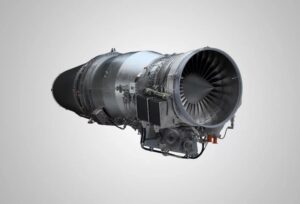
Turbofan engines form the core of modern military aviation. By bypassing a portion of airflow around the engine core, they achieve improved fuel economy, quieter operation, and higher thrust efficiency. Military turbofan engines are fitted to multirole fighters, bombers, and airborne early-warning aircraft, where range and payload capacity are critical.
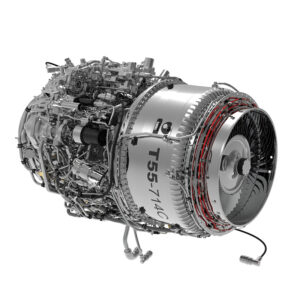
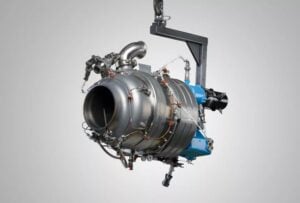
T55-714C Turboshaft Engine by Honeywell
Advanced turbofans employ electronic engine control (EEC) systems to optimize fuel flow, monitor parameters, and enhance reliability during long-range missions.
Ramjet engines and scramjets are air-breathing propulsion systems without moving parts, used primarily in missiles and hypersonic platforms. Ramjets operate effectively between Mach 3–6, while scramjet engines maintain combustion at supersonic airflow speeds beyond Mach 6, enabling long-range and rapid-response capabilities.
Pulsejet engines are simple, low-cost propulsion units producing thrust through intermittent combustion. While less efficient than turbines, their lightweight construction and minimal moving parts make them suitable for tactical UAS, drone engines, and expendable weapon systems.
Hybrid and electric propulsion systems integrate electric motors with diesel or turbine engines to achieve silent operation and lower thermal signatures. These configurations are increasingly applied to unmanned ground vehicles (UGVs) and UAV propulsion, improving stealth and reducing fuel consumption.
Hybrid powerplants also allow regenerative braking and auxiliary power generation for onboard systems, supporting sustainable operations in defense environments.
Heavy fuel engines operate on kerosene-based fuels such as JP-8 and JP-5, improving safety and logistics compatibility. Common in UAV engines, marine propulsion engines, and rotary engine manufacturers’ designs, these powerplants perform reliably under harsh temperature and pressure conditions.
Heavy fuel compliance supports interoperability across Army, Navy, and Air Force platforms under unified single-fuel policies.
Military aircraft engines include turbofan, turboprop, and turbojet engines, each selected according to range, altitude, and speed requirements. Fighter jet engines prioritize thrust-to-weight ratio and agility, while transport and surveillance aircraft rely on fuel-efficient turbofans or turboprops for endurance.
Rotary and piston aircraft engines remain relevant for training aircraft and UAV propulsion, where simplicity and maintainability are key. Experimental aerospace engines such as scramjets extend reach into hypersonic flight regimes.
Tank engines, military diesel engines, and multi-fuel motors power the armored fleets of ground forces. Typical configurations include 4-, 8-, or 12-cylinder diesels designed for continuous operation under load.
Applications range from main battle tank engines and APC engines to smaller ATV engines used in reconnaissance and logistics roles. Many military multi-fuel engines can operate on diesel or aviation fuel, ensuring compatibility with battlefield supply chains.
Marine propulsion engines include diesel and gas turbine engines driving frigates, destroyers, hovercrafts, and amphibious vehicles. LCAC engines and ACV engines are optimized for shallow-water maneuverability and high-power output.
Submarine engines and warship engines rely on low-noise operation and efficient cooling systems for extended submerged or surface missions. Advanced gearboxes, lubrication systems, and fuel control units support continuous operation in corrosive marine environments.
UAV engines, drone motors, and quadcopter engines are central to unmanned aerial platforms used for surveillance, logistics, and tactical engagement. These may include heavy fuel rotary engines, small piston engines, or electric propulsion systems.
Unmanned ground vehicles and maritime vehicles also employ compact diesel or hybrid engines for sustained endurance and silent approach in reconnaissance or mine-countermeasure roles.
Fuel systems are integral to the performance and safety of all military engines, managing the delivery, metering, and filtration of fuel under a wide range of operating conditions. They are designed for compatibility with multiple fuel types, including diesel, jet fuel, kerosene, and heavy fuels such as JP-8 and JP-5, to align with single-fuel defense policies and simplify logistics in joint operations.
A typical defense engine fuel system includes a fuel control unit (FCU), high-pressure injectors, pumps, and filtration assemblies. The FCU regulates flow in response to throttle and altitude inputs, while modern electronic engine controls (EECs) adjust delivery rates for optimal combustion efficiency. In turbofan, turboprop, and turbojet engines, precise metering is essential to maintain thrust stability and prevent surge during rapid power transitions.
For ground and naval platforms, fuel systems incorporate armored or self-sealing tanks, redundant feed lines, and emergency shut-off valves to reduce fire risk and ensure continued operation under combat damage. Marine and amphibious variants employ corrosion-resistant materials and water-separator filters to maintain performance in saline or humid environments.
Advances in digital fuel management enable predictive monitoring of consumption and contamination, supporting condition-based maintenance across fleets. Integration of fuel systems with onboard diagnostics enhances overall efficiency, reliability, and mission endurance in modern military standard engines.
Military standard engines (MIL-STD) are engineered for endurance, maintainability, and safety in extreme environments. Ruggedization covers shock and vibration testing, thermal cycling, and salt-fog exposure, ensuring performance under heat, cold, dust, and corrosion.
Subsystems such as gearboxes, fan modules, and bypass ducts are reinforced to prevent fatigue, while electronic engine controls monitor data for predictive maintenance. Manufacturers increasingly adopt digital ECUs and analytics to reduce downtime and extend engine life across fleets.
Across air, land, and sea platforms, military engines share a set of core mechanical and electronic subsystems that enable reliable operation under demanding conditions. These include air intake and filtration assemblies, fuel delivery and ignition systems, lubrication and cooling circuits, and power transmission components such as gearboxes and accessory drives.
In diesel and multi-fuel military engines, cylinder blocks, crankshafts, pistons, and turbochargers form the heart of the power unit, delivering high torque at low RPM. Gas turbine and jet engines incorporate compressors, combustors, and turbines to convert thermal energy into thrust or rotational power for propellers and generators. Electric and hybrid systems integrate motors, controllers, and inverters to manage energy flow between onboard batteries and auxiliary engines.
Supporting systems, such as cooling, lubrication, and exhaust management, maintain thermal stability and prevent component fatigue during continuous operation. Advanced coatings, temperature-resistant alloys, and vibration-isolated mountings extend service life in harsh environments ranging from desert terrain to maritime climates.
Subsystem modularity allows faster field servicing and compatibility across vehicle families, aircraft types, and naval powerplants, streamlining logistics for armed forces and defense integrators.
Integrating military engines into platforms requires coordination between OEMs and defense system integrators. Factors such as vibration isolation, cooling system routing, and fuel control unit compatibility influence performance and service life.
Condition-based maintenance systems now employ electronic engine control data to forecast component fatigue, enabling timely overhauls of tank engines, aircraft engines, and marine propulsion engines. This approach maximizes operational availability and supports long-term fleet readiness.
Current research focuses on lightweight hybrid and hydrogen-capable defense engines, high-bypass military turbofan engines, and digital twin technologies for predictive diagnostics. Additive manufacturing of combustors, gearboxes, and nozzles is also improving efficiency and reducing production timelines.
As defense programs demand higher efficiency and lower signatures, next-generation military engines will integrate adaptive controls, modular design, and advanced materials for improved sustainability and interoperability.
Military engines remain a cornerstone of defense mobility and power generation, spanning aircraft, armored vehicles, unmanned systems, and marine fleets. Manufacturers of military engines and power plants continue to refine turbine, piston, diesel, and hybrid systems to enhance reliability, standardization, and operational endurance across modern defense applications.[/body-copy]


 Searching Companies & Products


 Subscribe to the Weekly eBrief
The latest engineering and technical developments straight to your inbox - join thousands of engineers who receive it.
Subscribe to the Weekly eBrief
The latest engineering and technical developments straight to your inbox - join thousands of engineers who receive it.