Battery Management Systems (BMS) provide the supervisory control needed to ensure safe, efficient, and predictable power delivery across defense platforms operating in harsh, high-demand environments. Military BMS handle SoC/SoH estimation, cell balancing, protection, and thermal management under extreme conditions.
This category showcases military battery management system suppliers, supporting applications from hybrid-electric ground vehicles and UAVs to naval systems and soldier-worn electronics.
If you design, build or supply Battery Management Systems (BMS), create a profile to showcase your capabilities and connect with visitors who have an active requirement for your solutions.
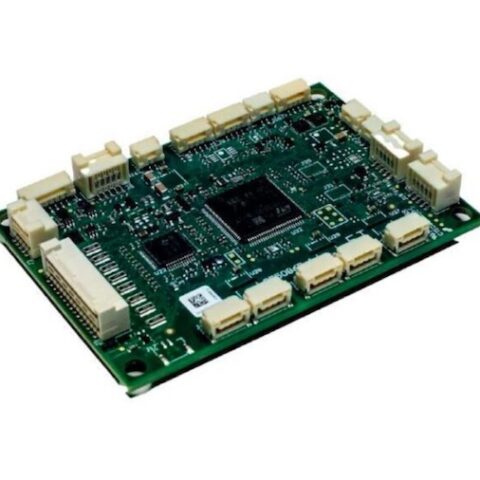
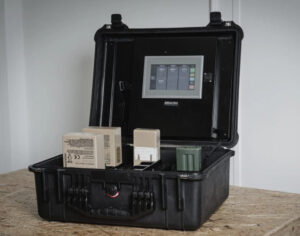
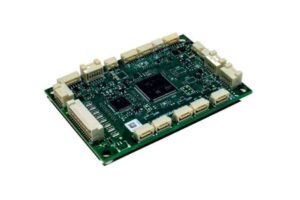
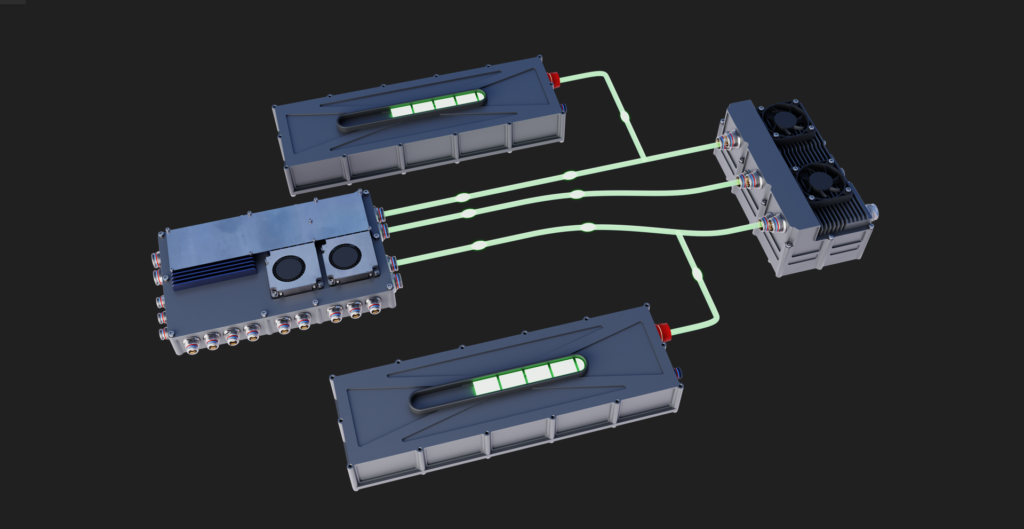
Distributed BMS systems with central & module controllers & a high-voltage monitor
Distributed BMS systems with central & module controllers & a high-voltage monitor
... a distributed BatteryManagementSystem(BMS) formed from central control, module-level monitoring,... ...he distributed system to measure cell voltage and temperature, perform 180 mA balancing, and apply...
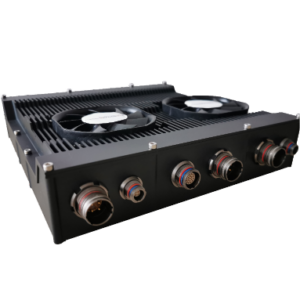
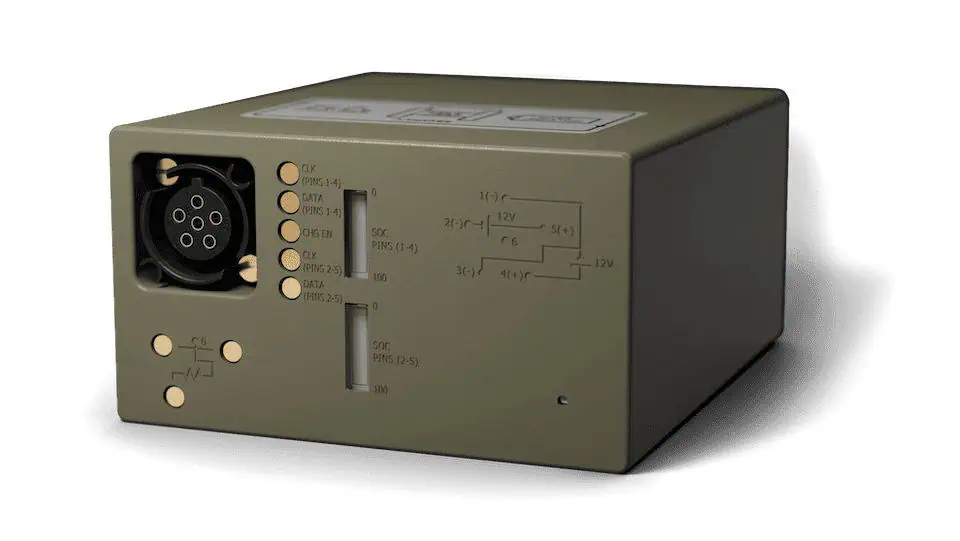
High-current BMS with power sensing modules (100 A / 200 A / 300 A)
High-current BMS with power sensing modules (100 A / 200 A / 300 A)
... an integrated BatteryManagementSystem(BMS) controller that combines pack monitoring, balancing,... ... layered fault management. The V07043 Power Sensing Module family complements the controller with...
The Complete Guide to Military Battery Management Systems (BMS)
Overview by
William Mackenzie
Updated:
Introduction to Military Battery Management Systems
Defense-grade Battery Management Systems (BMS) serve as the essential supervisory controller for the entire power source, ensuring that energy is delivered safely, efficiently, and predictably under the most demanding operational conditions. In modern operations involving hybrid-electric combat vehicles, increasingly power-hungry Intelligence, Surveillance, and Reconnaissance (ISR) payloads, and unmanned platforms reliant on dense onboard energy storage, a BMS becomes the primary enabler of mission capability.
Why Rugged BMS Are Critical for Military Operations
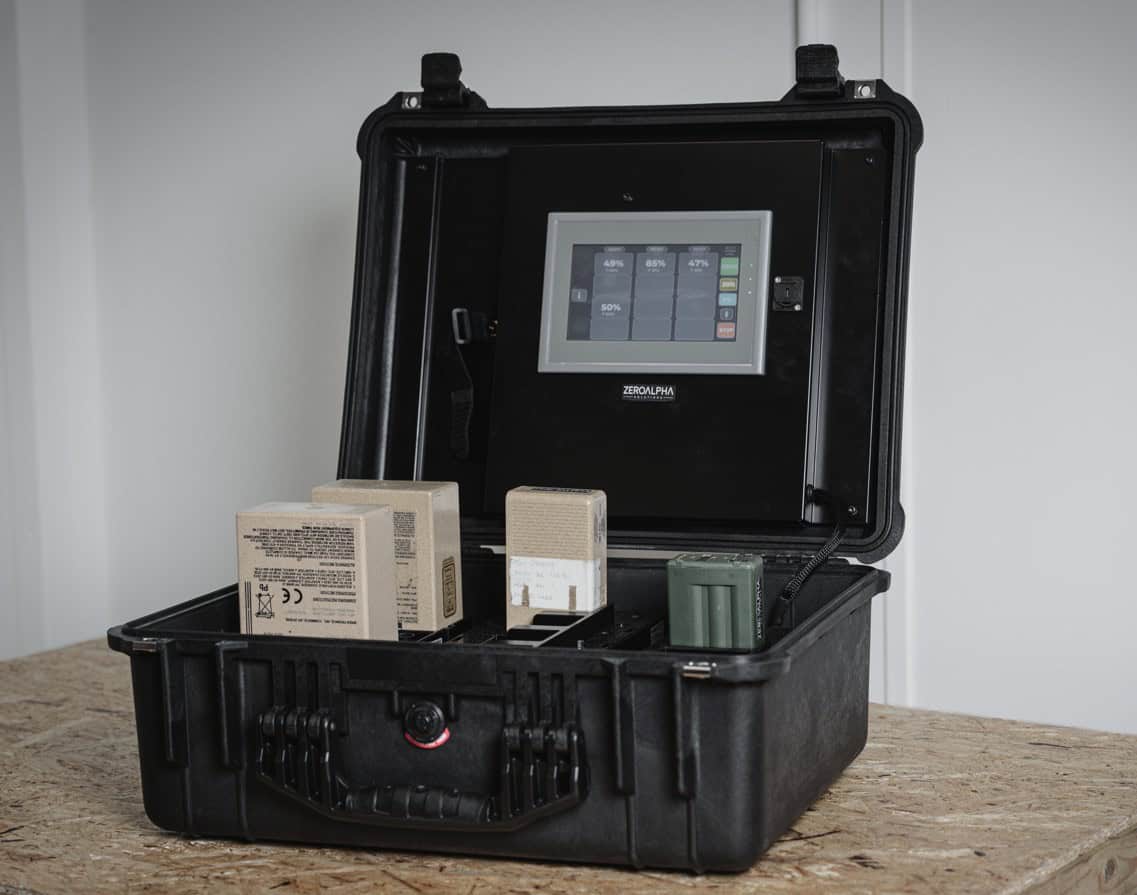
12-Channel Smart BMS by ZeroAlpha Solutions
Unlike commercial systems, military platforms simply cannot tolerate unexpected battery failures in the field. Deep-cycle usage profiles, extreme temperatures, severe shock environments, and adversarial electromagnetic conditions all work to exacerbate battery stress and accelerate degradation. A defense-grade battery management system maintains the integrity of the power system by preventing over-stress events, optimizing charge/discharge behavior, and providing real-time diagnostics to mission computers and vehicle power managers.
Beyond basic protection and monitoring, the BMS directly influences operational availability: it dictates effective range, endurance, silent-watch duration, and survivability of mission-critical electronics. It is simultaneously a high-integrity safety device, a performance optimizer, and a key contributor to readiness and sustainment, fulfilling the stringent demands of managing battery pack systems for aerospace and defense.
Core Functions of a Battery Management System
State of Charge (SoC) Estimation
Accurate SoC estimation is fundamental for effective tactical planning and energy budgeting. Defense-grade battery management systems deploy multi-parameter estimation techniques which often include Coulomb counting, open-circuit voltage correlation, Kalman filtering, and temperature-compensated models to maintain accuracy even under dynamic, fluctuating load conditions. Onboard mission systems rely on these precise values to determine available power for propulsion, communications, sensors, or critical weapons employment.
State of Health (SoH) and Predictive Maintenance
SoH forecasting allows the operator to understand the remaining useful life, internal resistance changes, capacity fade, and long-term degradation trends. Predictive analytics support condition-based maintenance, critically reducing the logistical burden in expeditionary environments. A BMS that can anticipate failure modes dramatically reduces the risk of catastrophic battery events while simplifying complex fleet planning and maximizing operational tempo.
Cell Balancing (Passive, Active Cell Balancing BMS, and Hybrid Approaches)
Cell imbalance is rapidly exacerbated by the high-current operation and steep temperature gradients common in military platforms.
Passive balancing dissipates excess energy as heat. It is simpler and lighter, but inherently less efficient.
An active cell balancing BMS redistributes charge between cells, significantly improving performance and efficiency, especially in large-format packs.
Hybrid approaches intelligently balance efficiency with stringent SWaP-C (Size, Weight, Power, and Cost) constraints.
Effective cell balancing maintains uniform charge states, thereby maximizing cycle life and drastically reducing overall thermal risk.
Charge/Discharge Monitoring and Protection
The BMS strictly enforces electrical boundaries to protect against over-current, over-voltage, under-voltage, and short-circuit events. High-energy military packs require rapid, deterministic protective responses, often coordinated with vehicle power distribution units and mission computers to immediately avoid cascading failures.
Thermal Management and Thermal Runaway Prevention
The risk of thermal runaway dramatically increases with energy density and extreme operational loads. Military battery management system designs incorporate multi-point temperature sensing, sophisticated predictive thermal modeling, and coordinated control of liquid or forced-air cooling systems. In sealed or subsea environments, the BMS must operate with limited thermal headroom, making highly accurate predictive algorithms absolutely critical for safety.
Fault Detection, Isolation, and Event Logging
A rugged BMS continuously logs all fault events, anomalies, environmental exposures, and electrical performance parameters. Fault isolation and persistence monitoring improve diagnostics and support forensic analysis, which is essential for platforms that may experience physical shock, ballistic threats, or intense electromagnetic interference (EMI).
Defense BMS Applications
Military Ground Vehicles (Hybrid, Electric, and Auxiliary Power Systems)
Ground vehicles demand high-pulse capability, robust thermal tolerance, and survivability under extreme vibration, shock, and electromagnetic threats. Hybrid-electric combat vehicles rely on the battery management system to manage both traction batteries and auxiliary power banks. Silent-watch missions place unique, critical demands on battery longevity, requiring highly accurate SoC and precise thermal management.
Unmanned Aerial Vehicles (Drone BMS Requirements and SWaP-C Constraints)
UAV power systems, including those using LiPo and Li-on batteries, must operate at the very limits of energy density. Drone BMS units must be lightweight, reliable at altitude, dust-tolerant, and capable of maintaining safety while minimizing power overhead. High-C-rate discharges during aggressive takeoff and maneuvering require highly precise monitoring, while cold-temperature performance is critical at altitude. Battery management systems for drones must focus on ultra-light design.
Naval Systems (Submersible and Shipboard Power Systems)
Naval energy storage systems face salt fog, high humidity, pressure variation, and severe EMI from shipboard sensors and communications equipment. Submersibles require sealed, pressure-resistant battery configurations with BMS architectures capable of operating in oxygen-deprived, thermally challenging environments.
Soldier-Worn Power Systems and Man-Portable Electronics
Modern soldiers carry radios, optics, navigation systems, and computing devices, making individual power management increasingly complex. Ultra-compact, tactical BMS units must provide high reliability, ruggedness, and safe operation close to the human body. Over-temperature and impact-resistant designs are absolutely essential.
BMS for High-Power Directed Energy Weapons and Sensors
Directed-energy systems such as lasers, microwave weapons, and railgun auxiliaries, impose extreme transient loads. BMS units must expertly coordinate with power conditioning electronics to deliver pulse-power safely and repeatedly. Continuous monitoring for internal resistance rise and temperature spikes is vital to avoid cascading failures during high-demand events.
BMS Architectures & System Designs
Centralized BMS
IQ Prime Battery Management System from Eberspaecher Vecture
In this architecture, all sensing and control hardware resides on a single controller. Centralized battery management systems simplify wiring but can become a single point of failure and a processing bottleneck in very large packs. For smaller defense systems including robotics and soldier-worn devices, this architecture remains effective.
Distributed / Modular BMS Architecture
Increasingly common in large vehicle, naval, or aircraft packs, distributed BMS architecture places monitoring electronics directly at the cell level. This fundamentally improves signal integrity, dramatically reduces heavy wiring complexity, and significantly enhances redundancy and safety. Custom battery management systems also allow for segmenting the power pack to enhance ballistic survivability.
Master–Slave / Scalable BMS Architectures
Large-format packs often employ a master controller coordinating multiple slave units. This setup enables high scalability across different vehicle variants, supports modular energy packs, and handles the multi-string assemblies typical in hybrid electric platforms.
Integration with Platform Power Management Systems
Modern defense systems demand tight, seamless integration between the BMS, power distribution units, mission computers, and propulsion controllers. A well-integrated BMS feeds real-time telemetry into platform health systems and actively participates in energy prioritization, an essential capability during degraded power states or complex power allocation scenarios (e.g., JADC2 power demands). Interfaces must be resilient and conform to standards like MIL-STD-1553 and robust Ethernet/TSN protocols.
Battery Chemistry Considerations for Military BMS
Li-ion (NMC, NCA, LFP)
Different lithium-ion chemistries necessitate specialized battery management system approaches, offering trade-offs between energy density, power delivery, safety margin, and thermal sensitivity.
NMC/NCA: Offer high energy density, common in UAVs and vehicle propulsion.
LFP: Valued for superior thermal stability and long cycle life, often favored for soldier-worn power systems or shipboard installations.
Li-Po battery management system approaches are distinct due to the form factor and typically higher C-rates.
Emerging and High-Power Chemistries
Emerging chemistries, such as Lithium-Sulfur (Li-S), offer significant weight savings but demand more advanced BMS algorithms to manage their complex degradation behavior. High-power cells capable of rapid discharge impose unique demands on the BMS, including millisecond-scale current limiting, highly refined thermal modeling, and precise integration with pulse-power electronics.
Environmental & Ruggedization Requirements
Military battery management systems must maintain reliable operation under the demanding environmental, mechanical, and electromagnetic conditions encountered across deployed platforms.
MIL-STD-810 for Environmental Survivability: Qualification under MIL-STD-810 is non-negotiable, ensuring reliable operation under severe vibration, shock, dust, humidity, altitude, immersion, and freeze-thaw cycles. These stresses directly impact sensor calibration and overall system integrity.
MIL-STD-461 for EMI/EMC: Battery management systems must robustly withstand and not interfere with the intense electromagnetic environments generated by vehicle radios, radar systems, and directed-energy equipment. Compliance with MIL-STD-461 protects both the battery and adjacent mission electronics.
Vibration, Shock, and Ballistic Survivability: Ground and air platforms impart consistently harsh vibrational loads. Shock-resistant mounting, reinforced enclosures, and redundant sensing strategies ensure the BMS maintains integrity under extreme mechanical events and can handle scenarios involving localized power disruption due to ballistic damage.
Emerging Trends in Battery Management System Technology
Advances in battery management technology are improving predictive maintenance, lifecycle visibility, and the flexibility of military power systems.
AI-Enhanced BMS for Predictive Analytics: Machine learning models are enabling significantly more accurate SoH prediction, real-time anomaly detection, and highly optimized charge/discharge strategies tailored to specific, evolving mission profiles.
Digital Twins for Battery Lifecycle Management: Digital twinning allows for precise modeling of battery degradation over time, providing operators with a clear understanding of remaining life under specific, anticipated mission profiles. This greatly enhances sustainment planning and maximizes uptime.
Modular Energy Packs and Swappable Military Power Systems: Future soldier systems, Unmanned Ground Vehicles (UGVs), and UAVs will rely increasingly on standardized, swappable battery modules. BMS architectures must evolve to support hot-swap operation, rapid authentication, and seamless reintegration into platform power networks.
The Advanced Energy Storage for Defense & Security Summit will convene defense, government, and industry leaders on May 27–28, 2026, to explore advanced battery systems, supply chain resilience, and scalable energy solutions shaping future capabilities
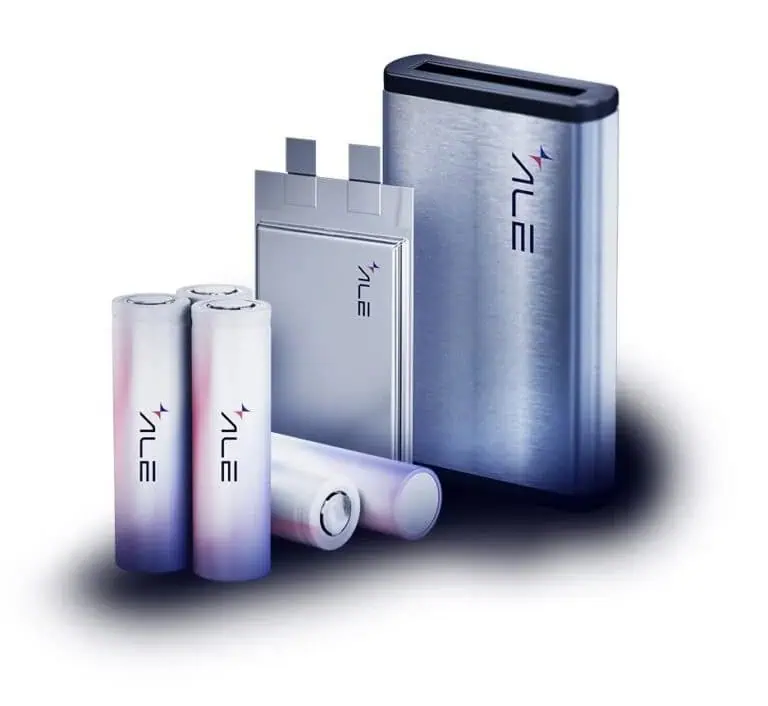
Represented by KT Technical Solutions, American Lithium Energy outlines key performance, safety, lifecycle, and cost considerations for selecting battery solutions across defense, industrial, and commercial applications
Packet Digital has secured significant APFIT funding to advance U.S.-made lithium battery production, strengthening military energy resilience and supporting extended-range UAS, space, and underwater platform performance
Defense Advancement showcases visionair's power distribution, power generation, battery management and engine starter solutions for tactical unmanned aircraft
The latest defense technology news, straight to your inbox.
Get our weekly roundup of technology developments, new products and industry news.
THANK YOU FOR SIGNING UP
Thanks for joining us. Check your inbox.
We've sent you an email. Click the confirmation link to complete your subscription to the weekly eBrief. In the meantime, explore the latest news, suppliers and technologies on DA.
Advancing Defense Capability Through Strategic Collaboration
Defense Advancement works with major OEMs to foster collaboration and increase engagement with SMEs, to accelerate innovation and drive defense capabilities forward.