UAV Navigation-Grupo Oesía, focused on Guidance, Navigation and Control (GNC) systems for autonomous and intelligent platforms, applies its established aerospace expertise to maritime environments.
Its solutions are engineered to support unmanned surface vehicles (USVs) operating in demanding naval scenarios, delivering precise control, consistent performance, and adaptable autonomy tailored to surface operations.
Expanding GNC Capabilities for Maritime Platforms
UAV Navigation has adapted its core architectures and algorithms to meet the distinct challenges of maritime missions. These include variable sea conditions, constrained navigation zones, and potential disruption of satellite-based positioning signals. The company’s GNC systems for USVs are designed to maintain operational continuity, combining multiple onboard sensor inputs with proven estimation techniques originally validated in aeronautical applications.
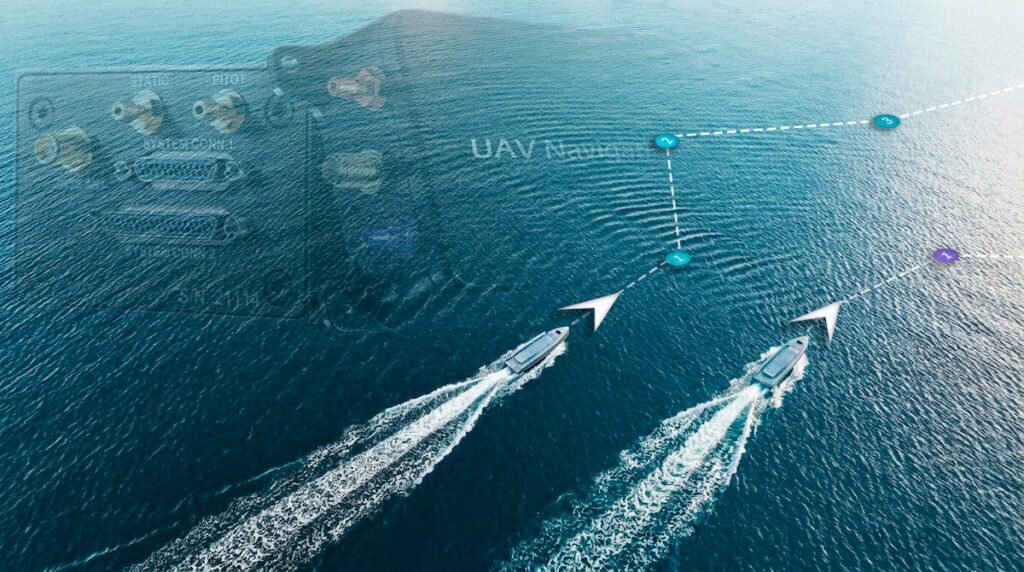
The VECTOR autopilot family enables mission execution across supervised and autonomous modes, supporting full operational cycles from deployment through recovery. Key capabilities include dynamic relative routing, allowing vessels to adjust their position in real time in relation to a reference platform, such as a mothership. This function supports coordinated launch and retrieval operations, as well as formation movement.
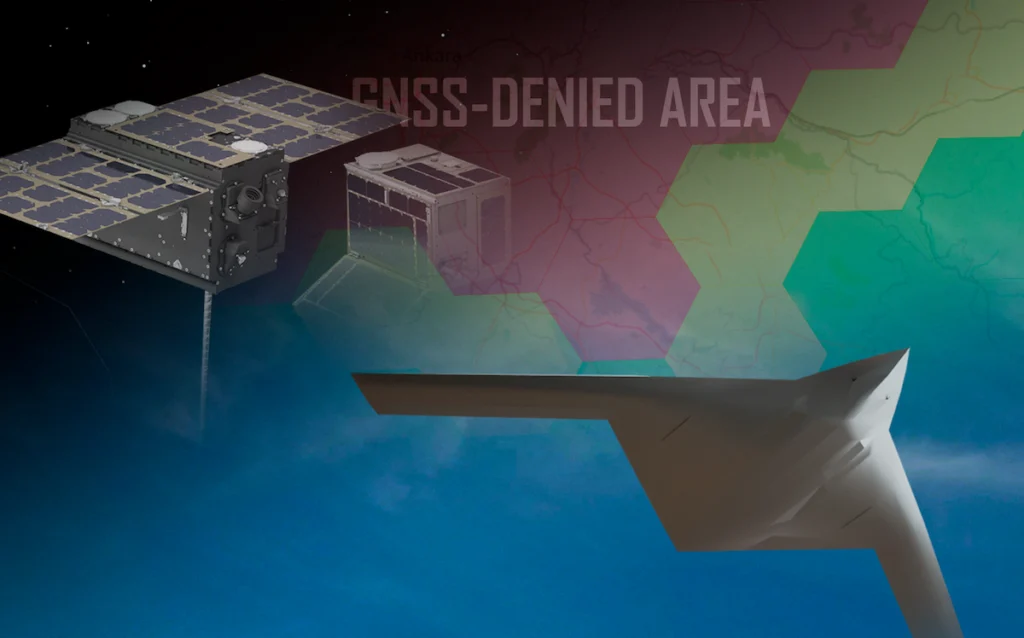
Resilient navigation in environments where GNSS signals may be unreliable or unavailable is achieved through sensor fusion, integrating inertial systems and additional onboard data sources. Conditional mission logic further enhances autonomy by enabling the system to trigger specific actions based on predefined parameters such as geographic boundaries, mission events, or system states.
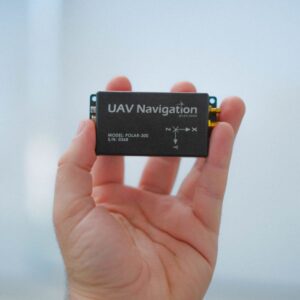
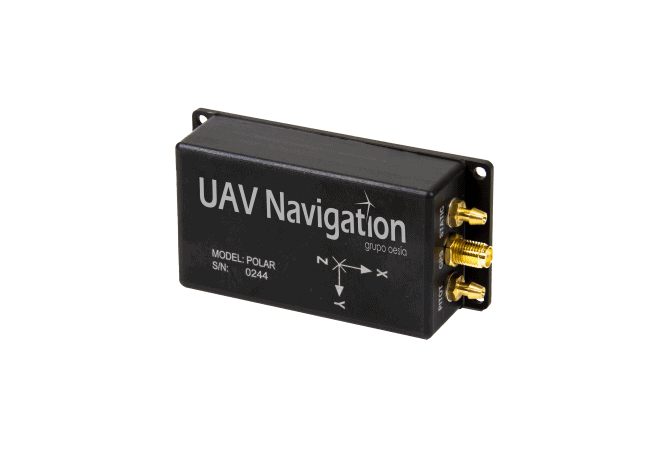
POLAR-300 MEMS-based AHRS & INS unit.
The architecture also supports interoperability across domains, allowing coordination with unmanned aerial vehicles and other platforms within distributed operational frameworks. Missions can proceed without reliance on continuous communication links, an important consideration in contested or communication-limited environments. When required, compatibility with long-range communication systems, including satellite links, is supported. All solutions are developed in alignment with rigorous industrial and defense standards, ensuring reliable performance in adverse maritime conditions.
The Role of USVs in Naval Operations
Unmanned surface vehicles have become increasingly significant within naval forces due to their ability to extend operational reach while reducing personnel risk. These systems support a wide range of missions, including surveillance, reconnaissance, protection, logistics, and, in certain operational contexts, offensive roles.
Smaller tactical USVs, particularly those classified as Class 1 and 2, provide a strong balance between cost and operational capability. They can carry a variety of payloads such as electro-optical systems, compact radar units, and automatic identification systems. Their effectiveness is enhanced when equipped with autonomous navigation, mission planning, and contingency handling capabilities, allowing them to continue operations even when communications are degraded.
The concept of sustained presence in an operational area, sometimes referred to as loitering capability, enables USVs to remain in position until a defined trigger initiates further action. This approach supports discreet monitoring, target designation, and coordinated operations such as decoy deployment or saturation strategies, depending on mission parameters and regulatory considerations.
Compared with larger crewed vessels, USVs provide advantages including access to constrained areas, reduced logistical requirements, and rapid deployment. Their ability to operate collaboratively in distributed formations enhances resilience and supports functions such as networked surveillance and area denial. Integration with aerial platforms further extends their utility, enabling coordinated air-sea operations where tasks and data are distributed among multiple systems.
Operational Example: NEWT21 and the FOG USV
A practical demonstration of UAV Navigation’s maritime GNC capabilities is found in its collaboration with NEWT21. The FOG USV integrates UAV Navigation-Grupo Oesía’s navigation and control system, resulting in a platform capable of extended missions under challenging conditions.
The vessel offers an operational range between 110 and 330 nautical miles and is designed to function in sea states up to level 4. It has completed surveillance and reconnaissance operations over distances exceeding 50 nautical miles in Baltic Sea conditions, maintaining performance in moderate swell environments.
The system enables full mission execution in both autonomous and supervised modes, managing route planning, trajectory adjustments, and approach maneuvers relative to a mothership. Navigation safety features and collision avoidance functions are incorporated in accordance with operational requirements. The platform is currently deployed in Ukraine, where it is expected to demonstrate performance in an active operational environment.
Equipped with stabilized electro-optical payloads and advanced onboard sensors, the FOG USV supports surveillance, reconnaissance, and mission support roles where persistence, navigational accuracy, and reduced operator workload are essential.
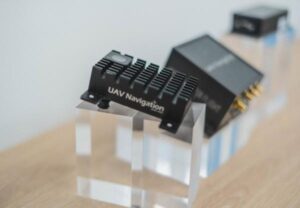
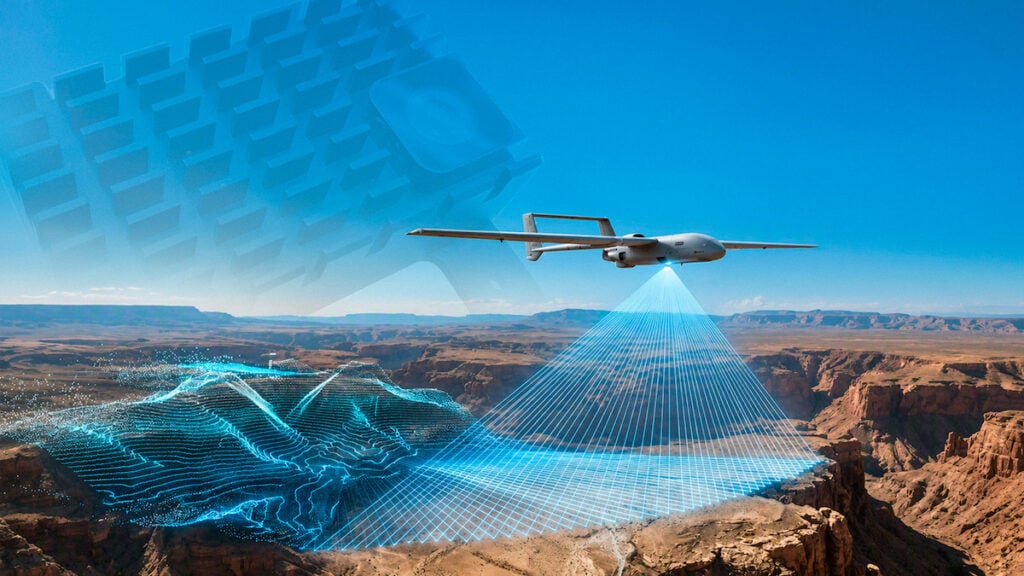
Visual Navigation System (VNS01).
Toward Integrated Air-Sea Operations
UAV Navigation’s development focus extends beyond individual platforms to encompass coordinated, multi-domain operations. Its systems enable UAVs and USVs to function within a shared mission framework, supporting synchronized task execution and real-time information exchange.
Within this structure, smaller USVs can operate as distributed sensing nodes, electronic warfare support elements, or persistent presence assets. These roles complement traditional naval and aerial systems, contributing to a more flexible and scalable force composition.
The continued advancement of coordinated unmanned systems supports improved adaptability in complex operational environments. By enhancing interoperability and enabling distributed mission execution, GNC technologies play a central role in shaping the evolution of modern naval defense capabilities.
Read USV: The Critical Role of Guidance, Navigation and Control in Modern Naval Defense.