
Showcase your capabilities
If you design, build or supply Attritable UAV, create a profile to showcase your capabilities and connect with visitors who have an active requirement for your solutions.




Attritable UAVs are low-cost unmanned systems designed to deliver meaningful combat effects in high-threat environments where platform losses are an accepted operational risk. Supporting the defense industry's shift toward affordable mass, these platforms enable Intelligence, Surveillance, Reconnaissance (ISR), electronic warfare, decoy operations, suppression of enemy air defenses (SEAD), and precision strike missions.
This page showcases manufacturers of attritable drones that enhance force survivability, collaborative combat operations, and mission effectiveness across contested battlespaces.
Read the Technology Overview

Cutting-Edge Defense Technologies Empowering The Warfighter On The Modern Battlefield

If you design, build or supply Attritable UAV, create a profile to showcase your capabilities and connect with visitors who have an active requirement for your solutions.

Attritable UAV (Unmanned Aerial Vehicles) occupy a distinct operational space between traditional, reusable unmanned systems and completely expendable one-way weapons. Engineers and military planners design these platforms to be sufficiently low-cost that commanders can accept individual combat losses, yet capable enough to deliver meaningful tactical effects. Rather than over-investing in the preservation of a few high-value assets, modern armed forces use an attritable drone approach to build resilience, flexibility, and overwhelming operational mass.
As integrated air defense systems become more sophisticated, contested environments grow increasingly hostile for both manned aircraft and multi-million dollar drones. Consequently, defense acquisition is embracing the concept of affordable mass. Operational success no longer relies solely on a handful of highly complex platforms. Instead, victory depends on quantity, rapid distribution, and mission adaptability. Today, attritable UAVs serve as critical components of future force structures, supporting intelligence gathering, electronic warfare, kinetic strike missions, and collaborative combat concepts across multiple domains.
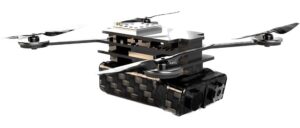
Stictia Nano attritable UAS from Artic Horizons
The defining metric of an attritable UAV is its unit cost. While no universal price point exists, these systems must cost substantially less than traditional combat aircraft or premium unmanned platforms. The underlying objective is not to produce disposable systems, but rather to field platforms that operators can risk in high-threat environments without severe financial or operational penalties.
This procurement philosophy pivots away from platform preservation toward absolute mission accomplishment. Building these systems at scale allows military forces to absorb combat losses rapidly, maintaining a high operational tempo during prolonged conflicts.
Conventional military aerospace programs prioritize platform survivability through expensive defensive suites, heavy shielding, and low-observable technologies. In contrast, an attritable drone focuses entirely on mission success when losses are anticipated. Designers achieve survivability through tactical distribution, swarming, and operational flexibility rather than onboard hardware complexity. Accepting a calculated rate of attrition drastically reduces manufacturing costs, maintenance footprints, and deployment timelines.
Engineers evaluate an attritable UAV based on its immediate mission lifecycle. Whether the platform conducts electronic attack, reconnaissance, or precision strike operations, its ultimate value rests on tactical outcomes rather than a decades-long service life. This design philosophy avoids the extreme cost burdens associated with long-term sustainment, structural fatigue tracking, and legacy modernization programs.
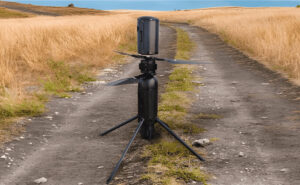
Damocles™ Launched Effect from Textron Systems
Modular open-system architectures dictate the engineering of modern attritable drones. Open payload interfaces allow flight line technicians to swap sensors, electronics, or weapons systems quickly. A single airframe can transition from an Intelligence, Surveillance, and Reconnaissance (ISR) asset to an electronic warfare platform or a kinetic weapon between sorties. This deep flexibility maximizes fleet utility while simplifying joint logistics.
The strategic value of attritable concepts relies heavily on industrial capacity. Manufacturers leverage digital engineering, automated production lines, and commercial technologies to achieve high-rate manufacturing. In modern attrition warfare, the ability to build and deploy platforms rapidly is just as vital as the performance of the individual platform itself.
Attritable drones can penetrate deep into highly contested airspace, operating close to hostile emitters to deliver electronic attack effects that would put crewed aircraft at unacceptable risk. Their physical proximity to targets allows for highly effective jamming with lower power requirements, keeping high-value assets outside the enemy’s engagement envelope.
Equipped with compact electronic support measures and signals intelligence (SIGINT) payloads, attritable UAVs collect critical emissions data from adversary radars, communications networks, and electronic warfare nodes. This distributed intelligence feed improves overall battlespace awareness and feeds real-time targeting networks.
Decoy missions represent an ideal application for the attritable drone. By mimicking the radar signatures of larger, crewed aircraft, these platforms create false formations and deceptive flight profiles. This forces adversaries to activate their defensive systems, revealing hidden positions and expending expensive interceptor missile inventories on low-cost targets.
Suppression and destruction of enemy air defenses (SEAD/DEAD) require operating inside weapon engagement zones. Attritable UAVs offer a highly cost-effective method to stimulate, locate, and neutralize integrated air defenses, shifting the economic calculus of air defense back in favor of the attacker.
Armed variants of attritable drones deliver precision munitions against tactical targets without putting aircrews at risk. Many designs combine ISR sensors with a strike payload, creating a loitering platform that can hunt for targets, maintain persistent surveillance, and execute an attack within a single, seamless mission cycle. This capability is exceptionally valuable when targeting time-sensitive or fleeting threats forward-deployed in the battlespace.
High-risk missions into anti-access, area-denial (A2/AD) environments are prime use cases for these systems. Operating autonomously beyond the reach of friendly communications or support networks, they provide commanders with deep operational reach and critical flexibility.
Engineers match propulsion choices directly to the intended mission profile:
The mission computer acts as the central hub of any attritable UAV, managing sensor suites, flight controls, navigation data, and communications links. Sophisticated autonomy software handles route planning, threat avoidance, and payload management without requiring continuous operator intervention. Integrating artificial intelligence at the tactical edge allows these platforms to process massive data streams locally, adjusting to dynamic battlefield conditions instantly.
Command and control requires robust, secure communications. Attritable platforms leverage line-of-sight radios, satellite communications (SATCOM), tactical data links, and mobile ad-hoc mesh networks. To survive in heavily contested electromagnetic environments, these systems utilize anti-jam technology, low-probability-of-intercept (LPI) waveforms, and self-healing network protocols.
Modern peer conflicts require operations in environments where GPS and other global navigation satellite systems are actively jammed or spoofed. Attritable drones overcome this by integrating alternative positioning technologies. These include robust inertial navigation systems (INS), visual-inertial odometry, terrain-referenced navigation, and multi-sensor fusion algorithms that maintain positioning accuracy without satellite fixes.
Collaborative Combat Aircraft (CCA) represent a monumental shift in air combat architecture, designed from the ground up to operate as fully integrated members of a combined strike package flying alongside crewed fifth-generation and sixth-generation fighter aircraft. Rather than acting as standalone remote assets, CCAs expand the sensor, weapon, and electronic warfare capacity of the entire flight. This manned-unmanned teaming (MUM-T) architecture allows a single human pilot to direct multiple autonomous uncrewed platforms simultaneously, blending human tactical judgment and command authority with the rapid processing speed, persistence, and sheer numbers of autonomous machines to drastically increase flight survivability.
Within this ecosystem, future air operations rely on dynamic task allocation where human pilots delegate high-risk assignments to these attritable escorts. An attritable drone or attritable UAV can fly ahead to map enemy radar positions, draw defensive missile fire, or carry extra long-range air-to-air missiles for the crewed fighter. This operating structure significantly increases combat mass and lethality while minimizing the risk to human life in heavily contested airspace.
The future of unmanned warfare lies in cooperative autonomy. Autonomous swarms allow large groups of attritable UAVs to communicate peer-to-peer, dynamically dividing tasks like search, tracking, and targeting without a centralized controller. If an adversary downs several members of the swarm, the remaining platforms automatically redistribute the mission roles to complete the objective.
While airborne platforms dominate current defense discourse, the attritable philosophy is expanding across multiple domains. Navies are developing low-cost uncrewed surface vessels (USVs) and unmanned underwater vehicles (UUVs) to contest maritime choke points. Similarly, ground forces are integrating robotic combat vehicles to provide affordable mass on land.
Advanced aerospace research is now focusing on high-speed, rocket- or air-breathing jet-powered attritable systems. Combining the affordable mass philosophy with high-subsonic or supersonic speeds delivers highly responsive, survivable platforms capable of penetrating the most advanced defensive systems.


 Searching Companies & Products