Wireless Power Transfer (WPT) enables the transmission of electrical energy without physical conductors, supporting military systems that require reliable power in remote, contested, and infrastructure-limited environments. Technologies include inductive charging, resonant coupling, RF power transfer, microwave transmission, laser-based energy delivery, and wireless surface power systems.
This guide covers wireless power transmission solutions for tactical communications networks, electronic warfare equipment, counter-UAS systems, autonomous platforms, and logistics operations.
If you design, build or supply Wireless Power Transfer (WPT), create a profile to showcase your capabilities and connect with visitors who have an active requirement for your solutions.
Overview of Wireless Power Transfer Solutions for Military & Defense Operations
Overview by
William Mackenzie
Updated:
Introduction to Wireless Power Transfer (WPT) in Defense Applications
Military Wireless Power Transfer (WPT) enables electrical energy to be transmitted without physical conductors between a power source and receiving device. Defense applications range from short-range inductive charging to long-range radio frequency, microwave, and optical systems capable of powering vehicles, sensors, communications equipment, robotic platforms, and unmanned systems in demanding environments.
As military forces become increasingly dependent on electrically powered and autonomous systems, wireless power can reduce reliance on physical connectors, cabling, and frequent battery replacement. This can support more flexible, resilient, and persistent operations where conventional power infrastructure is limited or unavailable.
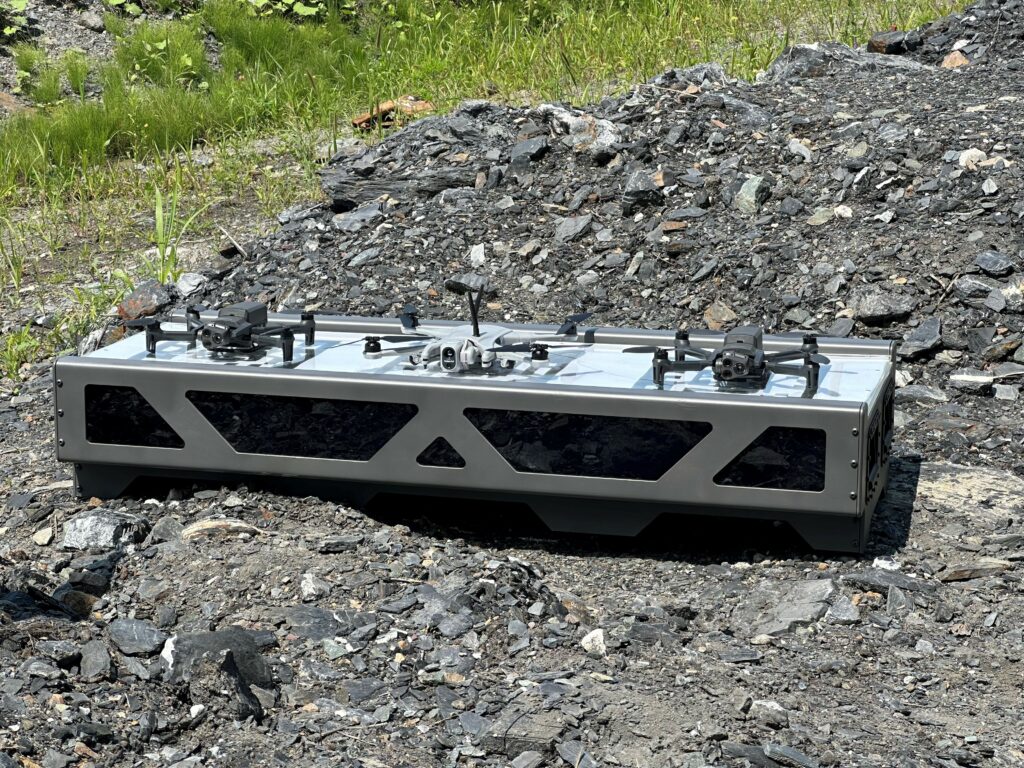
Wireless power transfer technology from GuRu Wireless
Types of Wireless Energy Transmission Technologies
Inductive Power Transfer
Inductive power transfer uses magnetic fields generated between closely coupled coils to transfer energy. This mature technology delivers high efficiency at short distances and is widely used for charging batteries and portable electronic devices. In military applications, inductive designs are particularly suitable for vehicle charging stations, portable equipment, and ruggedized field systems where reliability and environmental sealing are essential.
Resonant Inductive Coupling
Resonant inductive systems extend transfer distances by tuning both the transmitter and receiver to operate at the same resonant frequency. This engineering approach enables greater flexibility in alignment and positioning while maintaining high energy efficiency. Defense applications include autonomous vehicle charging stations, robotic systems, and multi-device charging environments where exact positioning cannot always be guaranteed.
Capacitive Wireless Power Transfer
Capacitive power transfer relies on electric fields rather than magnetic fields to transmit energy. These systems can be implemented using lightweight and low-profile structures, making them highly attractive for aerospace applications where weight and form factor constraints are paramount. Emerging military applications include embedded charging surfaces, portable electronics, and specialized platform integrations.
Radio Frequency (RF) Wireless Power Transmission
RF power transfer uses electromagnetic waves to deliver energy across significantly greater distances than conventional near-field technologies. An advanced RF power transmitter can focus energy toward a remote wireless power receiver, enabling entirely new operational concepts.
For defense organizations, far-field RF wireless power transmission offers the potential to support remote sensors, unattended systems, and airborne platforms operating beyond the reach of conventional charging methods. Persistent drone wireless power and aerial surveillance concepts are particularly attractive, as energy can potentially be delivered to aircraft without requiring landing or battery replacement. These capabilities may fundamentally change how military forces approach endurance and operational persistence.
Microwave Power Transmission
Microwave power transfer represents a specialized form of RF energy transmission optimized for higher-power and longer-range applications. High-gain antennas and advanced beam-control technologies can direct substantial amounts of energy toward remote receivers.
Potential military applications include expeditionary energy distribution networks, remote infrastructure support, and future concepts involving long-range energy delivery to forward operating locations. While technical challenges remain, microwave RF power transfer continues to attract significant defense research interest.
Laser-Based Wireless Power Transfer
Laser power transfer converts electrical energy into highly focused optical beams that are directed toward specialized photovoltaic receivers. This approach offers precise energy delivery and can achieve significant transmission distances under favorable atmospheric conditions.
Defense applications include powering remote sensors, supporting airborne platforms, and delivering energy to locations where physical access is restricted. The highly directional nature of laser systems also offers clear security advantages for targeted power delivery.
Wireless Surface Power Distribution Technologies
Wireless surface power technologies distribute energy across large surfaces, enabling multiple devices to draw power simultaneously without conventional connectors. Unlike traditional charging pads that require precise positioning, advanced surface-based systems can energize entire workspaces or operational areas.
Potential military applications include command posts, maintenance facilities, mission planning centers, operations rooms, and autonomous charging environments. Multiple devices can be powered concurrently, simplifying equipment deployment and reducing infrastructure complexity within tactical facilities.
Applications of Wireless Power Transfer Across Military & Defense
ISR, Border Security and Persistent Monitoring
Intelligence, Surveillance, and Reconnaissance (ISR) missions frequently require tactical assets to remain operational for extended periods. A distributed wireless power network can support persistent surveillance infrastructure by continuously supplying energy to remote sensors, observation systems, unattended ground sensors, and aerial surveillance platforms. This operational capability significantly extends mission duration while reducing maintenance risks and high-risk manual battery replacement missions in hostile territory.
Border security operations represent a particularly compelling use case for wireless energy transmission. Fixed surveillance towers, remote sensor arrays, and autonomous monitoring systems benefit from a decentralized wireless energy transfer architecture. These systems maintain operational readiness in isolated environments where traditional infrastructure remains entirely unavailable.
Electronic Warfare Systems
Electronic warfare equipment often operates in forward-deployed locations where reliable power availability is a critical operational constraint. Utilizing a targeted wireless power transmitter and wireless power receiver setup can simplify the deployment of jamming systems, passive monitoring stations, signals intelligence equipment, and electromagnetic surveillance assets. This reduction in cabling requirements directly increases tactical flexibility on the move.
As electronic warfare platforms become more mobile and distributed, robust RF power transfer architectures are being engineered to enable rapid repositioning and dynamic reconfiguration. This will allow operators to adapt swiftly to changing threat environments without extensive infrastructure modifications.
Tactical Communications Networks
Modern tactical power systems and communications networks depend on a growing ecosystem of radios, relay stations, satellite terminals, networking devices, and edge-computing systems. Integrating advanced wireless power transmission technologies supports expeditionary communications architectures by eliminating cabling complexity and enabling the rapid establishment of command posts in austere environments.
Future battlefield communications architectures may incorporate integrated wireless energy distribution layers alongside standard data networks. This configuration allows both vital information and wireless RF power to be delivered simultaneously across the same operational area.
Counter-UAS Systems
Counter-drone systems typically combine radar, RF sensors, electro-optical payloads, command-and-control infrastructure, and effectors. Deploying a dedicated wireless power system simplifies the integration of distributed sensing nodes and remote detection systems while supporting the persistent operation of protective air defense networks around critical facilities and forward operating bases.
Logistics and Sustainment Operations
Military logistics remains heavily burdened by battery transportation, storage, and replacement requirements. Modern RF power transmission and near-field charging solutions can reduce sustainment demands by enabling automated charging of equipment, reducing spare battery inventories, and improving equipment availability throughout operational deployments.
Special Operations Forces
Special operations units frequently operate in environments where minimizing physical signatures and reducing carried weight are critical mission requirements. Flexible wireless charging system configurations can support sensors, communications equipment, wearable technologies, and autonomous systems while reducing the logistical burden placed upon individual operators.
Autonomous Battlefield Systems
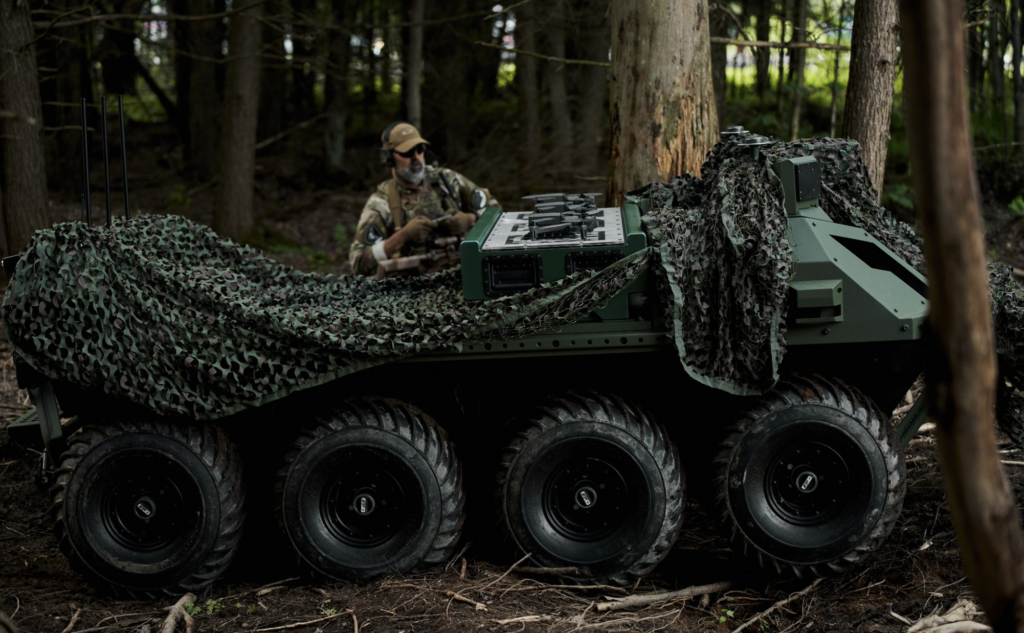
Future battlefields will feature increasing numbers of autonomous systems operating across land, sea, air, and space domains. Implementing an automated wireless energy transmitter network provides a pathway toward completely autonomous energy ecosystems. In this model, unmanned platforms can recharge without human intervention, enabling greater operational persistence and drastically reduced sustainment requirements.
Hardware & Technologies Enabling Wireless Energy Transmission
Technology Component
Operational Impact & Description
Advanced Antenna and Phased Array Systems
Utilizes software-controlled electronic beam steering to generate highly controlled energy patterns, eliminating the need for slow mechanical gimbals.
Beamforming and Adaptive Beam Steering
Concentrates energy precisely where it is required to maximize transfer efficiency, reduce unwanted emissions, and maintain tracking on dynamic platforms.
Rectennas and Energy Harvesting Technologies
Acts as the foundational element of far-field RF wireless power systems, continuously advancing conversion efficiency and equipment miniaturization.
Wide-Bandgap Semiconductors (GaN and SiC)
Replaces legacy silicon to support higher frequencies, maximize thermal efficiency, reduce losses, and increase overall power density across military power electronics.
Core Components of Military Wireless Power Systems
Building a reliable tactical power network requires the seamless integration of several hardware and software subsystems designed to manage high-frequency energy conversion.
Power Generation Sources: These systems draw raw energy from tactical generators, vehicle power networks, batteries, deployable microgrids, or shore infrastructure to dictate overall mobility and operational flexibility.
Energy Transmission Modules: These units convert raw electrical energy into electromagnetic, microwave, optical, or capacitive fields using high-efficiency wireless RF modules and amplifiers.
Receiver and Rectenna Technologies: Positioned on the receiving end, a wireless power receiver utilizes specialized wireless energy receiver units and rectifying antennas to harvest incident fields and restore stable DC power.
Beam Steering and Tracking Systems: Advanced tracking loops continuously adjust transmission parameters to maintain alignment with moving targets and ensure safe operation around personnel.
Power Management and Distribution Units: These units regulate voltage, control energy flow, and protect equipment to optimize overall conversion efficiency across a shared wireless power network.
Energy Storage Integration: High-rate batteries, supercapacitors, or hybrid storage technologies provide essential buffering during temporary fluctuations or beam blockages.
Monitoring, Diagnostics, and Control Software: Software platforms may leverage automation and artificial intelligence to manage energy allocation dynamically and provide real-time visibility into network health.
Together, these interconnected subsystems form the structural backbone of any military-grade wireless energy architecture deployed in the field.
Deep-tech startup SunCubes is deploying AI-powered cloud simulation tools from SimScale to develop laser-based charging systems that enable commercial and industrial drones to recharge in flight without physical contact
GuRu Wireless will demonstrate a dual-drone persistent flight system using a single 24 GHz Generator Unit to keep untethered aircraft airborne continuously at the MOSA Industry Summit
GuRu Wireless is pioneering wireless RF power beaming technology, enabling small tactical drones to operate continuously for extended ISR missions without the need to land or swap batteries
Red Cat has acquired Quaze Technologies to integrate wireless power transfer capabilities into autonomous defense systems, supporting persistent drone and robotic operations across air, ground, maritime, and underwater environments
Quaze Technologies showcased its wide-surface wireless power transfer at Arctic Warrior Experiment 2025, proving its ability to wirelessly recharge tactical systems in extreme Arctic conditions
Quaze Technologies bring wireless power transfer technology to the US defense sector at AUSA 23, enabling easy and reliable wireless charging for remote or autonomous devices on land, sea and air
The Quaze concept demonstrator remote charging station, Drone Swarm Tactical OverWatch (DSTOW), will be featured as part of Rheinmetall's innovation portfolio at DSEI
The latest defense technology news, straight to your inbox.
Get our weekly roundup of technology developments, new products and industry news.
THANK YOU FOR SIGNING UP
Thanks for joining us. Check your inbox.
We've sent you an email. Click the confirmation link to complete your subscription to the weekly eBrief. In the meantime, explore the latest news, suppliers and technologies on DA.
Advancing Defense Capability Through Strategic Collaboration
Defense Advancement works with major OEMs to foster collaboration and increase engagement with SMEs, to accelerate innovation and drive defense capabilities forward.