
Showcase your capabilities
If you design, build or supply Position Sensors, create a profile to showcase your capabilities and connect with visitors who have an active requirement for your solutions.




Get in touch with suppliers and manufacturers of position sensors for defense, aerospace, and mission-critical platforms. Linear, rotary, and arc position sensor solutions support actuators, control surfaces, steering systems, and mechanical linkages across land, air, and naval applications, with designs suited to harsh environments, high reliability requirements, and military use cases.
Read the Technology Overview




Tactical Grade IMU, GPS/INS, Weapon Orientation Solutions

High-Performance Fiber Optic and MEMS Inertial Sensors & Navigation Systems

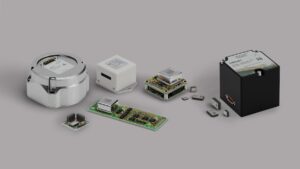
MEMS Inertial Sensors, Gyroscopes & Accelerometers for Inertial Guidance, Control & Stabilization

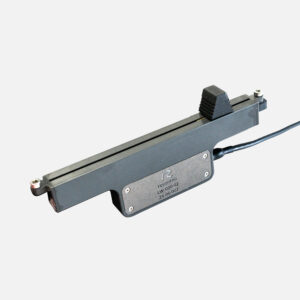
Ruggedized Solid-state Liquid Level, Temperature and Position Sensors for Military Applications

If you design, build or supply Position Sensors, create a profile to showcase your capabilities and connect with visitors who have an active requirement for your solutions.

Position sensors are critical to the control and feedback systems that underpin motile defense platforms and weapon technologies. Whether controlling an aircraft’s flight surfaces, aligning a radar antenna, or tracking a vehicle’s turret movement, these sensors provide the essential measurement of displacement and rotation needed for precision and safety.
Physically, position sensors fall into three main categories: linear, rotary, and arc/angular sensors. Each type can be implemented using several underlying measurement principles, including magnetic (Hall effect or inductive), optical, or potentiometric sensing, depending on the operational requirements and environmental conditions.
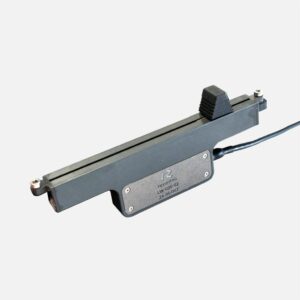
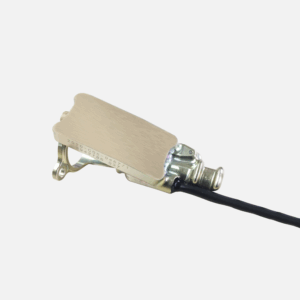
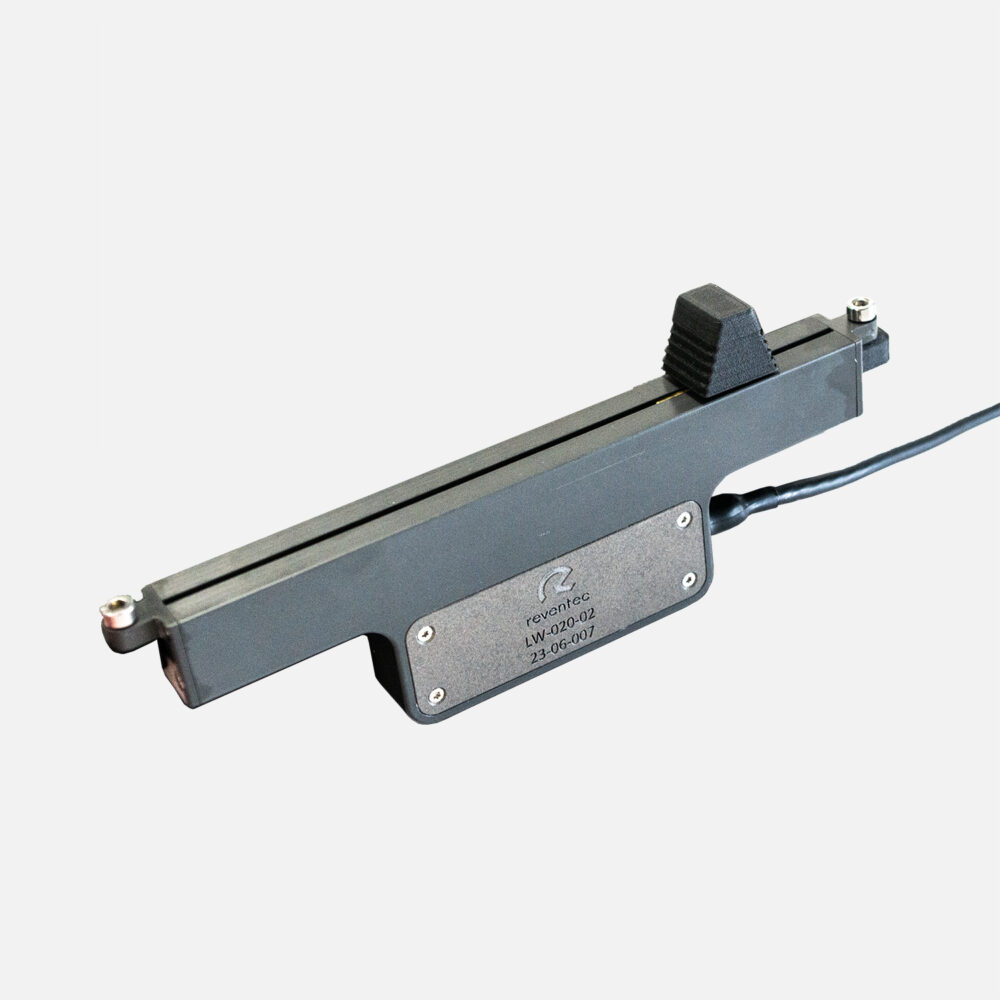
Quantum TMR 100mm Linear Position Sensor by Reventec
Linear position sensors measure displacement along a straight path and are widely used in hydraulic systems, brake mechanisms, and actuator stroke monitoring in defense platforms.
Common defense applications include:
Technologies:
Linear sensors are often mounted inside hydraulic cylinders or along actuator assemblies to deliver continuous feedback on piston or shaft movement. Ruggedized housings and hermetic sealing protect internal elements against oil ingress, vibration, and temperature extremes.
Rotary position sensors detect angular displacement, providing continuous or limited-angle feedback for systems that rotate about a central axis.
They are integral to defense platforms requiring accurate rotational measurement, such as:
Technologies:
Rotary sensors can be absolute (outputting a unique code for each position, retaining data on power loss) or incremental (measuring movement relative to a reference). Absolute rotary sensors are particularly valuable in mission-critical defense applications that require instant reactivation accuracy.
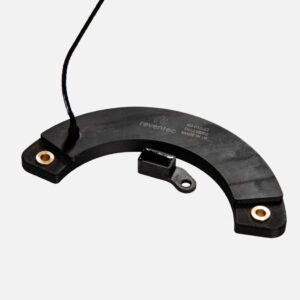
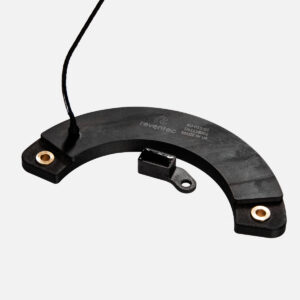
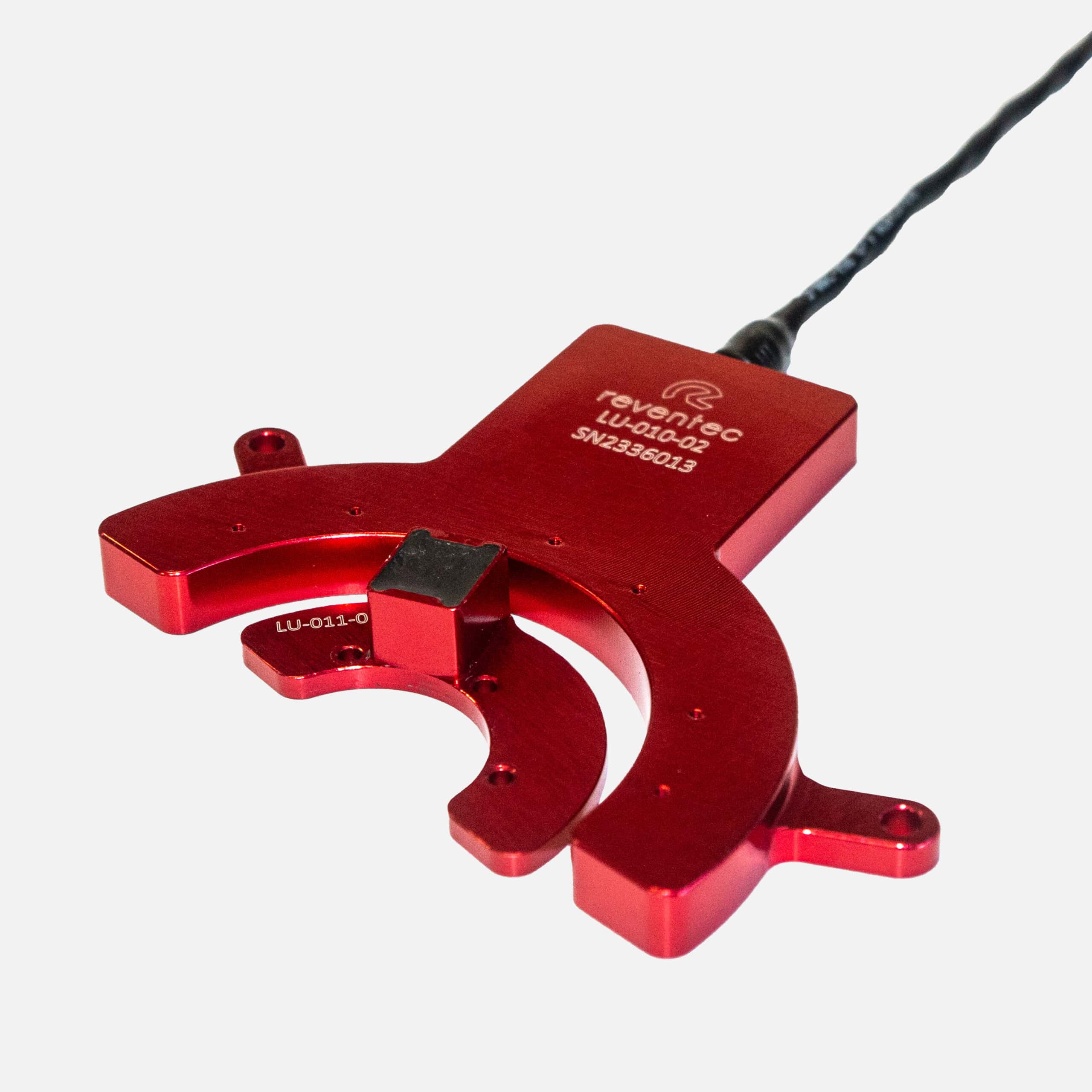
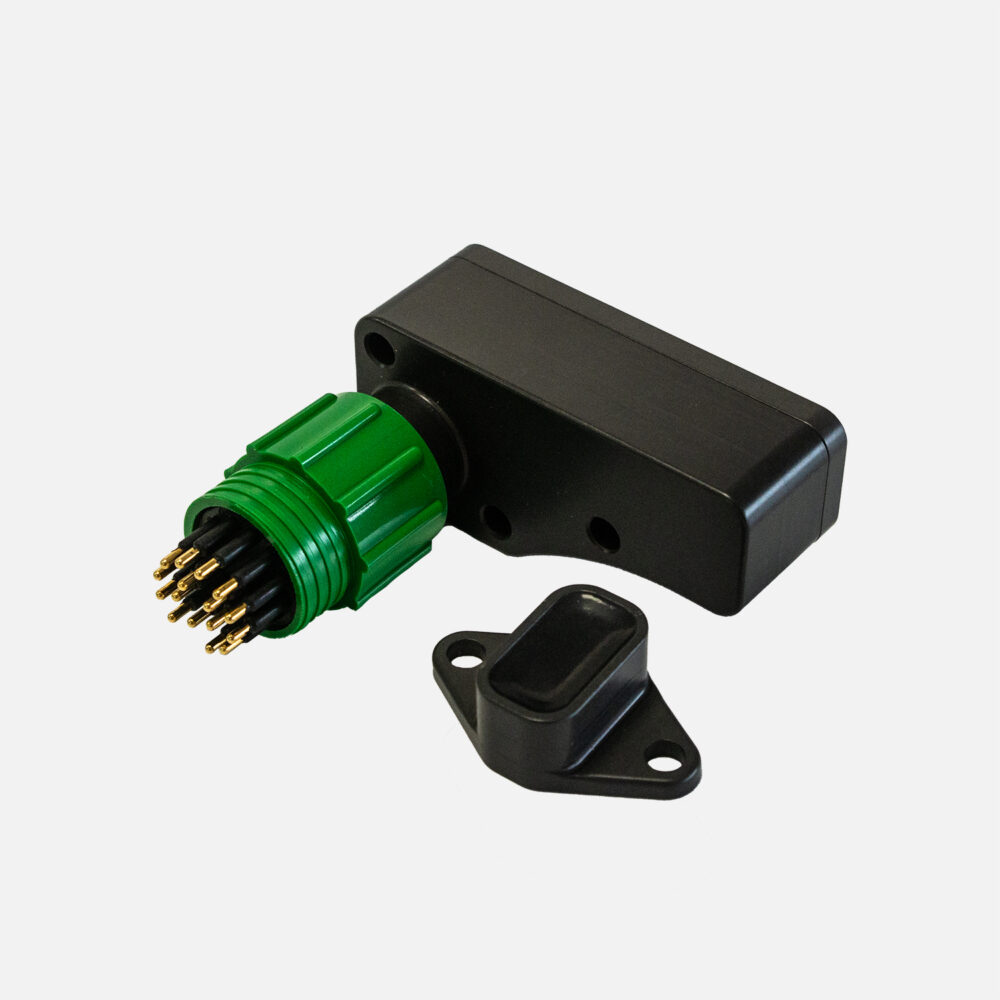
Quantum TMR 100° Arc Position Sensor by Reventec
Arc position sensors, also known as angular position sensors are designed to measure limited angular movement along an arc rather than full rotation. They combine aspects of both linear and rotary measurement, optimized for short-range motion in curved mechanical linkages.
They are used extensively in:
Technologies:
Arc sensors often provide the best balance of resolution and mechanical fit in applications where a compact arc segment corresponds to actuator travel or hinge movement.
| Sensor Geometry | Typical Range | Example Application | Primary Advantage |
| Linear | Millimeters to meters | Hydraulic pistons, actuator stroke | Long-range, simple alignment |
| Rotary | Full 360° rotation | Turrets, radar, rotor blades | Continuous angular feedback |
| Arc | Limited angular travel | Flight control surfaces, naval elevation | Compact and precise for short motion |
Selection depends on mechanical configuration, required resolution, and environmental factors. Rotary sensors suit continuous motion systems, linear types fit translational actuators, and arc sensors serve compact curved-path mechanisms.
Across these geometries, the sensing technology defines performance characteristics such as precision, environmental resistance, and lifespan.
| Technology | Key Characteristics | Common Defense Uses |
| Inductive (LVDT/LVIT) | Contactless, highly rugged, immune to wear | Hydraulic actuators, turret feedback, and naval systems |
| Hall Effect / Magnetoresistive | Compact, durable, unaffected by oil/dust | Vehicle steering, radar control, and actuators |
| Optical (Encoder/Transmissive) | High resolution, light-based, sensitive to debris | Radar arrays, missile guidance, tracking antenna azimuth |
| Potentiometric | Simple analog output, mechanical wear | Legacy actuators, test rigs |
Inductive and magnetic sensors dominate modern defense applications due to their resilience against shock, vibration, and temperature extremes. Optical sensors are preferred where micron-level accuracy is required, while potentiometric versions persist in simple, low-cycle mechanisms.
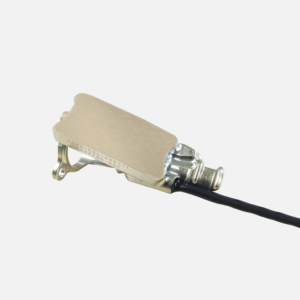
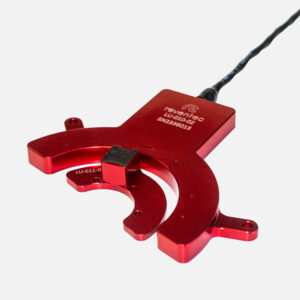
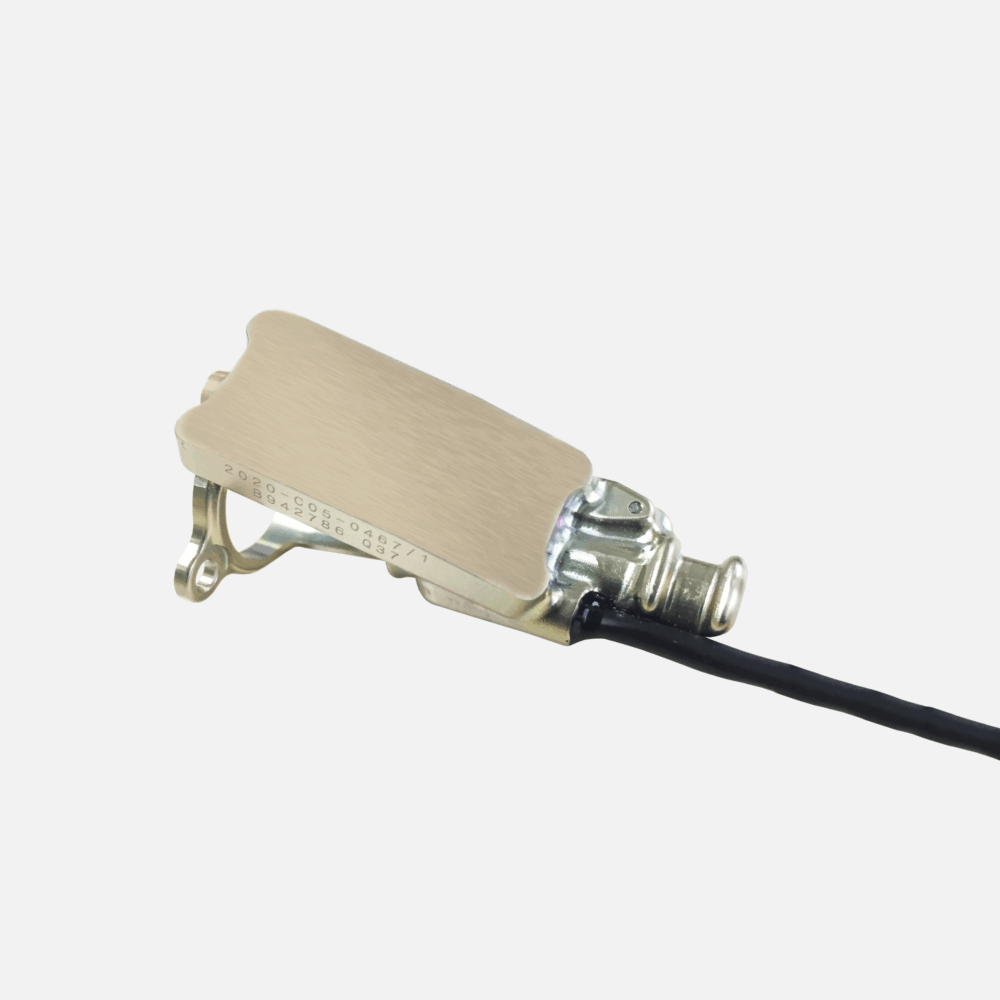
Quantum TMR Linear Positional Sensor by Reventec
Position sensors interface directly with digital or analog control systems, providing real-time feedback for closed-loop control. They form part of the control architecture for:
In many cases, position feedback is fused with data from inertial measurement units (IMUs) or gyroscopes to support GPS-denied navigation. These integrated systems enable accurate positioning and stabilization even when satellite-based navigation is unavailable due to jamming or signal denial.
Defense position sensors are engineered to perform reliably under the severe conditions defined by MIL-STD-810 (environmental testing) and MIL-STD-461 (EMC control). They must operate under conditions of:
To meet these challenges, sensors are often constructed from stainless steel or anodized aluminum, with sealed housings rated to IP68 or higher. Hermetic sealing, redundant sensing elements, and integrated signal conditioning are standard in defense-grade models.
Arc and rotary sensors used in helicopter rotor control or radar antenna stabilization typically include dual redundant outputs for fail-safe operation. Linear sensors embedded in hydraulic actuators often feature built-in temperature compensation and pressure-rated housings.
Military position sensors are designed in accordance with NATO and international defense standards to ensure interoperability and performance consistency:
Position sensor manufacturers often conduct qualification testing for shock, vibration, salt fog, and fluid susceptibility to meet mission-specific platform requirements.
Position sensors are foundational components in modern defense mechatronics, linking mechanical motion to electronic control and enabling automation, targeting precision, and navigation accuracy.
Across air, land, and sea domains, these sensors:
From helicopter rotor pitch systems to naval radar stabilization and armored vehicle steering control, position sensors ensure the accuracy and reliability required for mission success.


 Searching Companies & Products