Finden Sie Hersteller und Lieferanten von militärischen EO/IR-Systemen sowie taktischen elektrooptischen Infrarotsystemen, Sensoren und Technologien für ISR-, SAR- und C-UAS-Verteidigungsanwendungen
Hochentwickelte Militär- und Verteidigungselektronik, Elektrooptik, Wärmebildtechnik, FPGA, eingebettete Systeme, industrielles Internet der Dinge (IIoT) und intelligente Energielösungen
Hochentwickelte Militär- und Verteidigungselektronik, Elektrooptik, Wärmebildtechnik, FPGA, eingebettete Systeme, industrielles Internet der Dinge (IIoT) und intelligente Energielösungen
Wenn Sie entwerfen, bauen oder liefern Elektrooptische und Infrarot-Systeme (EO/IR), Erstellen Sie ein Profil, um Ihre Kompetenzen zu präsentieren und mit Besuchern in Kontakt zu treten, die einen konkreten Bedarf an Ihren Lösungen haben.
Compare manufacturers and suppliers of military Electro-Optical and Infrared (EO/IR) systems, including imaging sensors, optical components, and supporting technologies. This table identifies supplier locations, product capabilities, and documented manufacturing, customization, OEM supply, and system integration services.
Capabilities are supplier-reported and may vary by location or project requirements.
Manufacturer / Supplier
Location
EO/IR Technologies Supplied
Manufacturing
Customization
OEM Supply
System Integration
ASELSAN
Ankara, Turkey
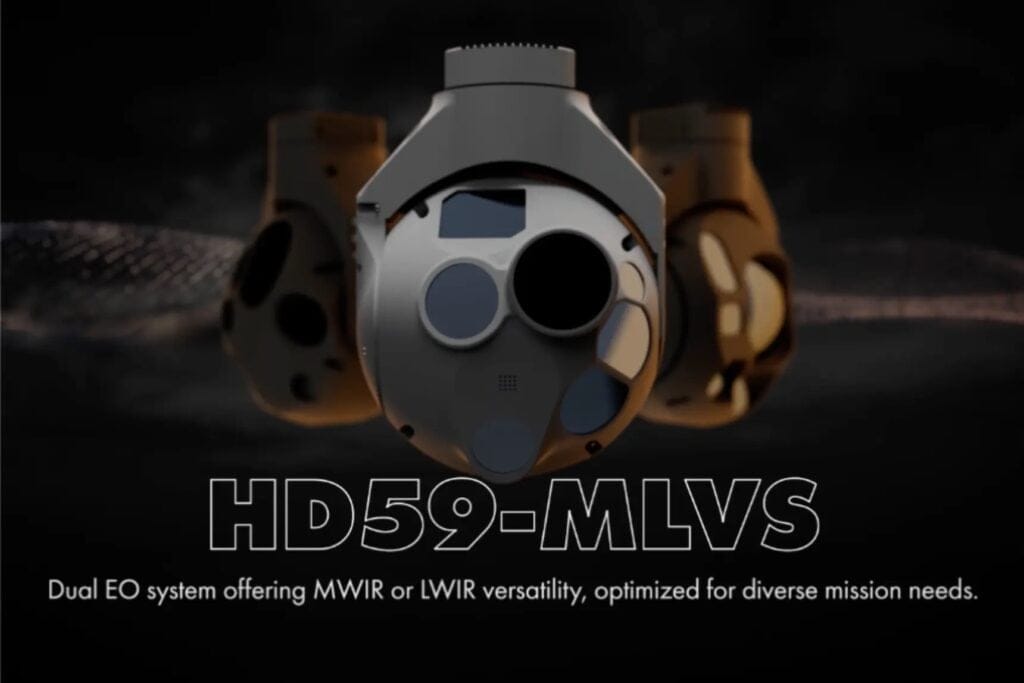
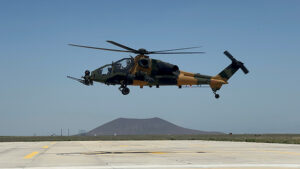
Airborne EO/IR gimbals, surveillance and targeting systems, land and naval electro-optics, laser systems
✓
✓
✓
✓
Trillium Engineering
Hood River, Oregon, USA
Stabilized EO/IR gimbals, multispectral imaging payloads, tracking and geolocation software
Notes: “Unknown” = not confirmed by the manufacturer information used.
Militärische EO/IR-Systeme
Übersicht von
Sarah Simpson
Aktualisiert:
EO/IR-Systeme (elektrooptische/Infrarotsysteme) kombinieren Sensoren für sichtbares Licht mit Infrarotsensoren und ermöglichen so den Einsatz bei Tag, bei Nacht sowie bei schlechten Lichtverhältnissen oder eingeschränkter Sicht.
Sie werden für eine Vielzahl von Verteidigungsanwendungen eingesetzt, bei denen es um die Verbesserung des Lagebewusstseins geht, darunter ISR (Aufklärung, Überwachung und Aufklärung), Such- und Rettungsaktionen, Bedrohungserkennung und Zielidentifizierung sowie der Schutz vor infrarotgelenkten Raketen.
Elektrooptische Infrarotsysteme
EO/IR-Systeme lassen sich in zwei große Kategorien unterteilen – bildgebende und nicht-bildgebende.
Nicht-bildgebende EO/IR-Systeme dienen der Erkennung sogenannter Punktziele, die klein genug sind, um innerhalb der Auflösung des Sensors als einzelner Punkt zu erscheinen. Sie werden zur Erkennung von Bedrohungen wie feindlichen Flugzeugen, Raketen und Drohnen eingesetzt und konzentrieren sich in der Regel eher auf die Erfassung ungewöhnlicher Energiemengen als auf die Erfassung signifikanter Details.
Bildgebende EO/IR-Systeme dienen der Erkennung sogenannter ausgedehnter Ziele und können auch zur Erkennung von Punktzielen eingesetzt werden. Bildgebende EO/IR-Systeme können darauf abzielen, alle Details ausgedehnter Ziele auf die gleiche Weise wie andere Kamerasysteme zu erfassen, oder sie können Bilder des Himmels aufnehmen und dann innerhalb dieses Bildes nach Punktzielen suchen.
EO/IR-Technologien
Zu den EO/IR-Technologien gehören Scanning- und Staring-Systeme. Scanning-Systeme verwenden eine lineare Anordnung aus einer oder mehreren Detektorreihen und führen diese Anordnung über das Bildfeld. Staring-Systeme nutzen eine rechteckige Detektoranordnung, um ein gesamtes Bild auf einmal aufzunehmen.
EO/IR-Sensoren
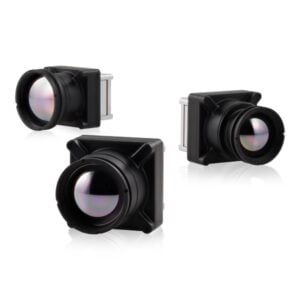
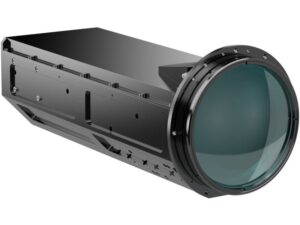
EO/IR-Sensoren können Licht im sichtbaren und ultravioletten Wellenlängenbereich sowie im kurzwelligen, mittelwelligen und langwelligen Infrarotbereich (SWIR/MWIR/LWIR) erfassen. Die Wahl der Wellenlängen hängt von der Anwendung des Systems und den Zielen ab, für deren Erkennung es ausgelegt ist. Die IR-Kameras können gekühlt oder ungekühlt sein, wobei gekühlte Systeme in der Regel eine größere Reichweite und höhere Empfindlichkeit bieten, jedoch sperriger und teurer sind.
EO/IR-Kardanringe und Halterungen
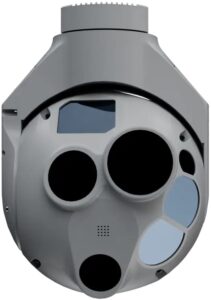
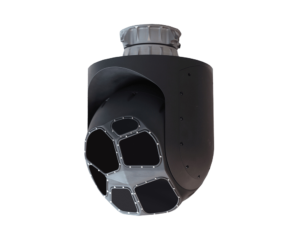
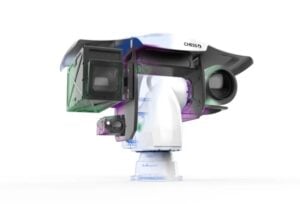
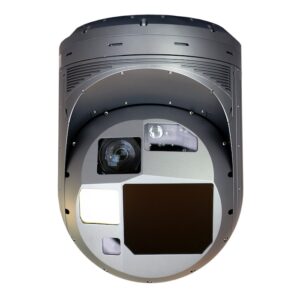
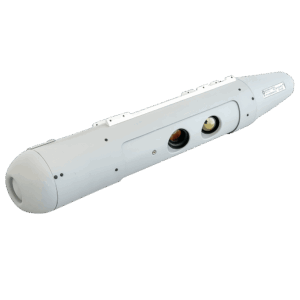
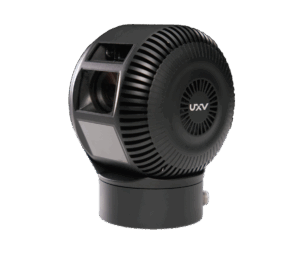
EO/IR-Systeme können in Gondeln oder stabilisierten Kardanringen untergebracht sein, um eine einfache Montage an Flugzeugen, Hubschraubern und UAVs (unbemannten Luftfahrzeugen) zu ermöglichen, oder sie können auf Stativen und anderen Strukturen für stationäre Anwendungen wie Basisverteidigung und UAS-Abwehr montiert werden.
Frequently Asked Questions
What are the main differences between EO/IR systems designed for surveillance and those used for targeting?
Surveillance EO/IR systems typically prioritize wide-area observation, persistent monitoring, and reliable detection across different operating conditions. Targeting systems place greater emphasis on precise line-of-sight control, tracking accuracy, target localization, and integration with fire control or weapon systems. Some multisensor platforms support both functions, although their suitability depends on the installed sensors, stabilization performance, and targeting capabilities.
When should military EO/IR systems include laser rangefinders or target designators?
Laser rangefinders are useful when accurate target distance measurements are required for surveillance, tracking, or fire control. Laser target designators serve a different purpose, enabling compatible laser-guided weapons to engage designated targets. The appropriate configuration depends on mission requirements, weapon compatibility, laser coding, eye-safety restrictions, and applicable operational procedures.
What integration requirements should be considered when selecting EO/IR systems for military vehicles and aircraft?
Mechanical mounting, available electrical power, cooling requirements, data interfaces, and compatibility with existing mission systems are central integration considerations. Airborne installations may also require aerodynamic and vibration assessments, while vehicle-mounted systems must accommodate shock, restricted installation space, and electromagnetic interference. Compatibility with command-and-control systems, video distribution networks, and existing operator interfaces can significantly influence integration complexity.
Is onboard image processing necessary for military EO/IR surveillance systems?
Onboard image processing is particularly valuable when EO/IR systems must perform automated target detection, image enhancement, or object tracking with limited communications bandwidth. Local processing can reduce the amount of video transmitted to remote operators and support faster analysis, depending on system architecture. However, processing capability must be balanced against power consumption, computational latency, thermal management, and compatibility with external processing systems.
What should I look for in an EO/IR sensor system for tactical UAS?
EO/IR systems for tactical Unmanned Aircraft Systems (UAS) should balance imaging performance, stabilization, and payload weight against the aircraft’s power capacity and endurance. Key considerations include sensor resolution, thermal sensitivity, optical zoom, target detection and identification range, and gimbal pointing accuracy. Compatibility with the aircraft’s flight control systems, communications links, and onboard processing hardware is also important, particularly for real-time surveillance, target tracking, and intelligence gathering.