

Showcase your capabilities
If you design, build or supply Embedded Networking, create a profile to showcase your capabilities and connect with visitors who have an active requirement for your solutions.




Embedded networking enables high-speed, secure, and reliable communication between mission-critical systems in modern aerospace and defense platforms. From embedded switches and routers to standardized data bus protocols like ARINC 429 and MIL-STD-1553, these systems form the nervous system of today's aircraft, satellites, and tactical military assets. Explore the role of embedded networking in these highly demanding sectors, covering technical aspects, deployment environments, and evolving standards that support operational security and efficiency.
Read the Technology Overview




Rugged Image Processing & Mission-Critical Electronics for Defense Systems

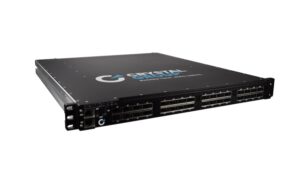
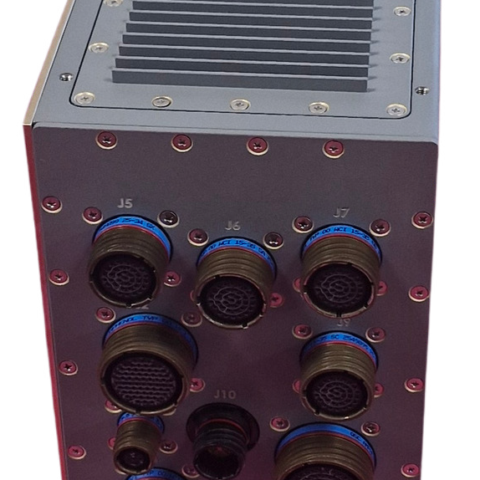
Ruggedized Edge Computing & Networking for Mission-Critical Defense Applications


Secure Radio Communication & Authentication Systems for Military, Defense & Security Applications

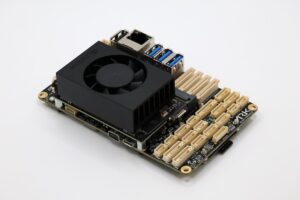
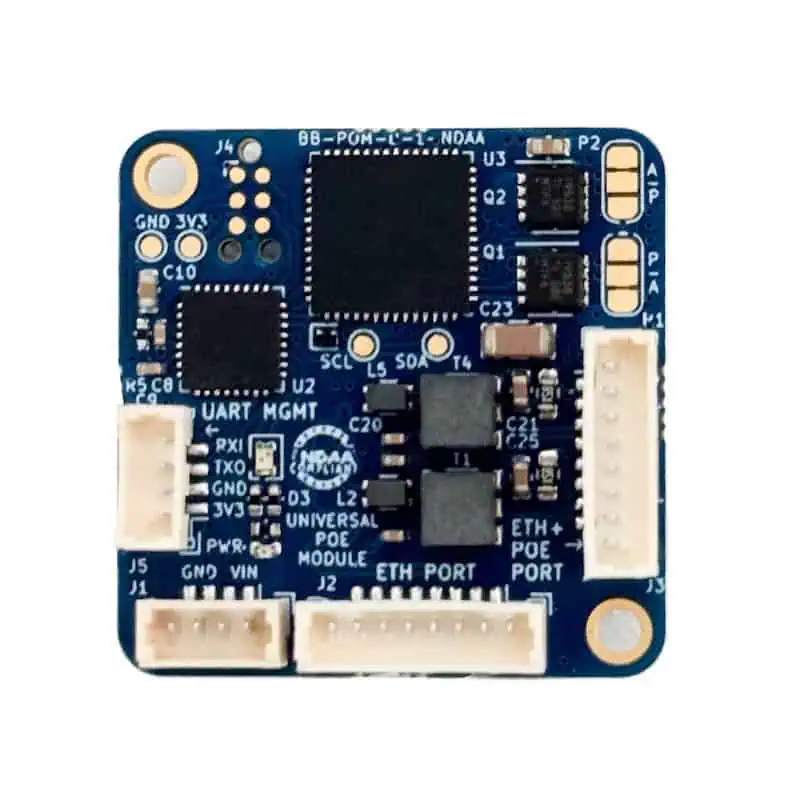
State-Of-The-Art NDAA-Compliant Electronic Hardware Components for Mission-Critical Drone & Robotics Platforms. Made in the USA.

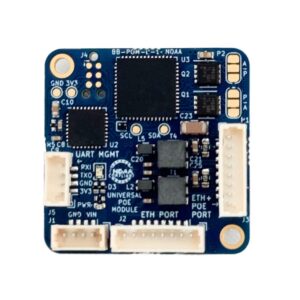
Data Transmission & Network Connectivity Hardware for OEMs of Mission-Critical Drones & Robotics

If you design, build or supply Embedded Networking, create a profile to showcase your capabilities and connect with visitors who have an active requirement for your solutions.

Embedded networking refers to the integration of network communication capabilities within embedded systems, which are self-contained computing platforms designed for specific control functions within larger mechanical or electronic systems.

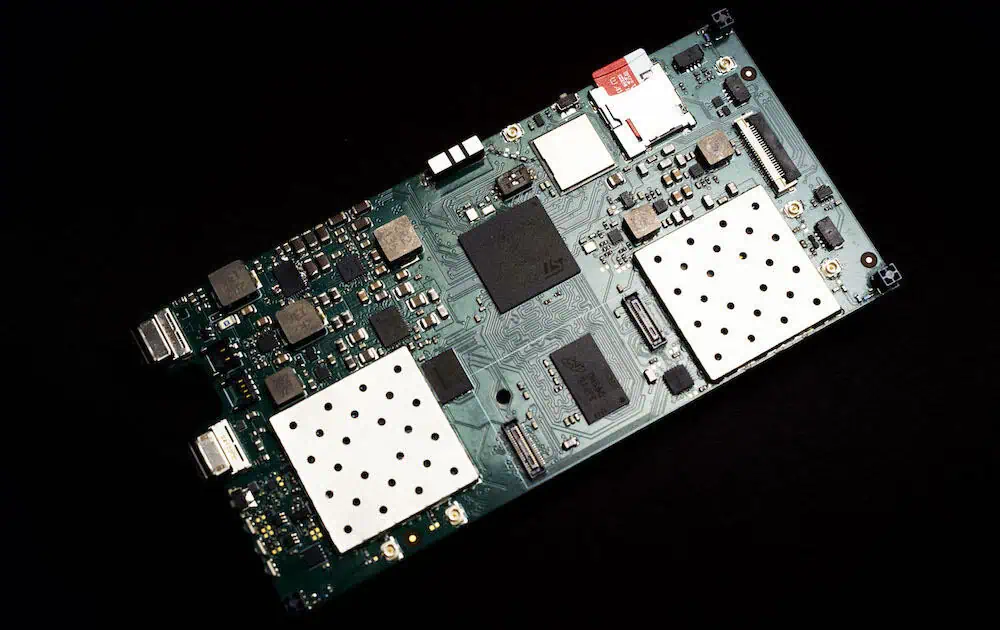
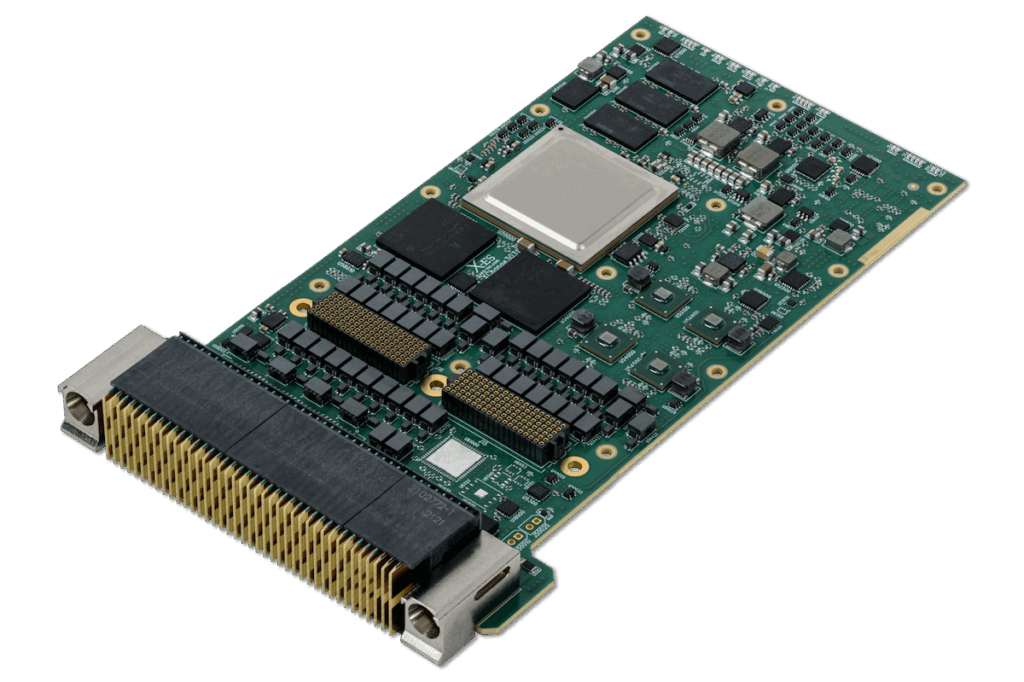
XChange3031 Embedded Networking Module by Extreme Engineering Solutions, Inc
In aerospace and defense applications, these embedded systems facilitate robust and deterministic communication between subsystems, often in real time and under severe environmental constraints.
An embedded system’s ability to interact through structured protocols at the network, transport, and application layers, including TCP/IP, the data link layer, and the OSI model, allows for seamless interoperability across disparate systems. This is crucial in military and aerospace domains, where sensors, navigation units, weapons systems, and avionics must reliably exchange data with minimal latency and maximum fault tolerance.
Communication protocols such as ARINC 429 and MIL-STD-1553 are central to embedded networking in aerospace and defense.
ARINC 429 is a unidirectional data bus standard primarily used in commercial and some military aircraft for data transmission between avionics systems.
MIL-STD-1553, on the other hand, is a military standard defining a time-division multiplexing scheme for digital communication, widely used in fixed-wing aircraft, helicopters, and naval platforms. These standards ensure compatibility, reduce integration complexity, and offer deterministic data delivery, which is critical for mission assurance. Additionally, newer systems incorporate Ethernet-based communication through embedded Ethernet and embedded routers that support advanced routing and switching while maintaining compliance with secure military communication protocols.
Embedded switches and embedded routers are essential components within avionics systems and flight control networks, enabling structured communication between flight-critical subsystems. These embedded networks manage the exchange of data between sensors, inertial navigation systems (INS), flight management computers, and cockpit displays with high reliability and minimal delay. Real-time data acquisition and rapid feedback loops ensure precise aircraft control, stability, and responsiveness during all phases of flight — from takeoff to mission execution and landing. In modern military aircraft, these networks also support advanced mission systems integration, allowing pilots to access radar feeds, targeting information, and navigation updates through a unified communication backbone.
Satellites rely heavily on embedded communication systems to maintain continuous and dependable telemetry, tracking, and command (TT&C) operations. Embedded networking in satellite platforms enables robust two-way communication between the spacecraft and ground control stations, ensuring that critical operational data, such as position, system health, and mission status, is transmitted accurately and securely. To function in space, embedded hardware must be radiation-hardened and built to withstand the mechanical stresses of launch and the extreme thermal variations of orbit. Embedded systems often utilize custom protocols or modified versions of ARINC 429 and MIL-STD-1553 to ensure deterministic performance even in degraded link conditions, securing the satellite’s ability to perform complex tasks such as repositioning, data relay, or scientific observation.
Unmanned aerial vehicles (UAVs) depend on sophisticated embedded networks to coordinate the integration of sensor payloads, flight control algorithms, and tactical communications systems. Embedded networking solutions manage high-throughput data flows from electro-optical/infrared (EO/IR) sensors, synthetic aperture radar (SAR), and electronic warfare payloads, while ensuring real-time feedback to autonomous navigation systems. Secure communication links, including tactical data links like Link 16 and encrypted IP-based channels, allow UAVs to maintain situational awareness, receive mission updates, and transmit reconnaissance data to command centers without interruption. The embedded routers and switches within UAV architectures are designed for minimal size, weight, and power consumption (SWaP), enabling long-endurance missions and supporting operations across contested and remote environments.
Embedded networking systems are vital to the operational effectiveness of tactical ground vehicles, including armored personnel carriers, main battle tanks, and reconnaissance vehicles. These vehicles employ embedded systems networking to interconnect mission-critical components such as targeting computers, situational awareness displays, fire control systems, and onboard diagnostics. Secure, low-latency communication links allow for real-time data sharing between these modules, ensuring rapid decision-making and enhanced battlefield survivability. Advanced embedded routers and aerospace-grade switches are often integrated to support encrypted tactical data links, reducing the vehicles’ vulnerability to electronic warfare threats and enabling seamless interoperability with broader battlefield networks.
In embedded networking environments, media converters enable interoperability between copper Ethernet and fiber optic links, allowing standard Ethernet to be carried over fiber without altering higher-layer protocols. This supports extended reach, improved resistance to electromagnetic interference, and the integration of distributed embedded subsystems while maintaining compatibility with existing network architectures.
In naval vessels, embedded networking solutions form the communication backbone that interconnects a ship’s complex array of weapons, navigation, propulsion, and sensor systems. Embedded communication architectures allow legacy interfaces, such as serial communication ports, to coexist with modern network layer technologies like embedded Ethernet. This hybrid approach facilitates both the modernization of existing platforms and the integration of new capabilities without complete system overhauls. Rugged embedded switches and routers are used to maintain continuous operation in the harsh marine environment, while redundant network designs ensure resilience against damage or system failure during combat operations.
Embedded networking technologies are also critical to the performance of ground-based missile defense and air defense systems. These systems require precise coordination between radar units, command and control centers, and interceptor launch platforms — all of which must communicate instantly and securely. Embedded networks manage the rapid transmission of targeting data, system status updates, and engagement commands, often under high electronic countermeasure (ECM) conditions. Communication protocols are embedded directly into the system hardware and firmware, supporting both standard military interfaces like MIL-STD-1553 and secure IP-based transmissions. This approach minimizes the risk of interception or cyber compromise, ensuring mission-critical resilience against sophisticated threats.
Integrating robust embedded networking architectures is a strategic enabler for modern defense operations. As the defense landscape shifts toward network-centric warfare and multi-domain operations, the demand for resilient, interoperable, and scalable embedded communication solutions continues to grow. Whether enabling secure communications between coalition partners or maintaining control of autonomous defense platforms, embedded networks form the invisible infrastructure that underpins modern mission success.
Embedded networking is no longer just a support layer — it is a mission-critical element of modern aerospace and defense platforms. From enabling secure, high-bandwidth data transfer in fighter jets to coordinating satellite communications in low Earth orbit, these systems define the effectiveness, survivability, and strategic value of today’s military assets. As technology evolves, embedded networking will continue to drive innovation, efficiency, and capability in aerospace and defense systems, shaping how modern conflicts are fought and won.
Designing communication protocols in embedded systems for aerospace and defense requires meticulous planning. Engineers must account for network topology, electromagnetic compatibility, redundancy, fault isolation, and compliance with stringent regulatory standards. Network design in these domains often balances trade-offs between bandwidth, power consumption, and physical space, especially in size, weight, and power (SWaP)-constrained environments.
Low-latency networking is another key consideration, especially in systems involving real-time targeting or flight stabilization. Ensuring deterministic behavior across the transport layer and application layer of a network is critical for operational reliability and mission success.
Recent advances in embedded computing and technology enable smarter, faster, and more secure networks. Aerospace embedded networking is adopting more intelligent routing schemes, network virtualization, and AI-assisted diagnostics to enhance performance and resilience.
Hybrid systems incorporating traditional MIL-STD interfaces with high-speed Ethernet are gaining popularity, particularly in platforms requiring backward compatibility. The rise of embedded devices that support software-defined networking (SDN) principles is also enabling dynamic reconfiguration of network paths in mission-critical environments.


 Searching Companies & Products


 Subscribe to the Weekly eBrief
The latest engineering and technical developments straight to your inbox - join thousands of engineers who receive it.
Subscribe to the Weekly eBrief
The latest engineering and technical developments straight to your inbox - join thousands of engineers who receive it.