



Inertial Navigation Systems (INS)
Discover cutting-edge solutions from 7 leading global suppliers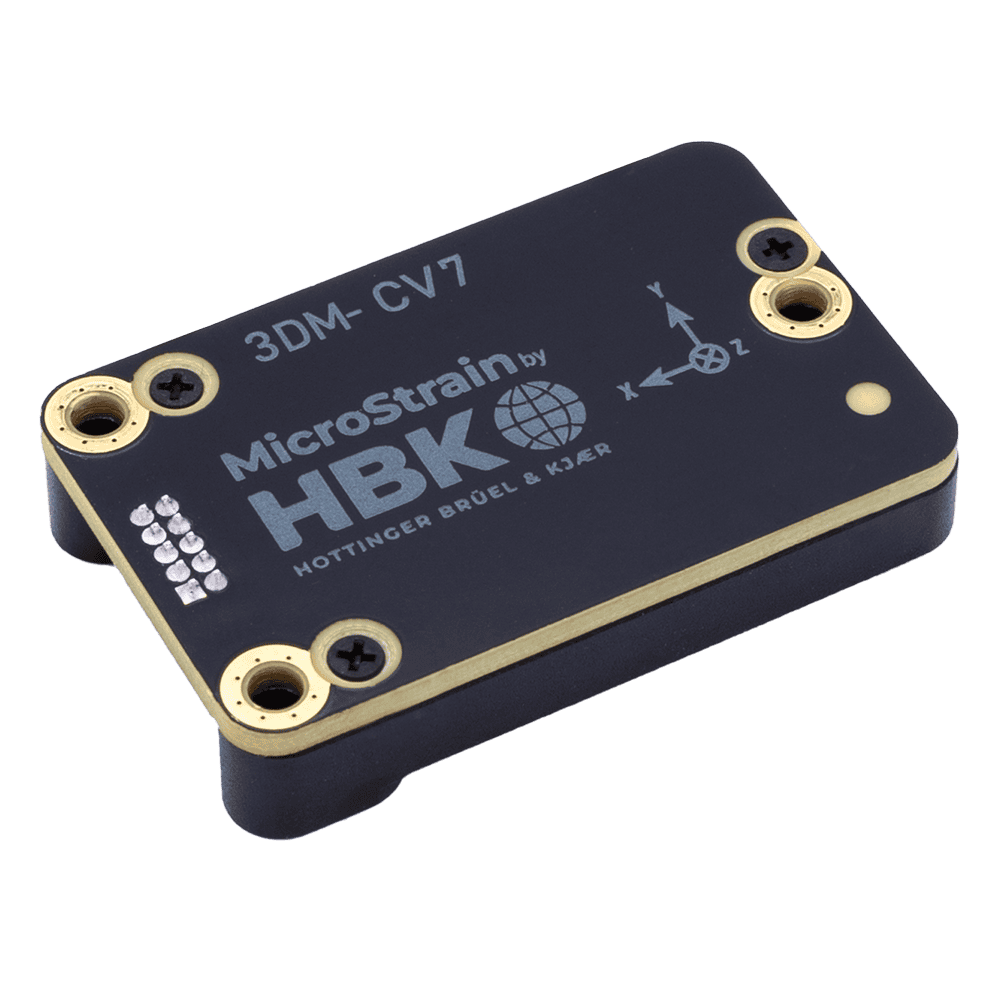
HBK Field Applications Engineer, Aidan Laracy, compares the performance of NMEA and MIP GNSS data input methods for the 3DM-CV7-INS. Learn as he explores the trade-offs between ease of integration and precision.
HBK’s MicroStrain developed 3DM-CV7-INS, an advanced, small-sized, lightweight tactical-grade inertial navigation device. This system seamlessly incorporates existing global satellite navigation receivers, delivering comprehensive position, velocity, attitude (PVA) solutions even during signal interruptions.
Choosing between two methods of providing GNSS information requires consideration: industry-standard NMEA format versus MicroStrain’s proprietary MIP protocol. Laracy examines both approaches and analyzes their static positioning capabilities.
NMEA: Simplicity First
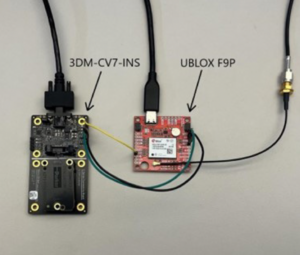
Integrating GNSS data into 3DM-CV7-INS is straightforward using standard NMEA output from external receiver’s serial connection. No programming necessary – simply configure device and connect wires to your chosen receiver. During testing, 3DM-CV7-INS received NMEA from uBlox F9P (RTK fix). Stationary 60-minute evaluation showed 0.0153m (North) and 0.0112m (East) standard deviations. However, certain presumptions limit full utilization of receiver’s capabilities, resulting in somewhat loose grouping of positional information. If NMEA-based assistance doesn’t meet precision requirements or greater flexibility is needed, consider our binary packet protocol (MIP).
MIP: Enhanced Precision and Adaptability
MicroStrain’s unique MIP can transmit various external aiding measurements to 3DM-CV7-INS via newly introduced command set. These instructions, including position and velocity in ECEF or LLH/NED formats, correspond well with typical GNSS receiver outputs. Additionally, 3DM-CV7-INS accepts pre-processed body velocity from lidar, radar, or optical flow sensors, plus true heading data. Such inputs help constrain uncertainty growth during extended satellite signal losses. MIP offers customization options, allowing individual specification of uncertainties and validities. Compared to NMEA, where assumptions are necessary, MIP provides more accurate position estimation. Comparative analysis revealed 3DM-CV7-INS using MIP achieved 0.0075m (North) and 0.0066m (East) standard deviations, surpassing NMEA performance.
3DM-CV7-INS: Flexibility in your Hands
Developers seeking quick product launch can utilize NMEA messages, providing complete PVA solutions without extra software needs.
While sufficient for basic navigation, NMEA lacks detailed information required by sophisticated GNSS/INS platforms. However, its rapid setup and zero programming requirements make it attractive for immediate deployment.
To boost performance and enhance products, consider MIP aiding commands. This approach necessitates some code development to format satellite data into MIP protocol and interface with 3DM-CV7-INS. Nevertheless, MIP offers greater customization options, delivering more precise positioning compared to standard NMEA input.
Both methods have distinct advantages. MicroStrain’s 3DM-CV7-INS presents versatile options for incorporating GNSS information – employing MIP aiding when optimizing performance and accuracy is crucial, while utilizing NMEA ensures easy integration and simplicity.
Visit the HBK website to find out more.