Underwater positioning systems provide navigation, localization, and tracking for submarines, UUVs, ROVs, divers, sensors, and other submerged assets operating beyond reliable GNSS coverage. These systems may combine acoustic positioning technologies such as USBL, SBL, and LBL with inertial navigation, DVL measurements, depth sensing, and terrain- or feature-aided navigation.
This page features suppliers of underwater positioning systems for mine countermeasures, anti-submarine warfare, ISR, seabed survey, asset recovery, and unmanned naval operations.
If you design, build or supply Underwater Positioning Systems, create a profile to showcase your capabilities and connect with visitors who have an active requirement for your solutions.
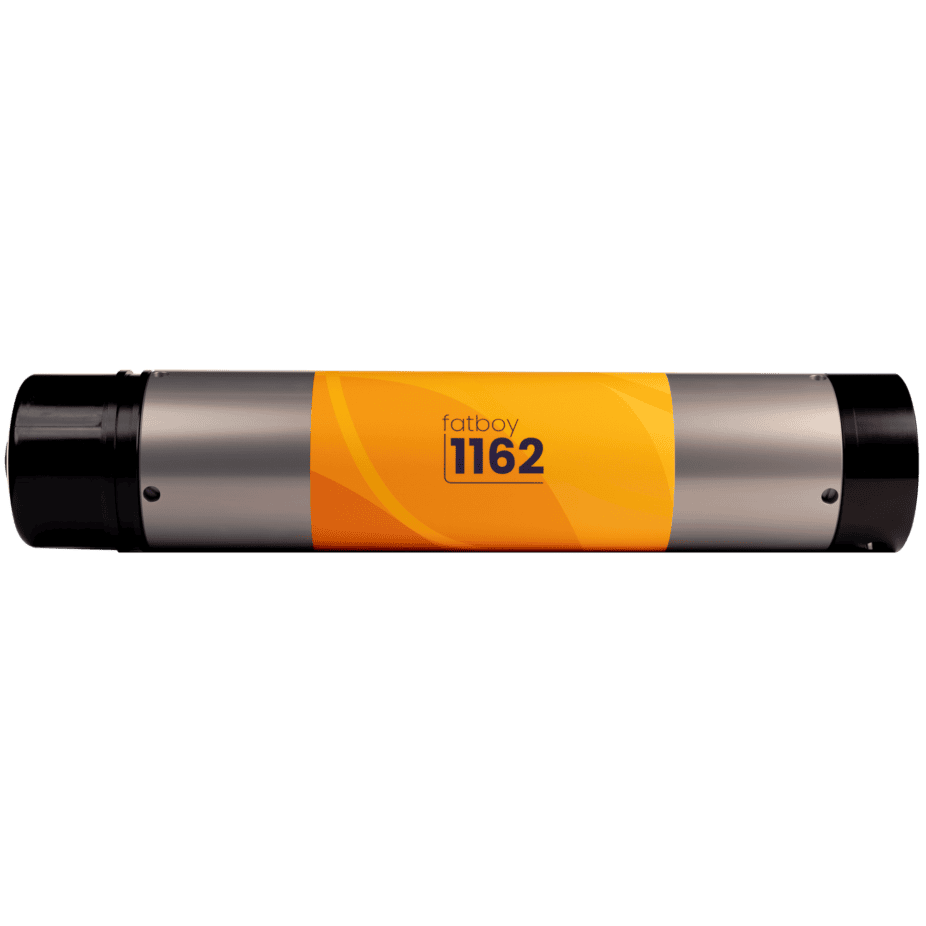
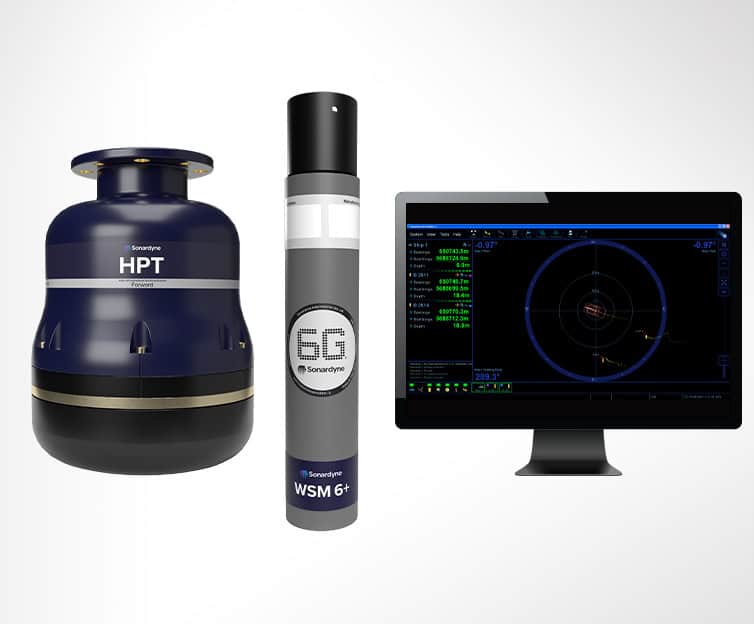
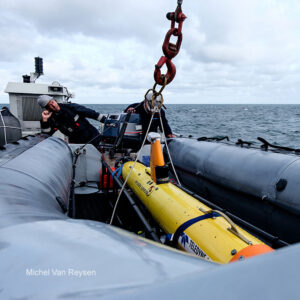
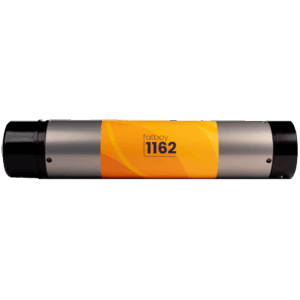
USBL tracking, dynamic positioning & subsea telemetry system
USBL tracking, dynamic positioning & subsea telemetry system
...is a versatile underwaterpositioning, tracking, and telemetry system developed for subsea survey,... ...ty for dynamic positioning, acoustically aided inertial navigation, autonomous vehicle command and...
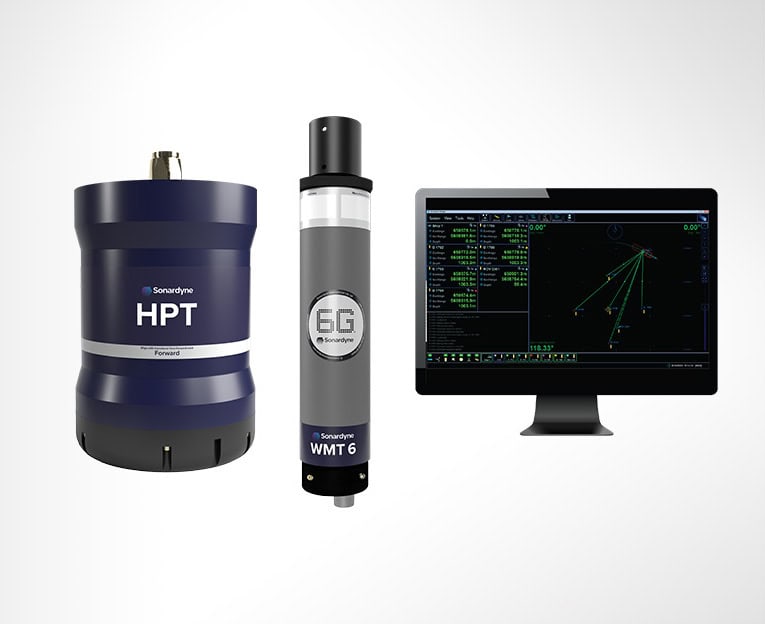
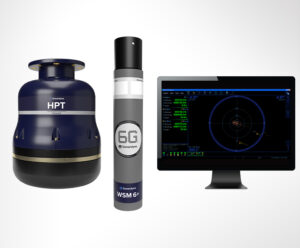
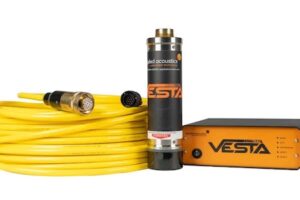
USBL tracking, positioning & underwater communications system for marine robotics
USBL tracking, positioning & underwater communications system for marine robotics
...L is a compact underwater tracking, positioning, and communications system developed for offshore... ...echnology, the system delivers reliable positioning and telemetry performance even in challenging...
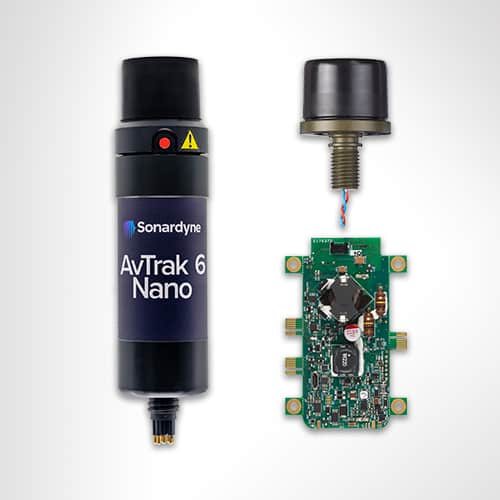
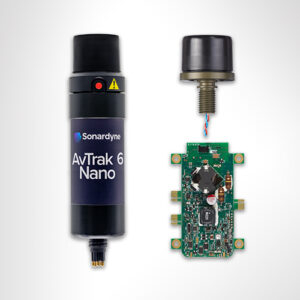
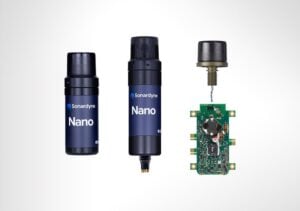
Compact USBL transponder for underwater tracking & subsea positioning
Compact USBL transponder for underwater tracking & subsea positioning
... developed for underwater tracking, positioning, and acoustic communication across AUV, ROV, diver,... ..., and reliable positioning data in challenging underwater environments. Available in NFC, connector,...
Overview of Underwater Positioning Systems for Naval Operations
Overview by
William Mackenzie
Updated:
Introduction to Underwater Positioning Systems
Underwater positioning systems provide navigation, localization, and tracking capabilities in environments where conventional GNSS signals cannot penetrate effectively. They are used to determine the position of submarines, Unmanned Underwater Vehicles (UUVs), Remotely Operated Vehicles (ROVs), divers, sensors, and other submerged assets relative to a vessel, seabed reference, geographic coordinate, or neighboring platform.
A modern marine positioning system may combine acoustic positioning, inertial navigation, velocity measurement, depth sensing, environmental references, and periodic surface-derived position fixes. Defense users often integrate several of these technologies through sensor fusion to maintain accurate naval positioning while reducing dependence on any single navigation source.
Key Types of Subsea Positioning Systems
Acoustic Underwater Positioning Systems
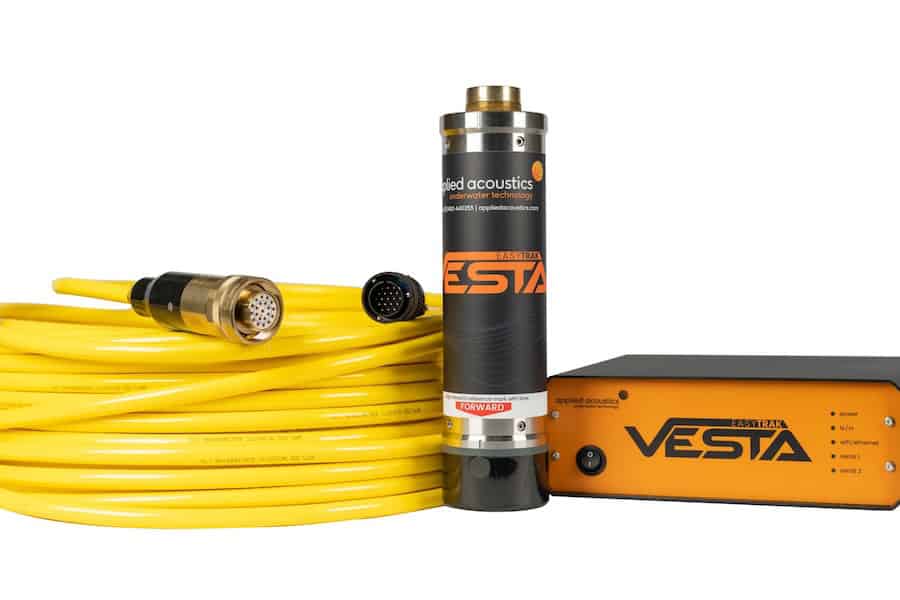
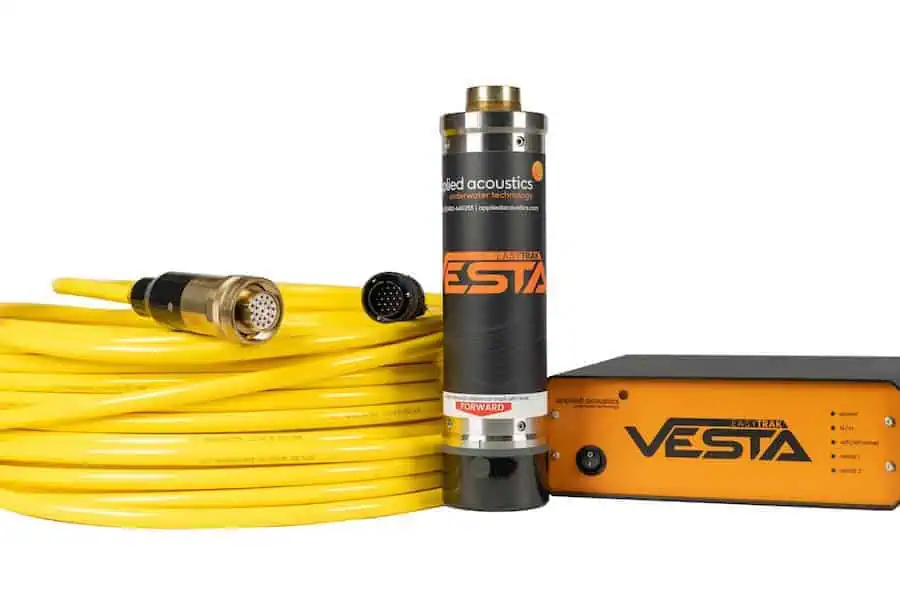
Easytrak Ultra Short Baseline Systems by Applied Acoustics.
An acoustic positioning system determines range and, depending on its architecture, bearing between underwater transducers, acoustic beacons, or transponders. Common underwater acoustic positioning systems include Ultra-Short Baseline (USBL), Short Baseline (SBL), Long Baseline (LBL), inverted USBL, and GNSS-acoustic positioning. USBL can support vessel-relative tracking of underwater vehicles, divers, and other assets, while LBL uses separated seabed references to create a local positioning network with favorable geometry for precise subsea positioning. Acoustic systems can also provide position references for appropriately equipped surface vessels. Accuracy is influenced by factors including array geometry, acoustic travel time, sound-speed variation, multipath propagation, and the quality of vessel position and attitude data.
Inertial Positioning Systems
An inertial positioning system estimates platform motion without continuously relying on external signals. Inertial Navigation Systems (INS) combine measurements from devices such as gyroscopes and accelerometers to calculate attitude, velocity, and position. Inertial Measurement Units (IMUs) provide the underlying motion measurements, while Attitude and Heading Reference Systems (AHRS) can provide stabilized roll, pitch, and heading information for navigation and sensor alignment. Because inertial position error accumulates over time, external aiding is commonly used to constrain drift.
Dead Reckoning Positioning Systems
Dead reckoning propagates a known position using measured velocity, heading, and depth. Doppler Velocity Logs (DVLs) can measure motion relative to the seabed through bottom tracking or, where bottom lock is unavailable, estimate velocity relative to the surrounding water. Pressure sensors provide depth information, while magnetic heading sensors can provide an additional orientation reference. Combined with inertial navigation, these measurements can substantially constrain accumulated position drift, although water-track measurements may be affected by currents.
Terrain, Sonar & Feature-Aided Positioning
Feature-aided methods estimate position by comparing sensed environmental information with known or previously mapped features. Techniques include terrain-relative navigation, bathymetric matching, sonar-based localization, simultaneous localization and mapping, optical or visual-inertial localization, and magnetic or gravity-based navigation. These approaches can complement conventional subsea positioning systems where acoustic infrastructure is unavailable or undesirable, although their effectiveness depends on environmental features, sensor performance, and the quality of available reference data.
Core Applications of Underwater Positioning Systems for Naval Operations
Mine Countermeasures and Anti-Submarine Warfare
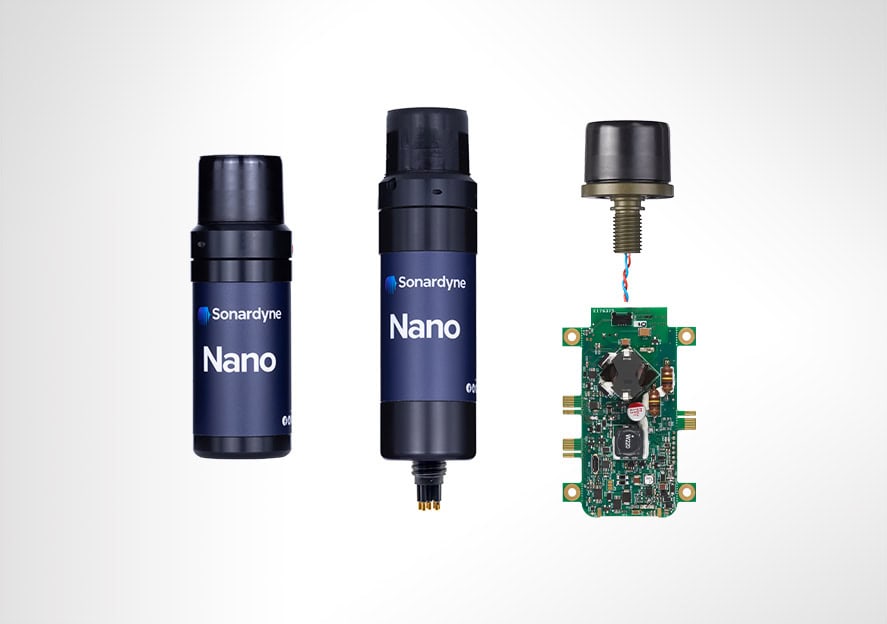
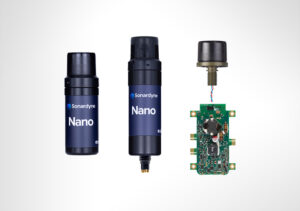
Nano, a compact USBL transponder for underwater tracking & subsea positioning, from Forcys
Mine Countermeasures (MCM) and Explosive Ordnance Disposal (EOD) missions require reliable positioning so sonar contacts, search tracks, and investigated objects can be associated with accurate locations. Autonomous and remotely operated systems may combine inertial navigation, DVL measurements, depth information, and acoustic positioning systems. In anti-submarine warfare operations, positioning can support the deployment, tracking, and georeferencing of underwater sensors and other assets so their locations remain accurately represented within the wider tactical picture.
ISR and Seabed Survey
Intelligence, Surveillance, and Reconnaissance (ISR) missions may require underwater vehicles to follow controlled tracks while accurately georeferencing sonar, imagery, magnetic measurements, or other sensor data. High-quality subsea positioning is especially important when separate mission passes must be correlated. Sensor fusion can help preserve navigation continuity when individual acoustic or environmental measurements become intermittent or unavailable.
Harbor and Port Security
Harbors present difficult conditions for underwater positioning because structures, vessel traffic, shallow water, and acoustic reflections can complicate signal propagation. Positioning technology can support patrol UUVs, inspection ROVs, diver tracking, and seabed sensors around critical maritime facilities. Short-range acoustic positioning and inertial aiding can be combined where complex geometry limits reliance on one measurement source.
Asset Tracking and Recovery
Underwater positioning systems are used to track deployed vehicles, sensors, equipment, and other subsea assets during routine operations as well as search and recovery missions. Search and recovery operations require accurate localization of vehicles, targets, and previously detected contacts. An ROV positioning system can combine acoustic ranging with vessel position and attitude data to estimate the vehicle’s subsea location. Separate underwater locator beacons can assist asset tracking and recovery, while an underwater locator beacon is typically designed to emit a recognizable acoustic signal after activation rather than provide a complete navigation solution.
Underwater Infrastructure Monitoring
Underwater positioning enables inspection platforms to associate observations with specific locations on cables, pipelines, seabed installations, moorings, and other critical infrastructure. Repeatable positioning is valuable where operators must compare inspections over time. ROV acoustic positioning can also help surface teams maintain awareness of vehicle location when visual reference is limited or the vehicle is operating around complex structures.
Diver and Swimmer Positioning
Military divers and combat swimmers may use compact acoustic, inertial, magnetic, and depth-based navigation equipment to maintain awareness underwater. Surface teams can also track divers using acoustic positioning where the mission permits active transmissions. An underwater acoustic beacon carried by a diver or attached to equipment can provide a reference for tracking, recovery, or rendezvous operations.
Navigation of Unmanned Naval Systems
Unmanned naval systems require reliable navigation and positioning appropriate to their endurance, autonomy, depth, and payload constraints. An Autonomous Underwater Vehicle (AUV) may rely heavily on inertial navigation and DVL aiding, with periodic acoustic or surface-derived corrections. An ROV positioning system is often referenced to its support vessel. Larger autonomous platforms may combine several navigation sources to support long-duration operations, limit accumulated navigation error, maintain planned routes, and enable controlled recovery.
Standards & Qualification Considerations
Naval procurement typically applies requirements according to the equipment, host platform, operating environment, interfaces, and mission. Relevant considerations can include:
Environmental qualification: MIL-STD-810 provides a framework for tailoring environmental engineering and laboratory testing to the expected service environment.
Electromagnetic compatibility: MIL-STD-461 establishes EMI emission and susceptibility requirements for applicable U.S. defense equipment and subsystems.
Acoustic interoperability: Where positioning is integrated with underwater digital communications, NATO STANAG 4748, commonly known as JANUS, may be relevant to interoperable acoustic communications.
Pressure and sealing: Housings, connectors, transducers, and underwater acoustic beacons must be qualified for their intended depth, pressure cycling, temperature, corrosion exposure, and deployment duration.
Navigation interfaces: Position, velocity, heading, depth, timing, reference frames, and quality data must be transferred reliably between navigation computers, mission systems, sensors, and command-and-control equipment.
Beacon requirements: Underwater locator beacon requirements should be treated separately from positioning-transponder requirements. The underwater locator beacon sound is generally intended to assist acoustic detection and recovery, rather than provide full vehicle positioning.
Qualification should therefore be based on the complete operating environment and system architecture rather than on positioning accuracy alone.
Emerging Developments in Underwater Positioning
Development is increasingly focused on maintaining useful position estimates for autonomous platforms while reducing external infrastructure and dependence on active acoustic transmissions. Important areas include:
Advanced terrain-relative navigation: Improved seabed maps, sonar processing, and onboard estimation can allow vehicles to use terrain characteristics as navigation references.
Autonomous beacon deployment and calibration:Unmanned platforms may deploy, survey, and manage acoustic beacon networks with less surface-vessel intervention.
Navigation using signals of opportunity: Research is exploring ways to extract useful navigation information from environmental, acoustic, magnetic, and other available signals that were not deployed solely for positioning.
Increased integration of communications and positioning: Acoustic communications, ranging, timing, and cooperative navigation can increasingly share hardware and information across networks of underwater and surface platforms.
These developments are expanding the role of underwater acoustic positioning systems from standalone tracking equipment toward integrated navigation architectures supporting more autonomous and distributed naval operations.
In this Q&A, applied acoustics highlights its subsea tracking technologies, their role in MCM and underwater infrastructure monitoring, and the challenges of achieving reliable acoustic positioning and communication in variable underwater conditions
applied acoustics supports military robotics with advanced subsea positioning solutions, supplying USBL systems and acoustic technologies for autonomous naval platforms and operations
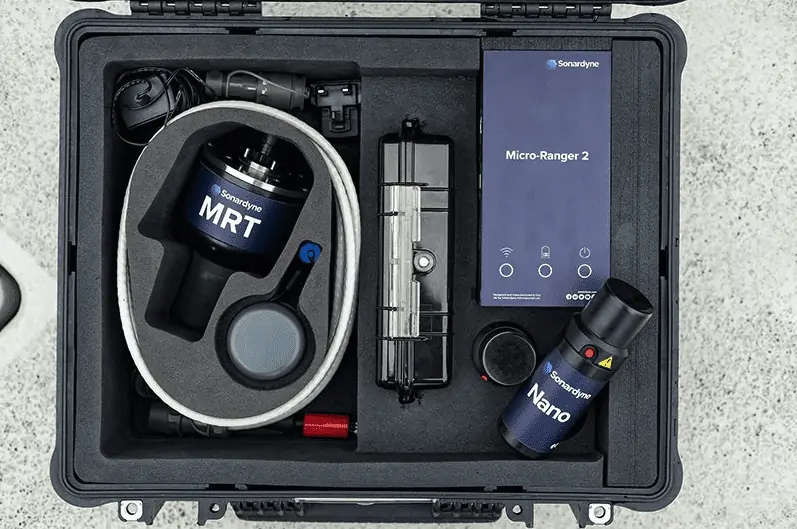
Sonardyne’s Mini-Ranger 2 USBL is a single, low-logistic but reliable system that unlocks a wide variety of capability and allows users to rationalize subsea equipment specifications and get the most of underwater assets
Sonardyne’s Micro-Ranger 2 will support existing U.S. Department of Defense programs and provide operatives with increased situational awareness during open sea missions
The latest defense technology news, straight to your inbox.
Get our weekly roundup of technology developments, new products and industry news.
THANK YOU FOR SIGNING UP
Thanks for joining us. Check your inbox.
We've sent you an email. Click the confirmation link to complete your subscription to the weekly eBrief. In the meantime, explore the latest news, suppliers and technologies on DA.
Advancing Defense Capability Through Strategic Collaboration
Defense Advancement works with major OEMs to foster collaboration and increase engagement with SMEs, to accelerate innovation and drive defense capabilities forward.