Showcase your capabilities
If you design, build or supply Laser Diode Drivers, create a profile to showcase your capabilities and connect with visitors who have an active requirement for your solutions.




Laser diode drivers are precision current-regulation subsystems that control and protect laser emitters used across modern defense platforms. Operating as controlled current sources rather than voltage supplies, they ensure stable optical output, wavelength consistency, and long-term device reliability, supporting continuous-wave, modulated, pulsed, and multi-channel configurations.
This page features leading laser diode driver manufacturers, employed in EO/IR sensors, ISR systems, LiDAR, rangefinding, countermeasures, and optical communications.
Read the Technology Overview
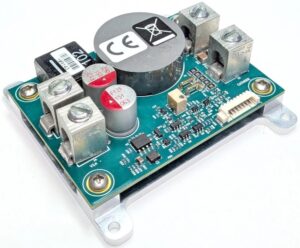
Laser Electronics for Mission-Critical Rangefinding, Targeting, & Directed Energy Systems

If you design, build or supply Laser Diode Drivers, create a profile to showcase your capabilities and connect with visitors who have an active requirement for your solutions.

Laser diode drivers are a critical enabling technology within modern defense and military systems, acting as the sophisticated electrical bridge between a platform’s power infrastructure and its laser sources. Unlike generic electronic loads, laser diodes are high-performance semiconductor devices. Their optical output, wavelength stability, and operational longevity are entirely dependent on the precision of the electrical current they receive.
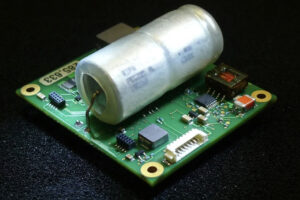
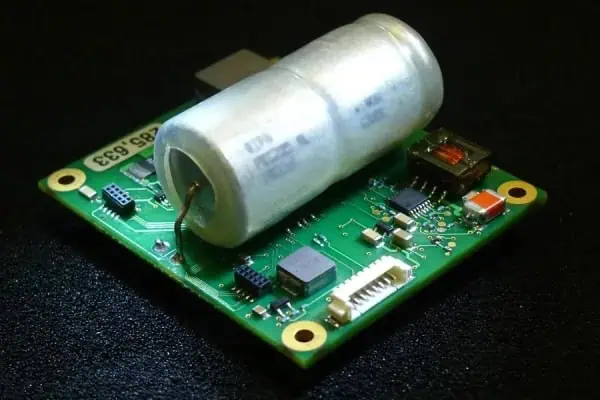
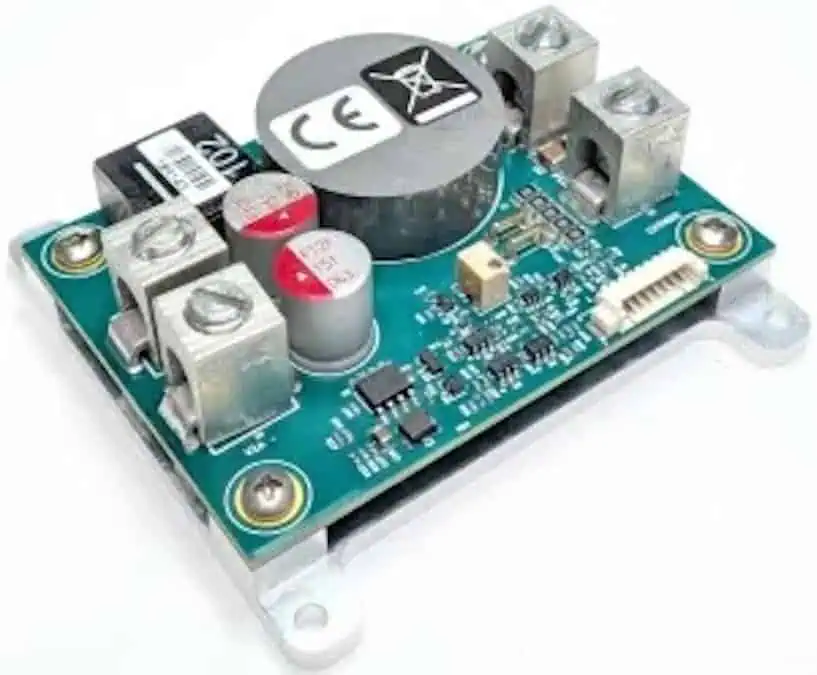
Laser Diode Drivers from Analog Modules
At their core, these drivers are current regulating power supplies rather than voltage sources. Because laser emitters are exceptionally sensitive, even minor overcurrent transients can cause catastrophic facet damage, while subtle current noise can degrade beam quality or detection range. In the defense sector where lasers are used for precision targeting, infrared countermeasures, and secure communications, the laser diode driver is a mission-critical subsystem.
A high-performance laser diode driver performs three vital roles:
Laser diode drivers broadly fall into two architectural categories, linear and switching. Linear drivers regulate current by dissipating excess voltage as heat, which results in inherently low electrical noise and excellent current stability. This makes them particularly suitable for low-noise optical applications where signal integrity or spectral purity is critical. The trade-off is efficiency, as higher output powers lead to increased thermal dissipation and more demanding cooling requirements.
Switching laser diode drivers use high-frequency power conversion techniques to regulate current more efficiently. Their higher efficiency and lower heat dissipation make them well suited to high-power systems or platforms with strict size, weight, and power constraints. However, switching architectures introduce electrical noise and ripple that must be carefully controlled through filtering, layout discipline, and control-loop design.
The choice between linear, low-noise laser diode drivers and switching, high-power laser diode drivers is therefore driven by noise tolerance, output power, thermal constraints, and available cooling.
CW laser diode drivers are designed to deliver a stable, uninterrupted current to the laser emitter. These drivers are used in applications that require constant optical output over extended periods, such as target illumination, stabilized sensing, or alignment functions. Key design considerations include long-term current stability, compensation for thermal drift, and protection against gradual degradation mechanisms. In defense systems, CW drivers are often required to operate reliably across wide temperature ranges and long mission durations.
Modulated and pulsed laser diode drivers are optimized for rapid current transitions and high peak currents with precise timing control. These drivers support systems such as laser rangefinder receivers, LiDAR, and optical communications, where pulse width, repetition rate, and timing accuracy directly affect performance. Engineering challenges include achieving fast rise and fall times without overshoot or ringing, which could damage the laser or distort the optical signal. Synchronization with sensors, inertial systems, or external timing references places additional demands on latency control and deterministic operation.
Multi-channel laser diode drivers are required for systems using laser diode bars or arrays. These drivers must deliver tightly matched currents across channels to maintain uniform optical output and avoid localized thermal stress. As channel count increases, challenges emerge around scalability, thermal management, and fault isolation. In defense platforms, array drivers are commonly used in high-power illumination, countermeasure, and emerging directed-energy-related systems, where reliability and predictable degradation behavior are essential.
Electro-Optical (EO) and Infrared (IR) Intelligence, Surveillance, and Reconnaissance (ISR) systems rely on laser diode drivers for active illumination, target designation, and tracking functions. In these applications, driver noise characteristics and modulation accuracy directly influence detection performance and image quality. Drivers must integrate closely with sensor processing and control electronics while operating reliably under vibration, shock, and thermal stress.
In LiDAR and laser rangefinding systems, laser diode drivers control pulse energy and timing with extreme precision. Any variation in current delivery, timing jitter, or thermal drift can introduce measurement errors. Defense-grade drivers are therefore engineered for deterministic timing behavior, stable pulse shaping, and repeatable performance across environmental extremes and power supply variation.
High-power and fast-response applications, including infrared countermeasures, optical communications, and directed-energy systems, impose demanding requirements on laser diode drivers. These systems often require high peak currents, rapid modulation, and robust fault handling. Drivers in such roles are typically tightly integrated with system-level control electronics and must respond predictably to command inputs while maintaining strict safety margins.
Laser diode drivers may be controlled using analog, digital, or hybrid interfaces. Analog control, through voltage or current setpoints, offers low latency and simplicity, making it suitable for fast modulation loops. Digital interfaces such as SPI, I²C, UART, and Ethernet enable precise configuration, monitoring, and integration into platform control networks. In modern defense systems, digital control is increasingly favored for its flexibility, diagnostics, and support for remote operation and health monitoring.
High-speed modulation capability is essential for systems performing ranging, imaging, or optical data transfer. Drivers must maintain precise control over pulse width, repetition rate, and timing alignment while minimizing jitter and latency. Deterministic behavior is particularly important when laser operation must be synchronized with radar systems, EO sensors, or inertial measurement units within a wider mission architecture.
Robust electrical protection is fundamental in defense laser systems. Laser diode drivers typically incorporate soft-start functionality to prevent inrush current, current limiting to avoid overdrive, and transient suppression to protect against power bus disturbances. Reverse polarity and short-circuit protection further safeguard both the laser diode and the driver electronics during integration, testing, and operational use.
Thermal effects have a direct impact on laser diode reliability and performance. Drivers often integrate temperature sensing and derating logic, reducing output current as thermal limits are approached. In many platforms, the driver interfaces with system-level thermal management to coordinate cooling and maintain stable operation across extreme ambient conditions.
Laser safety requirements extend beyond the laser source itself, and the driver plays a central role in enforcing safe operation. Interlocks, enable signals, and fail-safe shutdown mechanisms ensure that laser emission only occurs under authorized and controlled conditions. In defense platforms, laser diode drivers are typically designed to integrate into broader system-level laser safety architectures that protect personnel while maintaining operational effectiveness.
Commercial off-the-shelf (COTS) laser diode drivers offer reduced development time, proven performance, and lower initial cost. They are well suited to programs with standard power levels and operating conditions. However, many defense applications impose unique requirements, such as extreme temperature ranges, non-standard modulation profiles, or stringent electromagnetic compatibility constraints. In these cases, custom OEM laser diode driver designs are required to meet platform-specific electrical, mechanical, and environmental requirements while ensuring long-term availability and qualification support.
Laser driver technology continues to advance alongside developments in lasers, sensors, and processing architectures. Trends include higher power density designs, greater use of digital control and telemetry, and closer integration with mission computers and control electronics. Advances in wide-bandgap semiconductors are enabling more efficient and compact switching drivers, while intelligent monitoring and predictive health management are improving reliability and maintainability. As defense platforms increasingly depend on laser-based capabilities, laser drivers will continue to grow in sophistication and strategic importance.


 Searching Companies & Products