


Accelerate Defense Modernization through Strategic Sourcing
Discover cutting-edge solutions from leading global suppliersReticulate Micro has introduced a new family of flat panel Electronically Steerable Antennas (ESAs) featuring both Ku- and Ka-band satellite frequency options.
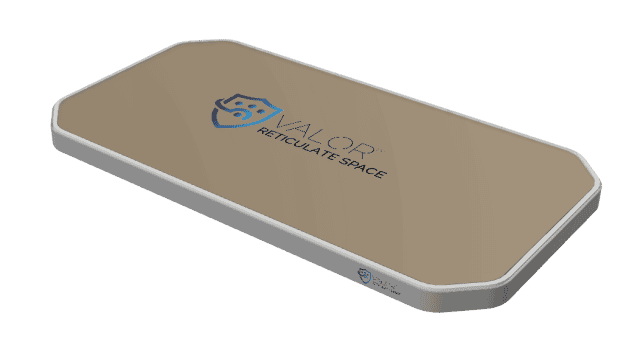
The VALOR line is suitable for a wide range of defense applications and environments, including antennas on land vehicles, aircraft, naval platforms and manpack devices, and is designed to provide scalability and multi-orbit connectivity.
The launch of the VALOR range follows Reticulate’s debut of its VESPER terminal management capability.
Josh Cryer, president and CEO of Reticulate Micro, noted: “With the launch of VALOR, we’re moving up the value chain – not only are we generating real-time streamed content through our VAST™ video-compression technology, but we also will manage the connections that carry that content. Like all Reticulate’s products, VALOR will have our VisionOS™ platform integrated into it, which ensures all our products are interoperable.”
David Horton, Chief Operating Officer for Reticulate Micro and president of Reticulate Space, commented: “A higher performing, low-power-consumption terminal is highly desirable with today’s warfighters, and we have that solution in the VALOR product line. Our product family is designed to be conformal and ultra-low profile to support aero, Unmanned Aerial Vehicles (UAVs), maritime and ground-based vehicle applications.”
Mark Steel, EVP Product & Services at Reticulate Micro and CTO of Reticulate Space, noted that the satellite communications industry has long struggled to design an affordable, low-power flat panel antenna to meet the requirements of a new wave of LEO and MEO constellations, but has fallen short, with people trying to fit a square peg in a round hole.
“Current ESAs on the market don’t fit the full requirements of the user – they’re still tremendously expensive, generate high power and have a large form factor,” Steel explained. “Other ESA solutions typically must sacrifice size, weight or power. We’re coming to market with a disruptive technology that we can scale to all the requirements of SWAP-C that our industry has wanted but has failed to deliver.”