
Showcase your capabilities
If you design, build or supply UAV Autopilot Software, create a profile to showcase your capabilities and connect with visitors who have an active requirement for your solutions.




Source military-grade drone autopilot software and advanced UAV autopilot systems from trusted defense developers. Autopilot software solutions deliver secure, safety-critical flight control for ISR, surveillance, and tactical operations in contested environments.
Read the Technology Overview
Bespoke Drone & Robotics Software Solutions for the Defense & Security Industries

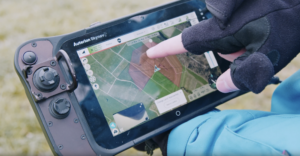
NDAA-Compliant Software-Defined Ecosystem For Next-Generation Robotics & Autonomous Vehicle Platforms

If you design, build or supply UAV Autopilot Software, create a profile to showcase your capabilities and connect with visitors who have an active requirement for your solutions.

Autopilot software is the core system that controls how military drones fly. It supports autonomous, semi-autonomous, and remotely piloted missions by managing guidance, navigation, and control functions. The software also coordinates sensors, actuators, and communications to keep the aircraft stable and responsive.
Tight integration with inertial navigation systems, GNSS receivers, air data computers, and mission computers allows reliable operation in contested environments. Running on real-time operating systems, military autopilot software delivers predictable performance and includes built-in health monitoring and fault detection to ensure safe, reliable operation throughout the UAV lifecycle.
Surveillance and ISR UAVs use autopilot software to maintain stable flight during long-duration missions. Precise navigation and flight control enable persistent border monitoring, maritime surveillance, and airborne reconnaissance while reducing operator workload.
Tactical UAVs rely on autopilot software for agile maneuvering in complex terrain and contested airspace. Robust guidance and control algorithms support low-altitude flight, rapid course changes, and reliable mission execution in dynamic battlefield environments.
Prism Supervisor autonomy software by Teledyne FLIR OEM.
Loitering munition systems impose heavy demands on autopilot software across multiple mission phases. The autopilot manages navigation, target tracking, and terminal guidance while maintaining flight stability and safety until mission completion.
Combat UAVs use autopilot software to support autonomous and semi-autonomous flight during high-risk operations. Reliable guidance, navigation, and control enable coordinated maneuvers, sensor integration, and mission continuity under degraded or denied conditions.
Maritime UAVs depend on autopilot software to handle challenging flight conditions such as high winds, ship-based launch and recovery, and extended over-water operations. Accurate navigation and control are essential for maritime domain awareness and persistent surveillance.
For force protection missions, autopilot software enables continuous airborne monitoring with minimal human intervention. Autonomous flight supports scalable UAV deployments that enhance battlefield awareness and reduce operator burden during sustained operations.
Off-the-shelf autopilot software is often selected for rapid prototyping, technology demonstration, and lower-risk platforms. These solutions typically provide baseline flight control systems, waypoint navigation, and standard sensor interfaces. They are frequently extended through software development kits to accommodate mission-specific logic or payload integration.
Custom autopilot software is developed for programs with stringent performance, security, or export control requirements. These implementations support tailored control algorithms, proprietary sensor fusion techniques, and integration with classified systems. Custom development is common for high-end ISR platforms, tactical UAVs, and autonomous aerial systems intended for long-duration or high-threat missions.
Effective UAV autopilot software depends on seamless integration with avionics and vehicle subsystems. Interfaces to inertial navigation systems, GNSS receivers, and air data computers enable accurate state estimation and navigation algorithms. Communication interfaces connect the flight control computer to ground control stations, payloads, and networked systems that support ISR missions and swarm coordination.
Servo control systems and actuator control modules translate software commands into the aircraft’s physical motion. For military UAV platforms, redundancy management and cross-channel monitoring are essential to mitigate single-point failures. Autopilot software must also support payload interfaces without compromising deterministic flight-control performance.
Military UAV autopilot software is often developed in accordance with established defense and aviation standards. Software processes may align with MIL-STD requirements for reliability, environmental resilience, and electromagnetic compatibility. NATO-aligned programs often consider relevant STANAG guidance to support interoperability across allied unmanned aerial systems.
Safety and assurance practices are based on recognized avionics standards for flight control systems, including requirements for verification, validation, and configuration management. While certification pathways vary by platform and mission, adherence to disciplined development processes is a baseline expectation for defense UAV autopilot systems.


 Searching Companies & Products