Remotely Operated Vehicles (ROVs) for Military and Defense Applications
Remotely operated vehicles (ROVs) are unmanned underwater systems used by military and defense organizations to conduct tasks such as inspection, surveillance, and explosive ordnance disposal in environments that are inaccessible or unsafe for divers. These vehicles are integrated into naval operations for underwater activities requiring precision, endurance, and real-time control.
If you design, build or supply Remotely Operated Vehicles (ROV), create a profile to showcase your capabilities and connect with visitors who have an active requirement for your solutions.
Remotely Operated Vehicles (ROVs) for Military and Defense Applications
Overview by
Summer James
Updated:
Remotely operated vehicles are advanced, unmanned underwater systems designed for underwater tasks ranging from explosive ordnance disposal (EOD) to intelligence, surveillance, and reconnaissance (ISR) operations. These tethered or free-moving submersibles enhance mission safety, access hazardous environments, and support tactical and strategic maritime operations across navies, coast guards, and defense agencies.
Military Applications for Remotely Operated Vehicles
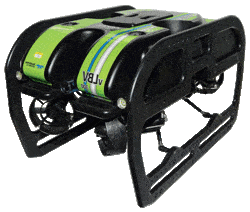
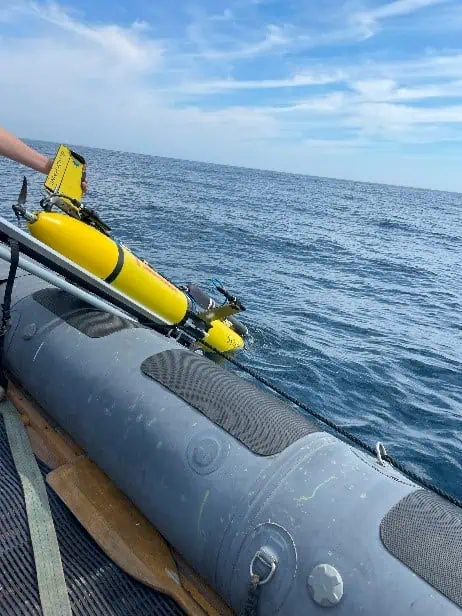
vLBV300-ISO Remotely Operated Vehicle by Teledyne Marine
Military-grade ROVs are deployed in various underwater operations that demand precision, stealth, and durability. Common use cases include:
Explosive Ordnance Disposal (EOD): ROVs equipped with manipulator arms and imaging cameras are used to identify, investigate, and neutralize underwater mines and improvised explosive devices.
ISR Operations: Defense ROVs perform underwater reconnaissance, gather real-time visual and sonar data, and support coastal surveillance tasks without risking personnel.
Mine Countermeasures: ROVs play a central role in detecting and classifying naval mines, ensuring safe passage for vessels and submarines.
Hull and Port Inspection: Often deployed as underwater inspection vehicles, these systems can be used for underwater infrastructure inspection, including harbor walls, piers, ship hulls, and submerged cables, often with sonar systems and positioning technologies.
Search and Recovery: ROVs assist in recovery operations for sunken objects, crashed aircraft, or other submerged assets critical to national defense.
Special Forces Support: Tactical ROVs may be deployed for covert underwater surveillance, sabotage assessments, and environmental reconnaissance in denied areas.
Military Remotely Operated Vehicles
Military and defense organizations use a variety of ROV types, each tailored for specific operational needs:
Observation-Class ROVs
Observation ROVs are lightweight systems primarily used for visual inspection, environmental monitoring, and preliminary ISR tasks. These units are often equipped with high-resolution imaging cameras and basic sensor packages.
Inspection-Class ROVs
Inspection ROVs offer more capabilities than observation models. They typically include sonar systems, manipulators, and advanced navigation systems, making them suitable for routine maintenance checks, pipeline inspections, and hull assessments.
Work-Class ROVs
Work-class ROVs are heavy-duty platforms used in high-risk or deep-sea missions. These units often have multiple manipulators, payload modules, and powerful thrusters to perform complex tasks such as mine clearance or underwater construction in military shipyards.
Tactical and Portable ROVs
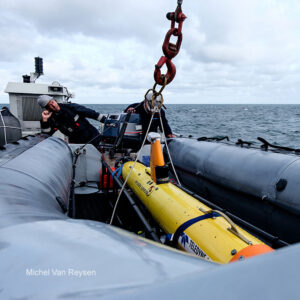
Designed for rapid deployment, tactical ROVs are compact and highly maneuverable. Their small size allows use from small vessels or inflatable boats, making them ideal for port security, law enforcement, and first responder missions.
EOD-Specific ROVs
These ROVs are explicitly built for explosive ordnance disposal and are equipped with manipulators, disruptors, and high-definition imaging systems. They are often integrated into EOD operations with LARS (launch and recovery systems) to ensure safe deployment and retrieval.
Key ROV Components and Technologies
Military ROVs integrate several advanced systems that enable precise underwater operations:
Manipulator Arms: These allow operators to interact with underwater objects, perform EOD tasks, and manipulate tools.
Control Interface: Intuitive, rugged control systems are essential for field operability, even with gloves or under combat conditions.
Military Standards and Compliance
Defense ROVs often conform to strict standards to ensure interoperability, safety, and mission readiness:
MIL-STD-810: Environmental engineering considerations and lab tests for military equipment durability.
MIL-STD-461: Electromagnetic compatibility requirements for defense equipment.
STANAG 4586: NATO standardization agreement for interoperability of unmanned vehicle control systems.
DEF STAN 00-35: UK MOD standard for environmental conditions and test procedures.
Compliance with these standards ensures ROV systems are rugged, reliable, and interoperable across allied defense forces.
Examples of Defense ROV Use
Several real-world applications highlight the value of ROVs in military environments:
Navy Hull Inspections: Deploying observation-class ROVs beneath fleet vessels during port visits to inspect for limpet mines or structural anomalies.
Underwater Infrastructure Security: Using tactical ROVs to survey underwater pipelines, cables, and harbor walls against sabotage threats.
Mine Clearance in Conflict Zones: Work-class ROVs have been used in littoral zones to detect, classify, and dispose of naval mines and underwater IEDs.
ISR Operations in Denied Areas: Deploying ROVs for reconnaissance in high-risk environments where divers or crewed vessels would be compromised.
Emerging Trends in Military ROV Technology
ROV development continues to advance rapidly, with new capabilities tailored for modern defense needs:
AI-Based Object Recognition: Machine vision systems now assist operators by identifying mines, anomalies, or enemy equipment in real time.
Autonomous Navigation Modes: Semi-autonomous control allows ROVs to complete pre-programmed missions while maintaining human-in-the-loop oversight.
Data Fusion with ISR Platforms: ROV sensor data is increasingly integrated into broader battlefield management systems.
Lightweight Materials: New composite structures make portable ROVs more durable and easier to deploy in hostile environments.
Swarming and Multi-ROV Coordination: Multiple ROVs operating together in coordinated missions is under evaluation for mine clearance and ISR.
ROV Manufacturers and Market Insights
The military ROV market includes a range of manufacturers producing systems for naval, coast guard, and special forces applications. Defense organizations often source from dedicated ROV manufacturers or dual-use technology providers with experience in subsea engineering and unmanned systems. Common evaluation criteria include system reliability, compliance with defense standards, modularity, and ease of maintenance.
Remotely operated vehicles are indispensable in modern military operations, enabling safer, faster, and more effective underwater missions. From harbor security to mine countermeasures, tactical reconnaissance to EOD operations, ROVs enhance the capabilities of defense forces around the globe. Ongoing innovation in sensor technologies, autonomy, and payload integration ensures that military ROVs will remain a cornerstone of subsea defense strategies for the foreseeable future.
The Royal Navy has received the second of four remotely-controlled primary systems designed to aid underwater mine countermeasures through advanced autonomous seabed mapping and uncrewed identification technologies
Forcys has integrated an EIVA software package with VideoRay Defender ROVs to simplify micro ROV operations for expeditionary forces, enhancing situational awareness in challenging underwater environments while reducing piloting requirements
Teledyne Marine validated SeaBat F50 sonar and autonomous navigation capabilities during live harbour trials in Sweden, and exhibited at Navy Tech & Seabed Defence 2026
NATO places a €40 million order for Exail’s K-Ster vehicles, reinforcing Europe’s shift toward autonomous mine countermeasures and strengthening maritime security
Discover how Forcys enables secure underwater communications and adaptive networks, empowering navies to maintain control and decision superiority in contested waters
Teledyne Marine has secured a long-term contract with the UK Ministry of Defence to support the REPMUS exercises, enhancing NATO’s maritime defense capabilities
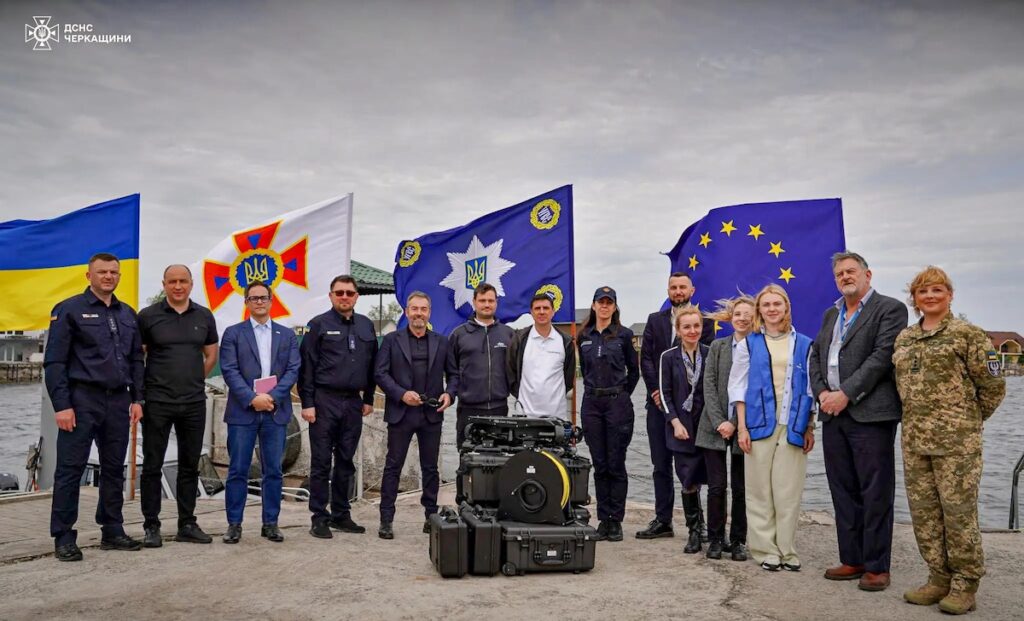
Deep Trekker has delivered sixteen REVOLUTION ROVs to Ukraine’s emergency services, supporting underwater demining operations through a UNDP-led initiative
The latest defense technology news, straight to your inbox.
Get our weekly roundup of technology developments, new products and industry news.
THANK YOU FOR SIGNING UP
Thanks for joining us. Check your inbox.
We've sent you an email. Click the confirmation link to complete your subscription to the weekly eBrief. In the meantime, explore the latest news, suppliers and technologies on DA.
Advancing Defense Capability Through Strategic Collaboration
Defense Advancement works with major OEMs to foster collaboration and increase engagement with SMEs, to accelerate innovation and drive defense capabilities forward.