


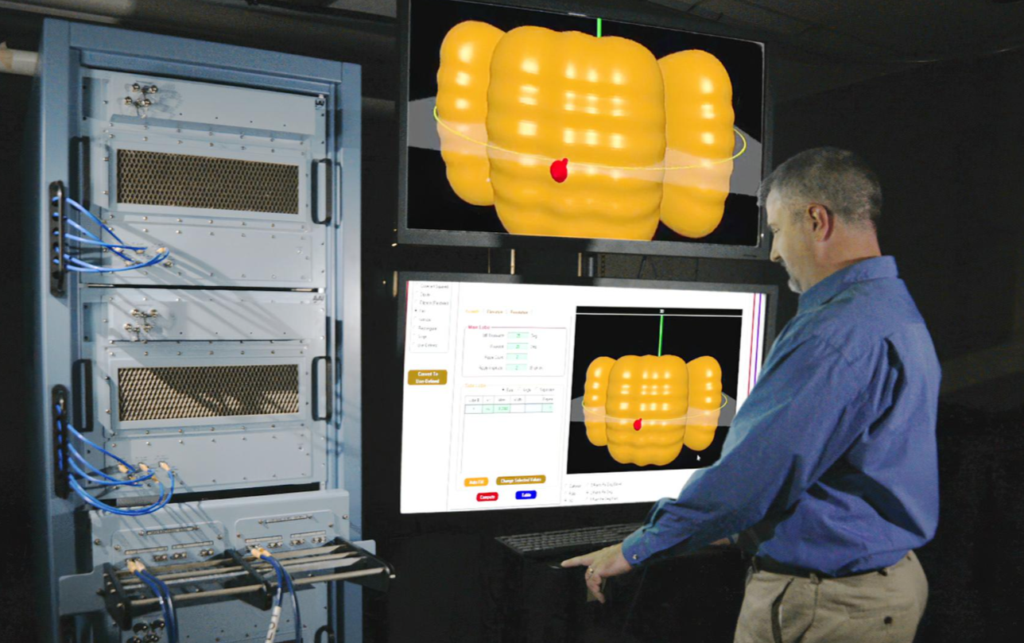
Textron Systems Corporation has been awarded a $9.5 million contract to provide advanced electronic warfare simulators for the U.S. Air Force F-15 upgrade program.
The contract, issued through federal IT solutions provider IMPRES Technology Solutions, Inc., focuses on testing the Eagle Passive Active Warning Survivability System (EPAWSS) sensor. Over a 17-month performance period, Textron Systems will deliver multiple Advanced Architecture Phase Amplitude and Time Simulator (A2PATS) units, along with support, testing services, and spare parts. This equipment will be utilized by the 68th Electronic Warfare Squadron at Eglin Air Force Base in Florida to support testing requirements for various Foreign Military Sales customers.
The A2PATS technology allows the U.S. Air Force and allied nations to evaluate new Radar Warning Receivers in secure environments capable of replicating complex electronic warfare threats. Using an innovative Direct-Port Architecture, the system is designed to be modular and scalable. It provides precise replication of the phase, amplitude, and time of arrival for radio frequency signals across a wide frequency range. These capabilities make the hardware suitable for testing electronic support measure suites, communications sensors, and radar warning receivers.
Steve Mensh, Senior Vice President of Electronic Systems, said, “The A2PATS system is capable of simultaneously simulating both electronic intelligence and communications intelligence signals, allowing for the modeling of an entire integrated air defense system. What we’re providing to the U.S. Air Force and our allied nations is a realistic environment for testing and training of modern electronic warfare capabilities.”
By stimulating a broad spectrum of signals, including electronic intelligence and communication intelligence, the system enables the modeling of integrated air defense systems. This high-fidelity simulation ensures that modern defense platforms are rigorously tested against the sophisticated signal environments they are likely to encounter in active missions.