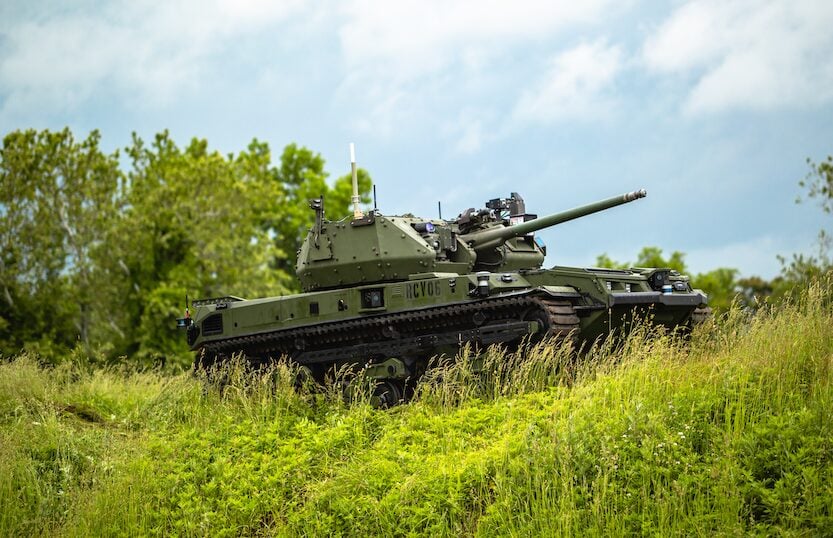





Textron Systems has completed the build and evaluation phase of its Cottonmouth® 30mm prototype designed for the U.S. Marine Corps Advanced Reconnaissance Vehicle (ARV) program.
This phase included testing of land mobility, lethality, and amphibious performance, with the variant completing its first full swim. Testing took place across several key facilities, including the Detroit Arsenal and Michigan National Guard Camp Grayling Joint Maneuver Training Center in Michigan, the U.S. Army’s Ground Vehicle Systems Center (GVSC), and U.S. Marine Corps Base Camp Pendleton in California.
The ARV-30mm is engineered to provide direct-fire support and anti-armor capabilities, expanding the mission capabilities available within the Cottonmouth ARV family. It is equipped with a medium-caliber cannon alongside advanced targeting and sensor systems. These features are intended to increase lethality, standoff range, and survivability in contested environments.
Zach Bupp, Vice President of Programs at Textron Systems, commented, “Completing the Cottonmouth 30mm build and evaluation period is a significant program milestone and reflects a decisive step toward redefining what reconnaissance platforms can deliver for Marines in the future fight.
“The competitive build and evaluation phases of the ARV program validate the maturity, capability and open systems architecture our systems offer in advance of the next program phase. As the ARV program advances, our open systems architecture enables rapid integration of new technologies and capabilities transforming how the Marines will communicate and fight across rapidly evolving operational environments.”
Textron Systems has designed the Cottonmouth ARV to function as a digitally connected naval sensor node. This architecture is intended to enhance the Marine Corps’ ability to gather and distribute critical intelligence across dispersed forces. The platform leverages the company’s established history in ground vehicle design, development, and manufacturing to provide a mission-ready solution for modern operational requirements.