Showcase your capabilities
If you design, build or supply Ethernet Connectors, create a profile to showcase your capabilities and connect with visitors who have an active requirement for your solutions.




Military ethernet connector solutions are ruggedized data interconnects engineered to maintain secure, high-speed network connectivity across defense and aerospace platforms. Designed for harsh operational environments, MIL-SPEC Ethernet connector products support C2 networks, tactical communications, avionics, vetronics, naval systems, unmanned platforms, ISR payloads, and C4ISR infrastructure.
This page showcases military ethernet connector manufacturers and suppliers offering aerospace ethernet connector solutions with MIL-DTL housings, high-speed inserts, EMI shielding, environmental sealing, and compact designs that help meet MIL-AERO Ethernet integration and SWaP requirements.
Read the Technology Overview
MIL-Spec Connectors for Military & Army Applications - MIL-STD Electrical Connectors

If you design, build or supply Ethernet Connectors, create a profile to showcase your capabilities and connect with visitors who have an active requirement for your solutions.

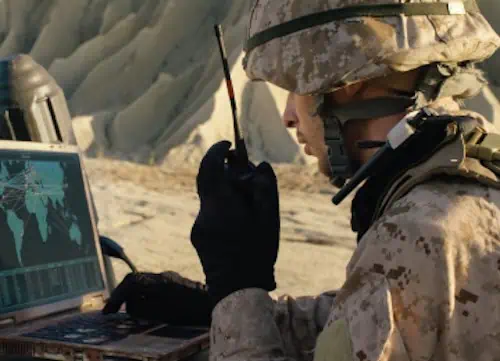
As network-centric warfare has become increasingly prevalent, the importance of the ability to move vast amounts of data across a battlefield has also grown accordingly. Mil-Spec Ethernet connectors are designed to accomplish this, while maintaining high-speed signal integrity in conditions where standard commercial-grade components would fail.
Mil-Spec Ethernet connectors are high-performance interconnects specifically built to facilitate high-speed data transmission within harsh military and defense environments. While many commercial connectors typically focus on cost and ease of use, military-grade Ethernet connectors prioritize survivability and reliability.
These components are typically built around established military connector families, such as the MIL-DTL-38999 series, but are outfitted with specialized high-speed inserts. This allows them to bridge the gap between traditional ruggedization standards and the bandwidth requirements of contemporary, data-heavy architectures.

Military-grade ethernet connectors by Omnetics Connector Corporation
Ethernet enables the deterministic exchange of data between subsystems, which is vital for real-time sensor fusion and secure tactical communications. By providing a scalable and interoperable framework, it allows disparate systems, such as a radar array and a fire-control computer, to communicate seamlessly. The shift toward C2 networks (Command and Control) has elevated the Ethernet connector to a mission-critical infrastructure layer.
For decades, circular connectors were used primarily for power and low-speed analog signals. However, modern military spec connectors now integrate high-speed differential pairs and advanced EMI shielding to handle the gigabit speeds required by today’s processing nodes.
Military-grade interconnect standards govern both physical housing and data protocols.
The mechanical “shell” of a connector is usually defined by MIL-DTL specifications:
The performance envelope is determined by the cable and contact arrangement. While Cat5e remains common in legacy systems, modern platforms are rapidly adopting Cat6A, Cat7, and even Cat8 to support 10Gbps+ data rates. Higher categories require stricter control over RF shielding, insertion loss, and crosstalk.
Standard IEEE Ethernet is non-deterministic, which can be a liability in combat systems. Consequently, many military communication networks are moving toward Time-Sensitive Networking (TSN). This protocol introduces traffic prioritization and scheduling, ensuring that mission-critical data reaches its destination with predictable latency.
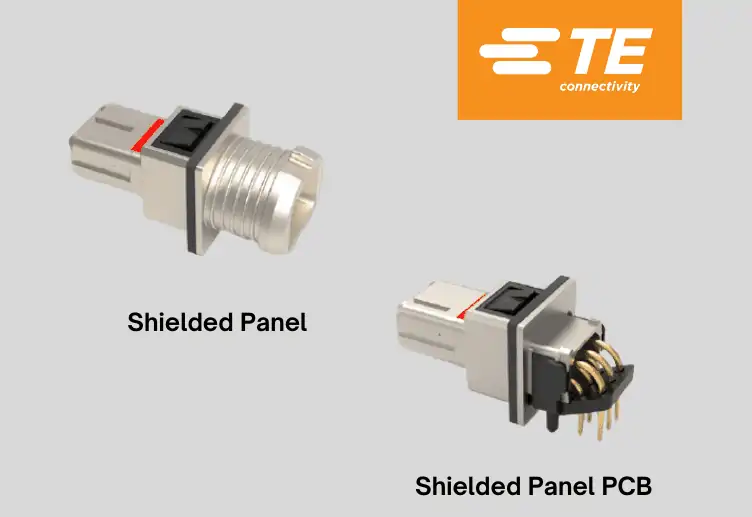
In a contested electromagnetic environment, RF shielding and EMI shielding are essential. A high-quality backshell ensures 360-degree shielding continuity from the cable to the connector shell, preventing signal interception and protecting the network from external interference.
Unlike a standard Ethernet cable plug, mil-spec variants may utilize a coupling nut (threaded or bayonet) to prevent accidental decoupling. Integrated strain relief and cable clamps protect the internal terminations from the harsh vibrations of a tracked vehicle or the high-G maneuvers of a fighter jet.
Moving 10Gbps through a circular connector in harsh environments requires precise high-speed differential pair design. Factors to consider include:
Aerospace ethernet connectors in manned and unmanned airborne platforms link everything from the cockpit display to the external ISR pods. They must be SWaP-optimized while meeting stringent flight safety certifications.
Tanks and IFVs are notoriously noisy environments, both mechanically and electromagnetically. Military-grade Ethernet solutions must withstand constant shock and the electrical interference generated by high-power engines and jamming equipment.
In maritime operations, salt fog and high-pressure water ingress are the primary threats. Here, connectors must meet IP68 or IP69K ratings, often utilizing specialized stainless steel or bronze housings to prevent galvanic corrosion.
Before a military Ethernet connector is deployed, it must withstand a rigorous array of tests according to a range of specifications. These may include
The industry is moving toward a Modular Open Systems Approach (MOSA). This initiative encourages the use of standardized, interoperable connectors to simplify upgrades and reduce lifecycle costs. Convergence of signals is also occurring; hybrid connectors combine power, data, and even RF signals into a single, compact interface, further optimizing the footprint within the platform.
As autonomous systems and AI-enabled platforms become the norm, the demand for reliable, high-bandwidth connectivity will only accelerate. Choosing the right Ethernet cable connector is therefore essential for the modern digital battlefield.


 Searching Companies & Products


 Subscribe to the Weekly eBrief
The latest engineering and technical developments straight to your inbox - join thousands of engineers who receive it.
Subscribe to the Weekly eBrief
The latest engineering and technical developments straight to your inbox - join thousands of engineers who receive it.