
Showcase your capabilities
If you design, build or supply EMI/RFI Filters, create a profile to showcase your capabilities and connect with visitors who have an active requirement for your solutions.




Military EMI/RFI filters are suppression components used to control conducted and radiated electromagnetic interference across defense electronics and platform power architectures. They may be applied to power lines, DC inputs, AC and three-phase systems, signal and data interfaces, RF paths, feedthrough connectors, and cable assemblies.
This page showcases leading EMI/RF filter manufacturers supporting mission computers, tactical radios, radar systems, EW payloads, and SATCOM equipment by reducing emissions and susceptibility.
Read the Technology Overview

Assured Position, Navigation and Timing (PNT) Solutions for Military and Defense

If you design, build or supply EMI/RFI Filters, create a profile to showcase your capabilities and connect with visitors who have an active requirement for your solutions.

EMI/RF filters are critical, highly engineered components designed to isolate and suppress unwanted electromagnetic energy within defense electronic architectures, helping to ensure the reliability of mission computers, tactical radios, and radar suites. A radio frequency interference filter, or RF interference filter, may be used on power lines, signal lines, data interfaces, or RF paths where unwanted emissions or susceptibility could affect mission-critical performance.
Military platforms generate a punishing spectrum of EMI/RFI from switching power supplies, electric motors, and high-power transmitters, while simultaneously facing external threats like high-intensity radiated fields (HIRF) and high-altitude electromagnetic pulses (HEMP). To achieve electromagnetic compatibility (EMC), reduce interference, and support survivability, EMI and RFI filtering is deployed as part of a holistic framework that integrates control solutions, rugged shielding, strategic grounding, military-grade EMI/RFI shields, and robust enclosure design.
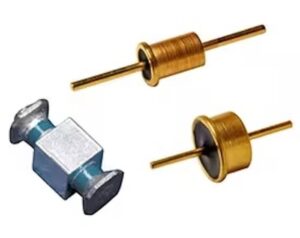
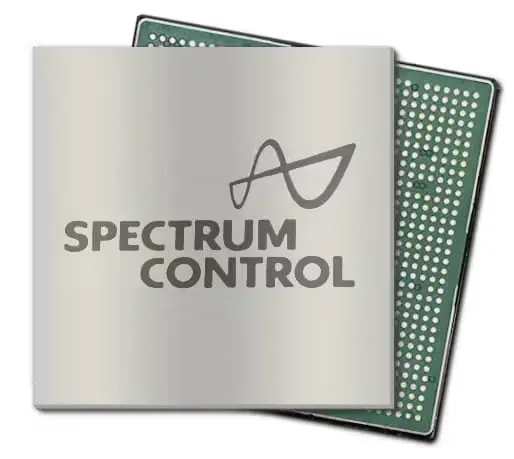
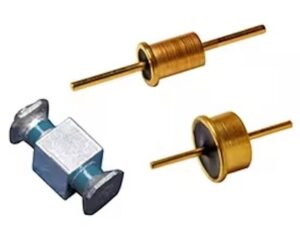
EMI Protection Components, EMI RFI control solutions from Spectrum Control.
The primary performance metric for an EMI/RFI filter is insertion loss, defined as 10 times the logarithm of the ratio of power delivered to the load before filter insertion to the power delivered after insertion. To achieve compliance, engineering professionals must evaluate the entire insertion loss curve rather than a single nominal value, mapping the filter’s passband, stopband, and cutoff frequency against the localized switching frequencies and harmonics unique to the defense platform.
Conducted noise propagates either as differential-mode noise between supply conductors or as common-mode noise flowing in phase across multiple lines and returning through the chassis ground. Differential-mode noise from switching regulators is managed via series impedance and shunt capacitance, whereas common-mode noise from high voltage switching nodes or parasitic capacitance requires common-mode chokes, feedthrough capacitors, RFI filters, and other RFI filtering measures to prevent external wiring harnesses from acting as radiating antennas.
Filter attenuation is strongly influenced by the shifting terminal impedances of the connected source and load, which vary with frequency, operational state, and temperature. Mismatches can induce circuit resonance, voltage overshoot, or control-loop instability, which is especially critical when placing filters upstream of negative-impedance DC-DC converters where damping networks, impedance control, or other stabilization measures may be required to prevent system oscillation and maintain power system stability.
Military filters use a precise blend of reactive shunting capacitors to divert high-frequency noise to ground, series inductors to block rapid current changes without saturating, and lossy ferrite components to absorb RFI and dissipate it as microscopic thermal energy. Discrete damping resistors or RC networks are integrated alongside these elements to introduce controlled equivalent series resistance, smoothing out sharp resonant peaks and stabilizing the network under pulsed or highly dynamic loads.
Filter topologies govern component layout to match specific line impedances: C filters bypass noise at high-impedance nodes; asymmetrical L filters balance unequal source and load impedances; LC networks can offer a steep 40 decibels per decade roll-off; Pi configurations provide dense attenuation, although designs using larger shunt capacitance may increase leakage current; T topologies can be useful where series impedance and shunt elements are required; and feedthrough or multi-stage designs reduce lead inductance at enclosure boundaries to deliver broad stopband rejection.
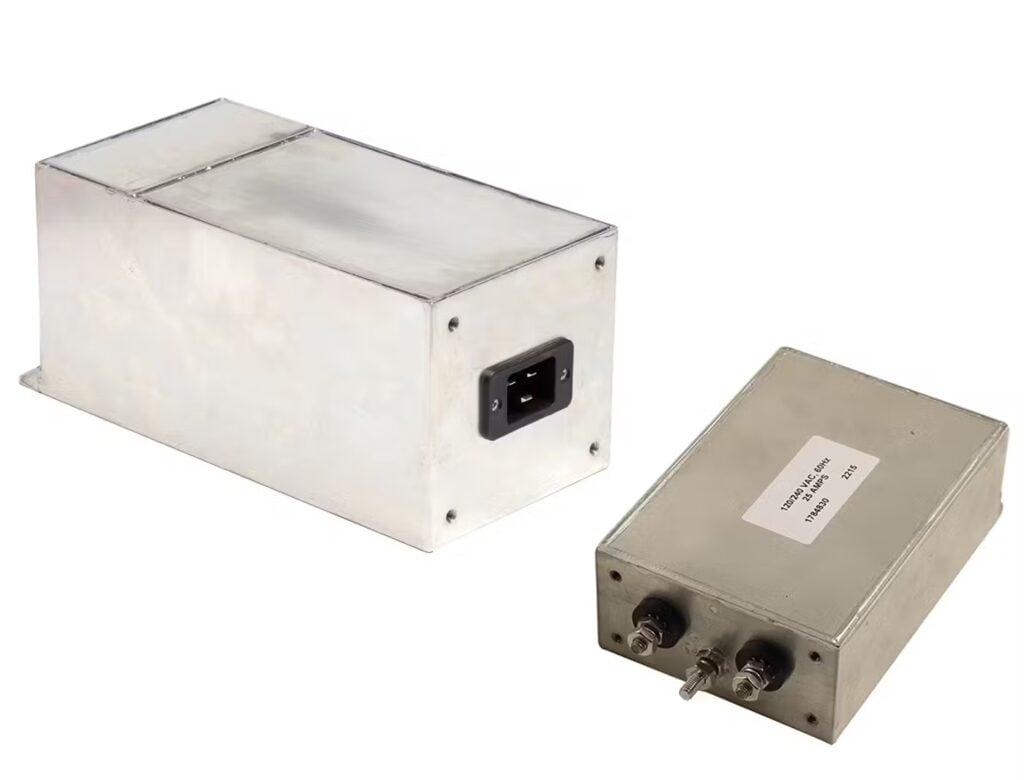
Power line EMI filters act as the primary defense boundary at the subsystem level, sealing tactical displays, rugged mission computers, and electronic warfare payloads from incoming transients while preventing internal switching noise from contaminating the shared power bus. Housed in fully shielded metallic enclosures, these heavy-duty assemblies incorporate common-mode chokes, safety capacitors, and transient voltage suppression networks to maximize isolation.
Engineered for 28 VDC and high-voltage distribution lines, these filters protect ground vehicle vetronics and aircraft flight controls by suppressing switching noise while enduring severe voltage surges, alternator load dumps, and engine-cranking battery drops. A military EMI/RFI filter for DC input protection may also be integrated with inrush current limiting and reverse-polarity protection circuits to support continuous operational integrity during power quality disruptions.
Deployed across tactical shelters, naval vessels, and high-power radar sites, three-phase AC filters manage heavy current loads and suppress conducted emissions from large rectifiers, inverters, and variable-frequency motor drives. These systems are engineered to tolerate high line-to-line voltages and demanding fault conditions, and shipboard variants may feature low common-mode leakage currents to comply with naval safety protocols and reduce the risk of hull currents.
Signal and data line filters protect low-level analog interfaces, sensor buses, and digital control networks from external RFI without causing rounding or attenuation of the underlying data waveform. For high-speed lines such as mil-spec Ethernet, USB 3.0, or high-rate serial telemetry links, specialized EMI/RFI filters with low-capacitance common-mode chokes and transient arrays are selected to reduce interference while preserving signal rise times, jitter boundaries, and skew limits.
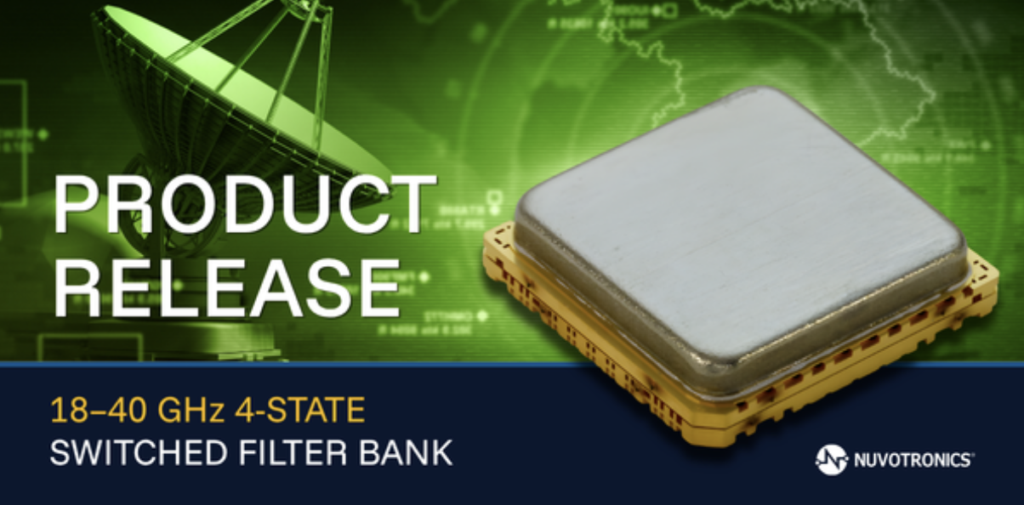
Operating within the active RF signal chains of transceivers, electronic support measures, and SATCOM terminals, these specialized components manage spectrum allocation and protect sensitive receiver front ends from desensitization caused by co-located transmitters. While low-pass and high-pass variants clear harmonics, high-performance cavity filters can deliver narrow bandpass or notch profiles with low insertion loss across crowded military frequency bands.
RF filter companies may provide standard or custom designs depending on frequency range, power handling, attenuation profile, packaging, and environmental qualification requirements.
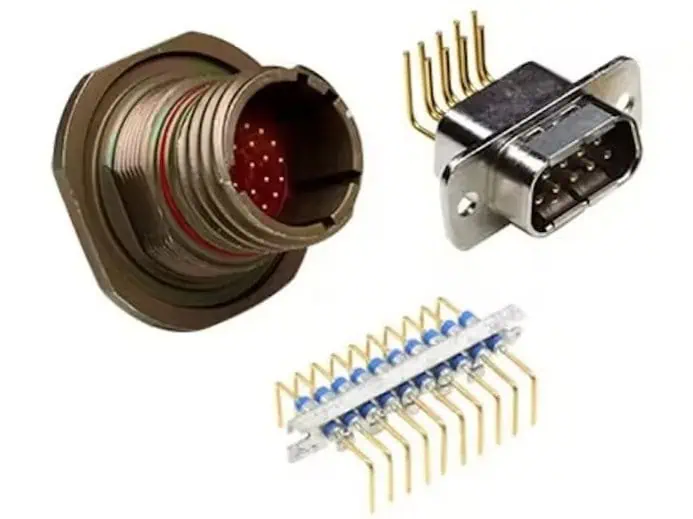
Feedthrough capacitors and filtered bulkhead connectors reduce electromagnetic leakage at enclosure penetration points, preventing unshielded cables from acting as antennas that carry ambient noise inside the chassis. By embedding capacitive and inductive filtering networks directly inside circular, rectangular, or micro-D connector shells, these components shunt high-frequency noise to the chassis wall while saving valuable internal printed circuit board space.
Utilized extensively during late-stage system integration and troubleshooting, external ferrite filters, clamp-on sleeves, and surface-mount chokes provide targeted RFI suppression without requiring a comprehensive printed circuit board redesign. They are deployed across complex vehicle wiring harnesses and aircraft avionics bays to suppress localized cable resonances and reduce the susceptibility of long cable runs to high electromagnetic environmental effects.
These components integrate multi-pin interconnect functionality with embedded EMI/RFI suppression arrays, allowing defense engineers to specify unique capacitive or inductive values on a pin-by-pin basis within a single connector shell. They are increasingly optimized for advanced command-and-control architectures running high-bandwidth protocols, utilizing specialized internal shielding and layouts to support EMI/RFI filtering and EMI/RFI compliance without compromising signal integrity.
Hardware components must meet strict military metrics before deployment in field operations. To support survivability, reliability, and interoperability in contested operational scenarios, military EMI filters may need to be qualified or selected against a stringent matrix of applicable defense standards:
Compliance with these parameters helps support hardware reliability under severe combat conditions.
Modern engineering approaches are changing how suppression devices are packaged and integrated. The following developments highlight the technological shifts driving next-generation electronic defense designs:
These material innovations enable developers to design smaller, lighter subsystems while maintaining signal fidelity.


 Searching Companies & Products