An underwater surveillance system is an integrated set of sensors, platforms, and processing tools used to detect, classify, localize, and track activity beneath the sea surface. These systems extend maritime domain awareness into the subsurface environment, supporting naval operations, ISR, and critical infrastructure protection where visibility is limited and acoustic conditions are complex.
This category showcases underwater surveillance system suppliers including sonar, non-acoustic sensors, imaging technologies, and fixed or mobile platforms to monitor ports, offshore energy assets, seabed infrastructure, and contested waters.
If you design, build or supply Underwater Surveillance Systems, create a profile to showcase your capabilities and connect with visitors who have an active requirement for your solutions.
Underwater surveillance systems are integrated sensing and monitoring solutions designed to detect, classify, localize, and track activity below the sea surface. Within modern naval and maritime defense, they provide critical situational awareness in an environment where visibility is limited, acoustic conditions are complex, and adversary activity is increasingly covert.
These surveillance systems extend maritime domain awareness into the subsurface domain and directly support undersea warfare by enabling early warning, track continuity, and informed response. As uncrewed platforms, seabed infrastructure, and autonomous underwater threats proliferate, underwater surveillance has evolved into a core capability supporting both force protection and strategic assurance.
Applications of Underwater Surveillance Systems
Naval Operations
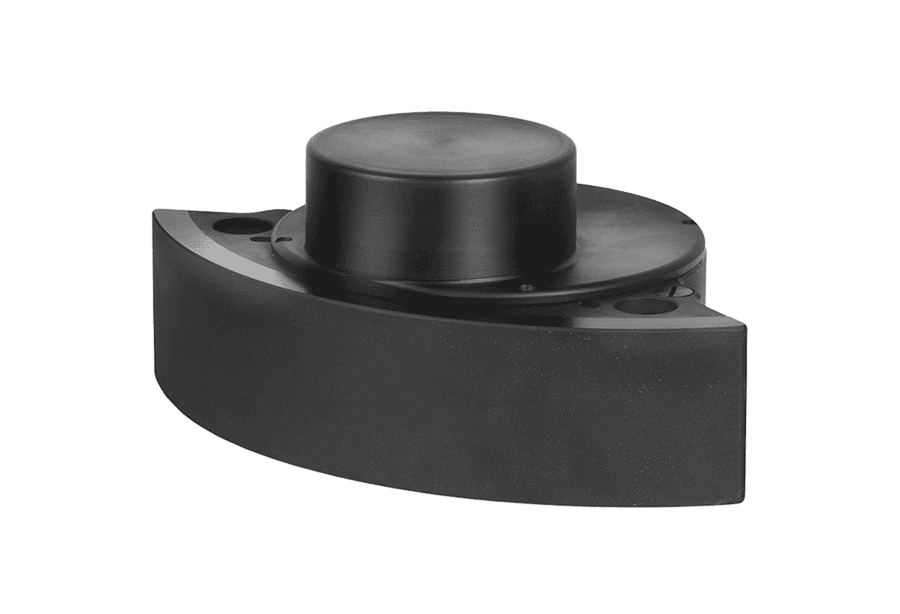
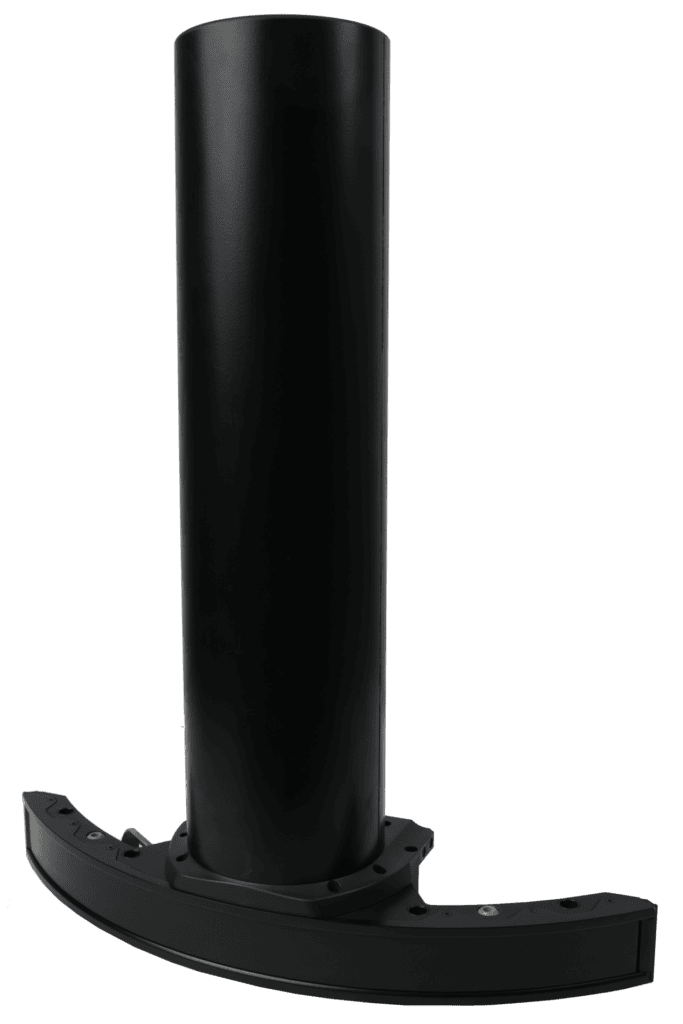
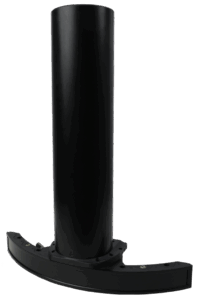
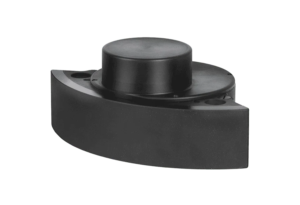
GuardPoint™ 400, a short-range intruder detection sonar, by NORBIT SECURITY
In naval operations, an underwater surveillance system is used to detect, track, and classify subsurface threats in support of force protection and undersea warfare.
Anti-submarine warfare (ASW) support: Early intruder detection and tracking of manned and unmanned submarines to extend warning time and cue ASW assets.
Autonomous underwater threats: Identification of small, low-signature autonomous platforms conducting reconnaissance, mine warfare, or intelligence collection.
Swimmer delivery vehicles and combat divers: Short-range detection of diver-based threats approaching ships, anchorages, or naval facilities.
Maritime Domain Awareness & ISR
In below-surface Intelligence, Surveillance, and Reconnaissance (ISR) operations, marine surveillance systems contribute to a complete maritime domain picture by extending awareness below the surface. Persistent sensing enables long-term pattern-of-life analysis, allowing operators to distinguish routine subsea activity from anomalous or hostile behavior. Covert monitoring near critical assets supports attribution and intelligence collection without requiring a continuous visible naval presence.
Critical Infrastructure Protection
Subsea surveillance is increasingly deployed to protect fixed and linear infrastructure from covert interference or sabotage.
Offshore Energy: Persistent monitoring of installations to detect unauthorized approach or loitering within exclusion zones.
Subsea Cables and Pipelines: Identifying disturbance, excavation, or tampering activity via an underwater surveillance network to prevent espionage or physical attack.
Strategic Seabed Monitoring: Supporting long-term awareness in sensitive areas where direct patrols are impractical or insufficient.
Ports & Harbor Security
Port surveillance requires specialized equipment to handle shallow water, high ambient noise, and dense civilian activity. Underwater surveillance camera systems in these settings are optimized for high-resolution detection of divers and small submersibles. These systems integrate with surface security and marine surveillance radar to support rapid response while minimizing false alarms.
Key Components of Underwater Surveillance Systems
Sonar-Based Surveillance Systems
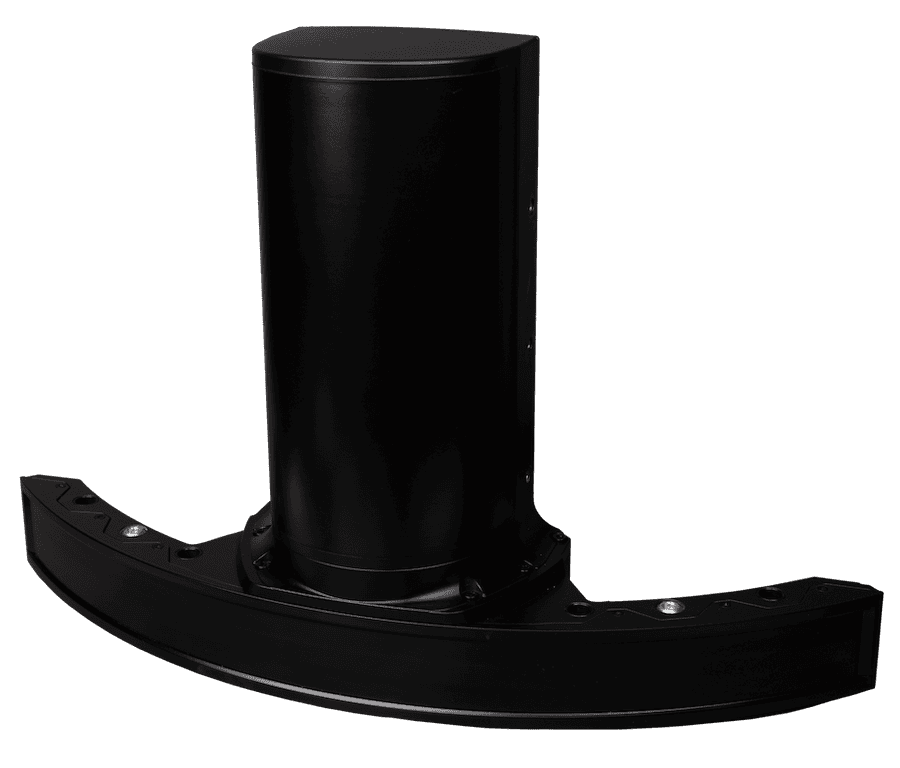
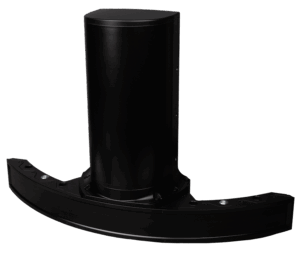
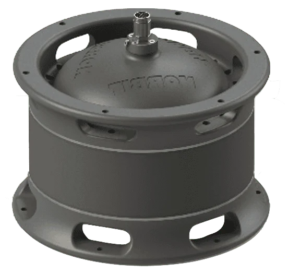
GuardPoint™ 70, a long-range open-water surveillance sonar, by NORBIT SECURITY
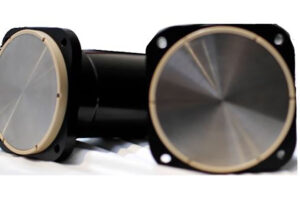
Sonar is typically the primary sensing modality for underwater surveillance.
Active sonar systems: These transmit acoustic pulses to localize targets, with high-frequency versions used for marina security and low-frequency for wide-area detection.
Passive sonar systems: These enable covert monitoring by detecting acoustic emissions from low-signature platforms without transmitting signals.
Magnetic and Non-Acoustic Sensors
Non-acoustic marine surveillance equipment provides complementary detection paths where sonar performance is degraded. Magnetic Anomaly Detection (MAD) identifies disturbances caused by ferrous objects like submarines, while electric field and pressure sensors detect hydrodynamic signatures. Fiber-optic Distributed Acoustic Sensing (DAS) supports continuous monitoring of linear infrastructure like pipelines.
Electro-Optical and Imaging Sensors
Electro-optical sensors provide visual confirmation in clear, shallow water environments. Underwater cameras and low-light imaging systems are used for inspection and identification tasks, particularly in port and infrastructure protection roles. Laser line scan and optical enhancement techniques improve visibility in turbid conditions, although optical sensing remains limited by water clarity, lighting conditions, and range.
Underwater Surveillance Drones & Robotics
Mobile unmanned and autonomous vehicles extend the reach of surveillance architectures into hazardous or inaccessible areas.
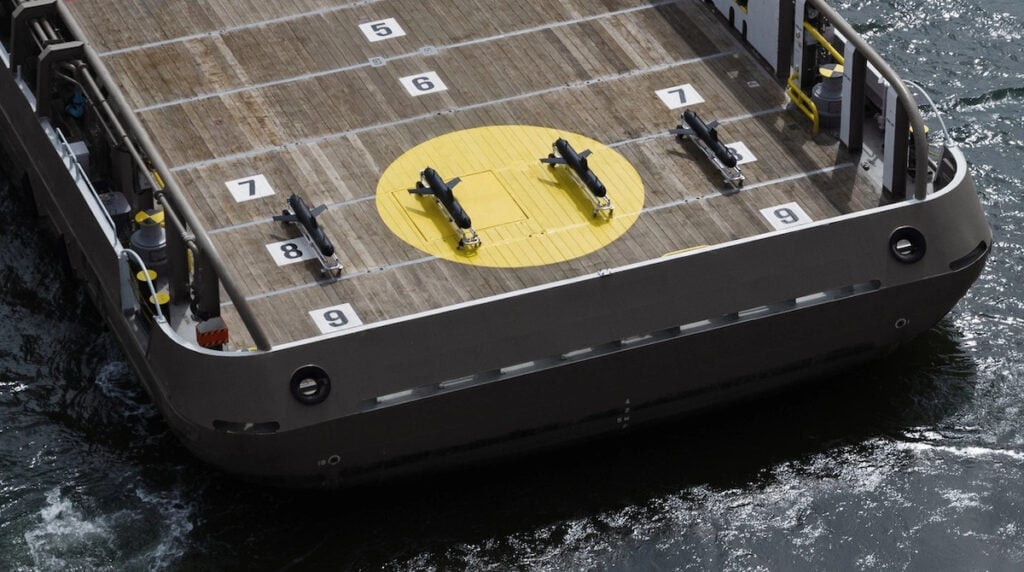
UUVs (Unmanned Underwater Vehicles): Untethered platforms utilized for persistent anti-submarine warfare and ISR to act as force multipliers in contested waters.
USVs (Uncrewed Surface Vehicles): Surface platforms equipped with underwater surveillance radar and towed arrays that act as communication relays between subsurface assets and command centers.
AUVs (Autonomous Underwater Vehicles): Self-contained vehicles that follow pre-programmed missions for wide-area seabed mapping and pattern-of-life surveillance.
Underwater Surveillance Radar
While radar does not penetrate the water, surface-based marine surveillance radar identifies periscopes, snorkels, or surface disturbances associated with submerged platforms. In littoral environments, radar cueing improves the efficiency of subsurface sensors by narrowing search areas.
Types of Underwater Surveillance Solutions
Fixed Underwater Surveillance Systems
Fixed underwater surveillance systems provide persistent, long-endurance monitoring of defined areas. Seabed-mounted sensor networks and harbor protection systems are designed for continuous operation with high reliability and minimal maintenance. These installations are often cabled for power and data, supporting high bandwidth communications and integration with shore-based command centers.
Mobile and Semi-Mobile Systems
Mobile surveillance systems are mounted on ships, vehicles, or deployable frames to support expeditionary and task-specific operations. Rapidly deployable surveillance barriers can be established around temporary operating areas or high-value assets. Semi-mobile systems offer a balance between endurance and repositioning capability, allowing coverage to be adapted as operational needs change.
Autonomous and Networked Nodes
Modern underwater surveillance architectures increasingly rely on autonomous sensor nodes operating cooperatively. These nodes manage local processing, power consumption, and data relay, forming resilient networks that can adapt to environmental and operational change. Networked approaches improve coverage, survivability, and scalability compared to standalone sensors.
Emerging Developments in Underwater Surveillance
Autonomous Platforms: Increased use of hybrid uncrewed platforms that act as persistent, mobile sensor nodes to extend surveillance reach.
Advanced Underwater Batteries: Solid-state subsea batteries are set to enable significantly longer mission durations for autonomous nodes and robots.
Persistent Seabed Sensing: Expansion of large-scale, deep-sea sensor networks that integrate AI-driven edge processing to identify threats in real-time.
Multi-Domain Integration: Deeper connectivity between subsurface sensors and satellite-based ISR to provide a seamless transition from detection to tracking.
Defense Advancement showcases NORBIT Security's underwater surveillance and threat detection solutions for real-time monitoring of critical naval and marine assets
Helsing is launching the Lura software platform and SG-1 Fathom autonomous underwater glider—a new maritime surveillance system that uses advanced AI to detect and deter underwater threats with speed, precision, and scale
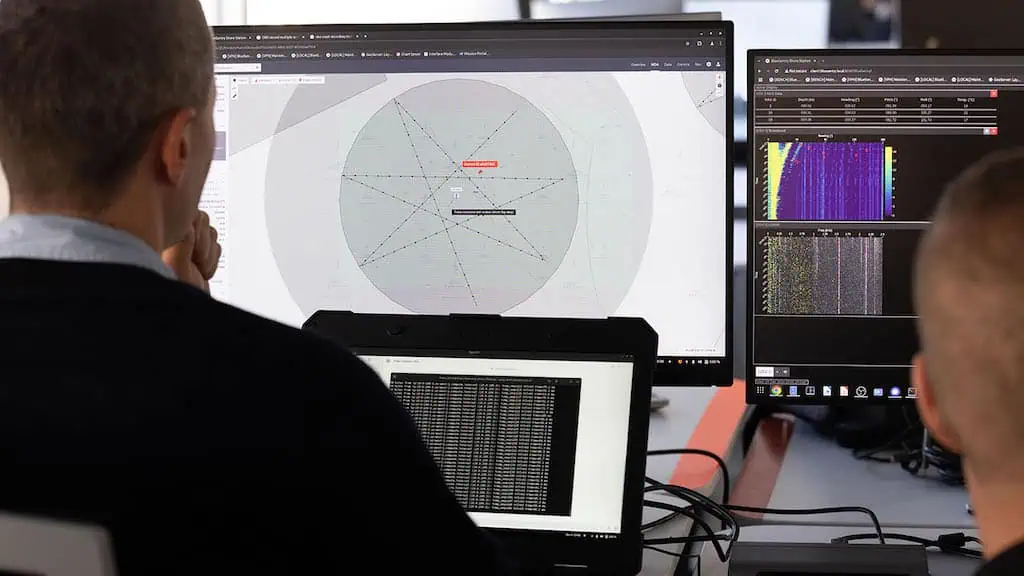
The BlueSentry sonar array has integrated with the Saildrone Surveyor, expanding the scope of naval interoperability and autonomous maritime capability developments between AUKUS partners
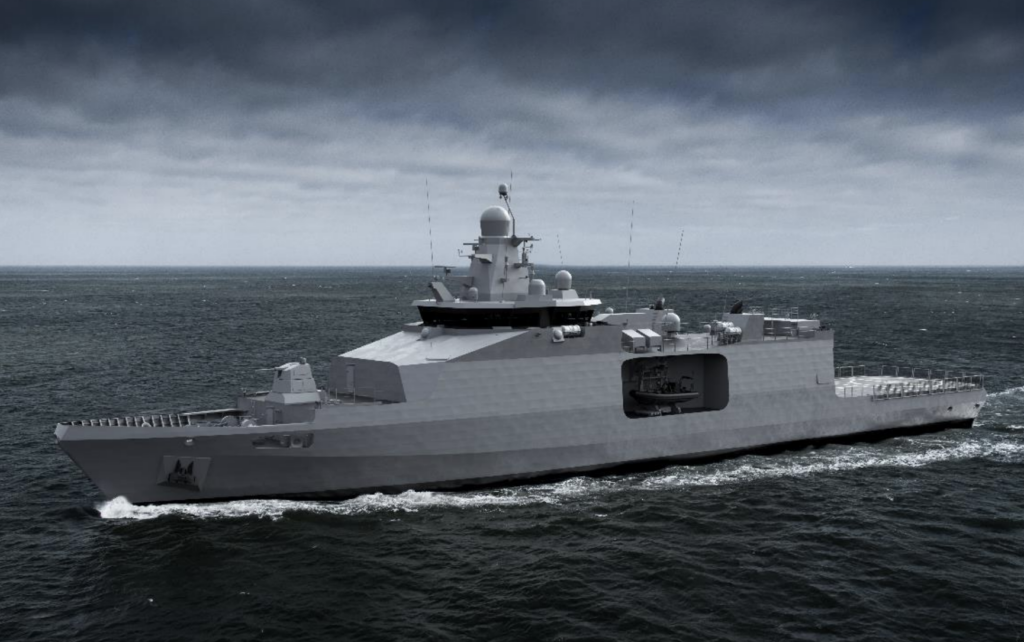
The French Defence Procurement Agency (DGA) has contracted Thales to equip the Navy's first seven Offshore Patrol Vessels with its Bluewatcher hull sonar, NS50 compact multi-mission surveillance radar, and TSA 3522 Identification Friend or Foe
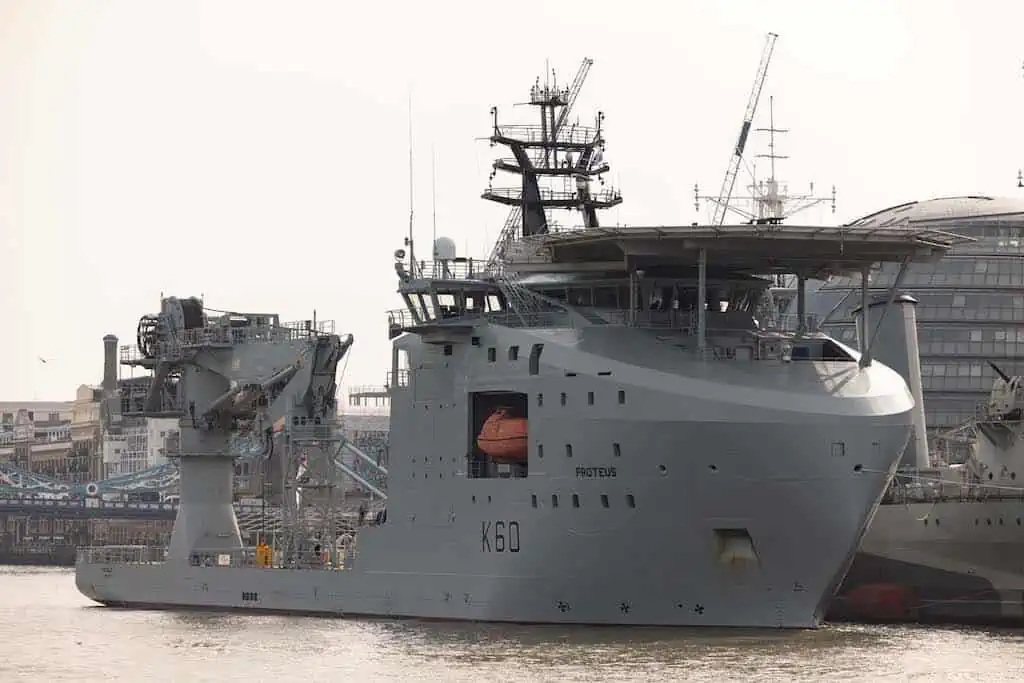
The Royal Navy’s RFA Proteus will have undersea surveillance, survey and warfare systems, and will be home to a suite of specialist capabilities for advancing science and technology
The latest defense technology news, straight to your inbox.
Get our weekly roundup of technology developments, new products and industry news.
THANK YOU FOR SIGNING UP
Thanks for joining us. Check your inbox.
We've sent you an email. Click the confirmation link to complete your subscription to the weekly eBrief. In the meantime, explore the latest news, suppliers and technologies on DA.
Advancing Defense Capability Through Strategic Collaboration
Defense Advancement works with major OEMs to foster collaboration and increase engagement with SMEs, to accelerate innovation and drive defense capabilities forward.