Suppliers: Underwater Gliders

ALSEAMAR

Advanced Naval Defense Solutions & Services for Marine & Submarine Applications

Teledyne Marine

Imaging Systems, Rugged Underwater Sensors, Autonomous & Unmanned Vessels for Defense & ISR

Showcase your capabilities

If you design, build or supply Underwater Gliders, create a profile to showcase your capabilities and connect with visitors who have an active requirement for your solutions.


Create Supplier Profile

Products

2 Cutting-edge Solutions
Add your solutions
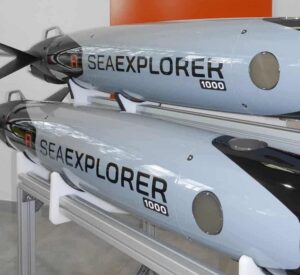
SEAEXPLORER 1000-M

Extended-endurance underwater stealth glider for naval defense missions

Extended-endurance underwater stealth glider for naval defense missions
...ER 1000-M is a military-configured underwater glider designed to support a range of naval defense... ...r security and defense operations, the platform is subject to export licensing and will be available...
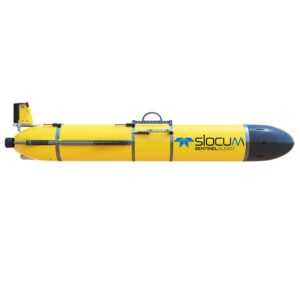
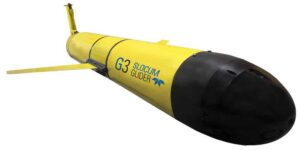
Slocum G3 Glider

Endurance Autonomous Underwater Glider for Defense

Endurance Autonomous Underwater Glider for Defense
...ven autonomous glider for military applications. Small development programs and large fleets... Slocum 3 gliders deliver high quality oceanographic data at a fraction of the cost compared to...

Underwater Gliders for Defense and Military Applications

Olivia Hannam

Updated:

Designed for low-energy, long-duration deployments, underwater gliders operate without propellers by adjusting their buoyancy to move vertically and using wings to glide horizontally. These vehicles carry sensor payloads to support intelligence, surveillance, and reconnaissance (ISR) missions, passive acoustic monitoring, and mine countermeasures. Their stealth and persistence make them indispensable in contested and covert maritime environments.
Understanding Underwater Gliders in Defense

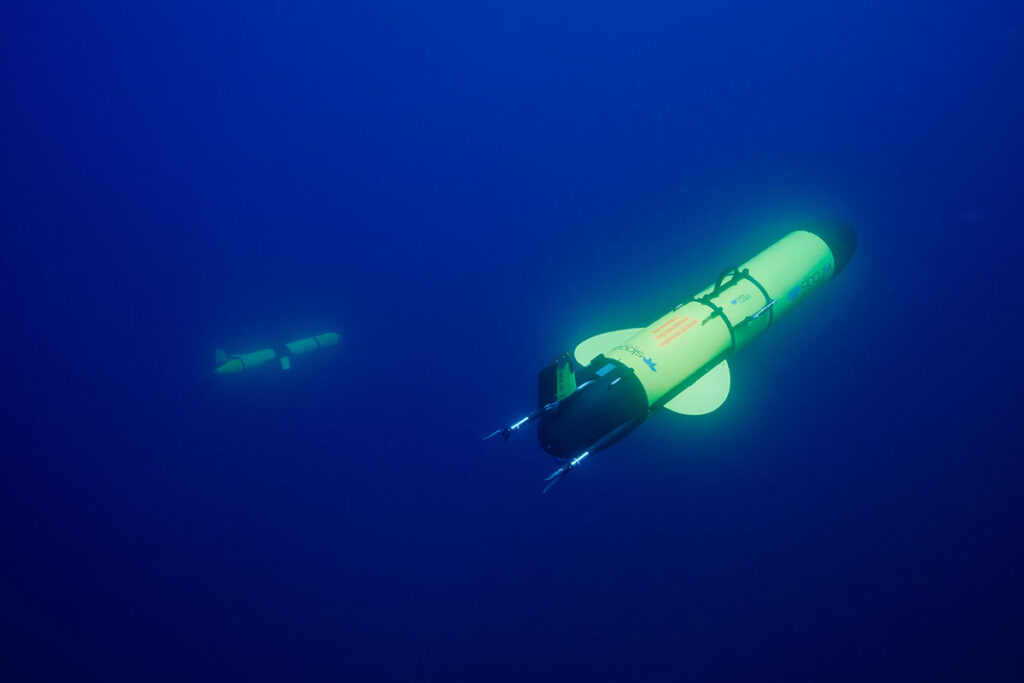
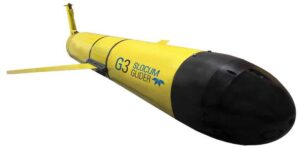
Underwater glider for defense applications by Teledyne Marine

Slocum G3 Glider by Teledyne Marine.

Underwater gliders are specialized autonomous underwater vehicles (AUVs) that rely on a variable buoyancy system and wings to convert vertical motion into horizontal glide. They differ significantly from traditional propulsion-driven AUVs or unmanned underwater vehicles (UUVs) by leveraging minimal energy to traverse large ocean distances over extended durations.

The glider’s movement is facilitated through internal ballast systems, typically driven by a buoyancy engine or piston that modulates density and depth. This motion is guided by control surfaces like rudders and wings, and monitored through sensors such as tilt sensors, pressure sensors, magnetic compasses, and GPS modules. Communications are maintained via satellite communication (satcom) systems, which intermittently relay mission data to command centers.

Applications in Military and Defense

Underwater gliders are extensively deployed in a range of defense applications. Their long endurance, stealth capabilities, and adaptability make them ideal for:

  • ISR operations: Supporting intelligence, surveillance, and reconnaissance across strategic maritime zones
  • Mine countermeasures: Locating and mapping underwater mines using sonar and acoustic sensor packages
  • Passive acoustic monitoring: Gathering environmental and acoustic intelligence without emitting detectable signals
  • Infrastructure protection: Monitoring undersea cables and critical maritime infrastructure
  • Persistent underwater surveillance: Remaining deployed for weeks or months, offering continuous data collection in strategic areas
  • Antisubmarine warfare: Detecting and tracking submarine activity using hydrophone arrays and acoustic sensors

Key Components and Technologies

Defense-grade underwater gliders incorporate a suite of sophisticated technologies:

  • Buoyancy engine or variable buoyancy system: Central to vertical movement control
  • Internal ballast system: Used to finely tune buoyancy and trim
  • Wing and rudder assemblies: Enable maneuverability and directional stability
  • Sensor payloads: Include hydrophone arrays, active acoustics, pressure sensors, magnetic compasses, and more
  • Power systems: Typically lithium-based battery packs optimized for energy efficiency
  • Satellite communications: Allow remote control, diagnostics, and data offloading
  • Electronic systems: Control core functions including navigation, data processing, and payload operation

Types of Underwater Gliders

Military and defense operations deploy various glider models, including:

  • Deep-diving gliders: Engineered for extended missions at depths exceeding 1000 meters
  • Shallow-water gliders: Ideal for coastal ISR and mine hunting
  • Wave gliders: Surface vehicles using wave energy for propulsion, often paired with underwater gliders
  • Glider drones: A term sometimes used for autonomous undersea vehicles with ISR capabilities

Each type serves specific mission needs, from persistent oceanographic surveillance to cable monitoring and seabed mapping.

Comparisons with Other UUVs

Compared to traditional AUVs and UUVs, underwater gliders:

  • Operate at significantly lower energy consumption
  • Enable more extended deployments (weeks to months)
  • Are quieter, enhancing stealth in ISR and antisubmarine missions
  • Offer limited payload capacity, but sufficient for most acoustic and sensing needs

However, gliders are generally slower and less maneuverable than propeller-driven systems, which may be necessary for rapid-response missions.

Relevant Standards and Protocols

Underwater gliders developed for military use often comply with defense standards:

  • MIL-STD-810: Environmental engineering considerations for military equipment
  • MIL-STD-461: EMC requirements for electronic systems
  • MIL-STD-1474: Acoustics limits for military equipment to ensure low detectability
  • NATO STANAG 4586: Standard interface for UUV interoperability

These standards ensure interoperability, durability, and stealth compatibility in complex operational environments.

Expanding Role in Modern Defense

As maritime conflicts become increasingly sophisticated, underwater gliders continue to evolve in sensor integration, autonomous behavior, and adaptive mission planning. Their low acoustic signature, long endurance, and real-time satcom capabilities make them a preferred tool for navies prioritizing persistent ISR, infrastructure defense, and environmental intelligence gathering.


 

Related Articles

UK MOD Selects Teledyne Marine Autonomous Systems & Persistent Oceanographic Sensors

Teledyne Marine to provide advanced autonomous gliders and floats to bolster the Royal Navy’s persistent oceanographic data collection

Apr 07, 2026
Teledyne Marine Enters Strategic Partnership to Advance Naval Unmanned Systems

Teledyne Marine and M Subs sign strategic collaboration to support UK Royal Navy and international naval programs through the integration of unmanned vehicle platforms, autonomy systems, and advanced maritime sensing technologies

Mar 05, 2026
Teledyne Showcases Autonomous Gliders & Anti-Submarine Warfare Systems to NATO Members

Teledyne's recent trials in the North Atlantic demonstrate how gliders and profiling floats create a formidable barrier against subsea adversaries

Feb 09, 2026
Teledyne Marine Expands UK Infrastructure to Support Royal Navy Unmanned Systems & Autonomy

New service agreements for Slocum gliders and Gavia AUVs trigger investment in dedicated maintenance facilities and specialized field support staff across the South Coast

Jan 26, 2026