Underwater electric field sensors are passive detection systems that measure electrical signatures generated by vessels, submarines, underwater vehicles, and other submerged assets operating in marine environments. Used across naval, maritime security, and critical infrastructure protection applications, these sensors provide a complementary capability to acoustic, magnetic, and sonar-based surveillance systems.
This page showcases leading underwater electric field sensor manufacturers, offering solutions designed for long-term operation in demanding underwater environments.
If you design, build or supply Underwater Electric Field Sensors, create a profile to showcase your capabilities and connect with visitors who have an active requirement for your solutions.
Technology Overview: Underwater Electric Field Sensors for Naval Surveillance
Overview by
William Mackenzie
Updated:
Introduction to Underwater Electric Field Sensors for Naval Operations
Underwater electric field sensors are specialized devices designed to detect and measure electric fields within the marine environment. In naval and maritime security applications, they provide a valuable means of detecting, tracking, and classifying vessels, submarines, underwater vehicles, and other objects that generate characteristic electrical signatures as they move through seawater.
All metallic structures immersed in seawater produce electric fields as a result of corrosion processes, cathodic protection systems, onboard electrical equipment, propulsion systems, and interactions between conductive materials and the surrounding environment. These signatures can often be detected passively, enabling electric field sensors to identify targets without transmitting energy or revealing their own presence.
For naval operators, electric field sensing offers several advantages. The technology provides a complementary detection method to acoustic, magnetic, and sonar-based systems, helping improve situational awareness and reducing the likelihood of undetected threats. Because electric field sensors operate passively, they are particularly valuable for covert surveillance, harbor protection, anti-submarine warfare, and persistent maritime monitoring missions.
Types of Underwater Electric Field Sensors
Fixed Electric Field Sensors
Fixed underwater electric field sensors are permanently installed on the seabed, harbor infrastructure, offshore installations, or coastal monitoring networks. These systems provide continuous monitoring of strategic waterways and maritime approaches, allowing operators to detect and track vessels entering protected areas.
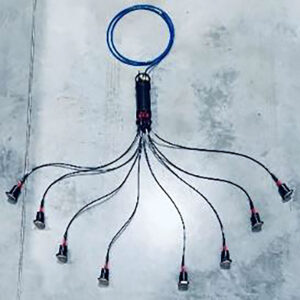
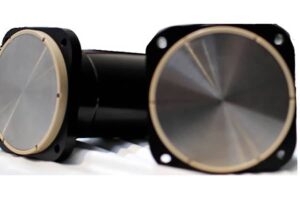
Tetrapulse by ELWAVE.
Their fixed position enables long-term collection of baseline environmental data, improving detection accuracy and helping distinguish genuine targets from background noise.
Portable and Deployable Systems
Portable systems are designed for rapid deployment in temporary security operations or expeditionary missions. They can be installed by divers, deployed from small vessels, or integrated into temporary surveillance networks around critical maritime assets.
These solutions offer flexibility for naval forces conducting operations in unfamiliar or contested environments.
Towed Sensor Systems
Towed electric field sensor systems are deployed behind surface vessels or underwater platforms. By increasing the distance between the sensing equipment and the host platform, these systems reduce self-generated interference and improve detection performance.
Towed configurations are commonly used for surveillance, route clearance, and environmental assessment missions where broad area coverage is required.
Autonomous and Unmanned Platform Sensors
Electric field sensors are increasingly integrated into Autonomous Underwater Vehicles (AUVs), Unmanned Underwater Vehicles (UUVs), and other autonomous maritime platforms. These systems allow operators to conduct covert sensing operations over large areas while minimizing risk to personnel.
The combination of autonomous navigation and passive sensing enables persistent underwater intelligence-gathering capabilities.
Distributed Sensor Networks
Distributed sensor networks consist of multiple sensing nodes connected through underwater communication systems and centralized command infrastructure. By correlating data from numerous sensors, operators can improve detection confidence, target localization accuracy, and overall situational awareness.
Such networks are becoming increasingly important for protecting naval bases, strategic waterways, and critical offshore infrastructure.
Key Features & Capabilities of Subsea Electric Field Sensors
High-Sensitivity Detection
Modern underwater electric field sensors are capable of detecting extremely weak electrical signals generated by maritime platforms. Advances in sensor design and signal processing have significantly improved sensitivity, enabling the detection of low-signature targets at greater ranges.
Long-Term Monitoring
Many systems are designed for extended deployments lasting months or even years. Robust construction, low maintenance requirements, and efficient power management enable continuous operation in demanding marine environments.
Low-Power Operation
Low power consumption is particularly important for seabed systems, autonomous vehicles, and remote sensor networks. Efficient electronics and intelligent power management allow sensors to remain operational for extended periods without frequent servicing.
Real-Time Data Collection
Modern electric field sensing systems provide real-time monitoring and reporting capabilities. This allows operators to rapidly identify potential threats, monitor vessel movements, and respond to emerging situations as they develop.
Multi-Sensor Integration
Electric field sensors are rarely deployed in isolation. They are commonly integrated with sonar systems, magnetic anomaly detectors, acoustic sensors, radar networks, and optical surveillance systems to create a comprehensive maritime surveillance capability.
Integration & Deployment Configurations
Seabed Installations: Seabed-mounted systems provide persistent surveillance of specific maritime areas. These installations are commonly used to monitor harbor entrances, shipping channels, and strategic underwater infrastructure.
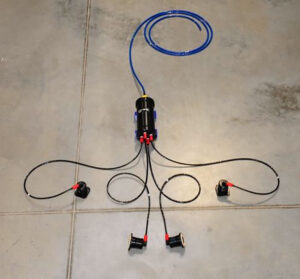
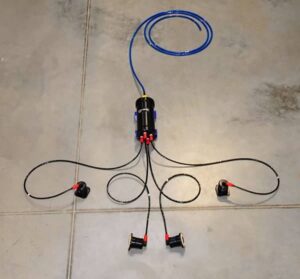
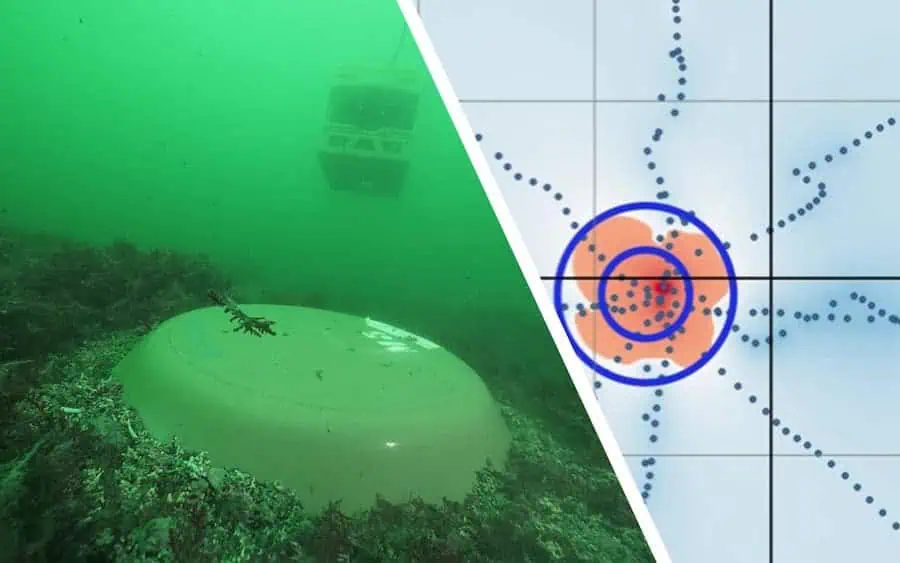
ESENSE by ELWAVE.
Buoy-Based Systems: Surface buoys can host electric field sensing equipment while also providing power, communications, and positioning capabilities. These systems are useful for temporary monitoring operations and wide-area surveillance networks.
Vessel Integration: Electric field sensors may be integrated onto naval vessels, patrol craft, and specialized surveillance platforms to enhance situational awareness during maritime operations.
AUV and UUV Payload Integration: The compact size and low power requirements of many electric field sensors make them well suited for deployment on autonomous underwater platforms. Integration with onboard navigation and processing systems enables highly capable autonomous sensing missions.
Networked Monitoring Systems: Increasingly, electric field sensors form part of larger maritime surveillance networks. These integrated architectures allow sensor data to be shared across command centers, vessels, and autonomous platforms, creating a common operational picture.
Applications of Underwater Electric Field Sensors
Naval and Defense Applications
Military organizations use underwater electric field sensors to support anti-submarine warfare, force protection, underwater surveillance, and maritime security operations. The passive nature of the technology makes it particularly useful for covert monitoring missions.
Harbor and Port Security
Ports and naval bases represent attractive targets for hostile activities. Electric field sensors can help detect unauthorized underwater vehicles, powered diver systems, and vessels approaching protected areas, contributing to layered security architectures.
Maritime Surveillance
Electric field sensing enhances maritime domain awareness by providing an additional method of detecting and monitoring vessel activity. The technology is particularly effective when combined with other underwater sensing modalities.
Autonomous Underwater Systems
AUVs and UUVs equipped with electric field sensors can perform surveillance, reconnaissance, and environmental monitoring tasks while operating independently over extended periods.
Offshore and Critical Infrastructure Protection
Offshore energy installations, subsea pipelines, communication cables, and other critical infrastructure require continuous monitoring against both accidental and deliberate threats. Electric field sensing systems provide an effective tool for monitoring activity around these assets.
Research and Environmental Monitoring
Beyond defense applications, electric field sensors are used by research organizations to study underwater electrical phenomena, investigate interactions between marine structures and the environment, and support oceanographic research programs.
Design & Performance Considerations
Sensor Sensitivity: Sensitivity remains one of the most important performance metrics. Detection capability depends on sensor design, electrode configuration, signal processing techniques, and environmental conditions.
Environmental Influences: Seawater conductivity, temperature, salinity, currents, and natural background electrical activity can all influence sensor performance. Effective systems are designed to compensate for these environmental variables.
Power and Communications Requirements: Deployment duration, operating environment, and mission objectives all influence power and communication system design. Remote deployments often require highly efficient power management and reliable underwater communications solutions.
Reliability and Durability: Marine environments present significant engineering challenges, including corrosion, pressure, biofouling, and mechanical stress. Sensors must be designed to withstand prolonged exposure while maintaining stable performance.
Data Processing and Analysis: Raw electric field measurements require sophisticated processing to extract meaningful information. Advanced filtering, signal characterization, and classification techniques help improve detection accuracy while minimizing false alarms.
Emerging Trends in Underwater Electric Field Sensing
Advanced Signal Processing: New signal processing techniques are improving the ability to detect weak targets in complex marine environments. Enhanced filtering and automated analysis tools continue to increase system effectiveness.
AI-Enabled Detection: Artificial intelligence and machine learning technologies are increasingly being applied to electric field sensing systems. These tools can help identify target signatures, classify contacts, and improve operator decision-making.
Persistent Underwater Surveillance Networks: Naval forces are placing greater emphasis on persistent underwater surveillance. Distributed electric field sensing networks are expected to play an increasingly important role in monitoring strategic maritime regions around the clock.
Multi-Phenomenology Sensing: Future maritime surveillance systems will increasingly combine electric field sensing with acoustic, magnetic, optical, and sonar technologies. This multi-phenomenology approach improves detection confidence, enhances target classification, and provides more comprehensive situational awareness.
ELWAVE develops cutting-edge active and passive underwater electric sensing technologies that enhance subsea detection, surveillance and imaging capabilities for naval defense and maritime security operations
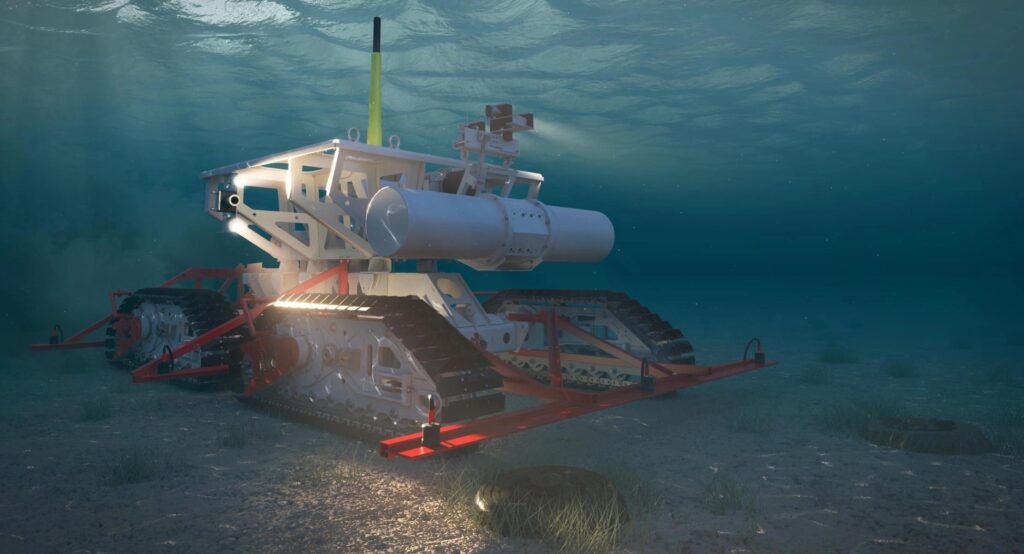
Royal IHC and Elwave are enhancing European naval mine countermeasures with an advanced seabed crawler, biomimicry-based sensors, and autonomous toolboxes under the E=MCM program
The latest defense technology news, straight to your inbox.
Get our weekly roundup of technology developments, new products and industry news.
THANK YOU FOR SIGNING UP
Thanks for joining us. Check your inbox.
We've sent you an email. Click the confirmation link to complete your subscription to the weekly eBrief. In the meantime, explore the latest news, suppliers and technologies on DA.
Advancing Defense Capability Through Strategic Collaboration
Defense Advancement works with major OEMs to foster collaboration and increase engagement with SMEs, to accelerate innovation and drive defense capabilities forward.