

Showcase your capabilities
If you design, build or supply Tactical Data Links, create a profile to showcase your capabilities and connect with visitors who have an active requirement for your solutions.





Tactical Data Links (TDLs) manage the secure, high-speed exchange of mission-critical digital data between all platforms operating across modern multi-domain battle spaces.
This guide showcases leading global suppliers of TDL terminals, gateways, and wireless data link solutions , engineered to provide guaranteed connectivity and information dominance for defense platforms worldwide.
Read the Technology Overview
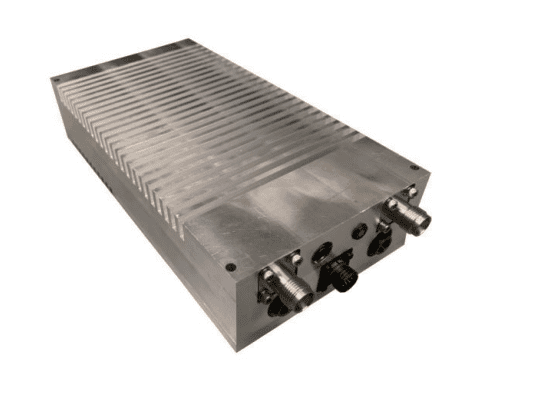
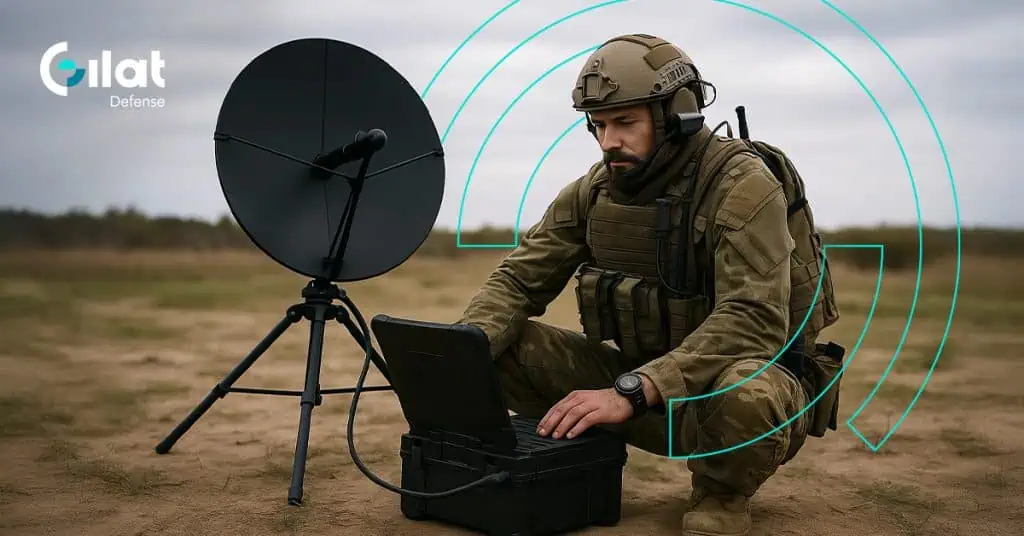
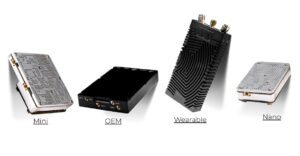
Integrated Radio MIMO Systems, RF Power Amplifiers for C-UAS, Electronic Warfare & ISR Data Links

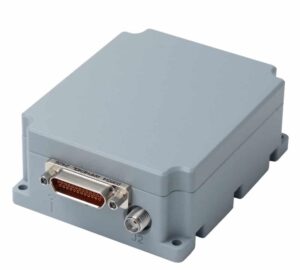
Anti-Jam GPS-GNSS Devices, Tactical Data Links, Telemetry Systems, Electronic Warfare Equipment & Flight Termination Systems

Ultra-Reliable & Secure BVLOS Communications Technology for Mission-Critical Drones & Robotics


BLOS Strategic Communications Systems and Tactical Radio Range Extension Technologies

If you design, build or supply Tactical Data Links, create a profile to showcase your capabilities and connect with visitors who have an active requirement for your solutions.

Tactical Data Links (TDLs) are more than just secure radios; they are the highly structured, deterministic plumbing for information exchange across the military battlespace.
These mechanisms enable platforms, advanced sensor packages, battle management systems, and kinetic weapons to share time-critical digital data across land, sea, air, and space domains. Unlike traditional, general-purpose communications channels, TDLs rely on stringent military-grade encryption, well-defined message taxonomies, and scheduled network access. Their fundamental mission is to deliver a reliable, machine-readable Common Operational Picture (COP) that can be processed and acted upon instantly by automated systems and human operators alike.
TDLs effectively form the digital backbone of modern command-and-control (C2) architectures. They allow air defense networks, maritime task groups, ground maneuver units, and Intelligence, Surveillance, and Reconnaissance (ISR) assets to maintain a synchronized, high-fidelity understanding of the tactical environment. A TDL’s design prioritizes survivability against electronic warfare (EW) threats, inherent interoperability across joint and coalition forces, and the guaranteed capacity to deliver actionable information within strict latency constraints.
Modern military strategy dictates that forces must operate fluidly across domains that are not only geographically dispersed but are also critically interdependent. TDLs are the technology that makes this interdependence possible, ensuring that track information, command directives, sensor data, and weapon status are coherently distributed across mixed formations of platforms.
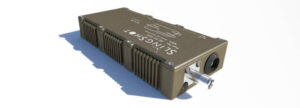
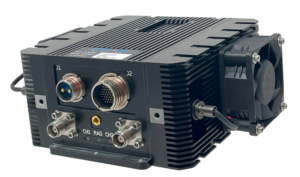
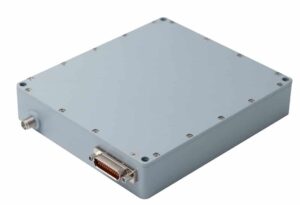
Slingshot, a BLOS Range Extension for tactical radios, from Spectra Group
Within a joint force construct, TDLs enable a Unified Battlespace Picture by bridging what were once separate and proprietary wireless data link architectures native to air, land, and sea units. For coalition operations, they supply a common information layer, managing complex variations in national systems, encryption policies, and security classifications.
Critically, in the shift toward Joint All-Domain Command and Control (JADC2) and Multi-Domain Operations (MDO), TDLs provide the necessary temporal precision. They ensure that time-sensitive updates, identification states, and engagement authorizations propagate across the force with the predictability required for high-speed kill chains. Without these advanced, high capacity datalink systems, synchronized multi-domain effects would be impossible, and situational awareness would rapidly collapse into isolated, incomplete snapshots.
The technological journey of TDLs mirrors the transition from platform-centric to network-centric warfare.
Future advanced data link systems increasingly rely on open-architecture Software-Defined Radios (SDRs), self-healing adaptive routing, AI-driven spectrum management, and integration with Low Earth Orbit (LEO) constellations, creating resilient networks that dynamically reconfigure to survive in contested environments.

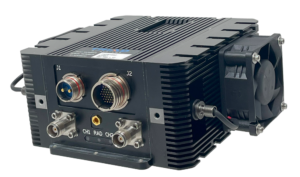
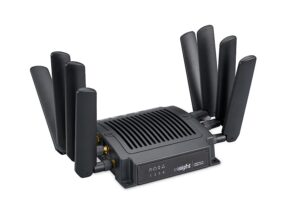
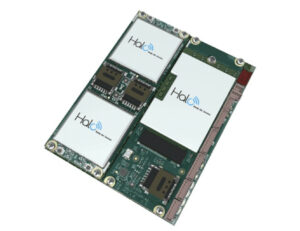
Halo OEM from Elsight
TDLs function by rigorously combining structured message protocols, precise network timing, secure RF waveforms, and a resilient network architecture that must constantly balance information reliability against bandwidth constraints. Every unique link defines its own message taxonomy, multiple access method, physical layer parameters, and operational rules. The coherence of these elements determines a link’s effectiveness in high-stress tactical environments, such as those characterized by severe jamming, high interference, or extreme mobility.
A TDL’s architecture is defined by core engineering choices regarding:
TDMA is central to key standards like Link 16 communications, ensuring deterministic slot allocation. Nodes transmit within precisely defined time boundaries, typically governed by highly accurate GPS or inertial timing systems. This allows large formations to efficiently share bandwidth without collisions, which is essential for time-sensitive targeting and track correlation.
However, it is critical to note that Link 16 also employs Direct Sequence Spread Spectrum (DSSS) technology, which acts as a form of Code Division Multiple Access (CDMA). This spreading is fundamental to its superior anti-jam and LPI/LPD performance, as the signal energy is spread across a much wider bandwidth, making it harder to disrupt or detect.
FDMA partitions available spectrum into independent channels. While simpler and often useful for dedicated point-to-point connections, this method is fundamentally limited in total capacity and anti-fragility compared to modern links.
Contemporary TDLs often combine techniques. For instance, Link 22 combines TDMA time-slotting with advanced spread-spectrum modulation and improved propagation modeling, enabling both predictable latency and hardened survivability.
Waveform engineering is the core discipline governing TDL performance.
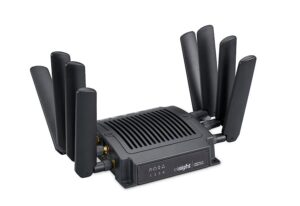
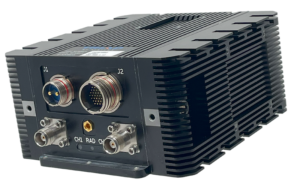
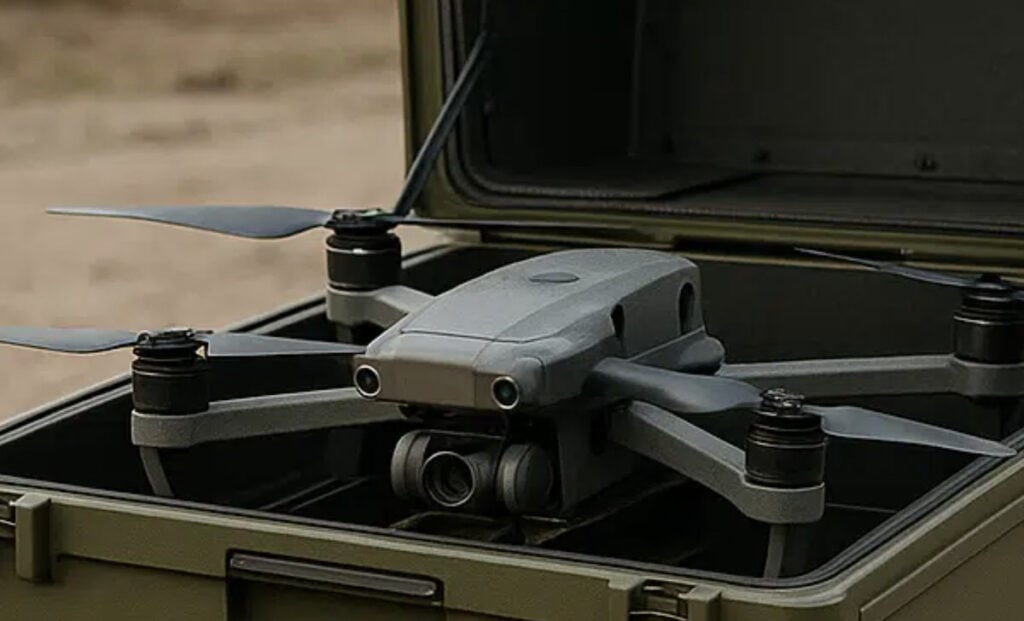
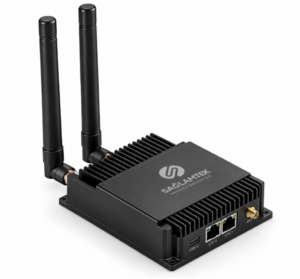
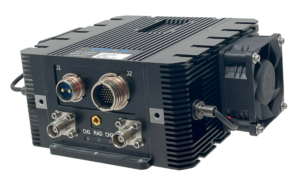
Boxed Halo by Elsight
Frequency Hopping Spread Spectrum (FHSS): This provides anti-jam robustness by rapidly shifting frequencies across the band according to a cryptographically derived, pseudo-random pattern.
These combined techniques allow military data links to maintain reliable function across an extremely wide operational envelope, effectively resisting hostile Electronic Warfare (EW) activity.
TDLs are inherently designed to guarantee time-bound data delivery rather than simply maximize raw throughput.
Link effectiveness is a function of the RF power, antenna gain and geometry, environmental conditions, interference levels, and frequency band selection. A high link margin is required to ensure reliable updates at long ranges or during the high-mobility operations common in fighter engagements or naval coordination in rough sea states.
High-assurance security is maintained through multiple layers:
The LPI/LPD properties of the waveform are paramount, minimizing the probability that sophisticated hostile sensors can successfully detect, classify, or geo-locate the link’s emissions.
A TDL terminal is a complex system that integrates the RF front-end, baseband processors, cryptographic modules, and mission-specific interfaces. For defense applications, these systems must operate reliably under extreme shock, vibration, heat load, and electromagnetic interference (EMI) constraints specific to airborne, ground, or maritime platforms.
Unmanned Aerial Vehicles (UAVs), Unmanned Ground Vehicles (UGVs), and Unmanned Surface Vessels (USVs) introduce severe constraints on Size, Weight, and Power (SWaP). Modern small-form-factor Software-Defined Radios (SDRs) allow even Group 2 and 3 UAV data link platforms to host complex waveforms, including Link 16, satellite tactical data link capabilities, or proprietary LPI/LPD links, all within a small payload capacity.
The antenna subsystem is often the single most critical factor defining a TDL’s ultimate operational performance.
Integrating TDL processing directly into the platform’s mission computer or avionics bus is a modern trend that significantly reduces latency and minimizes reliance on standalone gateway units. Open-systems architectures allow TDL functions to run as modular applications, enabling direct routing of fused sensor data to the communication channels without intermediary formatting or buffering. This technical approach ensures coherent timing, reduces integration complexity, and supports the rapid insertion of new waveforms or cryptographic protocols.
Link 16 remains the preeminent standard for interoperability across NATO and partner nations.
Link 11, defined by its legacy M-series messages, provided early maritime digital networking.
Link 22 is the secure, automated NATO replacement for Link 11. It provides a more robust, full-duplex, digital data link with enhanced error correction, dynamic routing, and a reduced operator workload compared to its predecessor. Its combination of advanced HF and UHF waveforms, coupled with modern propagation modeling, allows it to maintain critical connectivity in environments where the LOS limitations of Link 16 would cause a blackout.
Advanced data link systems like the F-35’s Multifunction Advanced Data Link (MADL) and the F-22’s Intra-Flight Data Link (IFDL) employ directional antennas, extremely narrow beams, and highly secure encryption to support undetectable, high-rate exchange of fused sensor data between low-observable aircraft.
Crucially, these systems are not natively interoperable, presenting a challenge for 5th-Generation Fighter Networks. Data exchange between an F-35 and F-22 (or between either platform and a 4th-Gen aircraft) typically requires an intermediary “gateway” solution—often housed in a relay pod or on a high-flying platform—to translate the data while preserving the low-observable (LO) integrity of the primary stealth assets.
The tactical common data link TCDL is an important component of ISR systems. TCDL is a high-bandwidth, full-duplex, directional data link that operates primarily in the C-band (with options for Ku-band SATCOM). Its chief purpose is to transport large sensor data loads, such as Full-Motion Video (FMV), Synthetic Aperture Radar (SAR) imagery, and high-resolution sensor products, from ISR aircraft and UAVs back to ground processing stations. It is a vital high capacity datalink for C4ISR.
The modern battlefield demands that TDLs operate within a Joint All-Domain Command and Control (JADC2) context. JADC2 envisions distributed sensors, decentralized command centers, and coordinated weapon systems working as a single, real-time enterprise. TDLs are the crucial pipes supplying the data streams that automated algorithms and decision-support tools depend on.
Integration ensures harmonized track numbering, consistent Identification Friend or Foe (IFF) states, unified geospatial frameworks, and near-zero-latency data routing from sensor to shooter. This architecture allows TDLs to serve as the primary transport mechanism within broader battle network designs.
Gateways and multi-link translators are essential to achieving seamless interoperability between otherwise distinct digital data link standards (e.g., Link 16 – VMF, Link 22, SATCOM). These systems normalize message formats, map complex platform identifiers, enforce track correlation rules, and manage cross-domain security policies. They are the key enablers that allow mixed-force packages, from legacy aircraft and naval units to advanced ISR drones and ground formations, to operate as a single, distributed sensor grid.
TDLs are inherently high-security systems. They rely on cryptographic modules that must strictly comply with national security standards, often requiring Type 1 or NATO-approved certification. Key distribution is a complex, time-sensitive logistical process involving regular crypto key updates, secure loading devices, multi-level access control, and physical, device-level tamper protection.
Transmission Security (TRANSEC) is the technical discipline that protects the link’s metadata – the when, where, and how of the transmission – from exploitation. Techniques include: frequency hopping, precise burst transmissions, directional antennas (to shape the signal energy), spread-spectrum modulation, and waveform agility. These measures are designed to reduce the Probability of Detection (LPD) and raise the cost for an adversary attempting Electronic Attack (EA).
The primary countermeasure to widespread jamming is Frequency Hopping Spread Spectrum (FHSS). High hopping rates, cryptographically controlled hop sequences, and advanced Forward Error Correction (FEC) ensure that tactical throughput can be maintained even when a significant portion of the allocated spectrum is actively being denied by an enemy.
Beyond preventing the interception of data, TDLs must actively prevent system compromise. Authentication tokens, rigorous sequence numbering, and embedded message integrity checks prevent sophisticated attacks like spoofing, message replay, and unauthorized system access. Data integrity is foundational to trusting the Common Operational Picture.
For multinational operations, TDLs must comply with a vast constellation of NATO Standardization Agreements (STANAGs). These agreements rigorously govern message formats, network timing, frequency use, operational procedures, and cryptography. Compliance with these standards is the only way to ensure seamless data exchange during complex coalition operations.
Compliance is not just about message formatting; it includes rigorous certification processes. Terminals must pass comprehensive environmental testing (such as MIL-STD-810 for shock and vibration) and demanding EMI/EMC requirements (MIL-STD-461) to prove they can perform reliably under harsh combat conditions.
Airborne Early Warning and Control (AEW&C) platforms leverage TDLs as their core transmission mechanism. From their elevated vantage point, these aircraft not only provide long-range sensor coverage but use Link 16 communications to correlate tracking data from every distributed asset—fighters, ships, and ground batteries. They act as the primary TDL network managers, coordinating interceptors and missile batteries and rapidly disseminating crucial identification states across the entire air defense formation.
In the maritime environment, TDLs integrate diverse sensor data, from radar, sonar, Electronic Support Measures (ESM), and Unmanned Maritime Systems (UMS), across an entire task group. This critical integration enables coordinated Anti-Air Warfare (AAW), Anti-Surface Warfare (ASuW), and maritime patrol activity across vast ocean areas. The use of robust Link 22 and satellite tactical data link systems ensures that naval forces maintain connectivity even when widely dispersed.
Digital Close Air Support (CAS) and fire mission workflows rely heavily on the Variable Message Format (VMF), Link 16, and high-capacity SATCOM TDLs. These digital data link systems replace error-prone voice calls with structured, machine-readable messages. The result is a dramatic reduction in engagement timelines, minimization of human error, and the rapid, precise integration of air and ground effects during complex missions.
Unmanned aerial (UAV), ground (UGV), and surface (USV) systems extend sensing range, provide critical overwatch, and often serve as resilient communication relays. Their integration into established tactical data links allows for distributed ISR, collaborative detection, and dynamic retasking. For many Group 3 and 4 UAVs, the tactical common data link (TCDL) is essential for backhauling the enormous sensor bandwidth required for modern reconnaissance.
The shift to SDR architectures is perhaps the most important trend. SDRs decouple TDL waveforms from dedicated hardware, allowing multiple waveforms, including Link 16, Link 22, VMF, and proprietary LPI/LPD links, to coexist within a single, universal terminal. This greatly simplifies platform upgrades, reduces hardware footprint (SWaP), and enables the rapid fielding of new capabilities as threats evolve.
Future advanced data link systems will be fundamentally driven by machine learning (ML). ML algorithms are already enabling:
These AI-driven capabilities will be central to creating the self-healing, next-generation tactical networks required for highly dynamic conflict.
The proliferation of Low Earth Orbit (LEO) satellite constellations, combined with new commercial standards, introduces low-latency, near-global coverage. LEO integration allows TDL concepts to extend far beyond the traditional reach of geo-stationary satellites, creating a hybrid terrestrial-space network architecture that is inherently more resilient to localized jamming and geographically expansive.
The final frontier involves blending civilian standards with military-grade security. Future waveforms will incorporate features from 5G/6G technology to support ultra-high bandwidth ISR, massive device connectivity, and distributed sensing. This will support resilient mesh architectures that can dynamically reconfigure to maintain persistent, high-capacity connectivity across shifting formations and contested environments.


 Searching Companies & Products