Showcase your capabilities
If you design, build or supply Remote Video Terminals, create a profile to showcase your capabilities and connect with visitors who have an active requirement for your solutions.




Remote Video Terminal (RVT) systems for live video feed applications deliver real-time ISR imagery and metadata directly to military operators in the field. Engineered for secure, low-latency video reception, RVTs bridge airborne sensors and ground users, transforming full-motion video into actionable intelligence that enhances coordination, target acquisition, and operational awareness across modern C4ISR networks.
This guide outlines suppliers of remote video terminal solutions and software for real-time ISR data dissemination, tactical video reception, and secure battlefield intelligence sharing.
Read the Technology Overview
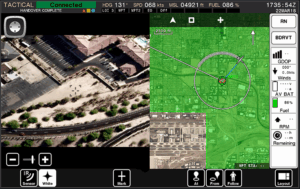
Hardware-Agnostic Remote Video Terminal Software for Uncrewed Systems

If you design, build or supply Remote Video Terminals, create a profile to showcase your capabilities and connect with visitors who have an active requirement for your solutions.

A Remote Video Terminal (RVT) empowers military personnel to receive, display, and directly interact with live video feeds and telemetry data from airborne, ground, or maritime sensors. Originally conceived to support Unmanned Aerial Vehicle (UAV) operators and forward observers, RVTs have matured into sophisticated, network-enabled nodes critical for achieving real-time, shared situational awareness across every domain of defense.
These systems function as the tactical endpoint for disseminating Full-Motion Video (FMV), providing commanders, Joint Terminal Attack Controllers (JTACs), and dismounted soldiers with immediate access to Intelligence, Surveillance, and Reconnaissance (ISR) data right at the point of need.
Remote video terminals fundamentally bridge the operational gap between high-value sensor platforms and the warfighter in the field. By allowing operators to view live video, annotate imagery, and coordinate actions based on the very latest intelligence, they dramatically improve responsiveness, precision, and efficiency in complex combat operations.
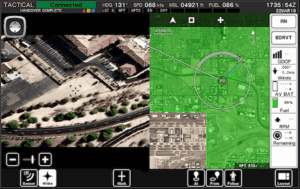
Unified Video Terminal by Kutta Technologies
Whether supporting target acquisition, confirming engagement effects (BDA), or maintaining persistent surveillance, RVTs expertly transform raw ISR data into actionable decision support, empowering distributed forces with critical, shared situational awareness in real time.
RVTs serve as crucial tactical receivers for video and telemetry data transmitted by a vast array of ISR platforms. This includes feeds from fixed-wing aircraft, rotary assets, Unmanned Aerial Systems (UAS), and ground-based persistent surveillance sensors. By connecting seamlessly to existing secure data links, RVTs deliver these real-time streams directly to troops or command elements, enabling a rapid and accurate understanding of the unfolding operational picture.
Modern RVTs are far from standalone devices; they are engineered to integrate seamlessly into complex command-and-control (C2) and wider ISR architectures. This deep integration allows for automated video routing, sophisticated geo-referenced map overlays, and synchronized metadata display, ensuring every operator views mission-critical information within the full, wider operational context. The result is a highly connected, data-driven battlespace.
RVTs are vital for personnel requiring direct, time-sensitive interaction with airborne sensors, giving rise to terms like military video terminal and tactical video terminal.
JTACs utilize the RVT (often referred to as a JTAC video terminal) to precisely verify target locations, coordinate close air support (CAS), and conduct air-to-ground strikes. Artillery and Mortar Observers employ them for detailed battle damage assessment (BDA) and fire correction.
In reconnaissance and security missions, the RVT delivers UAV imagery directly to ground commanders for immediate intelligence exploitation and critical maneuver planning.
Remote video terminals are meticulously engineered to withstand the extreme rigors of battlefield environments, leading to the development of handheld video terminal and man-portable video display categories.
The RF front-end module is crucial for platform compatibility. It supports multiple tactical frequency bands, including L-band, S-band, C-band, and Ku-band, to enable interoperability with diverse ISR platforms.
Advanced RVT software serves as the intelligence core of modern terminals, combining real-time video processing, geospatial data fusion, and intuitive operator interfaces to enhance tactical decision-making and mission coordination.
| Feature | Description | Compliance Standard |
| Video Decoding | Multi-channel, low-latency decoding of encrypted video streams. | H.264/H.265 |
| Metadata Display | Extracts and displays geospatial, platform, and sensor data alongside the video feed. | STANAG 4609 (NATO Digital Motion Imagery Standard) & MISB (Motion Imagery Standards Board) |
| Geo-Referencing | Overlays the video stream onto a digital map, allowing operators to directly input, manage, and share target coordinates. | STANAG 7085 (Digital Video Broadcast Standard) |
| Remote Control | Enables limited or full remote control of the sensor payload (e.g., pan-tilt-zoom) on the host platform. | STANAG 4586 (UAV Control System Interoperability Standard) |
The development of remote video terminals has led to specialized variants tailored to specific operational environments and user roles:
The integration of Artificial Intelligence and machine learning allows RVTs to perform automatic object detection, classification, and tracking within live video streams. This dramatically reduces the cognitive and visual burden on the operator and increases target acquisition accuracy.
Future terminals are incorporating AR, displaying mission-critical information such as target data, friendly force locations, and tactical boundaries, directly overlaid onto the live video feed. This crucial enhancement improves spatial orientation and decision speed in complex, dynamic battlespaces.
Next-generation RVTs leverage sophisticated hybrid communication architectures, combining terrestrial 5G (where available), tactical radio, and advanced SATCOM links. This ensures high-resolution video transmission and control can be maintained across extended ranges and challenged environments.
Specialized remote video terminal developers deliver highly configurable platforms that combine advanced hardware ruggedization, secure communications, and flexible video terminal software architectures.
These solutions demonstrate the ongoing development to provide the defense engineering community with the highest levels of real-time intelligence for operational superiority.


 Searching Companies & Products