Showcase your capabilities
If you design, build or supply Multispectral Cameras, create a profile to showcase your capabilities and connect with visitors who have an active requirement for your solutions.




Source leading manufacturers and suppliers of multispectral cameras and sensors. These advanced EO/IR systems are critical for a wide range of defense applications, providing enhanced situational awareness and superior intelligence, surveillance, and reconnaissance (ISR) capabilities.
Read the Technology Overview
Advanced Imaging & Sensor Autonomy for Time-Critical Airborne Intelligence Missions

If you design, build or supply Multispectral Cameras, create a profile to showcase your capabilities and connect with visitors who have an active requirement for your solutions.

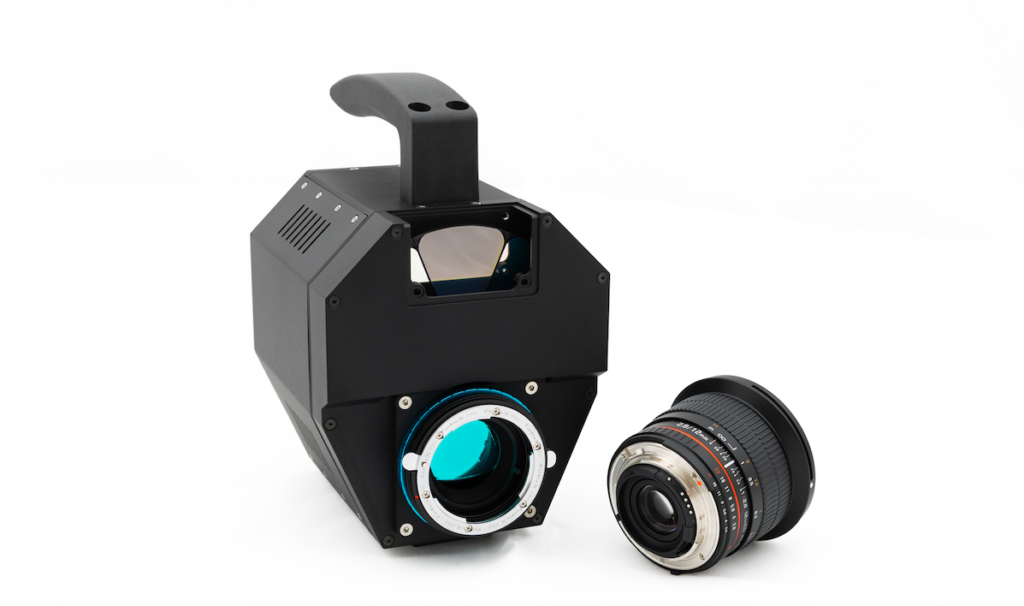
A multispectral camera creates layered images by capturing data from specific spectral bands, from visible light to long-wave infrared (LWIR). By analyzing the spectral signatures of different materials, these sensors can identify targets and detect concealed threats that standard cameras would miss. The development of compact, high-resolution multispectral sensors has made them ideal for UAV payloads, where they are used to improve situational awareness, data acquisition, and ISR missions.
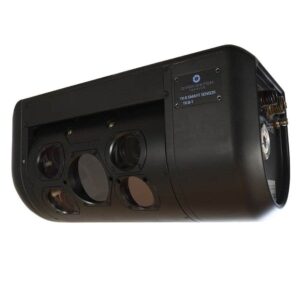
TK-8, a multispectral imaging payload, from Overwatch Imaging
Multispectral sensors are fundamental to ISR operations. They enhance target detection by revealing material compositions and distinguishing decoys from real assets. This technology is vital for military reconnaissance, allowing forces to monitor troop movements, conduct damage assessments, and identify enemy equipment at standoff distances, thereby contributing to force protection.
While advanced camouflage may deceive the human eye, it often fails to replicate the background’s signature across non-visible spectral bands. Multispectral imaging exploits these discrepancies to defeat camouflage, concealment, and deception (CCD) techniques. This is crucial for identifying hidden enemy positions, vehicles, and infrastructure, even in complex environments.
Integrating multispectral sensors into a layered defense approach enhances C-UAS capabilities. By analyzing spectral data from an unmanned aerial system, operators can more effectively identify and classify potential threats. This technology is also applied to detect disturbed earth, which has a different spectral and thermal signature than the surrounding terrain, aiding in the identification of IEDs and mines.
For border security and maritime patrol, multispectral cameras are critical for monitoring vast and often inaccessible areas. They can detect and track vessels, vehicles, and personnel in real-time, even in low-light conditions. In a maritime environment, they are used to identify ships, semi-submersible drug-smuggling vessels, and other objects of interest.
The soil and vegetation disturbed during the burial of an improvised explosive device (IED) or landmine have different physical and chemical properties than their surroundings. This creates a subtle anomaly in emissivity and reflectance that can be detected through multispectral analysis, enabling stand-off identification of potential threats along routes and in former battlefields.
By comparing multispectral images of the same area taken over time, analysts can perform automated change detection to generate Geospatial Intelligence (GEOINT). This technique is used to identify new construction, vehicle tracks, vegetation changes indicating activity, or other subtle environmental shifts that can provide critical intelligence without requiring constant human monitoring.
Following a strike, it is essential to assess the physical and functional damage to a target. Fusing visible, thermal, and multispectral imagery allows commanders to evaluate the effectiveness of an engagement, confirm target destruction, and make informed decisions about re-attack, increasing lethality and reducing munitions expenditure.
Multispectral and hyperspectral imaging can be used to detect illicit materials, from large-scale cultivation to trace amounts. From the air, sensors can identify crops like coca by their unique spectral signature compared to surrounding vegetation. For interdiction, sensors can identify the molecular fingerprint of narcotics like fentanyl concealed in mail or cargo.
This design uses several individual imagers, each paired with a unique optical filter to simultaneously capture different spectral bands (e.g., SWIR, MWIR, LWIR). This enables the collection of rich multispectral data from a single UAV payload, providing comprehensive information in a single pass.
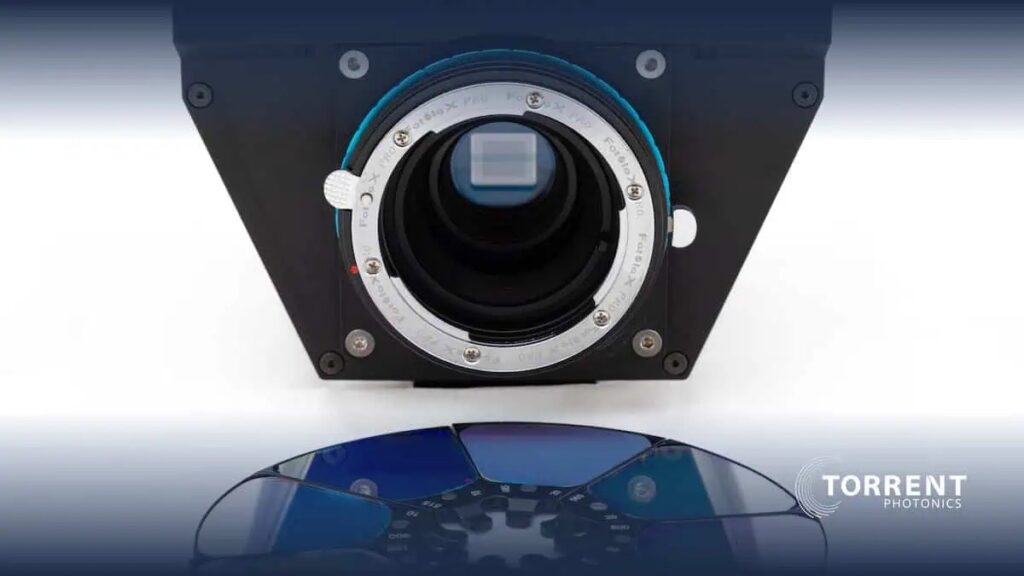
A filter-wheel camera uses a single focal-plane array (FPA) with a rotating wheel containing various bandpass filters. The wheel sequentially positions each filter in front of the sensor to capture a series of images in different bands. This method is highly precise but best suited for static scenes to avoid motion-induced blur.
These sensors feature a mosaic of spectral filters applied directly at the detector’s pixel level. This innovative design allows the camera to capture multiple spectral bands in a single “snapshot,” enabling real-time multispectral video. This is ideal for dynamic applications such as tracking moving targets or for use on mobile platforms.
Multispectral imaging is often compared with hyperspectral imaging. The key difference lies in the number and width of the bands. A multispectral sensor captures a small number of broad, discrete bands (typically 4-15). In contrast, hyperspectral imaging captures hundreds of narrow, contiguous bands, creating a near-complete spectrum for each pixel. While hyperspectral sensors are superior for detailed analysis and material identification, they generate massive datasets. For many defense applications focused on target detection and recognition, the targeted bands of a multispectral camera provide faster, more actionable geospatial intelligence.
Multispectral cameras and EO/IR payloads intended for defense applications must be compliant with a range of Military Standards (MIL-STDs) to ensure interoperability, reliability, and survivability in harsh operational environments. While specific requirements depend on the platform and theater, compliance typically includes:
MIL-STD-810: This standard dictates the requirements for environmental ruggedness. Certified systems undergo rigorous laboratory testing to ensure they can withstand factors such as extreme temperatures, shock from gunfire or impact, constant vibration on airborne or ground platforms, humidity, and water/dust ingress.
MIL-STD-461: This standard ensures Electromagnetic Compatibility (EMC). Compliance guarantees that the sensor does not emit electromagnetic interference (EMI) that could disrupt other critical electronic systems, and that it is not susceptible to interference from the platform’s own emissions.
Platform Power Standards: Depending on the intended platform, sensors must comply with specific electrical interface standards. MIL-STD-704 defines power characteristics for airborne platforms (manned aircraft and UAVs), while MIL-STD-1275 applies to equipment used on military ground vehicles.
In addition to these core standards, data and communication interfaces often adhere to protocols such as MIL-STD-1553 for avionics data buses, ensuring seamless integration with existing mission systems and command-and-control (C2) infrastructure.


 Searching Companies & Products