Showcase your capabilities
If you design, build or supply Vehicle Antennas, create a profile to showcase your capabilities and connect with visitors who have an active requirement for your solutions.




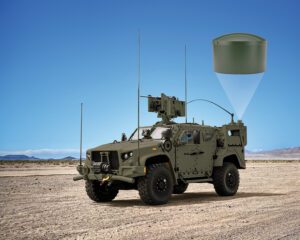
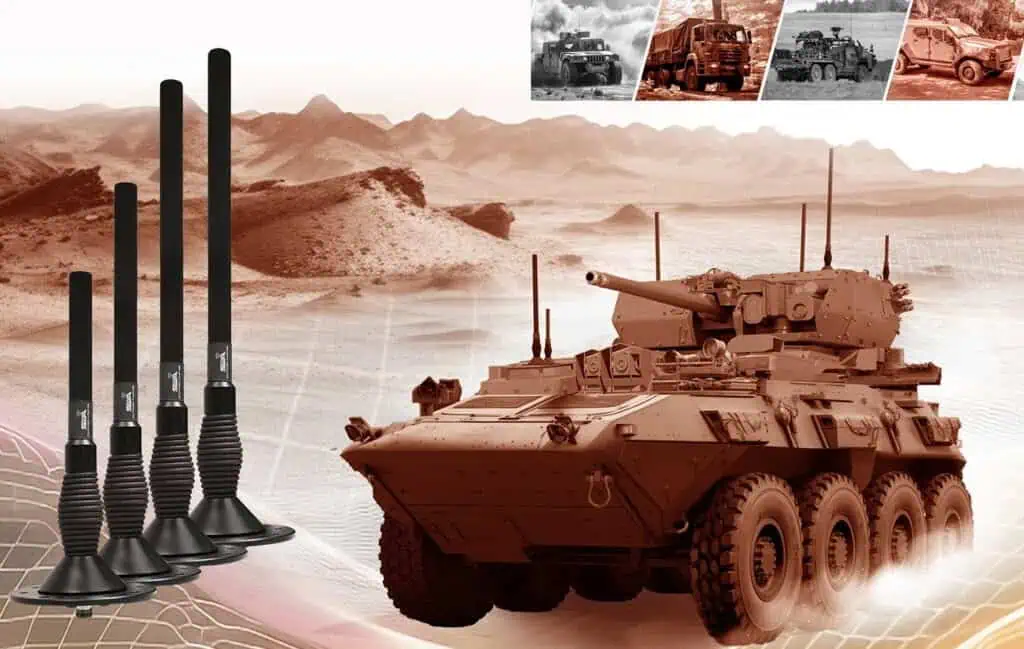
Military vehicle antennas help to ensure seamless communication and operational efficiency in defense scenarios. These specialized antennas, including those for radios, cell phones, and GPS/GNSS are engineered to withstand extreme conditions while providing reliable connectivity. The technology behind military antennas is designed to support secure communication, crucial for both strategic and tactical operations, making them an essential component of any military vehicle.
Read the Technology Overview


Assured Position, Navigation and Timing (PNT) Solutions for Military and Defense

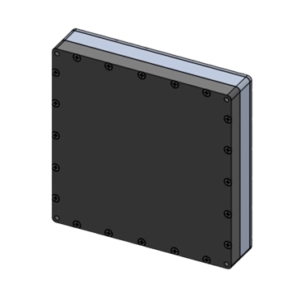
CRPA-Based GNSS Anti-Jamming & Interference Mitigation Solutions for Ultra-Reliable PNT Protection

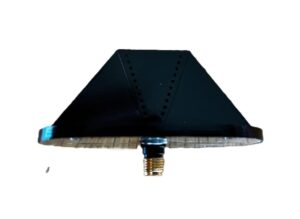
Mission-Critical Antenna, Tracking, & Video Solutions for Defense, Law Enforcement & Security Applications

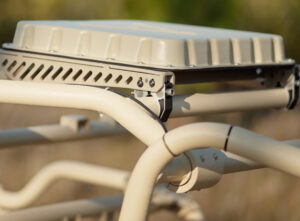
Mission-Critical Power & Lighting Solutions for Sustainable Military Operations

If you design, build or supply Vehicle Antennas, create a profile to showcase your capabilities and connect with visitors who have an active requirement for your solutions.

On a modern military land platform, antennas are part of the vehicle’s operational nervous system, linking radios, battle management systems, navigation receivers, electronic warfare equipment, tactical data links, sensors and deployed command networks. A vehicle may be mechanically complete and heavily protected, but if its antennas are poorly selected, badly placed or inadequately qualified, it can become isolated, electronically vulnerable or unreliable in the field.
The core challenge when specifying an antenna is that military vehicles are hostile RF environments. They combine high-power transmitters, sensitive receivers, digital electronics, armored structures, rotating turrets, weapon systems, GNSS receivers, electronic countermeasure equipment and dense cabling within a compact metal enclosure. Antenna performance therefore depends not only on the specification of the antenna itself, but on how it behaves once installed on a real vehicle roof, mast, turret side, mission shelter or composite body panel.
This guide explores the core considerations for systems engineers responsible for specifying and procuring military vehicle antenna systems, with an overview of the key suppliers of military vehicle antennas and core engineering considerations.
HF antennas are used when long-range communications are required without reliance on satellites or terrestrial infrastructure. On vehicles, HF systems commonly use long whip antennas, tuned whips or antenna systems connected to automatic tuning units. Because HF wavelengths are long, the vehicle itself becomes an important part of the radiating structure. The available ground plane, antenna base position, bonding quality and nearby metalwork strongly influence performance.
VHF antennas are widely used for combat net radio, tactical voice, data and manpack-to-vehicle interoperability. They offer a practical balance between range, antenna size and compatibility with established military radio systems. Vehicle VHF antennas are often whip-based, although wideband and low-profile designs are also used where snag risk or visual signature is a concern.
UHF antennas are used for tactical data, short-to-medium-range voice, air-ground coordination, some SATCOM-related services and multi-band radio systems. Compared with VHF, UHF antennas are physically smaller and can be easier to integrate into low-profile or blade formats. They are also more sensitive to cable loss than lower-frequency systems, making coaxial cable selection and routing more significant.
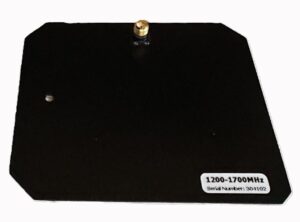
L-band, S-band and C-band antennas are used for GNSS, telemetry, tactical data links, UAV or UGV control, video transmission and specialist payload connectivity. These bands generally allow compact antennas, but they place greater importance on cable loss, connector quality, radome material, installation geometry and line-of-sight blockage.
At L-band, GNSS antennas are especially sensitive to placement. Nearby structures can cause multipath, partial sky obstruction or degraded anti-jam performance. For timing and navigation systems, antenna position should be assessed in relation to turret movement, sensor masts, remote weapon stations and other roof-mounted equipment.
SHF and EHF SATCOM antennas provide beyond-line-of-sight connectivity for command vehicles, specialist mission vehicles and deployed headquarters. Vehicle SATCOM systems may be designed for communications-on-the-pause or communications-on-the-move. On-the-pause terminals can use mechanically pointed dishes or flat panels deployed when stationary. On-the-move systems usually require stabilized directional antennas or electronically steered arrays.
GNSS antennas support positioning, navigation and timing for vehicle navigation systems, battle management systems, radios, sensors, weapon systems and time-synchronized networks. Modern military platforms may use multi-constellation receivers covering GPS and Galileo signals, depending on national policy and receiver configuration.
For military applications, GNSS antenna selection increasingly focuses on resilience. Active antennas with low-noise amplifiers are common, but they require careful power feed, filtering and protection against overdrive. Anti-jam systems may use controlled reception pattern antennas, which form spatial nulls against jammers. These systems are more complex than ordinary patch antennas and require suitable placement, calibration and integration with the GNSS receiver.
LTE, 5G and private-network antennas are increasingly used on military vehicles for training ranges, expeditionary bases, convoy systems, logistics visibility and hybrid military-commercial communications. These antennas may support public cellular networks, deployable private networks or tactical edge systems using commercial radio technologies.
Electronic warfare, signals intelligence and spectrum-monitoring vehicles use antennas not only to communicate, but to sense the electromagnetic environment. These systems may require wide instantaneous bandwidth, high sensitivity, direction-finding capability, phase coherence between antenna elements and known calibration behavior.
Combination antennas reduce antenna count by integrating multiple bands or functions into a single enclosure. They can be useful on platforms with limited roof space or where visual signature and snag risk must be reduced. Typical examples include combined GNSS/cellular/Wi-Fi antennas, multi-band tactical radio antennas and integrated blade antennas.
Antenna placement is one of the highest-value engineering decisions in the vehicle RF design. Placement determines radiation pattern, cable length, exposure to damage, crew safety, clearance, maintainability and interaction with other systems.
On armored vehicles, the roofline is crowded. Turrets rotate. Hatches open. Weapon stations traverse and elevate. Sensors require fields of view. Active protection systems and smoke launchers must remain unobstructed. Stowed equipment and appliqué armor may change the local RF environment. A position that looks available in CAD may be unsuitable once the vehicle is operated by a crew.
For omnidirectional communications antennas, roof-edge placement can distort the radiation pattern, while central placement may be physically blocked by turrets or payloads. For GNSS antennas, sky view and multipath avoidance are more important than maximum height. For EW or SIGINT antennas, symmetry, separation and calibration geometry may dominate.
Antenna placement should therefore be decided through a joint mechanical, RF, EMC and human-factors process. Late-stage antenna placement is a common cause of degraded performance and expensive rework.
Many vehicle antennas rely on the host platform as part of the antenna system. The roof, hull, shelter frame or mounting plate may act as a ground plane or counterpoise. Its size, material, shape, bonding and proximity to other structures affect impedance, radiation efficiency and pattern.
Steel and aluminum vehicle roofs can provide useful conductive surfaces, but they are rarely ideal ground planes. Armor geometry, roof seams, hatches, composite panels, non-conductive covers and add-on mission kits can interrupt current paths. Good practice is to treat the antenna, mount, ground plane, bonding network and cable route as a single RF assembly. Measuring VSWR at the radio alone may not reveal pattern distortion or poor radiation efficiency; it only confirms that the transmitter sees an acceptable impedance.
The military vehicle antenna market is supplied by a mix of dedicated RF antenna manufacturers, defense communications specialists, GNSS resilience vendors, and rugged commercial antenna companies whose products are adapted for tactical fleets.
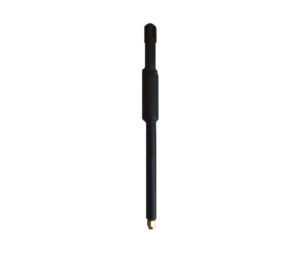
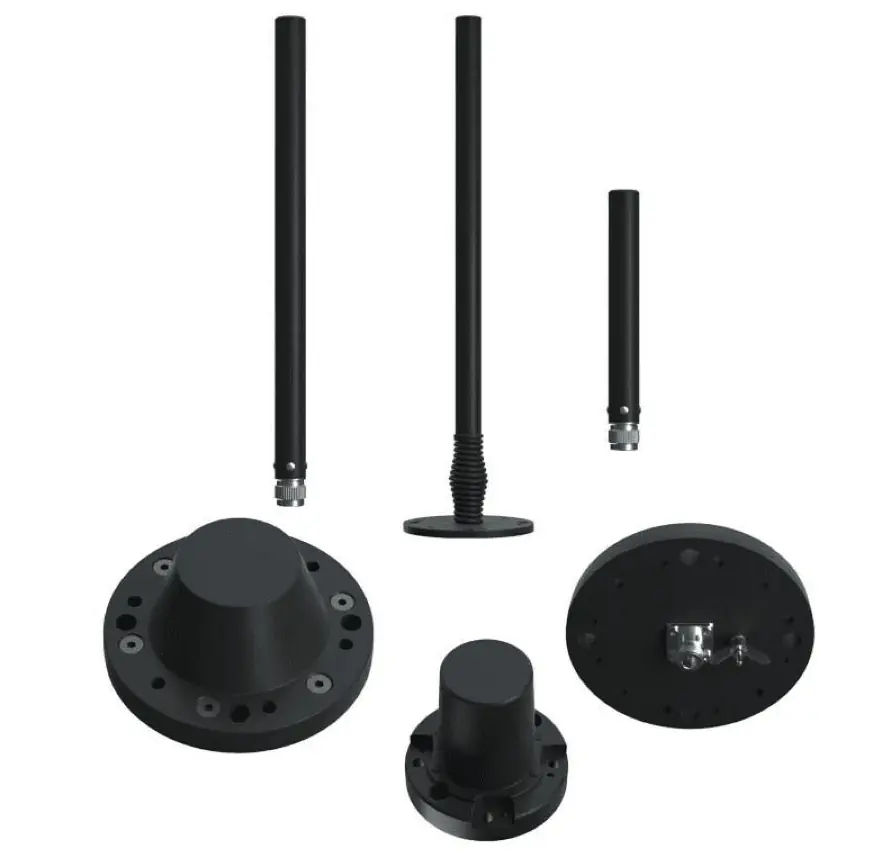
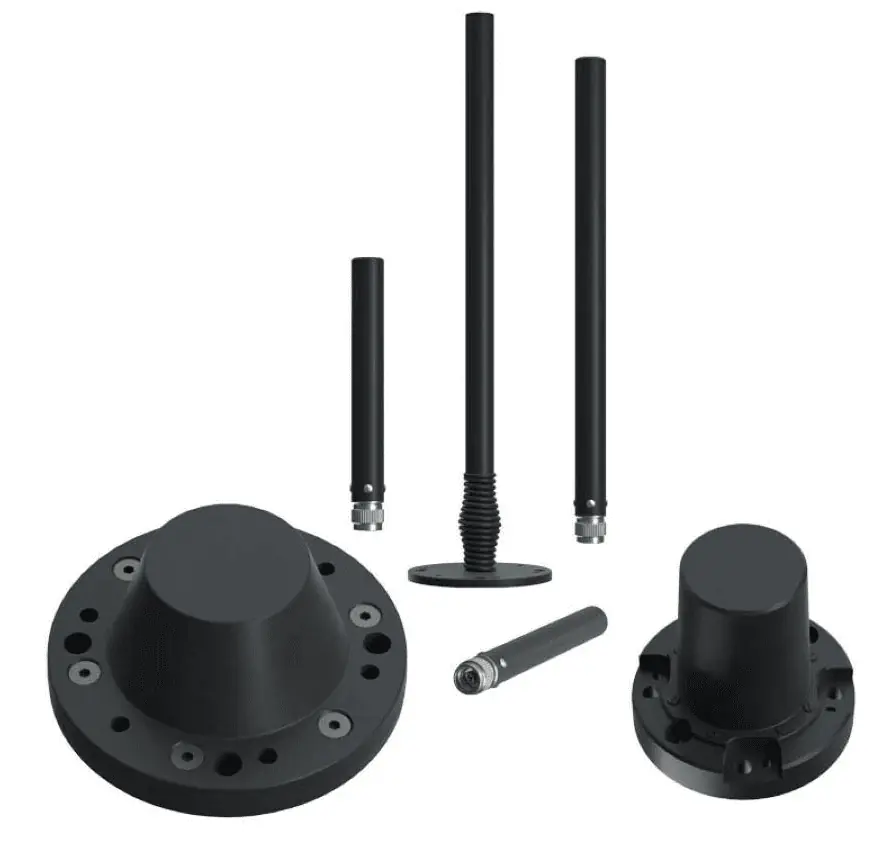
Apella Solutions is a UK-based provider of mission-critical antenna, tracking, and video solutions for defense, law enforcement, security, and unmanned systems applications. Its rugged antenna portfolio supports tactical communications across UHF, L, S, C, and LTE frequency bands, including products intended for military UGVs and other tactical vehicles. Apella is particularly associated with unmanned and mobile mission systems, including drone antennas, tracking solutions, video transmission, and RF products designed for challenging operating environments.
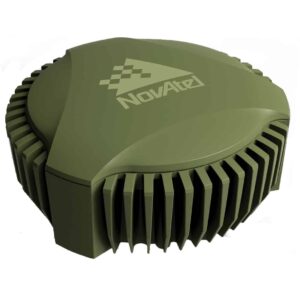
Hexagon’s NovAtel business supplies GNSS receivers, antennas, inertial navigation systems, and anti-jam antenna systems for defense and autonomy applications. It is a major assured-PNT supplier for vehicle programs with its GAJT family, which provides COTS anti-jam protection for land vehicles, fixed platforms, marine systems, and smaller autonomous platforms. NovAtel’s GAJT products are widely associated with controlled reception pattern antenna (CRPA) technology and null-forming electronics for maintaining GNSS reception in jamming environments.
Explore Hexagon | NovAtel Products
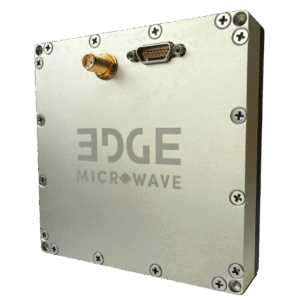
EDGE Microwave develops Controlled Reception Pattern Antenna (CRPA) technology and associated GNSS anti-jamming and anti-spoofing capabilities for mission-critical positioning, navigation, and timing applications. Protected GNSS antennas are increasingly important for ground-platform navigation, command-and-control synchronization, autonomous vehicle operation, and continued mission effectiveness in contested electromagnetic environments. EDGE Microwave specializes in compact CRPA design, interference mitigation, signal processing, and algorithm development for protected reception of navigation signals including GPS L1, Galileo E1, BeiDou B1C, and SBAS.
Explore Edge Microwave Products
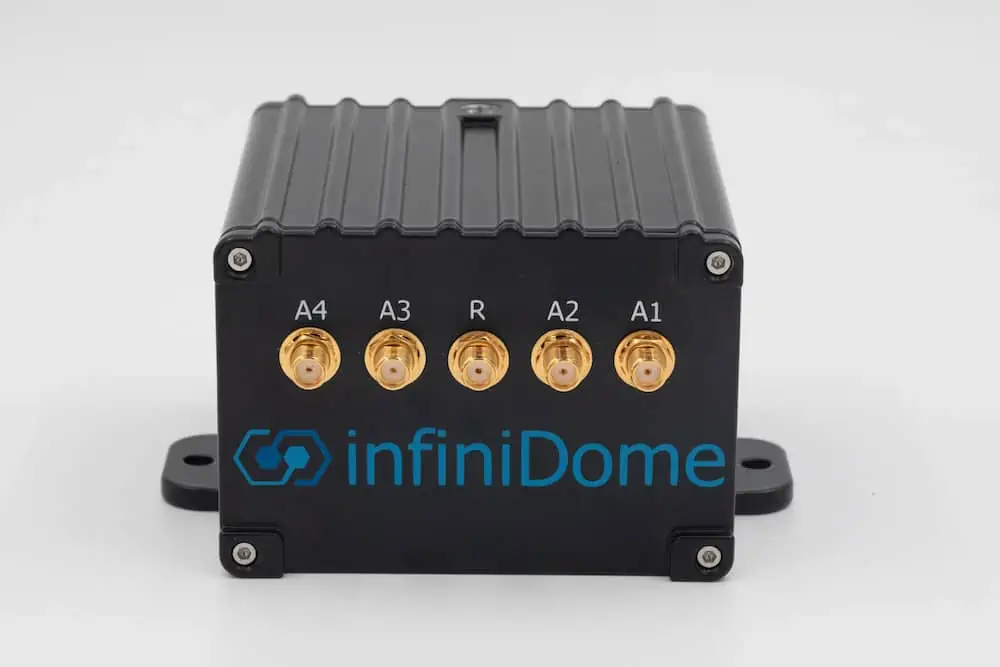
infiniDome develops GPS/GNSS protection and resilient navigation products for UAVs, vehicles, and critical infrastructure. Its products are designed as retrofit anti-jamming modules that work with off-the-shelf active GNSS antennas and receivers. The company is known for lightweight anti-jamming systems aimed at SWaP-constrained defense and homeland-security platforms.
Comrod Communication Group designs and manufactures tactical antennas, antenna systems, masts, power supplies, and related defense communications equipment. The company is a significant supplier in the vehicle antenna market with a catalog that directly addresses HF, VHF, UHF, LTE, and GNSS requirements for military platforms. Comrod is well known for broad tactical radio coverage, including single-band, wideband, multiband, and multi-port antennas, with many vehicle antennas available with L1 or L1/L2 GPS modules integrated into the base.
Hascall-Denke is a U.S. antenna manufacturer focused on military and commercial antennas, mounts, and accessories. It supplies vehicular, manpack, base-station, marine, and other military antenna types for defense communications users. The company emphasizes design, prototyping, and manufacturing for customer-specific requirements and states that it is a Defense Logistics Agency-approved supplier for the U.S. armed forces. Its portfolio includes military antennas across HF, VHF, UHF, L, S, and C bands, with vehicular products and mounting accessories suited to tactical radio installations and rugged platform integration.
Chelton is a UK-based aerospace, aviation, and defense engineering company with antenna, avionics, and land systems business areas. It supplies land and vehicle antenna products alongside broader secure communications and vehicle intercom capabilities. Chelton has a long heritage in defense antennas and positions its land portfolio around robust communications technologies for ground missions, including vehicle systems and microwave antennas.
Antenna Research Associates, commonly known as ARA, designs and manufactures antennas and RF systems for military, civil, fixed-site, mobile, and tactical applications. The company’s products address communications, RF surveillance, jamming, public safety, and other spectrum operations missions. ARA’s product base is broad, with NAVAIR’s small-business profile noting coverage from 10 Hz to 80 GHz and support for military and civilian frequency bands.
RAMI manufactures antenna systems for military, aviation, transportation, and other demanding markets. It offers products for handheld, manpack, vehicular, ground-based, airborne, and shipboard applications. The company’s heritage is in developing antennas for the U.S. military, supplying all branches of the U.S. armed forces. Relevant capabilities include HF, VHF, UHF, L/S, and C-band antennas, multiband product groups, and rugged vehicular SATCOM antennas designed for tactical vehicles and on-the-move applications.
Southwest Antennas designs and manufactures broadband RF and microwave antennas and accessories for tactical communications and other high-performance wireless applications. Its products are commonly associated with tactical radio systems, unmanned systems, MANET mesh radios, public safety, and defense networks. The company’s market position is strongest in rugged COTS antennas for modern networking waveforms, MIMO links, and rapidly fielded tactical communications packages. Relevant offerings include omnidirectional antennas for military and defense applications, permanent vehicle mounting kits for tactical radios and MANET/MIMO radios, and S/C-band and Link 16-related antenna products for tactical data-link applications.
MP Antenna develops and manufactures multipolarized antennas for land mobile radio, UAV, UGV, and other demanding communications applications. Its multipolarized designs can help maintain connectivity in obstructed, multipath, and non-line-of-sight operating environments. The company is known for antennas used in autonomous and unmanned platforms, tactical communications, and installations where link reliability is typically affected by terrain, vehicle orientation, and signal reflections.
Whether you’re responsible specifying a replacement antenna for a vehicle modernization program or designing optimal RF behavior on a new vehicle development, its important to select a credible supplier with the capabilities required. Use the sourcing guide at the top of this page to view and compare verified suppliers of Military Vehicle Antennas on Defense Advancement.


 Searching Companies & Products


 Subscribe to the Weekly eBrief
The latest engineering and technical developments straight to your inbox - join thousands of engineers who receive it.
Subscribe to the Weekly eBrief
The latest engineering and technical developments straight to your inbox - join thousands of engineers who receive it.