Military drone battery technology encompasses ruggedized energy storage systems designed to support aerial defense operations where reliability, endurance, and safety are critical. A military UAV battery must deliver high discharge rates for VTOL, rapid maneuvering, and continuous ISR payload operation while maintaining performance across extreme temperatures and mechanical stress.
This category highlights military drone battery manufacturers and suppliers with solutions for small tactical UAVs, rotary-wing platforms, and larger MALE or HALE systems, supporting both primary and auxiliary power roles.
If you design, build or supply Military Drone Batteries, create a profile to showcase your capabilities and connect with visitors who have an active requirement for your solutions.
... off-the-shelf battery packs is designed for rapid deployment and integration into a wide variety of... ...tandards, each battery pack can withstand 800 to 1000 charging cycles, and features integrated...
Military drone batteries are high-performance energy storage systems engineered to meet the rigorous demands of aerial defense operations, where reliability and endurance are non-negotiable. Unlike commercial power sources, a military-grade drone battery must function in extreme temperatures, withstand significant mechanical shock, and adhere to strict security protocols.
These batteries provide the high discharge rates necessary for rapid ascent and evasive maneuvers, while supporting sophisticated Intelligence, Surveillance, and Reconnaissance (ISR) payloads. By enabling hot-swappable configurations and rapid-charging capabilities, these systems ensure that a tactical Unmanned Aerial Vehicle (UAV) can maintain a high operational tempo with minimal downtime, directly supporting the ready-to-launch requirement of frontline personnel.
Applications of Military Drone Batteries by UAV Class
Small Tactical UAV Batteries
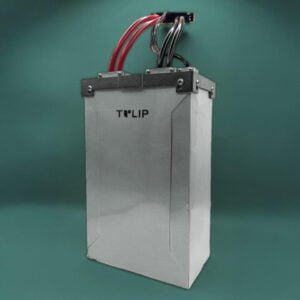
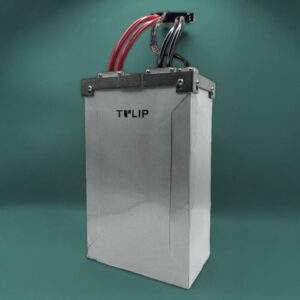
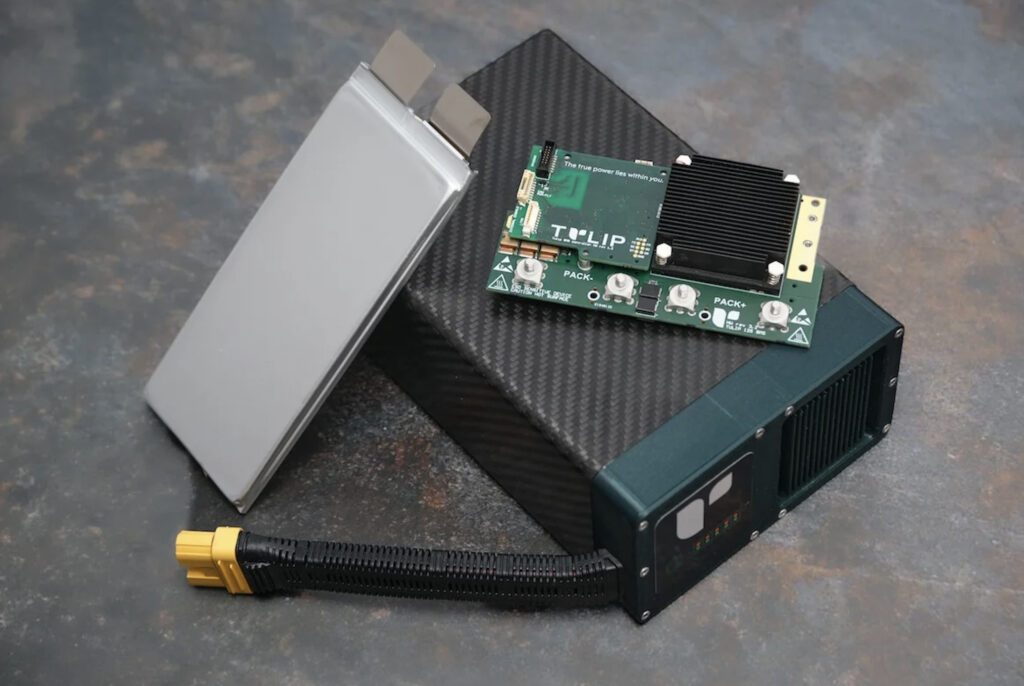
Osiris Battery Packs, plug-and-play battery packs for rapid deployment, by Tulip Tech
Hand-launched and short-range tactical UAVs place extreme emphasis on power-to-weight ratio and rapid discharge capability, typically operating for durations ranging from minutes to several hours. These systems must support aggressive climb rates and evasive maneuvers while simultaneously powering continuous sensor operation, necessitating battery packs that prioritize high specific power and compact packaging. Because these platforms are frequently operated by dismounted troops with minimal ground support, the integration of field-replaceable UAV battery designs is essential for maintaining mission persistence in the field.
MALE and HALE UAV Batteries
While Medium- and High-Altitude Long-Endurance (MALE/HALE) platforms rely primarily on internal combustion engines or turbines for primary propulsion, batteries serve a vital auxiliary role by providing backup power for flight-critical systems and supporting silent-watch operation modes. These battery systems are engineered to buffer peak electrical loads and enable safe recovery in contingency scenarios, often contributing directly to propulsion in hybrid-electric architectures during climb or loiter phases. Consequently, design focuses heavily on longevity, fault tolerance, and seamless integration with complex onboard power generation and distribution networks.
VTOL and Rotary-Wing UAVs
Vertical takeoff and landing (VTOL) and rotary-wing drones impose some of the most demanding electrical loads in military aviation, requiring massive burst power during launch and maneuvering followed by sustained high-current discharge during hover. Batteries for these platforms must tolerate high C-rates without excessive thermal buildup, making internal resistance management and active thermal pathways central to their design. The acute trade-off between endurance and payload capacity in this class drives constant innovation in high-power chemistries that can withstand repeated high-stress cycles.
Loitering Munitions and Attritable Systems
Loitering munitions and attritable drones introduce a distinct set of priorities where shelf life and storage stability often outweigh cycle life. These batteries must remain safe and fully functional after months or years in storage, capable of delivering peak performance immediately upon activation despite exposure to wide temperature swings. Given the scale at which these systems are fielded, manufacturers must balance high energy density with cost-efficiency and strict compliance with international transport regulations for hazardous materials.
Chemistries Used in Military Drone Batteries
Lithium-Ion (Li-ion)
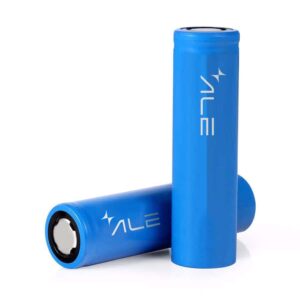
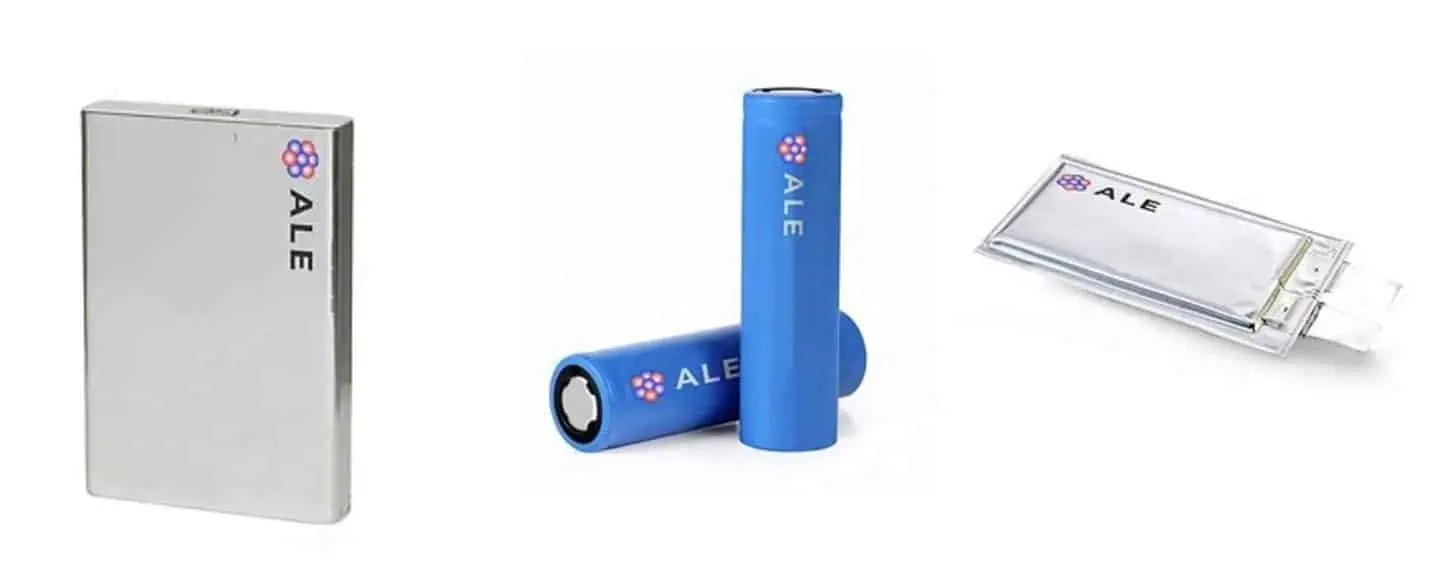
Cylindrical Lithium-Ion Batteries from American Lithium Energy
Military Li-ion UAV batteries remain the most widely deployed chemistry due to their proven balance of energy density, maturity, and manufacturability. These systems offer predictable behavior and excellent cycle life, especially when paired with sophisticated Battery Management Systems (BMS) that regulate cell health. Defense-grade Li-ion battery packs are typically ruggedized and derated to prioritize safety, utilizing conservative charging profiles to mitigate the risk of thermal runaway during high-intensity operations.
Lithium Polymer (LiPo)
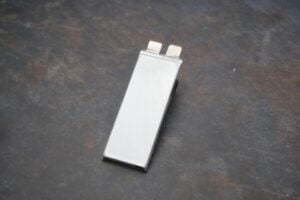
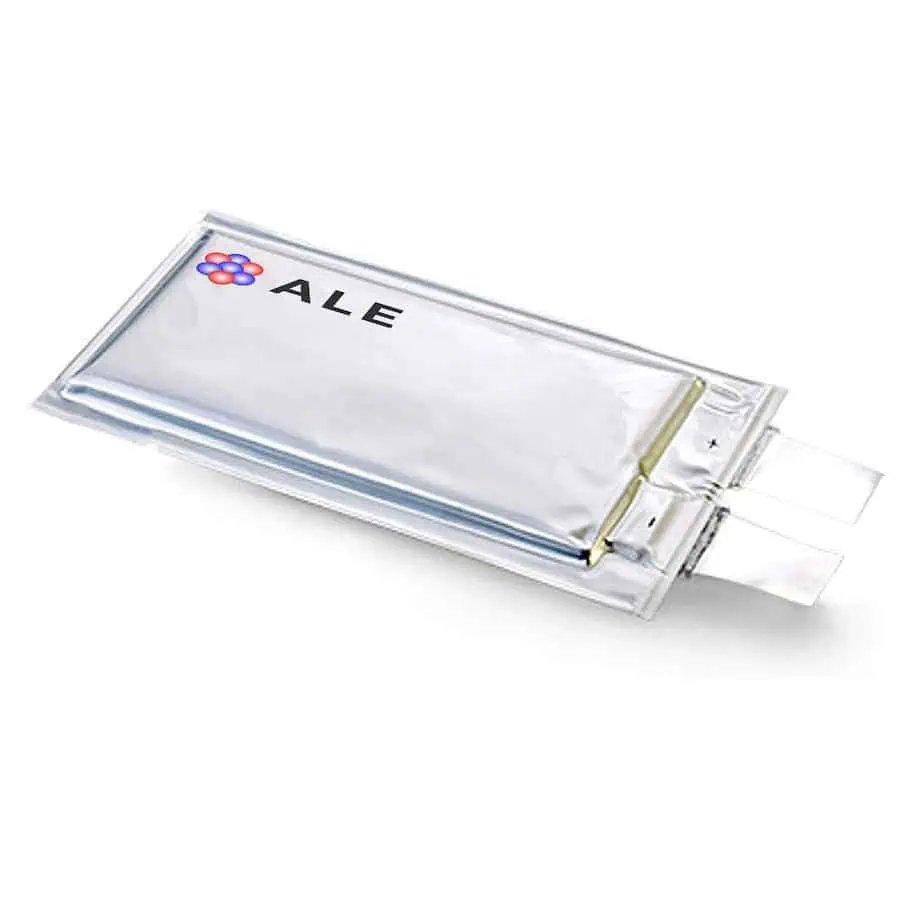
The military LiPo drone battery is favored for small tactical and high-performance VTOL UAVs where maximum discharge rates are the primary requirement. Their pouch-based construction allows for flexible form factors and superior power delivery, though this necessitates reinforced enclosures and continuous health monitoring to mitigate their inherent sensitivity to mechanical damage and thermal abuse.
Lithium-Sulfur (Li-S) and Solid-State Technology
Lithium-sulfur batteries promise a step-change in specific energy that could dramatically extend the range of electrically powered UAVs, though they currently remain largely in the research phase due to challenges with cycle life and dendrite formation. Parallel to this, solid-state UAV battery designs are emerging as a future cornerstone for aviation, replacing liquid electrolytes with solid materials to improve safety and thermal resilience. These advancements are particularly attractive for contested environments where the risk of leakage or fire from ballistic damage must be minimized.
Hybrid Drone Battery Systems
Defense programs are exploring hybrid architectures that leverage the complementary strengths of multiple technologies by combining batteries with fuel cells or supercapacitors. In these configurations, robust military drone battery packs handle transient loads and immediate power needs, while fuel cells provide the sustained energy required for long-endurance missions. Supercapacitors are increasingly integrated to absorb peak loads during VTOL transitions, effectively reducing stress on the primary battery and extending the overall system life.
Key Features of Military UAV Battery Solutions
Environmental and Operational Resilience
A ruggedized UAV battery must maintain operational integrity across extreme temperature ranges, typically from –40°C to +85°C, while resisting the effects of altitude, salt fog, and dust. Beyond thermal management, mechanical resilience is critical for platforms subjected to the high G-forces of catapult launches or the harsh vibrations of shipborne recovery. These systems are often qualified under MIL-STD-810H, ensuring they can survive the physical rigors of global deployment.
Waterproofing and Ingress Protection
For naval operations and search-and-rescue missions, a waterproof military drone battery is a critical requirement. Most professional-grade units are rated to IP67 (temporary immersion up to 1 meter), but high-end maritime UAVs utilize IP68 enclosures. These systems feature fully potted electronics, where internal components are encased in a protective resin to prevent short circuits, and use marine-grade O-rings and twist-lock connectors to ensure a watertight seal even under pressure.
Safety, Redundancy, and Compliance
Mission assurance dictates that battery systems include redundant monitoring and multi-layer protection mechanisms to ensure they fail gracefully rather than catastrophically. In-flight health monitoring allows for autonomous load shedding or return-to-base triggers if an anomaly is detected, while ballistic tolerance is increasingly integrated into rugged drone battery housings. Furthermore, adherence to NDAA compliance and MIL-STD-461G for electromagnetic compatibility ensures that these batteries do not interfere with sensitive communications or reveal the platform’s position through unintended emissions.
Charging, Logistics & Field Support
Modern energy logistics must bridge the gap between fixed infrastructure and the unpredictable nature of forward-operating environments. Battery chargers are engineered to support high-throughput operations at established bases while remaining adaptable for austere deployments where power may be limited to portable generators or solar arrays. These field-deployable chargers prioritize environmental shielding and EMI protection to ensure reliability in harsh climates.
Operational tempo often dictates the need for rapid turnaround, yet fast charging can accelerate cell degradation and increase thermal stress. A swappable military drone battery configuration offers a more predictable alternative for tactical units, allowing operators to replace depleted units in seconds. This modular approach ensures that the UAV remains airborne while the charging process is managed in a controlled, secondary environment, maximizing the availability of the airframe.
Emerging Trends in Military UAV Batteries
Battery technologies for military drones are increasingly focused on the integration of Artificial Intelligence (AI) within the BMS to predict degradation and adapt power usage based on real-time mission context. Simultaneously, research into sodium-ion chemistries and next-generation materials aims to reduce the defense supply chain’s reliance on constrained minerals. These trends point toward a future of increased energy resilience, supporting dispersed operations and autonomous decision-making in contested or denied environments.
The Advanced Energy Storage for Defense & Security Summit will convene defense, government, and industry leaders on May 27–28, 2026, to explore advanced battery systems, supply chain resilience, and scalable energy solutions shaping future capabilities
In this Q&A, Alexander Nijst, Chief Commercial Officer, from Tulip Tech explains how high-density batteries, rapid customization and automated production improve endurance, safety, traceability and supply resilience for defense and industrial users
American Lithium Energy, represented by KT Technical Solutions, develops high-density lithium batteries designed for aerospace and defense systems requiring compact, reliable, and safe energy storage
American Lithium Energy (ALE) is a trusted provider of secure, high-performance batteries, delivering essential power solutions to the U.S. Department of Defense and other high-demand sectors
The latest defense technology news, straight to your inbox.
Get our weekly roundup of technology developments, new products and industry news.
THANK YOU FOR SIGNING UP
Thanks for joining us. Check your inbox.
We've sent you an email. Click the confirmation link to complete your subscription to the weekly eBrief. In the meantime, explore the latest news, suppliers and technologies on DA.
Advancing Defense Capability Through Strategic Collaboration
Defense Advancement works with major OEMs to foster collaboration and increase engagement with SMEs, to accelerate innovation and drive defense capabilities forward.