

Showcase your capabilities
If you design, build or supply IFF Transponders, create a profile to showcase your capabilities and connect with visitors who have an active requirement for your solutions.




Identification Friend or Foe (IFF) transponders provide a secure means of distinguishing allied units from potential threats. These systems are integrated into both manned aircraft and unmanned aerial vehicles (UAVs), supporting safe operations in complex airspaces and during high-risk missions.
Read the Technology Overview

Cutting-Edge Encryption Solutions for Military & Government: Protection Against The Most Sophisticated Modern Cyber Threats

If you design, build or supply IFF Transponders, create a profile to showcase your capabilities and connect with visitors who have an active requirement for your solutions.

IFF transponders play a critical role in modern military command and control systems, supporting secure airspace management, mission coordination, and battlefield deconfliction. These systems automatically respond to interrogation signals with identifying information, ensuring that friendly assets are correctly recognized and protected in both peacetime and combat operations.

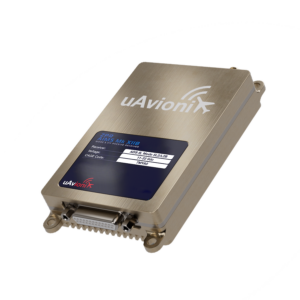
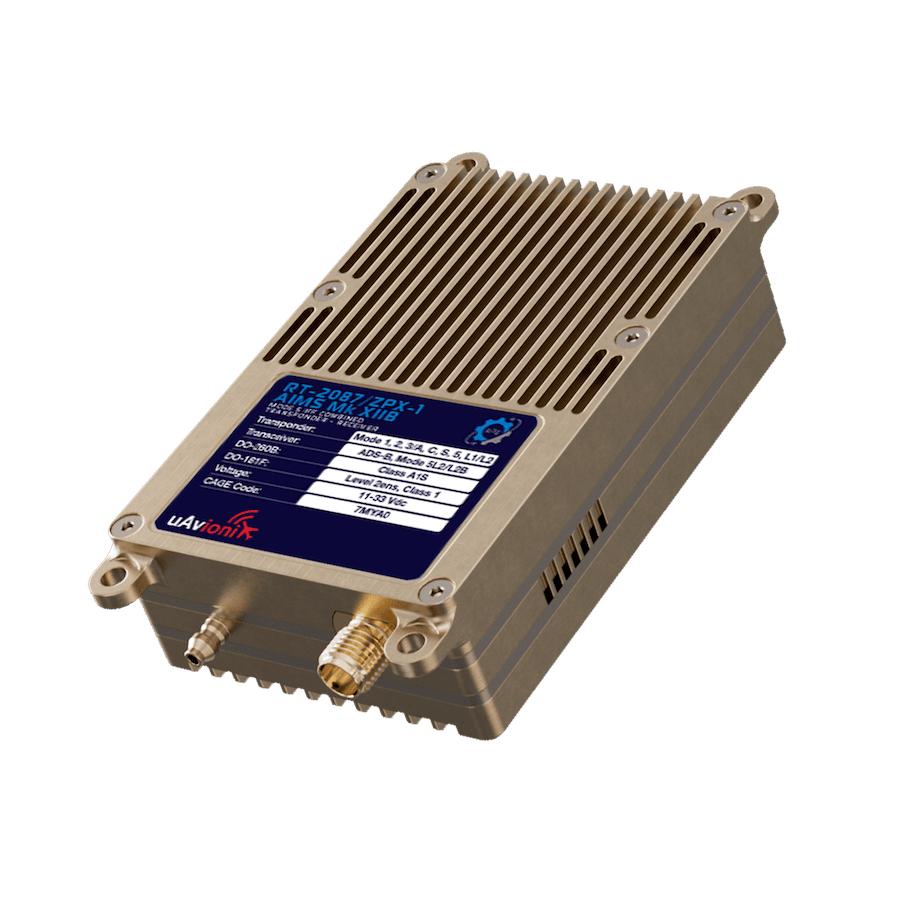
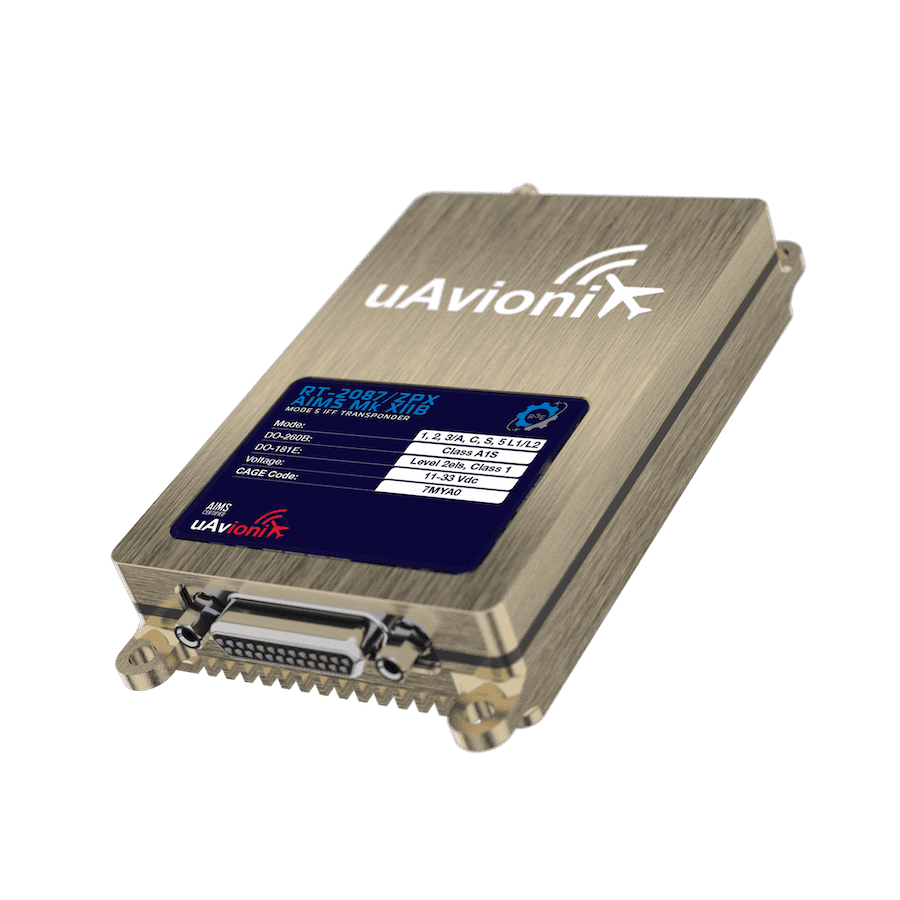
Combat ID Mode 5 transponder with ADS-B, ZPX-1, from uAvionix.
At its core, an IFF system consists of an interrogator and a transponder. The interrogator sends a coded radio frequency (RF) signal, and the transponder, embedded in an aircraft or UAV, replies with an encrypted response indicating its identity. This rapid exchange allows for the instantaneous classification of airborne objects as either friend or potential foe.
Modern IFF transponders are interoperable with secondary surveillance radar (SSR) systems, which are commonly used in civil and military air traffic control. SSR provides detailed tracking information, such as altitude and aircraft ID, while IFF adds a secure layer of authentication vital for defense operations.
IFF systems typically operate on 1030 MHz for interrogations and 1090 MHz for replies. These frequencies enable integration with broader surveillance networks and ensure compatibility with civil aviation systems as needed.
IFF modes are designated numerically, each assigned to specific operational roles ranging from basic identification to secure, encrypted exchanges. The primary modes are:
Understanding these modes is essential for interpreting IFF system outputs and configuring transponders for mission-specific roles. The transition from Mode 4 to Mode 5 has been a significant focus in modernizing military IFF capability, driven by the need for improved cybersecurity and resistance to electronic warfare.
IFF transponders are standard equipment on a broad range of platforms, including:
In addition to airborne deployment, IFF systems are used in ground-based air defense to ensure that automated systems do not mistakenly engage friendly aircraft.
The integration of IFF transponders into unmanned military aerial platforms poses unique challenges. UAVs often operate autonomously or with limited bandwidth for command and control, necessitating reliable, secure IFF functionality.
To address these needs, lightweight, low-power IFF transponders have been developed, featuring embedded encryption and minimal latency. Mode 5 capability is especially crucial in UAS due to its robust cryptographic security and ability to function within joint operational frameworks.
The proliferation of UAVs in contested environments makes IFF crucial for mitigating fratricide risk and facilitating seamless integration with manned platforms and coalition forces.
To maintain the integrity of IFF systems, specialized IFF emulators and test sets are employed. These tools simulate interrogation signals and monitor transponder responses, verifying correct operation and encryption synchronization.
IFF emulators are also used in training environments to replicate real-world identification scenarios without relying on live transponder responses. This ensures that personnel are well-versed in interpreting IFF signals and making rapid decisions based on accurate identification data.
Modern IFF systems are built with data interoperability at their core. Encryption is a defining feature, especially for Modes 4 and 5. NATO-standard cryptographic keys ensure that only authorized systems can decode responses, providing a secure identification channel in contested environments.
The secure exchange of identification data across joint and coalition forces reduces the likelihood of blue-on-blue incidents and supports coordinated tactical responses.
IFF transponders must also be compliant with international SSR standards, especially in joint-use airspace where military and civil aviation intersect. This dual compliance ensures operational safety while maintaining mission secrecy.
Identification Friend or Foe (IFF) transponders are governed by a suite of military standards that ensure interoperability, reliability, and security across various platforms and allied forces. These standards encompass communication protocols, environmental resilience, electromagnetic compatibility, and cryptographic requirements.
STANAG 4193 is a NATO standardization agreement that defines the technical characteristics and operational procedures for IFF systems among member nations. It ensures that IFF transponders are interoperable across allied forces, facilitating coordinated operations and reducing the risk of friendly fire incidents.
Adherence to these military standards is crucial for the effective deployment and operation of IFF transponders in military aircraft and unmanned platforms. They collectively ensure that systems are interoperable, resilient, and secure, meeting the rigorous demands of modern military operations.
MIL-STD-1553 defines the mechanical, electrical, and functional characteristics of a serial data bus used extensively in military avionics. This standard facilitates reliable, time-division multiplexed communication between mission-critical systems, including IFF transponders, ensuring synchronized data exchange across aircraft subsystems.
MIL-STD-461 establishes requirements for the control of electromagnetic interference characteristics of subsystems and equipment. Compliance ensures that IFF transponders operate effectively without causing or being susceptible to EMI, which is crucial for maintaining system integrity in electromagnetically dense environments.
MIL-STD-810 outlines testing procedures to evaluate equipment performance under various environmental stresses, including temperature extremes, vibration, shock, and humidity. IFF transponders adhering to this standard are validated for durability and functionality across diverse operational conditions.
MIL-STD-1760 specifies the standardized electrical interface between military aircraft and their carriage stores, including weapons and pods. This standard ensures that IFF transponders integrated into these stores can communicate effectively with the aircraft’s systems, facilitating proper identification and control.
The AIMS 17-1000 standard provides certification requirements for Mark XIIB IFF systems, encompassing Modes 4 and 5 operations. Compliance ensures that transponders meet stringent performance and interoperability criteria, including secure encryption protocols, which are essential for modern combat identification.
Despite their effectiveness, IFF systems face challenges, particularly in environments with dense electromagnetic activity or active jamming. Ongoing research focuses on enhancing signal robustness, minimizing latency, and improving power efficiency for integration into smaller platforms.
Future IFF systems may incorporate artificial intelligence to dynamically manage encryption and interrogation parameters, improving adaptability to rapidly changing mission requirements. Integration with emerging battlefield management systems will also ensure real-time visibility and support informed decision-making.
IFF transponders are indispensable to modern military operations, offering secure, automated identification that supports command, control, and coordination across all branches of defense. From encrypted Mode 5 replies on advanced fighters to compact systems for UAVs, the breadth of application reflects the technology’s strategic importance.
As threats evolve and military environments become increasingly complex, the role of IFF transponders will only grow in significance. Continued innovation in RF technology, encryption, and system integration will ensure that identification friend or foe remains a reliable pillar of defense capability.


 Searching Companies & Products