
Showcase your capabilities
If you design, build or supply Anemometers, create a profile to showcase your capabilities and connect with visitors who have an active requirement for your solutions.




Anemometers are used to measure wind speed and direction for a wide range of military and defense applications, from UAV flight control to artillery targeting and environmental monitoring.
Read the Technology Overview
If you design, build or supply Anemometers, create a profile to showcase your capabilities and connect with visitors who have an active requirement for your solutions.

Used across land, air, and maritime defense sectors, anemometers support accurate wind measurements essential to mission success. They contribute to the safe operation of UAVs, assist with weapon system calibration, and support mobile meteorological stations in the field. Modern designs include ultrasonic, cup, vane, hot-wire, and laser Doppler variants, often integrated with sensors, GPS modules, and communication interfaces.
In military and defense environments, real-time wind measurements are critical to operational safety and mission effectiveness. Anemometers are deployed across numerous defense platforms to support tactical, navigational, and meteorological applications.
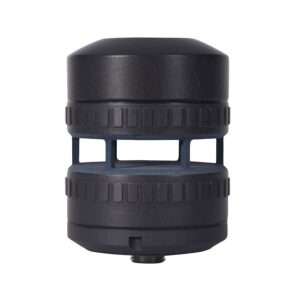
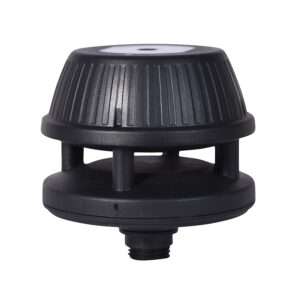
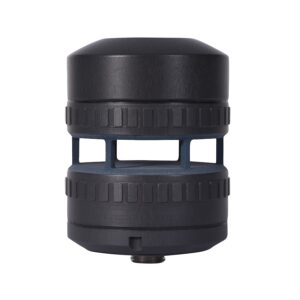
Ultrasonic Sensor by FT Technologies.
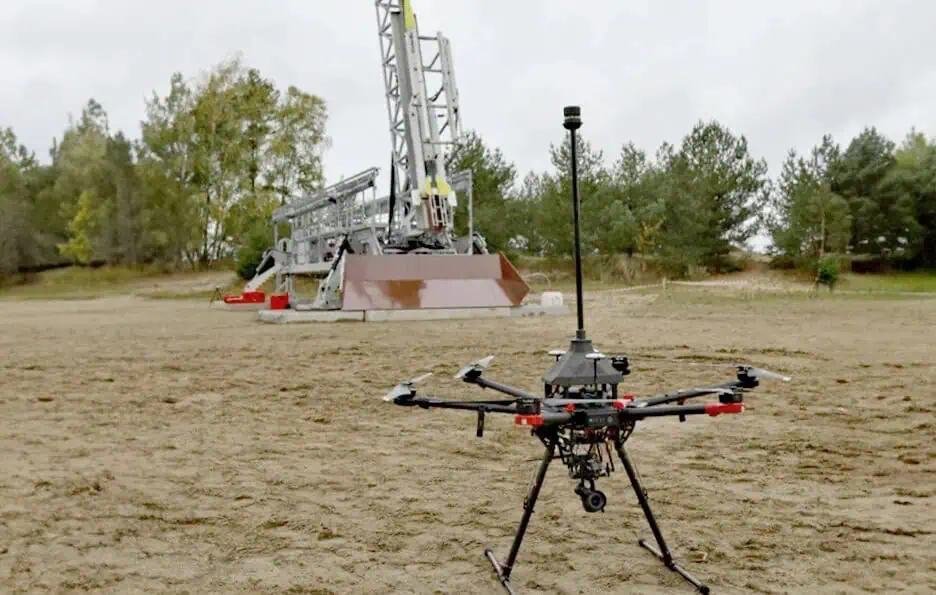
In UAV operations, accurate wind speed and direction data inform flight control algorithms, enhance stability, and improve autonomous decision-making. Ground-based systems, such as mobile weather stations or artillery units, use them to calculate firing solutions or deploy precision-guided munitions.
Naval forces employ anemometers to assess weather during maneuvers and launch operations, while missile defense and radar alignment systems use wind input for calibration. Portable wind measuring devices are also deployed for rapid environmental assessments in the field.
Ultrasonic anemometers aid UAVs with:
Additional pitot tube or vane rotor systems can provide redundancy.
Rugged portable anemometers offer:
Used by forward observers, artillery units, and UAV operators for field data.
Military-grade anemometers integrate with:
These may include power packs, processors, and protective casings for harsh environments.
| Type | Mechanical Parts | Accuracy | Size/Weight | Use Case |
| Cup Anemometer | Yes | Moderate | Medium | Weather stations, training bases |
| Vane Anemometer | Yes | Good | Compact | Portable field operations |
| Ultrasonic Anemometer | No | High | Lightweight | UAVs, onboard systems |
| Hot-Wire Anemometer | Yes | Very High | Small | Research, confined environments |
| Laser Doppler Anemometer | No | Very High | Bulky | Targeting systems, research labs |
Military-grade anemometers are designed and tested to meet rigorous international and defense-specific standards, ensuring accuracy, durability, and interoperability in the most demanding operational environments.
Recent advancements in military-grade wind measurement systems are driving improvements in accuracy, portability, and battlefield integration. These innovations reshape how environmental data is collected and used in real-time tactical scenarios.
Modern sonic anemometers now feature enhanced digital signal processing (DSP) algorithms that filter out environmental noise, compensate for turbulence, and increase measurement resolution. These upgrades allow for more precise wind vector analysis even in complex environments such as urban terrain or mountainous regions. Integration with onboard processors also enables direct transmission of processed wind data to fire control systems or UAV autopilots without requiring intermediate interpretation.
Laser Doppler anemometers are being adapted for deployment on high-altitude platforms such as reconnaissance drones and surveillance balloons. By measuring the frequency shift of laser light reflected from atmospheric particles, they provide highly accurate wind profiles at altitudes where traditional sensors struggle. This capability is critical for ballistic missile trajectory predictions, long-range artillery adjustments, and precision airdrop operations in thin-atmosphere conditions.
Advances in microelectromechanical systems (MEMS) and battery efficiency have led to the development of lightweight, soldier-portable anemometers. These compact devices can be clipped to gear, mounted on helmets, or integrated into multi-function handheld weather units. They enable individual troops to gather localized wind data for sniper ballistics, drone piloting, or immediate situational awareness during patrols and reconnaissance missions.
Networked wind measurement systems combine multiple fixed or mobile stations to create a distributed meteorological network across a battlefield. These stations communicate via secure radio or mesh networks, feeding real-time data into command-and-control systems. The resulting wind maps support mission planning, airspace management for UAV swarms, and coordinated artillery strikes. These networks provide a comprehensive operational weather picture in contested environments by integrating with other environmental sensors, such as temperature, humidity, and pressure modules.
The next generation of military anemometry is expected to leverage artificial intelligence, edge computing, and multi-domain sensor integration. AI-driven algorithms will predict wind shifts in real time, enabling autonomous systems to anticipate and adapt to environmental changes without human intervention. Swarm networking could allow UAVs, ground vehicles, and fixed stations to share wind data dynamically, creating a constantly updating 3D wind field across operational zones. Satellite uplinks will further extend the reach of these systems, allowing wind profiles from forward-deployed units to be combined with global atmospheric models. This fusion of localized sensing and large-scale forecasting will give commanders and autonomous platforms an unprecedented level of environmental awareness, enhancing both tactical decision-making and mission safety.


 Searching Companies & Products