




FT Technologies outlines the role of high-quality wind measurement in enabling reliable operation of uncrewed and autonomous vehicles, and examines how ultrasonic wind sensing addresses operational constraints associated with traditional pitot-based airspeed systems.
For UXVs operating in the air or on the surface, wind data quality directly affects navigation accuracy, control stability, and energy efficiency. As autonomy increases and human intervention decreases, the reliability of onboard environmental sensing becomes increasingly important for maintaining safe and predictable behavior across mission profiles.
Limitations of Pitot-Based Airspeed Measurement
Pitot tubes remain widely used for airspeed measurement and continue to play an important role in aviation. However, their performance can be constrained on uncrewed platforms, particularly at low airspeeds and in harsh or remote operating environments, where small pressure differentials are more susceptible to noise and error during loitering, delivery, or transition phases.
Additional challenges include blockage from dust, insects, salt, or debris, icing that can result in unreliable or lost data, and the limitation of measuring forward airspeed only, requiring supplementary sensing to derive full wind vectors. Routine inspection, cleaning, and calibration further complicate their use on long-endurance or remotely deployed autonomous platforms.
These limitations do not negate the continued value of pitot-based airspeed measurement in aviation, but they highlight why autonomous and remotely operated platforms often benefit from supplementary wind sensing technologies.
Ultrasonic Wind Sensing for Uncrewed Platforms
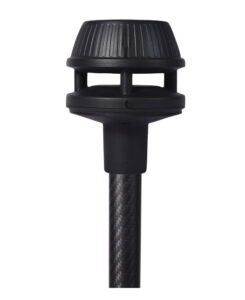
FT602 on a carbon tube
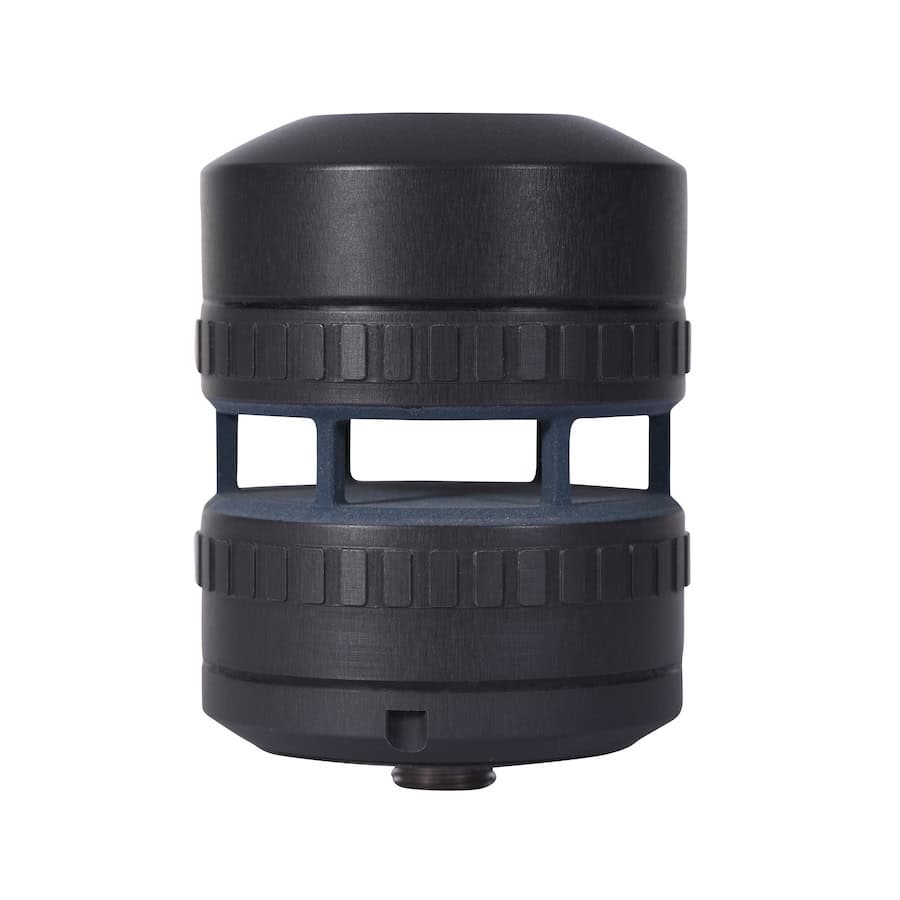
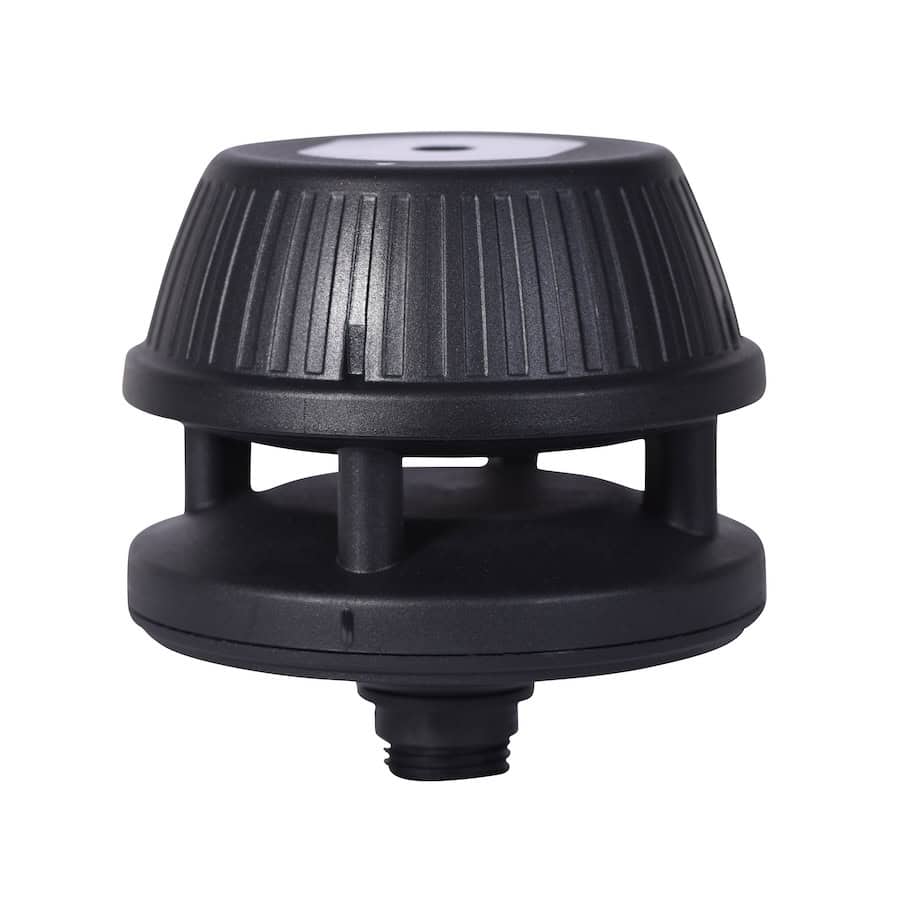
FT Technologies’ ultrasonic wind sensors, based on proprietary Acu-Res® acoustic resonance technology, provide a solid-state, non-contact alternative designed for continuous operation without routine maintenance. The sensing method maintains linear performance from zero wind up to 75 m/s and is inherently resistant to vibration and platform-generated noise, which are common characteristics of UXVs.
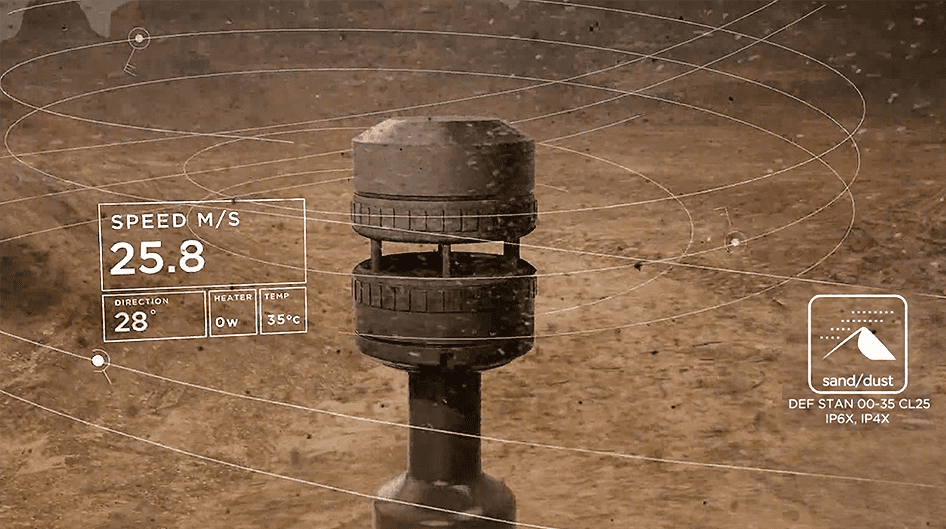
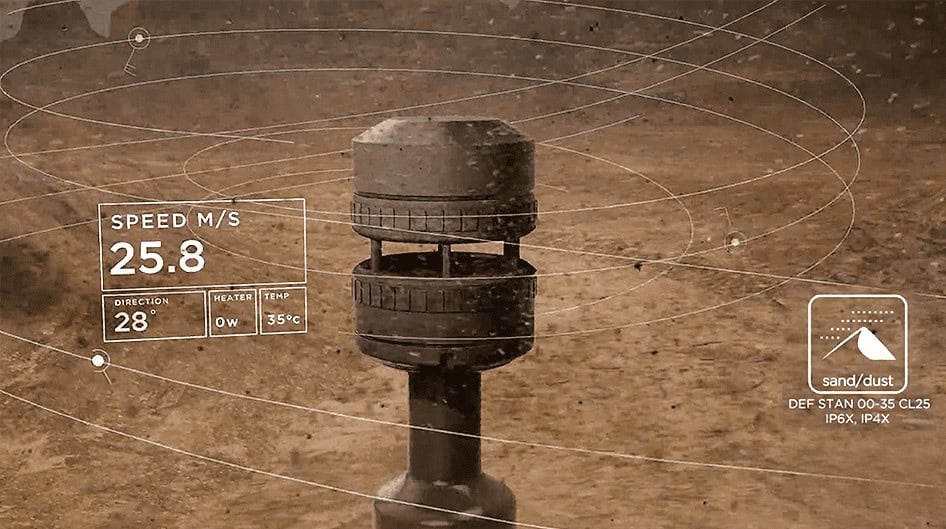
The solid-state architecture also provides resilience against sand, rain, salt spray, and electromagnetic interference, enabling reliable wind measurement in environments that challenge traditional airspeed systems.
Operational Benefits Across UXV Types
Accurate, real-time wind data improves autopilot stability, crosswind safety, and mission accuracy for UAVs and advanced air mobility platforms.
For USVs and other surface-based autonomous vessels, continuous wind feedback supports precise station-keeping and more efficient propulsion management during long-duration missions. Across hybrid and ground platforms, wind measurements enhance sensor fusion and trajectory planning, particularly in degraded or GNSS-denied environments.
Integration and System Compatibility
FT Technologies’ Acu-Res® ultrasonic wind sensors support industry-standard communication protocols, including NMEA 2000, CANbus and RS422/485, enabling straightforward integration with flight controllers, mission computers, and navigation systems.
Designed to withstand wide temperature extremes, vibration, shock, and EMC challenges, the sensors are suited to autonomous platforms where reliability and minimal maintenance are critical.