



Accelerate Defense Modernization through Strategic Sourcing
Discover cutting-edge solutions from leading global suppliers“3D printing in the military sector will be crucial for repairing equipment and extending its service life.” As additive manufacturing expands across defense and aerospace, its role in maintenance, repair, and operational readiness is becoming increasingly clear.
 In a conversation with Defense Advancement, José Luis Sánchez, Managing Director of Meltio, explains how wire-laser metal 3D printing enables the on-demand production and repair of critical components, reducing reliance on complex supply chains and supporting deployment in remote or operational environments. Already applied across defense and aerospace, from manufacturing metal parts to repairing components in armored vehicles and jet engines, he highlights its growing role in extending the service life of military equipment, particularly in forward operating bases, maritime environments, and remote operations where autonomy is essential.
In the following Q&A, Sánchez shares his insights into the current applications, advantages, and future direction of additive manufacturing in the defense sector, and how Meltio is supporting more flexible and autonomous manufacturing strategies.
What is 3D printing used for in the defense sector?
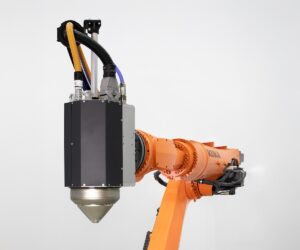 Additive manufacturing in the defense sector is primarily used in two areas: on-demand production of parts and the repair of critical components. This makes it possible to reduce dependence on complex supply chains and improve the operational readiness of systems.
Furthermore, its use in operational areas is becoming increasingly important, where the ability to manufacture or repair parts on-site represents a clear strategic advantage. In this context, additive manufacturing does not compete with traditional manufacturing but complements it where the latter reaches its limits, particularly in terms of time, logistics, and flexibility.
What does the future of 3D printing look like in the defense sector?
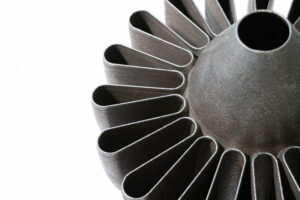 The future lies in its integration as a structural capability into operations. It is not just about manufacturing parts, but about transforming the logistics model into a more decentralized, digital, and resilient model. We will see its increasing application in outposts, maritime environments and in remote operations, where autonomy is crucial. It will also play a central role in the maintenance, repair, and extension of equipment lifespans.
Across industry as a whole, additive manufacturing is evolving from a production tool into a cross-functional capability that is redefining how organizations operate. The defense sector is currently the most demanding environment for testing these technologies, and what proves successful there will later be transferred to the rest of industry.
What advantages does the use of 3D printing offer in the military sector?
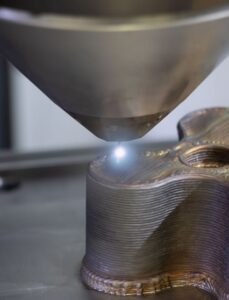 The main advantage is improved operational readiness. The ability to manufacture or repair parts right where and when they are needed reduces downtime and logistical dependence. Added to this is the ability to produce on demand, reduce inventory, and adapt quickly to changing requirements. In environments with high uncertainty, flexibility becomes a strategic advantage.
Ultimately, additive manufacturing enables the transition from a forecast-based model to a responsiveness-based model.
Is 3D printing more expensive than traditional supply chains?
That depends on the use case. In mass production, traditional methods remain more efficient in terms of cost per unit. In the defense sector, however, the analysis must not focus solely on the direct production costs. Factors such as lead times, logistics, storage, and the impact of system downtime are critical. When considering total costs and, above all, operational reliability, additive manufacturing can lead to efficiency gains.
Is 3D printing reliable?
Reliability depends on the maturity of the technology and its proper integration into industrial processes. In recent years, there have been significant advances in process control, repeatability, and the certification of materials and applications.
Today, there are already concrete use cases where these technologies are being deployed in demanding environments. The challenge is no longer to prove that it works, but to consistently expand its use. In this sense, we are observing a clear transition from experimentation to industrialization.
What is the current status of 3D printing in the military sector in Spain?
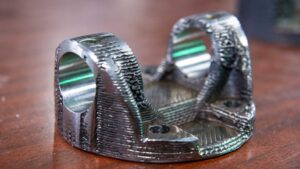 Spain is making gradual progress, in line with other European countries. There are initiatives at both the institutional and industrial levels to explore and deploy these capabilities, particularly in the areas of maintenance and logistics.
We are still in an introductory phase with a clear focus: integrating additive manufacturing as part of the industrial and defense infrastructure.
Does the future of 3D printing lie in the application of AI and self-healing materials?
Undoubtedly, this is a key differentiator. Artificial intelligence will play an important role, particularly in process optimization, quality control, and the management of distributed operations.
What is Meltio currently working on in the defense sector?
We are working to enable metal manufacturing and repair capabilities in environments where this was previously not possible. This includes both industrial facilities and deployment sites that are closer to the action. The focus is on creating flexibility and autonomy so that organizations can reduce their dependence on external supply chains.
To learn more about 3D printing, visit the Meltio website.