

Accelerate Defense Modernization through Strategic Sourcing
Discover cutting-edge solutions from leading global suppliers
Meltio, a developer of metal 3D printing solutions, has concluded its 2025 exhibition circuit by confirming that its Directed Energy Deposition technology has officially transitioned from experimental laboratories to active industrial supply chains worldwide.
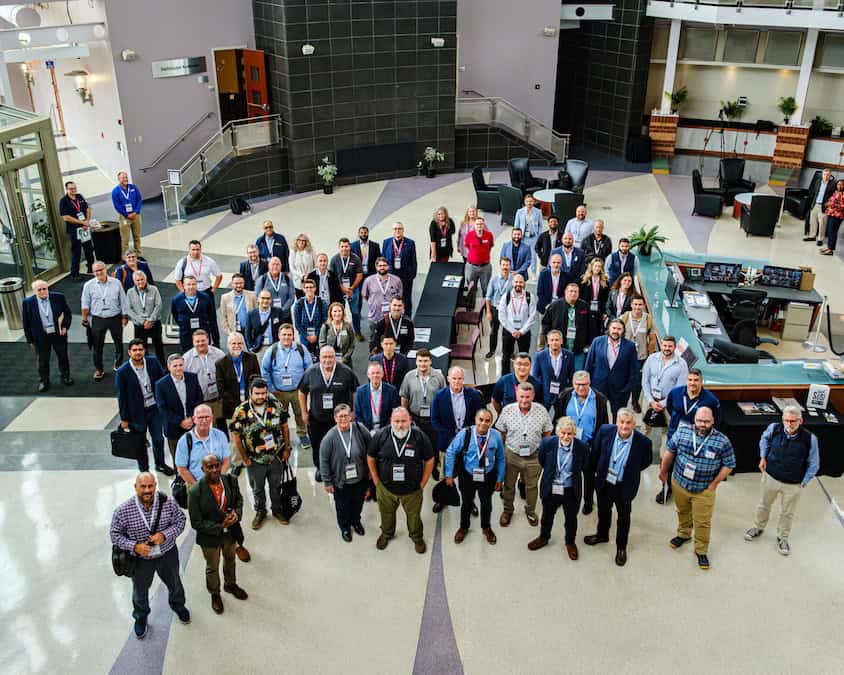
Throughout the year, the Spanish multinational demonstrated its wire-laser metal Additive Manufacturing (AM) solutions at major global AM and industrial trade shows, including MilAM, Rapid+TCT, EMO Hannover, and Formnext.
These appearances provided data-driven validation that the company’s hardware systems, such as the Meltio M600 and the Meltio Robot Cell, are successfully decoupling manufacturers in the automotive, defense, mining, naval, and oil and gas sectors from fragile global logistics networks.
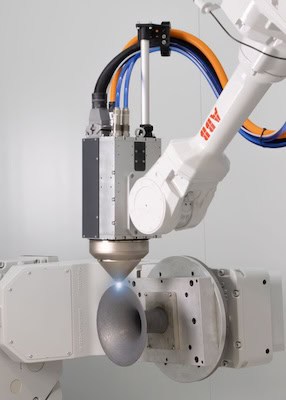
The demonstrations highlighted the efficiency and reliability of its industrial metal 3D printing systems. Meltio aimed to show manufacturers that metal AM can produce and repair parts in production cycles and machine shops effectively, offering a productive alternative to traditional methods such as boilermaking or casting.
Defense Sector Adoption
The defense sector has emerged as a primary driver of adoption, with the U.S. Navy, the Republic of Korea Marine Corps, and other global forces exploring and deploying AM systems to enhance operational readiness and address critical supply challenges, as highlighted at MilAM and Rapid+TCT.
A notable validation of the Meltio Robot Cell occurred during a naval case study where a critical reverse osmosis pump was restored in just 34 hours aboard a ship, significantly outperforming traditional procurement timelines.
In a separate collaboration with AM Solutions for the South Korean defense sector, Meltio technology was used to redesign ice cleats for the K2 Black Panther main battle tank. By utilizing an additive manufacturing-optimized honeycomb structure, the component weight was reduced from 10.74 kg to 4.26 kg, representing a 60% reduction while maintaining full mechanical integrity.
Hybrid manufacturing has also seen significant advancement through a partnership with Phillips Corporation, which integrated the Meltio Engine Blue into a Haas CNC machine. This integration allows manufacturers to produce complex metal parts with enhanced precision, reduced lead times, and less material waste.
High-Volume Industrial Efficiency
At EMO Hannover and Formnext, Meltio focused on high-volume efficiency, highlighting the economic limits of milling and casting and emphasizing return on investment (ROI) and shorter production cycles.
In the automotive and tooling sectors, the economic benefits of this approach were highlighted by the Hirudi Stub Axle case study. By switching to Meltio’s Wire-Laser Metal Deposition (W-LMD) process, the manufacturer achieved a 62.5% weight reduction and a 35.7% cost reduction. The part was produced in just over 21 hours, reducing lead times by 33% and demonstrating the technology’s suitability for leading automotive companies such as Iveco.
Global Expansion & Industrial Autonomy
The opening of Meltio’s first international reference site in Danville, Virginia, in partnership with Fastech, has further expanded the company’s global footprint. This facility serves as a hub for the North American oil and gas and naval sectors, and enables customers to witness the hardware, including the Meltio M600 and Robot Cell, producing real industrial parts.
For energy operators in remote or offshore locations, a delay of a single critical component can cost millions in downtime. Meltio’s technology addresses this by enabling “Industrial Autonomy”, the ability to print or repair parts on demand, exactly where they are needed, reducing reliance on fragile logistics networks.
Building on validated naval defense use cases, Meltio demonstrated solutions capable of processing corrosion-resistant superalloys like Inconel 718 and stainless steel, which are essential for the harsh conditions of the energy sector.
At Formnext, Meltio showcased Oil & Gas applications featuring complex geometries, such as dual combustion chambers with integrated cooling channels. These demonstrations confirmed that W-LMD can achieve the material density and mechanical properties required for safety-critical infrastructure while cutting lead times from months to days.
Technological Advancements: Meltio Engine Blue
Technological progress in 2025 was further defined by the introduction of the Meltio Engine Blue. This system utilizes a 1.4 kW Blue Laser, factory-calibrated to process reflective materials such as copper and aluminum with higher absorption rates than traditional infrared lasers.
The system offers a 30% reduction in energy consumption and achieves deposition rates up to 3.5x faster than previous generations. Multi-material capabilities were also showcased, including a naval propeller shaft bracket printed using both Marine Bronze and stainless steel at the new Danville reference site.
Industrial Impact & Future Outlook
Lukas Hoppe, Head of R&D at Meltio, commented, “Metal Additive Manufacturing is growing in demand among the global industrial sector. It solves the needs of these customers to obtain parts and repair them, effectively and reliably, and guarantees them greater autonomy since Meltio’s equipment is installed directly in their workshops.”
Hoppe, added, “The need for AM has never been greater and we understand those industrial customer needs and we are clear to demonstrate to them the clear advantages of integrating Meltio wire-laser metal 3D printing solutions into the manufacturing floor and the machine shops to lower costs, increase efficiency and overcome challenges such as supply chain stability.”
Meltio’s presence at these 2025 events reinforced a clear message about Industrial Autonomy. By enabling the on-demand production of near-series components, the company is supporting Tier 1 suppliers and defense forces reduce dependence on fragile global supply chains.