


Accelerate Defense Modernization through Strategic Sourcing
Discover cutting-edge solutions from leading global suppliers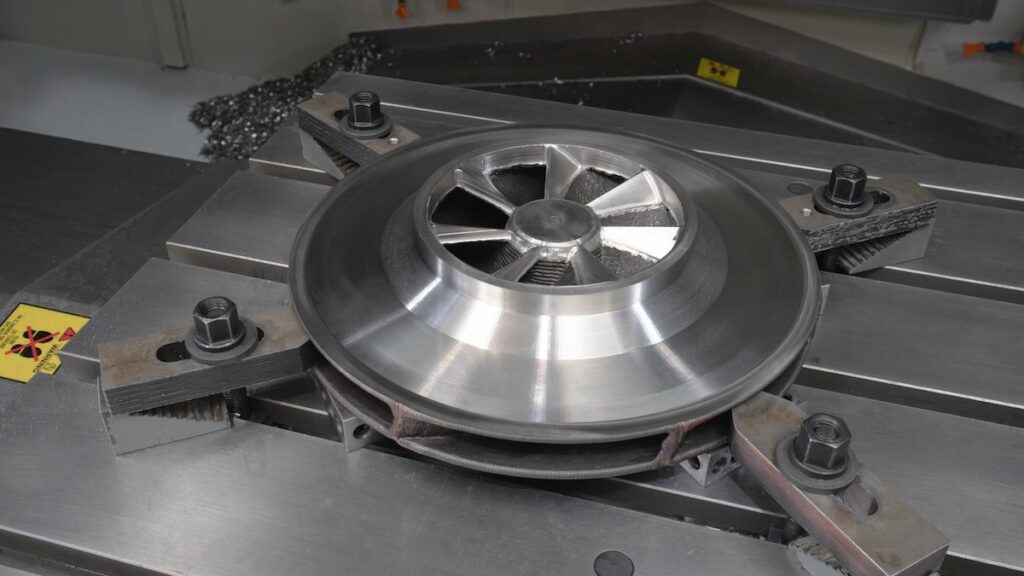
Meltio worked with a naval sector customer to redesign and manufacture a critical closed impeller for a fire suppression system using metal additive manufacturing. Read more >>
The impeller, previously cast in bronze, faced long lead times, high wear rates, and sourcing challenges. By applying Meltio’s Directed Energy Deposition process, the part was re-engineered in stainless steel 316L to improve corrosion resistance, fatigue performance, and production speed.
Addressing Continuous Operational Demands
In a fire suppression system, the impeller must accelerate from standstill to full operating speed within seconds when activated. This rapid startup transmits high torque through the system, placing significant mechanical stress on the component. During operation, the impeller is further subjected to vibration, erosive flow, and corrosive conditions, making wear a matter of when rather than if.
Transition from Casting to Additive Manufacturing
The original cast bronze component offered strength but could not meet modern requirements for rapid replacement or resilience in demanding environments. Using Meltio’s Directed Energy Deposition process, the customer reimagined the impeller in stainless steel 316L, a material that offers greater mechanical strength and corrosion resistance. The geometry was refined for printability using a Radial 360 toolpath strategy, with tailored support structures and variable deposition rates to improve surface quality and reduce post-processing.
Key engineering modifications included:
- Material upgrade: Stainless steel 316L for improved corrosion and fatigue resistance.
- Geometry optimization: Radial 360 strategy for efficient deposition.
- Custom support structures: Designed for overhangs with variable deposition for cleaner finishes.
Two-Stage Manufacturing Approach
The first printed impeller was fully functional but required significant machining due to its complex stainless steel geometry. Surface imperfections beneath the supports and slight material overgrowth on rounded areas increased finishing demands.
To address this, the production sequence was divided into two additive manufacturing stages with an intermediate machining operation. Meltio’s positioning system ensured precise alignment between both phases, improving accessibility to internal blades and enabling tighter dimensional tolerances.
Process improvements included:
- Two-phase build: Dividing the print into separate stages.
- Intermediate machining: Enhancing access for accurate finishing.
- Positional accuracy: Maintaining alignment using the Meltio positioning system.
Operational and Logistical Benefits
By shifting from traditional casting to on-demand, on-site metal additive manufacturing, the customer eliminated mold production, reduced spare part storage, and produced components directly when needed. The final impeller offers increased durability, minimized downtime, and readiness for deployment in critical firefighting systems.
- System: Meltio Engine for Robot Integration
- Sector: Naval
- Material: Stainless Steel 316L
- Printing Time: 85 hours
With Meltio’s technology, the customer not only produced a stronger, more resilient impeller, but also streamlined the supply process, ensuring that fire suppression systems remain operational, secure, and ready for immediate activation in high-risk environments.
Read the original article >>