
Showcase your capabilities
If you design, build or supply Drone Propellers, create a profile to showcase your capabilities and connect with visitors who have an active requirement for your solutions.




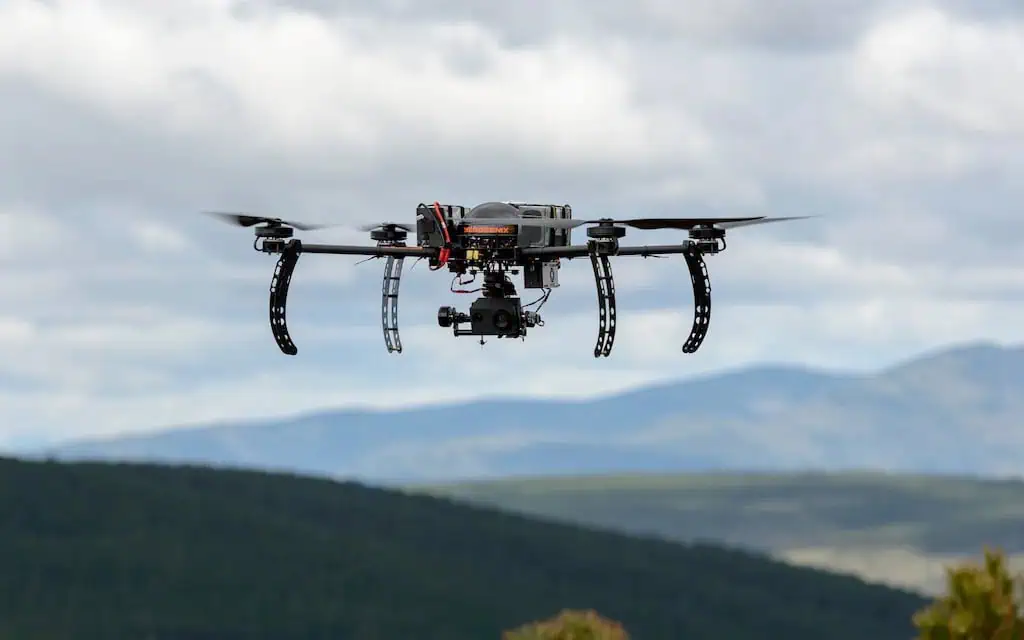
Drone propellers are critical to the performance, reliability, and mission success of military UAVs. Far beyond simple rotary components, these blades affect lift, noise, endurance, and payload capacity. For military applications, propeller selection involves advanced engineering, often blending carbon fiber construction, computational fluid dynamics (CFD), and custom tailoring to the UAV’s design and mission profile.
This page explores the different types of military drone propellers, off-the-shelf, custom off-the-shelf (CO-TS), and bespoke, along with the UAV platforms that use them, the missions they support, and why propeller choice is a strategic decision in defense operations.
Read the Technology Overview
Revolutionary Powerful Thrust Vectoring Technology for VTOL UAVs & Aerial Platforms

COTS & Custom Drone Propellers and Electric Motors for Military UAVs

If you design, build or supply Drone Propellers, create a profile to showcase your capabilities and connect with visitors who have an active requirement for your solutions.

Military-grade UAV propellers are typically offered in three configurations, each meeting different operational requirements.
Off-the-shelf propellers are ready-made, mass-produced propeller blades used in widely available drone systems. These are suitable for rapid deployment and field replacement in general-purpose multirotor UAVs. Although they may lack tailored performance enhancements, they provide a reliable and cost-effective solution for basic ISR tasks and short-duration missions.
Custom off-the-shelf (CO-TS) propellers adapt existing blade platforms with mission-specific modifications. This could include adjustments to blade pitch, noise reduction features, or improved integration with specific motors. CO-TS propellers are often shaped by computational fluid dynamics (CFD) simulations and offer an appealing balance of performance and logistical simplicity for mid-range tactical drones.
Bespoke propellers are precision-engineered from the ground up, typically using advanced carbon fiber composites and custom aerodynamic profiles. Designed for specific UAV platforms and mission profiles, bespoke blades are optimized through CFD, wind tunnel testing, and real-world simulations. These are the go-to choice for long-endurance surveillance drones, stealth aircraft, and heavy-lift eVTOL systems that demand high efficiency and minimal acoustic signature.
Different UAV designs impose unique demands on propeller geometry, material, and performance characteristics. The type of drone determines whether thrust, stealth, endurance, or lift is the top priority.

Mejzlik Drone Propellers from UAV Propulsion Tech
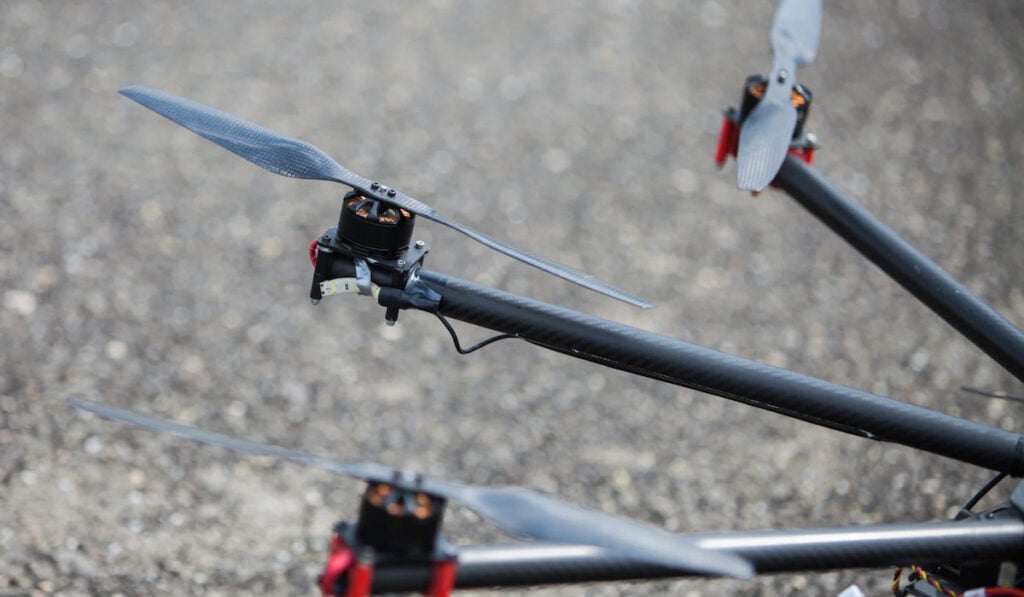
Multirotor drones (e.g., quadcopters, hexacopters) utilize compact, efficient rotors that provide stable lift and responsive maneuverability. These drones are often used in ISR and tactical missions where noise and agility are critical.
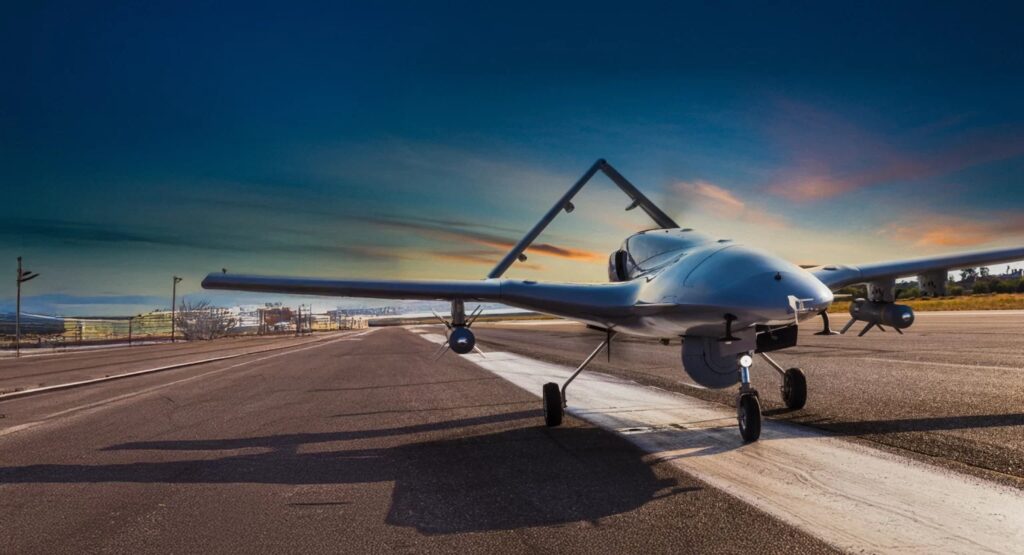
Fixed-wing platforms utilize fewer but larger propellers, typically optimized for cruise efficiency and endurance. These UAVs are deployed for border patrol, battlefield monitoring, and persistent aerial surveillance.
These drones combine rotor-based vertical lift with fixed-wing cruising. They require dual-function propellers capable of handling both hover and horizontal flight with minimal transition loss.
Designed to carry substantial payloads, these platforms use large-diameter, multi-blade heavy-lift propellers with reinforced carbon fiber hubs, providing maximum thrust and structural resilience.
Stealth drones operate in environments where radar and acoustic signatures must be minimized to avoid detection. Their propellers feature proprietary geometries, serrated blade tips, and radar-absorbing composites.
Each UAV mission profile introduces specific technical and operational challenges for propeller design. From quiet surveillance to combat resupply, the blades must be matched to real-world performance conditions.
Drones in this category require ultra-efficient, low-noise propellers that extend endurance while reducing detectability.
These UAVs operate in urban or obstacle-rich environments, demanding durable and responsive propellers that can be quickly swapped in the field.
Heavy-lift drones call for bespoke propellers with high static thrust and strong vibration resistance to handle challenging payload and weather conditions.
Combat search and rescue missions often require multirotor UAVs that operate at low altitudes with frequent starts and stops. Rugged, lightweight propellers are essential.
Drones used in EW or special forces operations need stealth-optimized propellers with low acoustic profiles and low radar cross-sections.
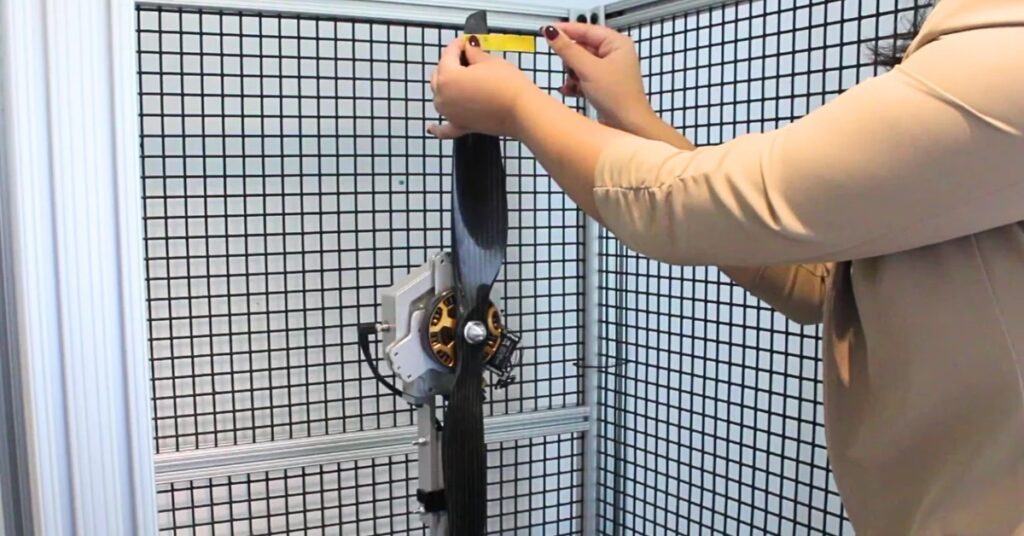
In military applications, a drone’s performance often comes down to how efficiently and quietly it moves through the air. Thrust-to-power efficiency, acoustic emissions, and vibration levels are all directly tied to blade geometry and material construction. Even small imbalances or mismatched pitch angles can reduce stability, impact flight time, and stress the drone’s motor systems.
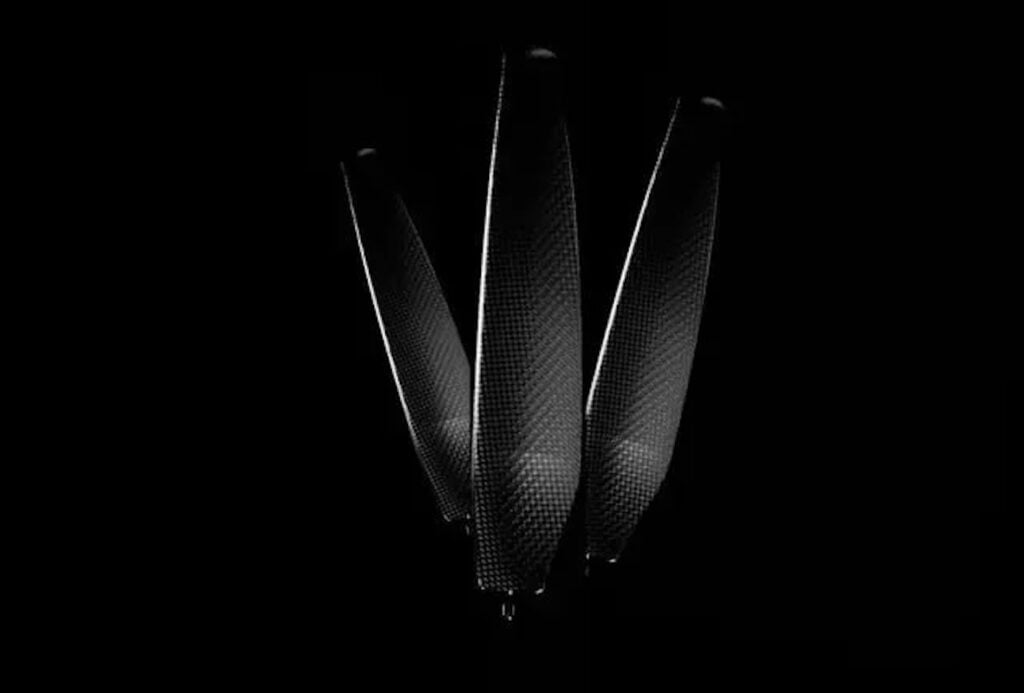
Carbon fiber is the dominant material in advanced military propellers due to its high strength-to-weight ratio and environmental durability. It allows for thin, aerodynamic shapes that can maintain rigidity under load and resist fatigue from high-frequency operation. These advantages are especially critical for high-altitude drones or those operating in wet, sandy, or icy conditions.
Computational fluid dynamics (CFD) plays a vital role in propeller development. Engineers utilize CFD modeling to simulate airflow over the blade surface, analyze vortex behavior, and refine the propeller shape for optimal performance. Combined with wind tunnel testing and material stress analysis, CFD enables bespoke blades to achieve exceptionally quiet, efficient flight.
The selection of a propeller type often reflects not just mission needs, but also procurement timelines and support logistics. Off-the-shelf blades can be stocked in volume and quickly deployed across fleets. CO-TS solutions allow for greater performance customization while maintaining reasonable lead times. Bespoke propellers, while slower to manufacture, are tailored for elite platforms where performance, stealth, or endurance cannot be compromised.
Propeller lifecycle management is also a crucial aspect of UAV operations. Field-replaceable designs support maintenance in combat zones, while more sophisticated propellers may require scheduled inspections and balancing. Some newer military drones are equipped with smart propellers—blades embedded with sensors that monitor wear, balance, and vibration in real-time.
The future of drone propellers lies in adaptive technologies and innovative design. Blade morphing systems, where propellers adjust pitch or twist mid-flight, are under development to improve efficiency across changing flight regimes. Additionally, AI-assisted CFD is enabling the shortening of development timelines while enhancing design accuracy.
Material science is also advancing. Next-generation carbon fiber weaves and resin systems are enhancing thermal stability, reducing radar reflection, and improving fatigue resistance. Combined with modular motor integration and predictive maintenance technologies, tomorrow’s UAV propellers will be even more mission-aware, durable, and adaptable.
Military drone propellers are more than just spinning blades—they are strategic assets that define UAV performance across stealth, endurance, lift, and maneuverability.
Whether using off-the-shelf components for speed, CO-TS options for adaptability, or bespoke designs for mission-critical excellence, defense professionals must align propeller capabilities with the needs of their UAV platforms. As drone operations evolve, advanced materials, CFD optimization, and intelligent blade systems will continue to shape the future of unmanned flight.


 Searching Companies & Products


 Subscribe to the Weekly eBrief
The latest engineering and technical developments straight to your inbox - join thousands of engineers who receive it.
Subscribe to the Weekly eBrief
The latest engineering and technical developments straight to your inbox - join thousands of engineers who receive it.