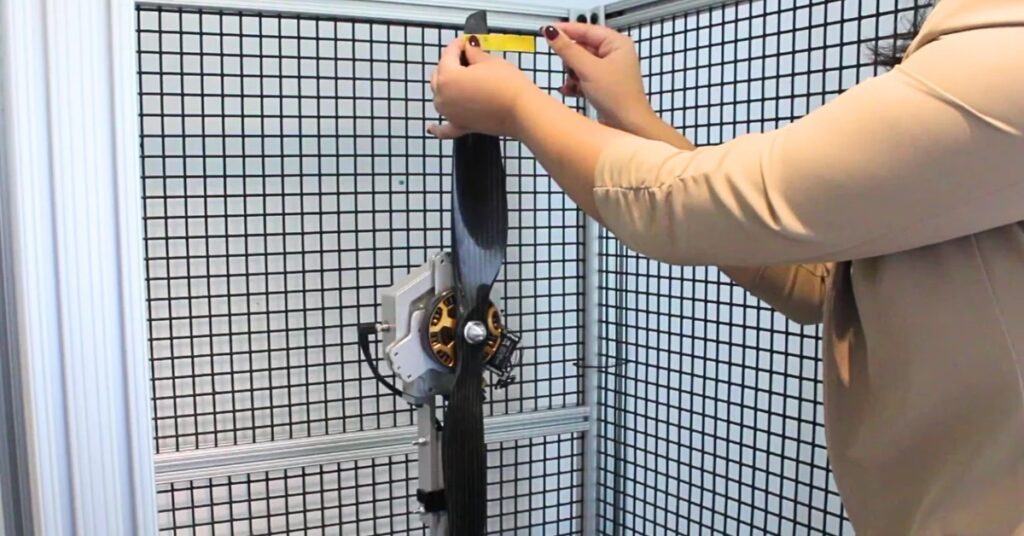
Tyto Robotics, a key developer of high-precision testing solutions for UAVs and drones, provides an in-depth overview of adding and removing material from drone propellers including techniques, materials and crucial considerations.
Balancing drone propellers is critical for maintaining flight stability and extending component life. The method chosen depends on the propeller’s material and size, as well as the amount of adjustment needed.
Adding Material
Tape enables easy weighing and flexible placement without drying time. Though low-strength tapes may detach during operation, compromising safety and test or data accuracy.
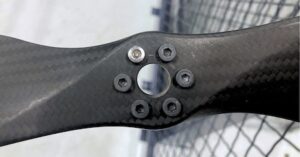
Adding a heavier screw to one side of a propeller hub to achieve balance.
Screws and Washers can be used, allowing adjustments to be made at the hub by adding washers or changing screw weight. These parts must be properly secured on the propeller to prevent dangerous projectiles.
Paint, Glue, Epoxy, Nail Polish are also effective for small corrections and unlikely to detach.
These substances can be applied anywhere on the blade, but it is more difficult to precisely measure their mass. Drying time is also required, though accelerator spray can speed this up when using glue.
Removing Material
Sanding is suitable for materials like plastic. This method should be done on the underside of the blade to preserve aerodynamic properties. Coarse sandpaper (100-220 grit) removes most material, followed by finer grit (400-800 grit) for a smooth finish.
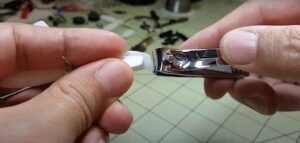
Trimming a plastic propeller with nail clippers.
Trimming is commonly used when more material needs to be removed. Material must be taken from the trailing edge or blade tips to minimize aerodynamic disruption, though trimming the tips impacts blade diameter and pitch.
To maintain airfoil performance, sanding and trimming should be done in the specified, appropriate areas.
Considerations
Although removing material avoids adding extra components, a key advantage, it may weaken propellers’ structural integrity, reducing blade efficiency and impacting the max RPM.
Safety is very important when dynamically balancing spinning propellers. Maintain a clear workspace, use safety glasses and gloves, stay clear of active blades, and follow Murphy’s Law: assume things could go wrong so prepare accordingly.