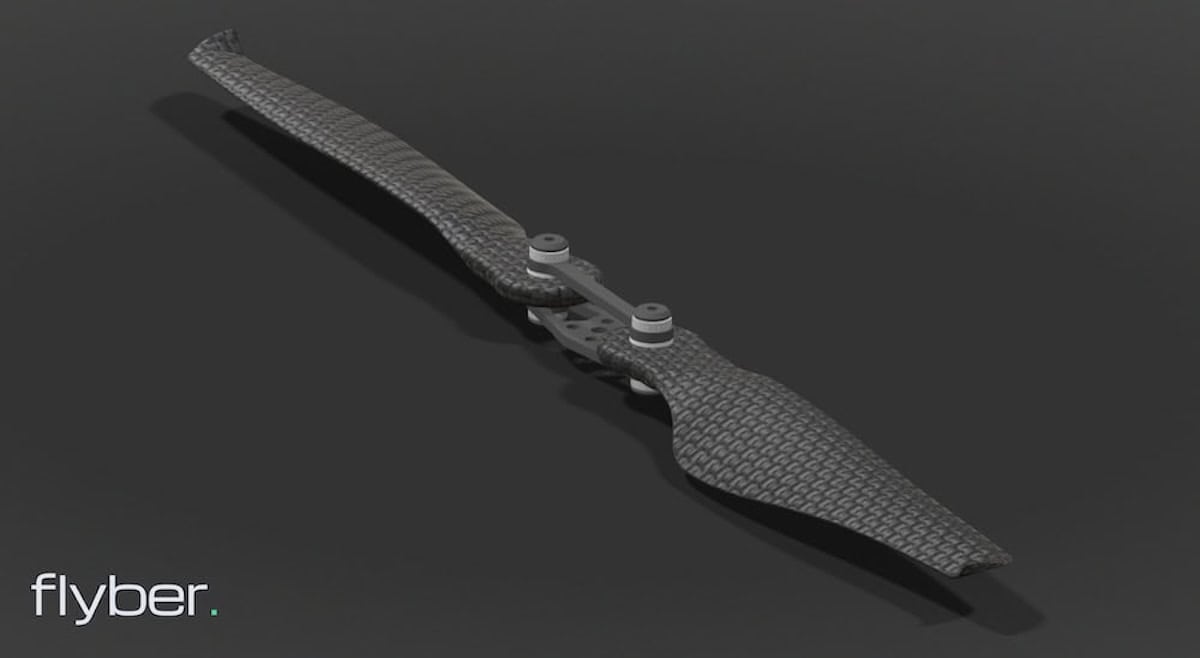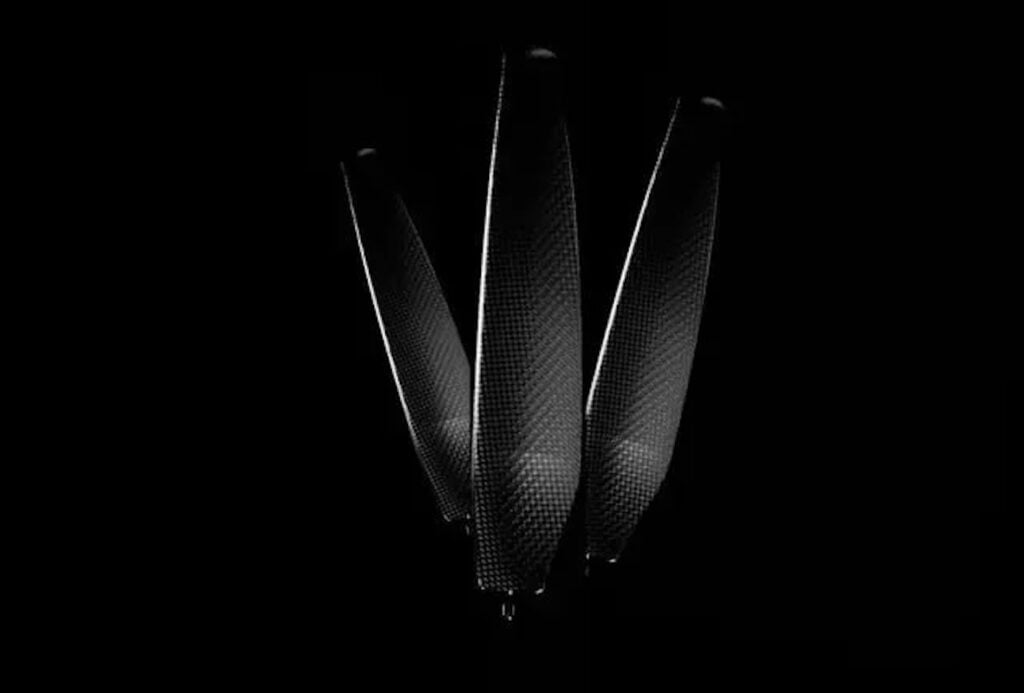




Flyber has successfully delivered its first optimised composite rotor blade prototype for UAVs, marking a step forward in advancing UAV performance standards.

Designed for electric and hybrid UAV platforms, this prototype integrates structural efficiency, weight savings, and improved aerodynamics. It is lighter and engineered to generate more lift per watt of power input, translating directly into longer flight times and quieter operation in the field.
Flyber developed the blades using high-pressure resin transfer moulding and precise fibre alignment techniques, achieving a uniform structure that outperforms traditional layups.
The company collaborated closely with industry partners during the prototyping phase, integrating their real-world UAV operating requirements into the design parameters. Feedback loops are tight, and the company used them to tune the blade’s twist profile, edge geometry, and core materials for optimal real-world results.
The prototype’s successful delivery was paired with internal vibration and fatigue testing, simulating flight cycles in demanding conditions. Early data is promising: improved acoustic performance and a measurable uplift in efficiency across standard mission profiles.
Flyber’s vertically integrated approach allows the company to progress from concept and CAD designs to physical blades within weeks rather than months, enabling faster iteration and testing for aerospace partners.
The Milton Keynes facility handled every stage of the prototype build in-house. That includes tooling, moulding, quality control, and performance validation, all under one roof, in the UK.
Rowan Carstensen, Co-founder and CEO, stated, “This wasn’t just a delivery milestone, it demonstrates that Flyber’s composite expertise can move from concept to real-world application quickly. The company is helping shape what next-generation flight will feel like.”
The prototype delivery represents an initial step, providing a basis for further development. With these first units in the air, Flyber is now scaling up for low-rate production while continuing to validate under various flight regimes and load profiles.
The goal is to produce blades that perform consistently and reliably in real-world flight conditions.